










Gjør som tusenvis av andre bokelskere
Abonner på vårt nyhetsbrev og få rabatter og inspirasjon til din neste leseopplevelse.
Ved å abonnere godtar du vår personvernerklæring.Du kan når som helst melde deg av våre nyhetsbrev.

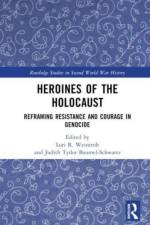
This book brings together international scholars to examine and share new approaches in the history of women's rescue and resistance during the Holocaust and the Armenian and Rwandan genocide.
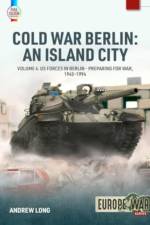
Covers US forces in Berlin during the Cold War, from their arrival in July 1945, through to the departure of American Berlin Brigade in 1994.Cold War Berlin - An Island City Volume 4: US Forces in Berlin - Preparing For War 1945-1994 examines how the troops of the US Army's Berlin Brigade prepared for war: the units that made up the brigade; how it trained; how it was equipped; how it planned to defend the city; and also looks at the Special Forces units that served alongside it.At the end of the Second World War, the victors split Germany into three zones of occupation, and Berlin was divided into four sectors: one each for the British, Americans, French and Soviets. The western part of the city lay well within eastern Germany, cut off from immediate friendly military support and, as the Cold War developed, was surrounded by around 420,000 Soviet troops of the Group of Soviet Forces in Germany (GSFG) - the shock troops who would lead the invasion of Western Europe in the event of a war against NATO. There were also 180,000 East German troops of the Nationale Volksarmee, supported by tens of thousands of paramilitary police and the infamous East German Border Guards (Grenztruppen der DDR).US Forces in Berlin - Preparing For War looks at how the Berlin Brigade, the 5,000-strong American component of the Western military presence in the city prepared to defend West Berlin from the communist threat and examines what is known of Operation Stoss (or Zentrum); the East German plan to occupy Berlin in the event of war. This volume also looks at the work of the United States Military Liaison Mission (USMLM).US Forces in Berlin - Preparing For War is the second of two volumes covering US forces in Berlin during the Cold War, from their arrival in July 1945, through to the departure of American Berlin Brigade in 1994. The text is richly illustrated with photographs, illustrations, diagrams, tables, maps, plans, and color profiles, and is printed in full color throughout.
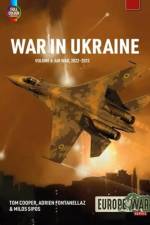
On 24 February 2022, the Russian Federation launched an all-out invasion of Ukraine. Coming after years of tensions following Russia's 2014 annexation of Crimea and thinly veiled direct armed support for separatists fighting in Donbass and Luhansk in eastern Ukraine, observers gave Ukraine's military little chance of surviving the initial Russian onslaught. Yet the Russian forces failed to deliver a decisive blow in the opening air or ground campaign. Volume 6 of War in Ukraine examines the air war between Russia and Ukraine during February and March of 2022.In order to explain the failures of the Russian Aerospace Forces (Vozdushno-kosmicheskiye Sily, VKS) in the opening moves of this war, this volume undertakes a detailed examination of the history, technology and doctrine of the Soviet and Russian air forces from the late Cold War up to the eve of the 2022 invasion, along with the opposing air force and ground-based anti-air defenses of the Armed Forces of Ukraine (Zbroiynyhsyl Ukrayini, ZSU).Building upon the general account of the opening moves of this conflict contained in Volume 2 of War in Ukraine, this volume presents a detailed account of the successes and failures of each side in their use of air power and how this impacted upon the ground campaign.War in Ukraine: Volume 6 The Air War February-March 2022 is illustrated throughout with full color photographs, specially commissioned maps, and the @War series' signature color artworks showing the aircraft of this ongoing conflict.
Che's Guevara's Final Adventure: The Guerrilla in Bolivia, 1967 is a detailed military history of the final campaign of Ernesto 'Che' Guevara, as he commanded the Bolivian National Liberation Army in a doomed campaign against the US-backed military regime headed by Air Force General René Barrientos.Between 1966 and 1967 Argentine-born Ernesto Guevara - known around the world as 'Che' - would lead the Cuban-backed Bolivian National Liberation Army in Ñancahuazú region of Bolivia, in what was known as the the Ñancahuazú Guerrilla. Bolivia at that time was governed by a military regime headed by Air Force General René Barrientos, who in November 1964 had overthrown the historic leader and constitutional president Víctor Paz Estenssoro and put an end to the nationalist-popular revolution that began in April 1952.At the beginning of the operations, Che's guerrillas obtained some positive results before the Bolivian army and troops of the security forces began a relentless pursuit, supported by aircraft of the Bolivian air force, which bombed and machinegunned the guerrilla camps. With US military help in the training of the Bolivian Army Rangers, it was possible to decimate the guerrillas and capture, and ultimately execute, Guevara in October 1967.Che's Guevara's Final Adventure: The Guerrilla in Bolivia, 1967 provides a detailed day-by-day account of the last campaign of a figure who even today remains an instantly recognisable icon of the left-wing revolutionary movements of the Cold War era, and is illustrated throughout with original photographs and includes specially commissioned color artworks.
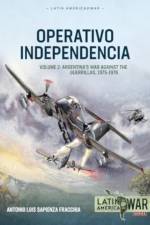
This volume examines Argentina's military history during the 1970s, focusing on the insurgency, government operations, and the Dirty War.Following the death of Juan Domingo Perón in 1974, the presidency of Argentina was assumed by his widow Isabel Martínez de Perón. Far from ceasing their opposition to the government, the People's Revolutionary Army (Ejército Revolucionario del Pueblo/ERP) and Montoneros stepped up their armed campaign to overthrow the government and replace it with a revolutionary Marxist-Leninist regime. Despite authorising Operativo Independencia (Operation Independence) Isabel Perón would ultimately be deposed by her own generals and the anti-guerilla campaign would descend into the so-called Dirty War.The campaign against anti-government and revolutionary groups in Argentina during the 1970s has become infamous for the notorious methods employed by government forces to ruthlessly suppress any form of opposition, and terms such as 'dirty war' and 'disappeared' have been added to the global lexicon as a result. Volume 2 of Operativo Independencia offers a military history of this insurgency and the campaign to suppress it, the telling of which to date has been highly politicised. Far from being only a movement of radical students and intellectuals, the opposition to Argentina's government included armed organisations that engaged in a bloody, if ineffective and ultimately futile, campaign of murder to achieve its aims. While Isabel Martínez de Perón authorised the launch of Operativo Independencia to suppress the armed insurgency, failure to take firm control of Argentina would lead to her overthrow by her own generals who would go on to establish a series of military juntas to rule Argentina until the return of democracy in the aftermath of the Falklands/Malvinas War of 1982.Operativo Independencia Volume 2 examines the military history of events between Isabel Martínez de Perón's assumption of the presidency of Argentina and the conclusion of the Dirty War. This volume details the motivation, operations and methods of government and opposition forces in this violent period of the history of Argentina.Operativo Independencia Volume 2: Guerilla War, the 1976 Coup D'état, and The Dirty War in Argentina is illustrated throughout with over 300 original photographs of the events in Argentina during the 1970s, along with specially commissioned maps and colour artworks.
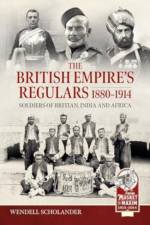
The history of the British Army's multi-racial forces that supported the empire's global dominance through economic power, a strong navy, and formidable military presence.What allowed the British to create and hold its empire? In 1914 the British had the largest empire in the world. The sun literally never set on its holdings. The Empire rested on three strong pillars - British economic might, a powerful fleet and its multi race armies. The wealth provided by British industry provided the sinews of British power. The fleet protected the arteries along which British products reached the world and the UK projected its power. But its wealth and strong navy would not allow England to guard the North-West Frontier of India, or march to Peking or Ethiopia or fight foes as varied as the Sikhs, Māori and Zulus. In The British Empire's Regulars - 1880-1914 the army and men that won and held the empire are covered in detail. In most books these men are as anonymous as pawns on a chessboard. The book gives a definitive account of the many different ethnic groups that served. Sikhs, Scots, Gurkhas, Ibos and more are all here. The work explains what contribution each made to The Empire's polyglot armies. Drawing on sociology, governmental records and history, the book will appeal to readers who are interested in the British Empire, its military forces, and to students and scholars of military sociology and history.
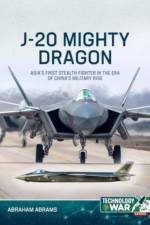
The J-20 fifth generation stealth fighter program has epitomised China's rise from a laggard in combat aviation into a potential world leader. J-20 Mighty Dragon: Asia's First Stealth Fighter in the Era of China's Military Rise details the J-20's technologies, capabilities, production timeline, design priorities, roles, evolution, and the formations and locations where it has been deployed, the ways other countries have responded to it, and how the last 30 years of China's industrial and technology sector's modernisation positioned the country to produce what may well now be the world's top air superiority fighter.The J-20 program is the most high-profile indicator of a turning point in the balance of power between China and the United States, and has produced by far the most capable fighter that America or its allies could face in a potential conflict. An assessment of the history of Chinese air superiority capabilities, and how the Korean War in particular has influenced the country to place a very strong emphasis on the need to field a leading fighter for air-to-air combat, thus provides an important deeper understanding of the program.Important context to understanding the J-20's significance and its current global standing is provided by brief assessments of the positions of the Russian and American fighter industries. The parallel development of supporting assets from aerial tankers to electronic warfare planes is also explored for a better understanding of the much-transformed Chinese fleet which J-20s are being inducted into.The program is also shown to have had a particularly significant influence in the United States, ranging from placing discourse on the F-35's modernisation and on sixth generation fighter development in an entirely new context, to stimulating the formation of new counter-stealth aggressor training units, development of new air-to-air missiles, and the acquisition of E-7 'flying radar' aircraft among many other responses to the new challenge. J-20 Mighty Dragon: Asia's First Stealth Fighter in the Era of China's Military Rise is the fi rst volume in the new Technology@War series and is extensively illustrated with colour photographs throughout and specially commissioned colour artworks.
In August 1644, Turenne and Grand Condé battled the shrewd Bavarian Mercy in grueling fights at Freiburg, revealing wartime challenges.Early August 1644 saw the two greatest French men-of-war of the mid-seventeenth century, Turenne and the future Grand Condé, attempt to dislodge the Bavarian general Franz von Mercy from the heights of Freiburg in the Black Forest. In the twilight of the Thirty Years' War, there was probably no better opponent for these two geniuses than Mercy, who had the astonishing ability to anticipate his enemies' plans. Against such a general, it would take no less than Enghien and Turenne. The battles of 3 and 5 August were among the most difficult that the two men would face throughout their careers: their carefully prepared plans were thwarted by the shrewdness of their opponents and some unfortunate initiatives on the part of their subordinates. The battles were so deadly that they brought Mazarin to tears. On learning of what could be considered a victory, the Cardinal is said to have stated that France would have been lost if it had won many similar victories.The days of Freiburg were the setting for some fascinating actions in which doggedness gave way only to courage. Thanks to numerous contemporary accounts, the reader is immersed in the heart of the two battles that enabled the French, despite being held at bay, to keep the Bavarians away from the right bank of the Rhine. The context of the campaign, the character of the three protagonists, the phases of the various battles, the armies involved and the lessons learned are all analysed in detail.
Explores the controversial 1944 destruction of the Montecassino Abbey, questioning the motives behind such wartime decisions and their enduring impact on military ethics.On 15 February 1944, one of the most iconic buildings in European history was destroyed by allied bombers. Plumes of Smoke is a book about the consequences of war, written as war again comes to Europe. It is also a book about what wars are fought for, and about those that make the fundamental decisions that affect us all. The decision to destroy the Abbey of Montecassino was and remains highly controversial. Why was this building of inestimable cultural value so easily destroyed? Was it to win a battle, or to prove the legitimacy of American bombing theory? It is not a story of individual bravery, although this existed aplenty on both sides in the mud and mountains of 1944 Italy, but a story of a battle that has no winners and no heroes. This is a story from 80 years ago that resonates clearly through the decades. In a time filled with arguments concerning the laws and morality of war, this story from the last major war in Europe may lead the reader to understand that little changes. Military Necessity remains the principal excuse for unnecessary devastation. When nations or generals are faced with difficult decisions, when winning becomes more important than the reasons they fought for in the first place, then legal and moral boundaries are often forgotten in the fog of war. It appears that little has improved over the succeeding decades when political convenience trumps moral courage and the importance of our human heritage.
Since formation in 1957 the Army Air Corps has played a prominent role in almost every British Army operation in modern times. Ops Normal is an unrivaled and comprehensive operational history of the Army Air Corps experience. It is a unique insight into the aircraft deployed, and the experiences of the men and women involved.Volume 1 of Ops Normal is exceptional as it draws generously on the testimony of those who were deployed on the early operations. Aircrew and Groundcrew provided critical aviation support to the full spectrum of flying operations in the most hazardous environments, often under fire. It also captures the pace of change and turbulence as the small embryonic corps of aviators evolved into the fully fledged combat arm of today.Ops Normal covers operations in Malaya, Borneo, Hong Kong, Cyprus, Kuwait, Aden, British Guiana, Belize and in Northern Ireland. It uses previously unpublished material, thought-provoking first-hand accounts coupled with contemporary unit records, and many unpublished images. The result is a fresh and compelling history of a Corps that though diminutive in numbers, rank as one of the most potent in the British Army's order of battle.Ops Normal is the only complete and authorized account of British Army aviation operations undertaken by the Army Air Corps. It is a fitting tribute to all who wore the sky blue beret and especially those that made the ultimate sacrifice. It is also a testimony to those that survive with the physical and mental scars of their service.
The story of one king at war, another who could not be allowed to live and the bastard who sparked rebellion and a siege of London that changed the course of British history.
From the bestselling author of Under a Gilded Moon comes the soaring story of an unlikely friendship of three men and one extraordinary woman and the legacy they built--if their own secrets don't destroy it.In the midst of World War II, a Tennessee farm boy, a Jewish Cambridge student, and a German POW forge a connection that endures--against all odds.But now everything that Will Dobbins, Dov Silverberg, and Hans Hessler fought for is at risk as their descendants clash for control of the corporation they founded together. In an attempt to remake its tattered corporate image, the firm hires event planner Hadley Jacks and her sister Kitzie to organize a reunion for the families on St. Simons Island, Georgia, the place that changed all three men's lives forever.As Hadley and her sister delve into the friends' past, they uncover the life of the courageous young woman who links them all together...and the old wounds that could tear everything apart.Told in dual timelines spanning World War II and the present, Echoes of Us follows the ripple effects of war, the bonds that outlast it, and the hope that ultimately carries us forward.
Historical Dictionary of Holocaust Cinema, Second Edition contains a chronology, an introduction, and an extensive bibliography. The dictionary section has more than 175 cross-referenced entries on films, directors, and historical figures. Foreign-language, experimental, and canonical films are included.
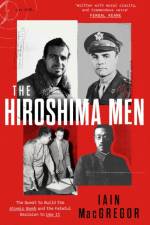
At 8:15 a.m. on August 6th, 1945, the Japanese port city of Hiroshima was struck by the world's first atomic bomb. Built in the US by the top-secret Manhattan Project and delivered by a B-29 Superfortress, a revolutionary long-range bomber, the weapon destroyed large swaths of the city, instantly killing tens of thousands. The world would never be the same again.The Hiroshima Men's unique narrative recounts the decade-long journey towards this first atomic attack. It charts the race for nuclear technology before, and during the Second World War, as the allies fought the axis powers in Europe, North Africa, China, and across the vastness of the Pacific, and is seen through the experiences of several key characters: General Leslie Groves, leader of the Manhattan Project alongside Robert Oppenheimer; pioneering Army Air Force bomber pilot Colonel Paul Tibbetts II; the mayor of Hiroshima, Senkichi Awaya, who would die alongside over eighty-thousand of his fellow citizens; and Pulitzer Prize-winning novelist John Hersey, who travelled to post-war Japan to expose the devastation the bomb had inflicted upon the city, and in a historic New Yorker article, described in unflinching detail the dangers posed by its deadly after-effect, radiation poisoning.This thrilling account takes the reader from the corridors of the White House to the laboratories and test sites of New Mexico; from the air war above Nazi Germany and the savage reconquest of the Pacific to the deadly firebombing air raids across the Japanese Home Islands. The Hiroshima Men also includes Japanese perspectives - a vital aspect often missing from Western narratives - to complete MacGregor's nuanced, deeply human account of the bombing's meaning and aftermath.
Cold War Museology is the first volume to bring together interdisciplinary and international contributions from leading practitioners and academics specialising in Cold War museology.
This book comprises essays that focus on a range of thinkers that challenge the boundaries of the just war tradition.
This book comprises essays that focus on a range of thinkers that challenge the boundaries of the just war tradition.
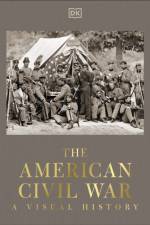
This revised and updated guide to the US Civil War offers an intimate account of America's bloodiest and most divisive conflict - 160 years on. This comprehensive, visually arresting guide explores the history, causes, and consequences of the US Civil War with eyewitness accounts by soldiers and civilians, key profiles of military leaders, and clear timelines that give an overview of how the events developed. Fully revised and updated, and produced in association with the Smithsonian Institute, The American Civil War is packed with information on key locations, the treatment of wounded soldiers, and slavery, and provides a rich and detailed account of one of the most controversial conflicts ever fought. Illustrated throughout with photography and paintings, it features detailed galleries showcasing weapons, equipment, and other artefacts, and also comes with informative and photographic features on memorial sites associated with the Civil War.
A comprehensive history of the African Union Mission in Sudan (AMIS) from its inception in 2004 until replacement in 2007 by UNAMID.A comprehensive history of the African Union Mission in Sudan (AMIS) from its inception in 2004 until replacement in 2007 by UNAMID.In response to the ongoing civil war in Darfur that began in 2003, the African Union deployed a peacekeeping force to the region in 2004. Initially just 150-strong, this force would grow to some 7,000 by the following year.Peacekeeping in Darfur: The AMIS provides a comprehensive history of AMIS I, II and III, the context to the conflict in Darfur and the various participants. It further describes the support provided by the European Union and the eventual transition of AMIS into UNAMID (African Union - United Nations Hybrid Operation in Darfur) in 2007. The author brings his personal experience of operations as part of AMIS and the role of the Hungarian Defence Forces to this book.Peacekeeping in Darfur: The AMIS is extensively illustrated by the author's own photographs taken while participating in the mission and includes specially commissioned artworks.
Abonner på vårt nyhetsbrev og få rabatter og inspirasjon til din neste leseopplevelse.
Ved å abonnere godtar du vår personvernerklæring.