

















Gjør som tusenvis av andre bokelskere
Abonner på vårt nyhetsbrev og få rabatter og inspirasjon til din neste leseopplevelse.
Ved å abonnere godtar du vår personvernerklæring.Du kan når som helst melde deg av våre nyhetsbrev.

For more than a century, the Paris Peace Conference of 1919 has remained an object of historical scrutiny. As an attempt to consolidate peace in the wake of World War I and to prevent future conflict, it was instrumental in shaping political and social dynamics both nationally and internationally. Yet, in spite of its implications for global conflict, little consideration has been given to the way the Paris Peace Conference constructed a new global order. In this illuminating and geographically wide-ranging reassessment, The Paris Peace Conference of 1919 reconsiders how this watershed event, its diplomatic negotiations and the peace treaties themselves gave rise to new dynamics of global power and politics. In doing so it highlights the way in which the forces of nationality and imperiality interacted with, and were reshaped by, the peace.
From a celebrated military historian, a highly engaging and thought-provoking explanation for America’s many misfortunes in wars and military campaigns since the mid-1960s.
During the Holocaust, Polish bystanders were witnesses not only to Nazi crimes but also to their own collective violence towards Jewish neighbours. This book shows how these memories continue to be distorted and silenced in Polish culture.
This edited volume delves into the intricate landscape of educational internationalism during the Cold War, providing an in-depth examination of its diverse forms, impulses, and global impacts.
Prize-winning novelist and short-story writer Beata Umubyeyi Mairesse’s harrowing, urgent memoir documents and reconstructs her escape, at the age of fifteen, from the Rwandan massacres of 1994, in which 800,000 Tutsi were slaughtered.
'Left London, on a journey with Kabool as my objective via Brindisi and Bombay'. With these words written on Tuesday October 15, 1878, the Scottish artist William Simpson (1823-1899), commenced a daily journal which he later entitled Diary of a Journey to Afghanistan during the Campaign of 1878-79.
A Montana farm boy with artistic talent flies B-24 bombers over Burma and C-108 gas-hauling tankers across the dangerous Himalayas into China.
How leadership skills in South Carolina helped result in Patriot victory in the Revolutionary War.
A raw look at the journey of one Marine from the rigors of bootcamp, through the hellish crucible of Special Operations selection to the Iraq war as it moved away from the nimble, nocturnal tactics Recon was known for, to a vicious game of IED cat-and-mouse.
Pompey's career in command began at a young age, taking control of his deceased father's legions in support of Sulla during the civil war with Marius. A precocious and ambitious talent, he held repeated commands before he was the legal age. Sulla called him 'the teenage butcher'. He served in the Sertorian War in Spain (recovering from an early defeat), helped crush Spartacus' revolt then freed the Eastern Mediterranean from the depradations of Cilician pirates in a matter of weeks. He brought a victorious end to the long-running Third Mithridatic War and brought the whole of Asia Minor, Syria, Lebanon, Jordan and Judea under Roman influence by a mix of force and diplomacy. For good reason he was hailed even in his own lifetime as the 'Roman Alexander' and Lee Fratantuono gives these events the detailed coverage they deserve. All this came before the events for which he is usually remembered: his great civil war against Julius Caesar. There is detailed analysis of the opening moves in Italy, Pompey's victory over Caesar at Dyrrhachium and the climactic battle at Pharsalus in September 48 BC. Pompey was defeated, fled ignominiously and was assassinated, leaving his two sons to carry on the war.
In the past, while visiting the First World War battlefields, the author often wondered where the various Victoria Cross actions took place. He resolved to find out. In 1988, in the midst of his army career, research for this book commenced and over the years numerous sources have been consulted. Victoria Crosses on the Western Front - The Final Advance in Picardy is designed for the battlefield visitor as much as the armchair reader. A thorough account of each VC action is set within the wider strategic and tactical context. Detailed sketch maps show the area today, together with the battle-lines and movements of the combatants. It will allow visitors to stand upon the spot, or very close to, where each VC was won. Photographs of the battle sites richly illustrate the accounts. There is also a comprehensive biography for each recipient, covering every aspect of their lives warts and all parents and siblings, education, civilian employment, military career, wife and children, death and burial/commemoration. A host of other information, much of it published for the first time, reveals some fascinating characters, with numerous links to many famous people and events.
The casual visitor to Carlisle Cathedral will notice massive sandstone walls, a magnificent ceiling, and the exquisite Flemish carving of the Brougham Triptych. Less obvious is a brass memorial tablet on the North Wall. It commemorates a man who would probably have preferred it not to be noticed.
The Trafalgar Chronicle is the publication of choice for new research on the Georgian era navy, sometimes called 'Nelson's Navy'. Its scope extends to the maritime world of 1714 to 1837. In this volume, authors from five countries provide tales of adventure, battles, conquests and intrigue that span the world's oceans, taking readers to the UK, the US, South America, Venice, France, the Caribbean, South Africa and the Ionian Islands. The theme for this New Series 9 is naval intelligence in the Georgian era. The contributions include two articles on the methods of gathering naval intelligence - one by author Steve Maffeo who has written the definitive book on the subject. Two articles explore how Nelson and Rodney respectively applied naval intelligence in their missions. Three articles about intelligence agents follow, including a featured monograph on Baron d'Imbert, a royalist spy during the French Revolutionary and Napoleonic Wars. Biographical portraits include a discussion of Duckworth's dilemma of choosing between his mission in the Caribbean and safeguarding the health of his men from the threat of yellow fever. The tale of Joshua Penny tells of a Royal Navy sailor who deserted and found refuge in a cave in South Africa. A third article documents the last survivors of the Battle of Trafalgar as they reached their final years. Five more articles of general interest cover a range of topics, to include the parliamentary debates concerning the War of 1812, the cruise of the US Frigate Essex, copper bottoms on Royal Navy ships, political wranglings in South America, and the origin of the name of Villeneuve's flagship, Bucentaure. This richly illustrated, peer reviewed, scholarly journal of naval history is a 'must-read' for all enthusiasts and historians of the Age of Sail. **'Well written, well researched, well-illustrated, this is a publication that will both delight and inform. A most enjoyable read.' D J Paul in Naval Review****'The Chronicle is a wonderful collection of articles, and a delight to dip into.' ****Warship World**
Among all the branches of the Red Army during the Second World War, self-propelled artillery is probably the most overlooked and misinterpreted. Attention has focused on the tanks the Red Army deployed against the Germans on the Eastern Front, the T-34 in particular; the self-propelled guns, which played an increasingly important tactical role after the shocking defeats of 1941 and 1942, have been neglected. Alexey Tarasov, in this detailed, wide-ranging and very heavily illustrated history, describes how the Soviets rose to the challenge of creating a series of self-propelled guns in extraordinarily difficult wartime conditions, and he assesses, and illustrates, all the types they produced. Also he covers the organization, training, tactics and combat operations of the self-propelled artillery units. When the Germans invaded the Soviets lacked self-propelled artillery, believing that tanks and field guns would provide sufficient support for their infantry. But the effectiveness of the German assault guns persuaded them that they had to design similar armoured vehicles and rapidly they did so. As the author shows, by the end of the war, after an intense process of improvisation and development, they fielded self-propelled guns, in particular the SU-76, SU-122 and SU-152, which matched those of the Germans in terms of performance and heavily outnumbered them on the battlefield. Alexey Tarasov's photographic history will be essential reading for anyone who has a special interest in Soviet armour and armoured warfare in general, and it will be a valuable source for modellers.
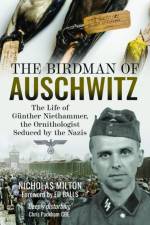
When Soviet troops were liberating Auschwitz concentration camp in January 1945 among the piles of half burnt corpses and emaciated prisoners left behind, they were amazed to find nesting boxes for birds. The same boxes were found in the walled garden at the house of Rudolf Hoess, the notorious camp commandant. In his safe, they also discovered a research paper on the birds of Auschwitz with a personal dedication. It read 'I owe this to the great understanding which the commandant of Konzentrationslager Auschwitz, SS-Sturmbannführer Höß, gave to the scientific development of this area and the research tasks that the German expansion in the East brings with it.'The nesting boxes and research paper belonged to one of the most erudite but naive guards ever to serve at the camp, Dr. Günther Niethammer. On his arrival in 1940 Niethammer's passion for birds soon became known throughout Auschwitz and led to him being assigned to 'special duties' by Hoess. So instead of guard duties, Niethammer shot game to order for commandant and conducted the most infamous bird survey of all time. Turning a blind eye to the heinous treatment of the prisoners and the extermination of the Jews, Niethammer instead shot birds and created a macabre museum of bird skins at the camp working with one of the inmates. After leaving Auschwitz, he carried out further bird surveys in occupied Crete, Bulgaria, and Italy. When the war was finally over Niethammer was put on trial but spent just 3 years in prison before returning to the Museum Koenig where his career, although tainted by association with Auschwitz, still flourished until his death in 1974. This is the story of the one of the greatest ornithologists of his generation who was seduced by the Nazis and became 'The Birdman of Auschwitz'.
Before the French Revolution, the Russian Empire played a minor role in the history of Western Europe, yet its involvement in the wars of the Republic and against Napoleon would change its influence on the fate of the continent forever. Fighting the Russians examines the crucial role played by the men of the Czar's Empire through hundreds of original letters, notebooks and accounts written by French soldiers at the time of the events or shortly after the fall of Napoleon. These rare unpublished sources, or those never before translated into English, recount key moments such as the battles of Zurich, Austerlitz, Eylau, Borodino and Leipzig, the burning of Moscow, the passage of the Berezina and the capture of Paris by the Cossacks. The terrible retreat from Russia and the torture inflicted on French soldiers by irregulars are also examined, as well as the times Napoleon was almost captured by Russian horsemen. Together, these writings plunge the reader into a world of unprecedented violence, but they also reveal the French fascination with the Russians, who were perceived as strange individuals from faraway lands whose courage bordered on madness.
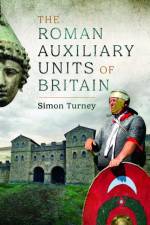
The majority of work on Roman Britain's military focuses on the legions, with much less attention paid to the auxilia, even though the latter formed the vast majority of the manpower. The auxiliary units were drawn from all over the Empire and provided both infantry and cavalry units, many of which provided specialisms that the legions lacked. For example, the Cohors I Hamiorum Sagittariorum were a cohort of archers from Syria stationed at Carvoran fort on Hadrian's Wall. Simon Turney, following decades of research, presents this work, referencing every one of the fifty-nine auxiliary units identified in Britain. For each there is a unit history, detailing their movements, involvement in campaigns and anything noteworthy. This is followed by a set of lists detailing known, attested members of the unit and any inscriptions that mention them. Each entry is also accompanied by photographs and/or maps, including the sites the unit occupied, tombstones, images, inscriptions and so on. This is the finest, most up-to-date reference available for the auxiliary units of Britain.
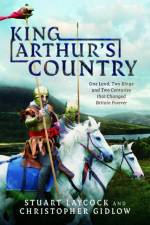
England today is a rich, complex mix of identities, cultures, and heritages. However, in the decades after Roman Britain collapsed in the fifth century, the cultures of the Angles and of the Saxons, with significant degrees of homogeneity, spread rapidly westwards across much of eastern, southern and central England. Then it stopped. Or was stopped. For the area then still beyond Anglo-Saxon reach is characterized by a network of military and economic links across the island. Perhaps significantly, this includes parts of Britain traditionally associated with King Arthur. Later, the multi-ethnic and multi-cultural kingdom of Mercia, in alliance with British kingdoms in Wales, spread from the Midlands across England under the mysterious King Penda, dominating the earlier Anglo-Saxon kingdoms with its wealth and military power. The region that gave birth to Mercia is also a region that was a most likely base for the elusive figure of King Arthur. The authors use historical and archaeological evidence, much of it new, to explore the link between Arthur's kingdom and the rise of Penda's Mercia. They seek to locate lost Arthurian battlefields and understand what happened there, with exciting, new results. This is the story of one region, two kings and two centuries that changed England forever.
On 13 July 1917 a thirty-year-old junior officer on leave from the Western Front arrived at London's Euston Station, with its famous arch and great hall. Siegfried Sassoon was heading for Liverpool on a journey likely to end in his arrest. His destination was the headquarters of his battalion. A week earlier he had written to tell his commanding officer that he was refusing further military service. He enclosed a statement written to be read out in Parliament declaring that Britain's war aims were no longer worthy. He was committing, as he admitted', 'an act of wilful defiance of military authority'. He was ready to face court-martial and imprisonment (or worse). He was known in the Army as a brave and efficient soldier, already decorated and now recommended for a DSO. His speciality was in bombing. Now he had delivered a bombshell of a different kind. He hated what the war had become. He had lately turned his poetic talent into a new kind of satire. A recent composition, 'The One-Legged Man', was about what soldiers yearned for: 'a Blighty wound' to take them home to safety. The poem ends: 'He hobbled blithely through the gate; And thought 'Thank God they had to amputate'. Sassoon wanted a fair peace settlement to end the war, as did his friends in the House of Commons. There were possibilities. The day before he caught his train, the German Reichstag had passed a declaration demanding 'peace with no annexations and no indemnities': if agreed to by Britain and its Allies and followed through this would mean a settlement including German withdrawal from all occupied territory. These were days of drama for a soldier - and perhaps for the world. This book tells Sassoon's story.
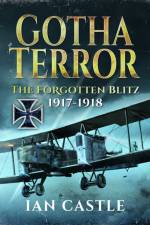
By the autumn of 1916, advances in Britain's air defence capability had all but ended the Zeppelin menace, which had haunted the nation for almost two years. However, an emerging complacency regarding the aerial threat was immediately shattered by the introduction in 1917 of the Grosskampfflugzeug, better known as the Gotha bomber. Whereas Zeppelin airships had attacked individually and stealthily under the cover of darkness, the German Army now had a squadron of bomber aeroplanes capable of brazenly attacking London and south-east England in broad daylight, thereby unleashing a new wave of terror on the British population. Britain, having downgraded its aerial defences after the apparent defeat of the Zeppelins, was forced to rethink. The improvements instigated compelled the German raiders to change their tactics too, as each side strived to gain the upper hand. And all the time the German Navy Zeppelins, whose campaign had not been abandoned entirely, continued to strike when opportunity allowed. The story of these dramatic air raids is told by incorporating numerous, never-before published, eye-witness accounts, revealing a personal view of the experiences shared by those who lived through the conflict, both on the ground and in the air. The German air campaign against the United Kingdom in the First World War was the first sustained, strategic aerial bombing campaign in history. Yet it has become dwarfed by the enormity of the Blitz of the Second World War, but for those caught up in the tragedy of these raids the impact was every bit as devastating. In Gotha Terror Ian Castle tells the full story of the 1917 - 1918 raids in unprecedented detail in what is the final book in a trilogy, completing the story of Britain's Forgotten Blitz.
For such a famous regiment as the 42nd Regiment of Foot (The Black Watch), the number of published memoirs is surprisingly low. The discovery of the three hand-written journals in the collection of the National Library of Scotland covering the period from August 1808, when the regiment left Gibraltar for Lisbon until the end of 1813, are therefore of significant importance in our understanding of the actions of this regiment during the Peninsular War. James Stirling became an Ensign by purchase in the 42nd Foot on 14 August 1805 at the age of thirteen, vice Ensign Thomas Munro. He then rose to the rank of Lieutenant without purchase on 27 August 1807. Stirling served in the Peninsula with 42nd Foot from September 1808 to January 1809, then at Walcheren and again in the Peninsula from May 1812 to August 1813 (from October 1812 as Aide de Camp to his father Major General James Stirling). On his father's retirement from active service, he joined the Portuguese Army from 9 November 1813 as a Brevet Captain in the 11th Line Regiment, remaining with them until 13 October 1814. He then became a Captain in the 42nd by purchase on 11 May 1815. He saw action at Walcheren, Corunna, Salamanca, Burgos, the Pyrenees, Orthez and Toulouse. He retired from the army in 1817 and died on 20 January 1818 aged only 25 years old. These absorbing and revealing journals cover Captain James Stirling's entire period of active service with the 42nd Foot, as well as the time he served with the Portuguese forces until the end of 1813, his sudden death preventing him from completing the record of his service with the Portuguese Army in 1814. Author Gareth Glover provides explanatory notes throughout to add extra context to Stirling's commentary, making this book accessible for both the historian and enthusiast.
Abonner på vårt nyhetsbrev og få rabatter og inspirasjon til din neste leseopplevelse.
Ved å abonnere godtar du vår personvernerklæring.