








Gjør som tusenvis av andre bokelskere
Abonner på vårt nyhetsbrev og få rabatter og inspirasjon til din neste leseopplevelse.
Ved å abonnere godtar du vår personvernerklæring.Du kan når som helst melde deg av våre nyhetsbrev.

This book provides a comparative study of the impact of referendums on conflict resolution and peacebuilding in post-conflict societies.
This volume offers a comprehensive overview of the field of space policy.
On 26 February 1991, cavalry troops of Cougar Squadron, the 2nd Squadron of the 2nd Armored Cavalry Regiment, charged out of a sandstorm during Operation Desert Storm and caught Iraqs Republican Guard Corps in the open desert along the North-South grid line of a military map referred to as the 73 Easting. Taken by surprise, the defending Iraqi armor brigade was swept away in salvos of American tank and missile fire in what became the U.S. Armys largest tank battle since World War II. Douglas Macgregor, the man who trained and led Cougar Squadron into battle, recounts two stories. One is the inspiring tale of the valiant American soldiers, sergeants, lieutenants, and captains who fought and won the battle. The other is a story of failed generalship, one that explains why Iraqs Republican Guard escaped, ensuring that Saddam Husseins regime survived and Americas war with Iraq dragged on. Certain to provoke debate, this is the latest book from the controversial and influential military veteran whose two previous books, Breaking the Phalanx and Transformation Under Fire, are credited with influencing thinking and organization inside Americas ground forces and figure prominently in current discussions about military strategy and defense policies. Its fast-moving battle narrative, told from the vantage point of Macgregors Abrams tank, and its detailed portraits of American soldiers, along with vivid descriptions of the devastating technology of mounted warfare, will captivate anyone with a taste for adventure as well as an interest in contemporary military history.
Crusading in the Long Nineteenth Century offers a trans-cultural examination of "crusade medievalism", that is the use of the symbolism and rhetoric of the crusades in the popular and political discourse of the long nineteenth century.
This volume fills in the gap in the existing war film criticism by offering insights into how the Afghanistan War (2001-2021) and the Iraq War (2003-2011) have been represented in popular and documentary filmic productions in Iraq, Afghanistan, Great Britain, Germany, Denmark, Poland, Spain, and Australia.
Submariners are a special breed. Not for them a life on the ocean wave, the fresh air and sunshine of other naval sailors. With stealth and daring they go deep and dark, alone and unseen, in often dangerous waters. They sometimes call themselves the Silent Service, with good reason. Australian submariners have done extraordinary deeds in the First and Second World Wars and, more recently, the Cold War. In April 1915 the Australian submarine AE2 penetrated the Dardanelles Strait to ' run amuck', a historic feat that was a turning point in the Gallipoli campaign. Eventually captured, her crew spent three harrowing years as prisoners-of-war in Turkey. In the Second World War Australian naval volunteers made their name serving in midget submarines, attacking Hitler's mightiest battleship, the Tirpitz, in the icy waters of a Norwegian fjord. Later, they fought the Japanese in the South China Sea. And in the last half of the twentieth century, RAN submarines played a vital role tracking the Soviet navy in the Pacific Ocean. One wrong move could have led to outright war. The risks they ran, the perils they met and the intelligence they gathered are still classified Top Secret.
Examines American journalists' and media companies' roles in Hitler's Germany, reigniting the debate on the relationship between political power and the media.
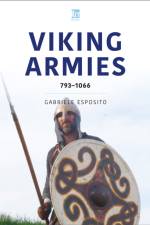
Tales of legendary Viking armies have stood the test of time, still capturing the imagination of historians today and giving a glimpse into the ferocity and tactical proficiency with which these warriors fought over 1000 years ago. In this book, Gabriele Esposito examines a period of 273 years and gives an overview of the histories of the different factions and incarnations of the Vikings, as well as their most famous campaigns and battles. Furthermore, their weapons, armour and clothing are brought to life through over 120 colour photographs of replica equipment in use by reenactment groups from across the world.
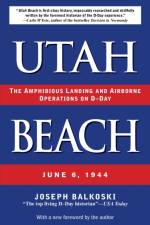
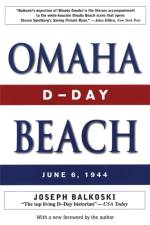
The Normandy Landings were the first operations of the Allied Powers' invasion of Normandy, also known as Operation Neptune and Operation Overlord, during World War II. D-Day for the operation, postponed 24 hours, became June 6, 1944, H-Hour was 6:30 am.
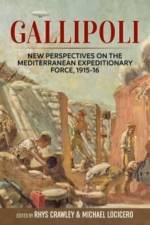
Explores various aspects of the Allied military effort to force a passage through the Dardanelles Straits and eliminate Ottoman Turkey from its Central Powers alliance.Generally conceded to be doomed from the outset by the most recent historiography, the Gallipoli campaign still arouses heated controversy. In a new compendium of original research by an impressive array of established and up and coming scholars, Gallipoli: New Perspectives on the Mediterranean Expeditionary Force, 1915-16 explores various aspects of the Allied military effort to force a passage through the Dardanelles Straits and eliminate Ottoman Turkey from its Central Powers alliance.Contributors and topics: Phylomena Badsey: Care giving and naval nurses; John Bourne: 7th North Staffordshire Regiment; Stephen Chambers: Prisoners of war; Alexandra Churchill: Evacuation of the peninsula; Jeff Cleverly: Suvla Bay landings; Rhys Crawley: Mediterranean Expeditionary Force Headquarters; Brian Curragh: Lieutenant-General Sir Bryan Mahon and 10th (Irish) Division; Peter Doyle: Gallipoli terrain; Katherine Swinfen Eady: 29th Division staff officer; Meleah Hampton: First Battle of Krithia; Peter Hart: Royal Naval Division; Simon House: Corps Expeditionnaire d'Orient; Gavin Hughes: Irish regiments; James Hurst: ANZAC landing; Rob Langham: Highland Mountain Brigade; Michael LoCicero: Krithia Nullah operations November-December 1915; Linda Parker: British and Australian chaplains; Ross Mahoney: British airpower; Simon Peaple: Grand strategy; Chris Pugsley: New Zealand military performance; David Raw: Hunter-Weston-Egerton feud; Chris Roberts: Australian brigade command; Rob Stevenson: 1st Australian Division; Tom Williams: Territorial divisions at Suvla Bay and Ritchie Wood & John Dixon: British and Australian tunnellers.
The first full-scale history of Theoderic and the Goths in more than seventy-five years, tracing the transformation of a divided kingdom into a great power
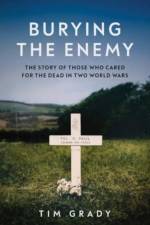
A fascinating and moving history of the British and German war dead buried on enemy soil in the two world wars
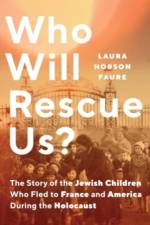
The first account of Jewish children’s flight from Nazi Germany to France—and their subsequent escape to America from the Vichy regime
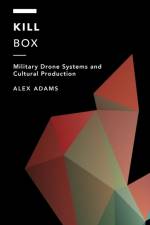
Drone warfare represents one of the most pressing moral and political problems of contemporary military ethics. Since the beginning of the American drone program in the late twentieth century, drone technologies have been used to conduct remote extrajudicial assassinations, to violate national sovereignty, and to conduct intrusive surveillance in contravention of international human rights norms, among other controversial uses. Today, military drones are used by dozens of military forces. As such, these technologies pose urgent questions which problematize well-established ways of thinking about central aspects of the ethics of warfare, such as justice, sovereignty, battlefield trauma, the political and physical limits of conflict, and, perhaps most prominently of all, the legitimacy of military violence. Though some of these concerns are well-worn, their central role in - and reconfiguration by - drone warfare means that they deserve serious reconsideration.Kill Box investigates this urgent conceptual territory through readings of the popular cultural productions that have emerged as a part of these debates, and reveals the ways in which narrative texts have been an integral part of the framing of these political and philosophical conversations. Examining well-known single-issue drone texts, such as Eye in the Sky, Good Kill, and The Drone Eats with Me, alongside lesser known texts, such as pulp novels, genre sci-fi, and Netflix thrillers, this new book shows us the surprisingly versatile and elastic ways in which drone discourse continues to be co-constituted by narrative entertainment.
This book explores the military events and diplomatic games in the later years of World War II through which Josip Broz Tito's Yugoslav Partisans resistance movement gained the support of the Allies and, eventually, control over Yugoslavia itself.
This book explores the rise of two resistance movements in Yugoslavia after its invasion and partition by Germany, Italy, Hungary, and Bulgaria in April 1941: one led by Draa Mihailovi¿'s Chetniks, supporters of the Serb monarchy; and the Partisans, led by Josip Broz Tito and his Communist Party.
Kawasaki, Sakade, Zimmerman, and their contributors examine the historical development of burden-sharing among the US and its allies after the Second World War, looking at examples from Western Europe and East Asia.
Balkoski is in top form in this groundbreaking analysis of the other half of America's D-Day.--Dennis Showalter, author of Patton and Rommel
Balkoski's depiction of 'Bloody Omaha' is the literary accompaniment to the white-knuckle Omaha Beach scene that opens Steven Spielberg's Saving Private Ryan. -- John Hillen, New York Post
An intimate look at Elie Wiesel, author of the seminal Holocaust memoir Night and recipient of the Nobel Peace Prize
Abonner på vårt nyhetsbrev og få rabatter og inspirasjon til din neste leseopplevelse.
Ved å abonnere godtar du vår personvernerklæring.