

















Gjør som tusenvis av andre bokelskere
Abonner på vårt nyhetsbrev og få rabatter og inspirasjon til din neste leseopplevelse.
Ved å abonnere godtar du vår personvernerklæring.Du kan når som helst melde deg av våre nyhetsbrev.

This collection of primary sources examines the history of emotions in the United States, spanning the years 1800-1865. This fascinating collection of materials, alongside extensive editorial commentary, will be of great interest to students of American History and the History of Emotions.
This book investigates the radical transformation of the relationship between Germany and France, neighbors whose border constituted one of the deepest fault lines of European history.
On War gathers together some of the finest writing on that troubling subject published in Raritan between 2003 and 2022. The editors, Jackson Lears and Karen Parker Lears, have selected work that typifies Raritan’s wide-ranging sensibility--focusing on a topic that is aesthetically rich, intellectually challenging, and morally disturbing. It is also all too timely.
'Nobody knows how much I owe that man', Primo Levi said of his Italian compatriot Lorenzo Perrone, who saved his life at Auschwitz. 'I could never repay him'. Each day for a period of six months, Perrone, who worked beside Auschwitz in desperate conditions, risked his own life to smuggle part of his own soup ration to Levi, quietly leaving the mess tin by a half-constructed brick wall. Without those extra five hundred calories, Levi could not have survived, and would probably not have written If This Is a Man, the first published account by a Holocaust survivor. In A Man of Few Words, Carlo Greppi pieces together the life of Lorenzo Perrone, a bricklayer from the Piedmontese town of Fossano, not far from Levi's native Turin. Near-destitute and with minimal formal education, Perrone left very few traces of himself. Yet despite their stark differences - Levi was a middle-class chemist - their friendship survived the Holocaust and continued until Perrone's tragic death. Levi never forgot Perrone. In every book he wrote, he mentions that he owes his life to a man named Lorenzo, and he returned persistently, in the last years of his life, to the man of few words who saved his life. Compassionate, worldly and prescient, Greppi brings us a story that has much to say about the world we live in today, about an individual who kept hope alive in one of the darkest times and places known to humankind.
The Eastern Front was where the war against Nazi Germany was lost and won. More people died there in the battles and destruction than all the other theatres put together. From the Arctic snows of Finland to the vast steppes of the Ukraine, the fighting took place in every sort of landscape and every weather condition: sub-zero temperatures that froze engines and weapons, mosquito-infested swamps, the raputitsa mud that brought mechanised armies to a halt, and the huge industrial cities that were fought over street by street and house by house. What was it like to fight there? Hitler's War of Extinction from the Eastern Fronttakes the reader into the thick of the battle lines in vivid colour. First-hand accounts from reports and diaries provide soldiers' insights to accompany the candid photos of life and death to provide an evocation of what it was like to fight for survival on the Eastern Front. Boasting more 250 original colour photographs, Hitler's War of Extinction: Rare German Colour Photographs shows the visceral nature of the battle between two intolerant ideologies that would leave upwards of 25 million servicemen and civilians dead.
Peter's book is part of the My Voice Project, a collection of firsthand accounts of Holocaust survivors and refugees from Nazi persecution who settled in the UK. Peter Mittler was born in Vienna and escaped to England on the Kindertransport. He became an authority in policy and provision for adults and children with intellectual disabilities. -- .
The Hundred Years' War is one of the most famous conflicts in British history, featuring such renowned battles as Crecy, Poitiers and Agincourt. It is a period littered with such legendary names as the Black Prince, Henry V and Joan of Arc, and a fascinating one for the development of warfare, weapons and armour. Gabriele Esposito puts the conflict in context with an overview of earlier Anglo-French conflicts and the roots of the dispute between the Plantagenet and Valois dynasties. He then devotes several chapters to giving a concise overview of the dramatic events of the war, before moving on to describe in detail the organization, tactics, weapons, armour and equipment of all the varied forces. Those drawn in by various alliances, such as Scottish, Spanish and Burgundian troops are not forgotten. He shows the evolution of warfare across the period, from the early dominance of the longbowmen over the French knights to the increasing importance of artillery in the Valois recovery. As usual for The Armies of the Past series, Gabriele Esposito's informative text is lavishly illustrated with colour photographs of replica weapons, armour and clothing in use.
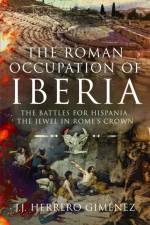
The area of Hispania, this being the Roman name for the Iberian Peninsula and its provinces, had a great influence on the development of the history of Ancient Rome. In part this was because some of Rome's main emperors, such as Trajan or Hadrian, politicians, including Lucius Cornelius Balbus the first consul of the Republic born outside of Italy, writers and poets like Martial or Lucanus, and philosophers, like Seneca, came from the Iberian Peninsula. It was also a consequence of the enormous commercial flow that existed between the colony and the metropolis, and because some of the events that took place in Hispania deeply marked Rome. For this reason, many of the main protagonists of its history, at some point in their lives lived, and fought, in Hispania, including such individuals as Sulla, Pompey, Julius Caesar and Augustus, among many others. Iberia became a battleground between Rome and Carthage in the Second Punic War, followed by the endless bloody struggle against the Iberian and Celtic tribes that turned Hispania into a kind of Vietnam for the Romans. It was also the scene of bitter fighting during the Civil Wars that led to the end of the Republic and the beginning of the Empire, with the great battles between Julius Caesar and the sons of Pompey, as well as the final defeat of Quintus Sertorius who had held out in Spain for over a decade. There was also three years of struggle by the Emperor Augustus trying to quell the revolts of the Cantabrian tribes. Lastly, Spain, as with other parts of the Empire, had to battle the barbarian incursions. Those by the Mauri came from the south, while from the north poured the Goths. At first, they became foederati of the Romans, fighting for the Empire in exchange for land, but when Rome ended up collapsing, the Goths occupied the space of power left by the Romans. This, though, did not mean the disappearance of the Hispano-Romans, but rather that they began to collaborate with the new occupiers of Hispania, and their influence and legacy can still be felt today. This is seen not only through its language and culture, but also through a multitude of public works and an enormous amount of historical heritage that we can still enjoy.
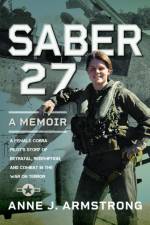
Captain Anne "Chichi" Armstrong, a newly minted AH-1W SuperCobra attack helicopter pilot in the United States Marine Corps, dreamt of flying in combat after living through the terrorist attacks on the Twin Towers a decade earlier. Eager to "make it", especially after her struggles in flight school, she can think of no greater challenge, and reward, than flying her Cobra over the skies of Afghanistan. When a chance opportunity to fight, and fly, in Helmand Province is suddenly offered, Chichi eagerly accepts. She spends six months in Camp Leatherneck behind a desk in a plywood office writing the Air Tasking Order flight schedule. Despite her initial frustration, she begins to enjoy her time deployed. Even better, she flies with the skid squadrons in-country, finally realizing her dream of becoming a combat attack helicopter pilot. She's made it. Or so she thinks. Chichi returns to her parent squadron fresh from combat and eager to progress her flight qualifications, only to realize she's been blacklisted for abandoning them - she's not the priority and will never get a chance to fulfil her true potential. Ten months after returning Stateside, Chichi volunteers to return to Afghanistan. Chichi quickly re-establishes her combat lifestyle working in yet another plywood office. She fights her way back into the cockpit and flies enough to earn the prestigious Air Medal. Mid-deployment, a British Royal Navy officer joins her shift who she falls for fast, making her reevaluate what really matters in life. Before she leaves the desert, they decide to pursue a long-distance relationship, motivating her to begin the painful process of clearing the skeletons out of her closet that she hasn't acknowledged for years. But when she stops denying her past, will her dark truth ruin both her career in the military and her future with her beloved?
This book reappraises the origins of the European Union through the lens of the private experts who advised Western governments on war and peace throughout the 1940s, particularly the partnership between the so-called "Father of Europe" Jean Monnet and the US think tank Council on Foreign Relations.
The Political Psychology of Social Unrest in Latin America is a unique collection of research and writings by Latin American scholars. It explores the social, psychological, and political factors of the recent turmoil in Latin American countries.
Known as a time of revolutions in science, the early modern era in Europe was characterized by the emergence of new disciplines and ways of thinking. Taking this conceit a step further, Sacred Habitat shows how Spanish friars and missionaries used new scholarly approaches, methods, and empirical data from their studies of ecology to promote Catholic goals and incorporate American nature into centuries-old church traditions. Ran Segev examines the interrelated connections between Catholicism and geography, cosmography, and natural history-fields of study that gained particular prominence during the sixteenth and seventeenth centuries-and shows how these new bodies of knowledge provided innovative ways of conceptualizing and transmitting religious ideologies in the post-Reformation era. Weaving together historical narratives on Spain and its colonies with scholarship on the Catholic Reformation, Atlantic science, and environmental history, Segev contends that knowledge about American nature allowed pious Catholics to reconnect with their religious traditions and enabled them to apply their beliefs to a foreign land. Sacred Habitat presents a fresh perspective on Catholic renewal. Scholars of religion and historians of Spain, colonial Latin America, and early modern science will welcome this provocative intervention in the history of empire, science, knowledge, and early modern Catholicism.
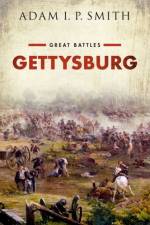
Gettysburg provides an engaging and succinct overview of why the battle of Gettysburg happened, its outcome and why it mattered. It explains why Gettysburg is the most "famous" battle of the American Civil War, and which, it is often said, was the "turning point" of the war.
In the long nineteenth century, officers were held as prisoners of war, but it meant pawning personal honour in exchange for freedom of movement and other privileges-in-captivity. Jasper Heinzen investigates how captives, statesmen, and humanitarians understood honour in this context, and the implications on our understanding of early modern war.
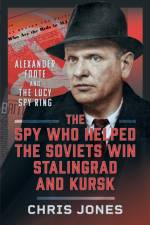
In his short life, Liverpool-born Alexander Foote went from being a volunteer in the International Brigade in Spain to becoming an agent of Soviet military intelligence in Switzerland. Pretending to his friends that he was a dim-witted Englishman with private means, Foote became the key telegraphist of the so-called 'Red Three' network of radio stations, communicating top secret German intelligence to the USSR from under the noses of the Swiss authorities. The information from Foote's Morse key originated from sources in Germany and came to Foote via the enigmatic figure of Rudolph Rossler, known as Agent Lucy. Where he obtained the information from is a mystery that has never been solved. During the battles of Stalingrad and Kursk, Soviet generals came to depend on the information from Foote's transmitter and those of his comrades. On his release from a ten-month remand in a Swiss gaol on an espionage charge, Foote absconded to Paris in 1944 before being invited for debriefing in Moscow. When he arrived, he became aware that he was under suspicion of being a British spy and it took all his wit to talk his comrades in Soviet intelligence out of sending him to the gulag: a fate that waited for many of the others in his Swiss network. Disillusioned with life in the USSR, Foote approached British intelligence while he was on a Soviet mission in Berlin. He made them an offer: if they got him back to Britain he would tell them all he knew about Soviet intelligence, from the inside. This is his story.
Hillforts in modern day Britain occupy often, but not always, isolated, windswept locations on the edge of modern day society. For the Iron Age tribes of that turbulent period 2-3000 years ago, hillforts or defended settlements were built for a number of reasons, they were seen as a statement of wealth and power by local chiefs and warlords, places of refuge for the local population in times of need as well as meeting points for trade, markets and religious festivals. With the advent of aerial drone photography these obscure locations are brought to life spectacularly from above to provide an unparalleled view of the subject matter. The Iron Age Dobunni Tribe occupied the modern day counties of Gloucestershire, Somerset, Wiltshire, Oxfordshire, Worcestershire and Herefordshire in the centuries leading up to the Roman invasion of AD 43. The different types, classifications and construction of hillforts are explained with aerial photographs illustrating these differences. Questions are answered on who were the Dobunni tribe and where did they come from, what social structure existed and what were their religious beliefs. This new, fully illustrated study puts forward a thesis to establish the frontiers of the tribal area using local topography and the location of hillforts. A chapter is given over to each county with individual hillforts discussed as to their location, structure, type and classification, myths and excavated finds. For each hillfort there are what3word locations on where to park, Ordnance Survey six figure map references, information on the length of walk in kilometres and a grading of the difficulty of the walk, making this book essential reading for historians, tourists, and photographs enthusiasts alike.
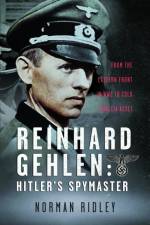
Eleven years after Reinhard Gehlen, the head of Adolf Hitler's Eastern Front military intelligence unit, emerged from hiding to hand himself over to US forces, he had, with the help of the American CIA, created a legend for himself as founder and first president of the West German Secret Service. In this role he employed many of the same Wehrmacht and SS officers he had served with during the Second World War. All through the steady progression of his career before and during the Second World War, Gehlen had been far too industrious and committed to court the limelight. Then after the defeat of Germany, when he transferred his allegiance to the CIA and later became head of the Bundesnachrichtendienst, he became a man whom Hugh Trevor Roper's described as someone who 'always moved in the shadows'. For some, the German intelligence network that Gehlen had controlled since 1942, was part of an unbroken tradition going back to the days of Bismarck. For a great many in Gehlen's organisation the Cold War was merely an extension of an anti-Soviet campaign that had begun on 22 June 1941, when Hitler launched Operation Barbarossa. After the war, Gehlen had emerged unscathed from Hitler's bunker and no war crimes charges were ever brought against him. His name, and those of 350 of his Wehrmacht command, were redacted from the official lists of German prisoners of war. Gehlen protected and employed men like Heinrich Schmitz who had been part of Einsatzgruppe A, the murder squad that massacred so many, including communist functionaries and Jewish women, men and children, in the Baltic States. Though Gehlen had remained loyal to Hitler right to the end, once state authority collapsed he wasted little time in making contact with the Americans and offered to place his vast intelligence resources at their disposal in the new fight against Soviet communism. While German generals Heinz Guderian and Franz Halder placed great store by Gehlen's reports on the tactical level, Hitler called them 'defeatist' and gave them barely a glance when making his disastrous strategic decisions. Allen Dulles, head of the CIA, did not repeat Hitler's mistake, but Gehlen deeply resented the way that his reports to Dulles were mishandled. It became Gehlen's ambition initially to head up a completely independent West German foreign intelligence service. However, it was not until 1951 that talks to establish a West German intelligence service at federal level began. In the immediate post-war years, Gehlen tirelessly made his case to defend the harbouring of former Wehrmacht and SS personnel in his organisation and battled to prove his worth to the Americans. This book looks at Gehlen's life from his early career in the chaos of Weimar, through his elevation to General Staff intelligence officer on the Russian Front. It describes how he survived the defeat of the Third Reich and offered himself to the Americans as a foil against the Soviet Union in the Cold War. In doing so it closely examines Gehlen's record to separate fact from his self-serving fictions.
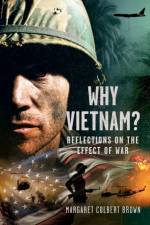
The reasons behind the USA's involvement in Vietnam remain a subject of extensive debate. Initially, America supported the French until their defeat at Dien Bien Phu, which then shifted to backing the South Vietnamese government due to fears of communism spreading throughout Southeast Asia. Why Vietnam delves into the myriad reasons for US involvement, examining theories that date back to 1918 when Woodrow Wilson ignored Ho Chi Minh's plea for independence at the Treaty of Versailles, through to Johnson's full commitment to the undeclared war, which restrained the military to a defensive role in protecting South Vietnam instead of an offensive one that would send troops across the DMZ into Laos and Cambodia. The questions of why the USA became involved, whether their involvement was justified, and if the war was ever winnable have been fiercely debated for over 50 years. This book seeks to address these 'whys' by providing a thorough examination of all contributing factors, from presidential actions to foreign policy, and the social and political climates of the war era.
Vietnam's War of Hate recounts what returning from Vietnam was like for the author in 1969, proud of his combat service and proud of his Delta Company brothers. As a draftee who was discharged from the Army five months early with shrapnel a couple inches from his heart, Trewyn knew he was lucky to be alive. Inconceivably, five months later he was ready to go back to Vietnam. Dying with brothers in war looked better to him than living with haters in America while going to college in the anticipated refuge of his childhood hometown. This book is about his struggles trying to understand the animosity toward Vietnam veterans in the United States back then. The magnitude was overwhelming. It also documents the evolution of my knowledge about the war overall and his battles against the common, inaccurate representations of the largely honorable and valorous soldiers who deployed to Southeast Asia. It took Trewyn over thirty years to feel welcome in America, to experience a homecoming commensurate with the sacrifices made. Unfortunately, the erroneous portrayal of U.S. forces in Vietnam persists in popular culture and in the conventional wisdom of far too many Americans. The image of those who served remains tainted to this day including, most tragically, perception of the 58 thousand men and 8 women who died in Vietnam. Pride in their service to America was stolen from them by America. It was ripped from the hearts of their loved ones. Vietnam's War of Hate describes the authors arduous journey entangled in this awful saga. Its causes are exposed along the way. Alarmingly, America is once again experiencing the type of strife and convulsions that he came home to in 1969. The bitterness and polarization of that period have resurfaced. Thus, the long trek charted in this book offers both timely and enduring lessons for our current era.
The Red Fox of Colditz recounts the tale of Lt AM Sinclair KRRC, from his capture post-Calais' fall in May 1940 to his demise in September 1943 while attempting an escape from Colditz Castle, the notorious prison camp for tenacious escape artists. He was WWII's most prolific British escapee, enjoying more freedom in occupied Europe than any other, yet never completing a successful 'home run' to his dismay. His most famous escape attempt involved impersonating a red-haired German guard commander, complete with a notable moustache, resembling Emperor Franz Joseph-a feat inaccurately credited to the Senior British Officer in the film 'The Colditz Story'. After extensive preparation, Sinclair, in disguise alongside two prisoners in German uniforms, rappelled from a window, replacing the sentries. However, their plan was foiled when a soldier at the moat gate sounded the alarm. Amidst the chaos, Sinclair was shot but recovered. Despite six escape attempts from Colditz, reaching the borders of Switzerland and Holland, he never achieved his objective of returning to England for active service. Tragically, in September 1944, he discovered the deaths of his younger brother at Anzio and his friend and escape partner, Ronnie Littledale, in Normandy. In a final, desperate attempt to rejoin his Regiment and contribute to Germany's defeat, Sinclair chose to mimic Maurice LeBrun's successful park escape. On September 25, 1944, cloaked in an overcoat to hide his civilian attire and declining his close friend Gris Davies-Scourfield's offer of companionship, Sinclair merged with the prisoners heading to the park. Once settled, he discarded his overcoat, dashed to the perimeter wire fence, and started climbing. Disregarding the German sentries' 'Halt' commands, he clambered over the fence and fled amid gunfire, one bullet striking his elbow and ricocheting into his heart, killing him instantly. Days later, he received a burial with full military honors in the local cemetery, attended by officers from Colditz on parole and several German guards. As Sinclair's possessions were gathered for his family, a hidden note was discovered: "I take full responsibility. Safe home to you, all you good chaps." For his numerous valiant escape attempts and determination to return to active service, Sinclair was posthumously awarded the Distinguished Service Order (DSO).
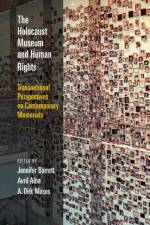
Spanning six continents-Europe, Australia, Africa, Asia, North America, and South America-this edited collection offers a comparative, transnational study of Holocaust and human rights museums that foregrounds the overlapping and often contested work these institutions do in narrating and memorializing histories of genocide and human rights abuses for a public audience. Museums that link the Holocaust with social justice, human rights, and genocide prevention have been founded in many countries-for example, the Kazerne Dossin Memorial Museum in Belgium, the Anne Frank House in the Netherlands, and the Johannesburg Holocaust and Genocide Centre in South Africa-making Holocaust and human rights museums a global phenomenon. It is not uncommon for these institutions to court controversy by linking the Holocaust to human rights issues in their locales and abroad. Some begin from a "Holocaust core" and extrapolate from this history to address broader concerns, while others integrate the Holocaust as "a" or, at times, "the" case study par excellence of human rights abuses. Other institutions that may not explicitly focus on the Holocaust continue to engage these representational practices to highlight other instances of genocide and human rights abuses.The case studies in this book illuminate the convergences between Holocaust and human rights museums in their demands for social justice and reparation, educational and activist purpose, design principles, and curatorial choices. But it also shows how these museums can also be sites of contestation around how stories of suffering, courage, and survival are told; whose stories are prioritized; and who is consulted. Although Holocaust museums were once the most influential form of representation of human rights issues in the international museum and heritage fields, they are now in dialogue-visually, spatially, methodologically-with museums and memorial sites concerned with human rights more broadly. Interrogating debates in both museology and Holocaust memory studies, this volume reveals how institutions dedicated to these concerns have become active and influential contributors to local, national, and transnational dialogues about human rights.Contributors: Avril Alba, Brook Andrew, Jennifer Barrett, Jennifer Carter, Danielle Celermajer, Steven Cooke, Donna-Lee Frieze, Shirli Gilbert, Sulamith Graefenstein, Christoph Hanzig, Vannessa Hearman, Rosanne Kennedy, Marcia Langton, Edwina Light, Wendy Lipworth, A. Dirk Moses, Tali Nates, Jessica Neath, Michael Robertson, Amy Sodaro, Garry Walter.
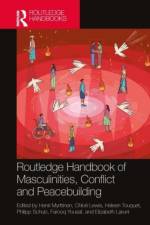
This handbook broadens and engages with current debates on men and masculinities in conflict and peacebuilding.
Famous throughout history for their doomed stand at Thermopylae, and immortalised by contemporary Athenian writers who viewed them as the exotic other, the Spartans, and their brutality and bravery, both fascinate and appal us. Andrew Bayliss reveals the best and the worst of this harsh society, separating myth from reality.
Abonner på vårt nyhetsbrev og få rabatter og inspirasjon til din neste leseopplevelse.
Ved å abonnere godtar du vår personvernerklæring.