












Gjør som tusenvis av andre bokelskere
Abonner på vårt nyhetsbrev og få rabatter og inspirasjon til din neste leseopplevelse.
Ved å abonnere godtar du vår personvernerklæring.Du kan når som helst melde deg av våre nyhetsbrev.

Exploring Outremer Volume I is a collection of 14 original essays by the leading scholars in the field on the history and archaeology of the Latin East.
This book analyzes the process by which Mussolini built the world's first Fascist regime, describes how the Duce's heirs have adapted to current political conditions, and how they have gone mainstream.
The Service du Travail Obligatoire (STO), or the Compulsory Work Service, program remains one of the most unsettling features of France's history in World War II. Established by the Vichy government in 1943, this initiative saw young men provide forced labor, primarily within France or Germany, in support of the Third Reich's war effort. In this illuminating translation of the journal of Jean Louis Mary Pasquiers, a former teacher and forced laborer from Paris, Passing Misery documents Pasquiers' life within war-torn Europe, in unwilling service to the Nazi regime. By exploring Pasquiers' personal story, this book offers an unrivalled insight into the complexities of war-time collaboration, resistance, and moral culpability, shedding light on one of the darkest chapters in European history.
In a fast-paced narrative of soaring ideals and sordid politics, of civil war and foreign invasion, the award-winning historian Alan Taylor presents a pivotal twenty-year period in which North America's three largest countries-the United States, Mexico, and Canada-all transformed themselves into nations. The American Civil War stands at the center of the story, its military history and the drama of emancipation the highlights. Taylor relies on vivid characters to carry the story, from Joseph Hooker, whose timidity in crisis was exploited by Robert E. Lee and Stonewall Jackson in the Union defeat at Chancellorsville, to Martin Delany and Mary Ann Shadd Cary, Black abolitionists whose critical work in Canada and the United States advanced emancipation and the enrollment of Black soldiers in Union armies.The outbreak of the Civil War created a continental power vacuum that allowed French forces to invade Mexico in 1862 and set up an empire ruled by a Habsburg archduke. This inflamed the ongoing power struggle between Mexico's Conservatives-landowners, the military, the Church-and Liberal supporters of social democracy, led ably by Benito Juarez. Along the southwestern border Mexico's Conservative forces made common cause with the Confederacy, while General James Carleton violently suppressed Apaches and Navajos in New Mexico and Arizona. When the Union triumph restored the continental balance of power, French forces withdrew, and Liberals consolidated a republic in Mexico.Canada was meantime fending off a potential rupture between French-speaking Catholics in Quebec and English-speakers in Ontario. When Union victory raised the threat of American invasion, Canadian leaders pressed for a continent-wide confederation joined by a transcontinental railroad. The rollicking story of liberal ideals, political venality, and corporate corruption marked the dawn of the Gilded Age in North America.
This book surveys the history of concentration camps from their beginnings in colonial warfare to the present, but it questions facile assumptions about their origins.
Ang describes the development of the Five Power Defence Arrangements (FPDA), an important security regional arrangement, from its inception to the present from the perspectives of the five FPDA allies.
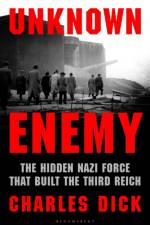
Adolf Hitler described the Organisation Todt as 'the greatest construction organisation of all time'. In 1945, British intelligence credited it with having carried out in little over five years 'the most impressive building programme since Roman times'. It was from this organisation, headed by Albert Speer, that Hitler enlisted the nation's leading engineers and architects to build his empire. In time, it became an indispensable partner to the SS and the Wehrmacht and led to the deaths of millions.In Unknown Enemy, Charles Dick reveals for the first time the full extent of the Organisation Todt and its long arm across Europe and the Reich. In wartime, its operations relied mainly on Germany's slave labour system, the largest such exploitation of foreign labour since the end of the Transatlantic Slave Trade - and one in which millions of civilians, Jews and prisoners of war lost their lives. Dick takes us inside the OT's vast building projects throughout German-occupied Europe, from the Arctic circle to the Balkans and deep into what the Third Reich termed its 'eastern Lebensraum', to tell the story of how engineers and builders - so-called 'ordinary men' - perpetrated some of the gravest war crimes under its banner.Despite its extensive network, the Organisation Todt largely managed to slip under the radar of war prosecutors after Germany's defeat. Drawing on extensive new research, first-person accounts and survivor testimony, Unknown Enemy finally unearths its dark story.
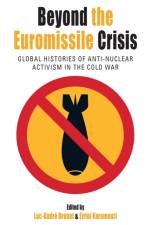
Historical consensus views the Euromissile Crisis of the early 1980s as "the last battle of the Cold War." In this illuminating re-examination of this multifaceted campaign, Beyond the Euromissile Crisis broadens our understanding of anti-nuclear activism, highlighting how it remains a truly global phenomenon. Investigating the motivations, forms of action, and accomplishments of activists from South Africa, Polynesia, Brazil and elsewhere, this volume offers new ways of conceptualizing the chronology of anti-nuclear protest.
This book uncovers many hidden facts and untold stories of the Fleet Air Arm (FAA), shedding light on its remarkable history, much of which has not been widely published. It offers a concise yet vivid account of how the Royal Navy's Air Service (RNAS) evolved over the years, shaped by over a century of political manoeuvring and its long-standing rivalry with the Royal Air Force. Even today, the FAA continues to operate in the shadow of the RAF, as seen in the ongoing developments surrounding the Queen Elizabeth class aircraft carriers and the F-35B aircraft they now carry, frequent subjects in the media. Few know that the last serviceman to die in the Second World War was an FAA pilot, shot down over Japan at the very end of the Pacific conflict. While FAA victories such as Taranto and the Falklands are well known, it may surprise readers to learn that the FAA briefly flew Lancasters in 1946. And in the Gulf War, FAA Westland Lynx helicopters made history by virtually wiping out Iraq's navy using Sea Skua missiles, the first time seaborne helicopters achieved such a feat. This book also features the most comprehensive post-1945 timeline of the FAA, a reflection of the decline of Britain's maritime power over recent decades. Enriching the narrative are personal anecdotes from FAA personnel, highlighting their bravery, dedication, and sacrifice in the line of duty.
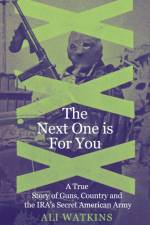
Northern Ireland, 1975. Violence has erupted on the streets of Belfast. After years as a sleepy, guerilla army, the IRA is clashing with Loyalist gangs and heavily armed British soldiers. But the Troubles have spilled beyond the small island: An ocean away, in the heart of Philadelphia's Irish enclave, a teenage girl finds a letter in her mailbox. Inside is a bullet, and the message is clear: The next one is for you or your family. From New York Times reporter and Pulitzer finalist Ali Watkins, this true-crime saga is the long-buried story of how a group of Philadelphia gunrunners armed the IRA at the height of the Troubles. A ragtag band of carpenters, family men and fugitives, the Philadelphia Five, as they came to be known, banded together, bolstering the fight for a united Ireland but fuelling the Troubles at an untold cost. This small group of Irish nationalists smuggled hundreds of rifles, rocket launchers, explosives and armour-piercing bullets across the Atlantic Ocean and into Northern Ireland. Whether they were skimming money from innocuous-seeming charities, coolly slipping weapons into hidden compartments of vans and houses, or scouring local graveyards for the names of dead Irishmen to use on firearm forms, the gunrunners approached their mission -to unite Ireland under one flag, by any means necessary -with ruthless poise, even as investigators closed in, members of their own movement began to turn on them, and bodies stacked up on all sides. A gripping tale of crime, rebellion and the hazy line between them, The Next One Is for You is the definitive account of America's hand in the Troubles - a conflict whose resonance is still felt on both sides of the Atlantic today.
Working in Europe, across enemy lines in occupied China and in Washington D.C., Betty, Zuzka, Jane and Marlene forged letters and 'official' military orders, wrote and produced entire newspapers, scripted radio broadcasts and songs and even developed rumours for undercover spies and double agents to spread to the enemy.
Abonner på vårt nyhetsbrev og få rabatter og inspirasjon til din neste leseopplevelse.
Ved å abonnere godtar du vår personvernerklæring.