



Gjør som tusenvis av andre bokelskere
Abonner på vårt nyhetsbrev og få rabatter og inspirasjon til din neste leseopplevelse.
Ved å abonnere godtar du vår personvernerklæring.Du kan når som helst melde deg av våre nyhetsbrev.

Enriching the existing scholarship on this important exhibition, Italy at Work: Her Renaissance in Design Today (1950-53), this book shows the dynamic role art, specifically sculpture, played in constructing both Italian and American culture after the Second World War.
How Dutch violence of war during 1945-1949 was discussed, concealed, passed on, manipulated and used politically.
One of the most difficult security challenges of the post-Cold War era has been stabilizing failing states in an era of irregular warfare. A consistent component of the strategy to address this problem has been security force assistance where outside powers train and advise the host nation's military. Despite billions of dollars spent, the commitment of thousands of advisors, and innumerable casualties, the American efforts in Afghanistan and Iraq failed catastrophically. Nevertheless, among those colossal military disasters were pockets of success. The Iraqi Special Operations Forces (ISOF) held back the Islamic State in 2014 long enough to allow American and allied forces to flow back into the country, and many Afghan commando units fought to the bitter end as their country disintegrated around them. What made those units successful while the larger missions ended disastrously? Author Frank K. Sobchak explores security force assistance across five case studies, examining what factors were most critical for U.S. Special Forces units to build capable partners like the ISOF and the commandos. More specifically, the book assesses the impact of five components of Special Forces advisory missions: language training and cultural awareness of the advising force; the partner force-to-advisor ratio; the advisors' ability to organize host-nation forces; whether advisors are permitted to guide in combat; and the consistency in advisor pairing. Based on the experiences of U.S. Army Special Forces in El Salvador (1981-1991), Colombia (2002-2016), the Philippines (2001-2015), Iraq (2003-2011), and Afghanistan (2007-2021), Sobchak argues that the most crucial factors in producing combat-effective partners are consistency in advisor pairing and maintaining a partner force-to-advisor ratio of twelve special forces soldiers advising a company-sized force or smaller. Intriguingly, and counter to conventional wisdom, at first glance language training and cultural awareness do not seem to be critical factors, as most of the Green Berets that trained units in Iraq and Afghanistan lacked both capabilities. Despite an orthodoxy that argues the opposite, there is little evidence that combat advising is decisive in producing effective partners and there is conflicting evidence that language training and cultural awareness are important. Many of these findings, while focused on Special Forces operations and doctrine, could be used to improve the odds of success for larger security-force assistance missions as well.
In February 1534, Franz von Waldeck, the Catholic Bishop of Münster, alarmed by the rise of an Anabaptist enclave in the city, initiated a siege that would last for sixteen brutal months. This stronghold, led by fervent believers who viewed Münster as the 'New Jerusalem', resisted the bishop's forces with unwavering resolve. Amidst religious turmoil and shifting political allegiances, the Anabaptists fortified the city, repelling numerous assaults and withstanding starvation, disease, and internal strife.In A Mighty Fortress of God, the siege comes to life through the vivid accounts of contemporary witnesses and detailed historical research. Readers are taken step by step through the critical phases of the siege: the construction of earthworks, the organization of defenses, and the increasingly desperate attempts by both sides to break the deadlock. From the failed attacks of 1534 to the dramatic betrayal that finally led to the collapse of the Anabaptist defense in June 1535, this account illuminates a key moment in Reformation-era history. The book also explores the motivations, leadership, and ideologies of both the besiegers and the besieged, offering an unparalleled insight into the complexities of the Anabaptist movement and its tragic end in Münster.The text is supplemented by specially-commissioned artwork of clothing and flags, as well as detailed appendices providing, amongst other things, the Bishop's Articles of War, and details of the costs of the siege.
This book combines social science concepts, history, and transitional justice studies to examine the social dynamics, specific actors, and ideologies involved in the genocide in Rwanda, and examines what makes this genocide a unique case of mass violence and political transition compared with other cases of mass violence.
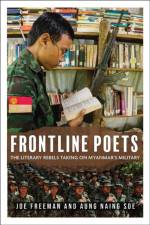
Combining poems by contemporary Burmese poets along with their life stories. The book demonstrates the power of the written word and is both a parallel story of Burmese political turmoil and the life-affirming power of literature.
This book improves our understanding of battlefield coalitions, providing novel theoretical and empirical insight into their nature and capabilities, as well as the military and political consequences of their combat operations.
This volume helps us understand the transformations of terrorist organisations, as well as the conflicts they are involved in, by broadening the perspective on what is considered terrorist learning.
This book explores unit cohesion in ancient armies using military and social approaches, and how this contributed to the making of war in the Mediterranean world. Suitable for students and scholars of ancient warfare, military history, and military studies.
The book attempts to deconstruct the monolithic regional-level approach through a methodical study of Central European states. It will be useful for scholars and interested individuals who want to understand why and how individual states in the region participate in NATO and EU security and defence initiatives and policies.
In the late-nineteenth and early-twentieth centuries, Japan, China, Tsarist Russia and later the USSR, vied for imperial dominance in Northeast Asia. They contested and adopted many of the physical and rhetorical features of Old-World imperialism, mitigated by domestic political forces and deeply ingrained cultural and historical values.
This book examines the ways in which American habits and politics replaced the traditional European republican canon.
This book brings together Vilém Flusser and intellectual Jewish history of the second half of the twentieth century. Flusser is viewed today by many scholars as the most original theoretician of media and photography in the second half of the twentieth century, and yet this is the first monograph about him in English.
Abonner på vårt nyhetsbrev og få rabatter og inspirasjon til din neste leseopplevelse.
Ved å abonnere godtar du vår personvernerklæring.