



Gjør som tusenvis av andre bokelskere
Abonner på vårt nyhetsbrev og få rabatter og inspirasjon til din neste leseopplevelse.
Ved å abonnere godtar du vår personvernerklæring.Du kan når som helst melde deg av våre nyhetsbrev.

The American battalion was trapped, under siege and under fire, and one man was their best, last hope.Delivery Man: The Enemy-Alien Nisei Translator Who Saved His Battalion in World War II is the suspenseful, tragic and true story of a combat translator in a pioneering American special operations force, sent into the heart of a forgotten jungle war in which he fought soldiers of his own ancestry and put his life on the line to save hundreds of his brothers. U.S. Army Sgt. Roy Matsumoto was born in Los Angeles and lived for seven years in Hiroshima. His family remained in Japan in 1929, when he returned to Southern California alone and took a job delivering groceries. Like all Japanese-Americans, Roy’s life was upended by Japan’s attack on Pearl Harbor, followed by his internment by his own country – first at the Los Angeles horse-racing track on which Sea Biscuit had triumphed two years before, and then at another concentration camp in Arkansas. In exchange for his freedom, Roy volunteered to join the U.S. Army, which trained him and sent him into northern Burma. That’s where the American commando force known as Merrill’s Marauders braved a malarial jungle to engage a tenacious enemy force on a winning streak. Though contact with his family in Japan would be impossible for the duration of the war, Roy took comfort that their home city of Hiroshima, sheltered by an inland sea, was considered relatively safe from attack.
'My name is Renee Salt. I am 94 years old, I am a witness to history. I am a survivor.This is my attempt to make sense of a story which I can scarcely believe happened to me. Some of these pages are drenched in horror, but every so often a little light of hope and humanity shines through.There is love, too - so much love.'Renee and her mother Sala never left each other's sides. From invasion to liberation, September 1939 to April 1945, as Renee was marched, herded and shoved from ghetto to camp, there was one constant. One hand which clutched hers - her mother's. Every day for six years, mother and daughter were tangled together in hell. From ghettos to slave labour, from Auschwitz to Bergen-Belsen, they were a powerful source of solace and hope to one another. Renee knows that she is only alive today because of her mother, that it was the sheer force and power of her love that gave them both something fragile but beautiful to cling to in an ugly, depraved world. It was her mother who hid her, lied to the SS, went right when she was directed left - whose small actions had lifesaving consequences. Now, for Renee, the need to share has finally overcome the desire to forget. This is a love letter to a mother eighty years in the making.
Bu and her contributors illustrate the complexity of tensions and negotiations in the development of different types of public health systems in Asia during the early Cold War. An essential read for historians and policy-makers of public health, and historians of Asia during the Cold War.
This book presents the first large overview of late Soviet religiosity across several confessions and Soviet republics, from the 1960s to the 1980s.
This volume explores how the Cultural Cold War played out in Africa and Asia in the context of decolonization. Both the USA and the Soviet Union as well as East European states undertook significant efforts to influence cultural life in the newly independent, postcolonial world.
Through a microscopical lens, the book delves into the lives of some of the migrants linked to the Agata, either as members of the crew -a ship, after all, is a moving workplace-, as passengers, or as people sending letters through the ship.
Half of the book is a detailed description of three battles fought over four days in the Rhineland south of Goch between 27 February and March 2 1945. The other half of the book is an analysis of the units and involved. This book's fully documented and researched conclusions provide a new and controversial interpretation of 21 Army Group.
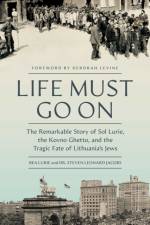
The remarkable story of Sol Lurie, a child survivor of six concentration camps during the Holocaust, who continues to be a beacon of hope.After a bucolic childhood in Kovno, Lithuania, Sol was just eleven when the Nazis invaded and he and his family were forced to move into the Kovno Ghetto. The Kovno Ghetto was one of the only ghettos to later become a concentration camp, and Sol was among just a few Jewish survivors from Kovno. In this inspiring story of tenacity, character, faith, love, and forgiveness, we follow young Sol through heartbreak and fear, torment and tortue. Through Sol's eyes, we learn the history of the communities in Eastern Europe, especially Lithuania, which has long been a gap in the wider history of the Holocaust. Along the way, we meet the righteous few who helped save young Sol's life. After being imprisoned in six other concentration camps for a total of four years, Sol was liberated from Buchenwald on his 15th birthday. To this day, he still joyfully celebrates every year the day he was born and liberated. Miraculously, Sol’s three brothers and his father also survived the Holocaust. Despite the horrors of youth, Sol never lost his determination to live life to the fullest. He embarked on a new life in the United States and would thrive as a husband, father, grandfather, business owner, and an inspiration for the thousands of schoolchildren and adults who have heard Sol share his incredible tales of survival and the positive lessons he has learned from the most horrific of experiences We can all learn from Sol at a time when divisiveness reigns. Despite all that he suffered and the death of his mother and nearly all his very large extended family, Sol’s courage and positive attitude continues to inspire as he actively seeks out and see the good in others. He wholeheartedly believes in bashert, a Yiddish word that means destiny, which gave him his “mission to educate others to love, not to hate.” Life Must Go On! is a moving and vital new addition to the history of the Holocaust and chorus of surivor stories that resonate throughout the generations.
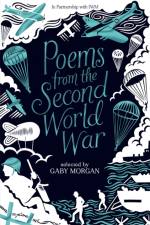
A collection of poetry from the Second World War, published in association with Imperial War Museums.
This book examines the historical experiences of LGBTQ+ individuals facing discrimination in the early 20th-century military before same-sex acts were explicitly illegal.
The Military Orders Volume VIII, organised around five thematic axes - interactions, administration, religion, perceptions, and approaches - offer broad coverage in terms of geographical variety, chronological spread and thematic focus, as well as a wide variety of approaches and methodologies.
This book explores the why and the how of women's participation in armed struggle, and challenges preconceived assertions about women and violence, providing both a historic and a contemporary focus.
The chapters always have more than one dimension: they speak of interrelation, entanglement, collaboration, diffusion, in general, put the different dictatorships (essentially: Francoism, diverse Fascisms and Communism) in context and comparison.
The intended audience includes readers at the graduate level in the fields of history, political science, and anthropology, general readers interested in the history of communism. It is hoped that research questions inspire new research for exploring convergent and divergent elements in social transformation in former communist countries.
Contributors to this book provide an Asian women's history from the perspective of gender analysis, assessing Japanese imperial policy and propaganda in its colonies and occupied territories and particularly its impact on women.
Holocaust vs. Popular Culture debates and deconstructs the binary responses to the representation of the Holocaust in European and non-European forms of Popular Culture.
Exploring Outremer Volume II is a collection of 15 original essays by the leading scholars in the field on the history and archaeology of the Latin East.
This volume of essays inspired by that conference, suitable for students, researchers, and anyone interested in Cold War culture, makes vital contributions to understanding Bond as a global phenomenon, across traditional divisions of East and West, and beyond the end of the Cold War from which he emerged.
An Archaeologist in Rome at the Service of the Order presents the so far completely unknown letters between the Grand Masters (Alof de Wignacourt, Luís Mendes de Vasconcellos, Antoine de Paule) and Antonio Bosio.
This volume offers a broad overview of the conditions, motives, and practice of violence during the most prominent intra-state conflicts in Europe during the first half of the 20th century.
This volume offers a broad overview of the conditions, motives, and practice of violence during the most prominent intra-state conflicts in Europe during the first half of the 20th century.
Abonner på vårt nyhetsbrev og få rabatter og inspirasjon til din neste leseopplevelse.
Ved å abonnere godtar du vår personvernerklæring.