












Gjør som tusenvis av andre bokelskere
Abonner på vårt nyhetsbrev og få rabatter og inspirasjon til din neste leseopplevelse.
Ved å abonnere godtar du vår personvernerklæring.Du kan når som helst melde deg av våre nyhetsbrev.

Establishing a "missed link" between the work of Piero Manzoni and Hélio Oiticica and their respective cultural contexts, this book sheds new light on overlooked aspects of these two artists' practices, particularly focusing on the shift from painting to performance in the long Sixties.
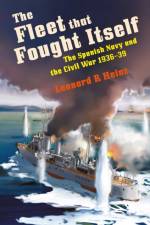
In July 1936 a military revolt brought civil war to Spain; it erupted into a bitter political contest and a brutal land war which have been well covered by historians - a less appreciated dimension of the conflict was the crucial role played by the navies of both sides. This new book describes and explores the naval operations that played out over thirty-eight months and spread well beyond the seas of Spain. Spanish guns thundered off the English coast and as far south as the Bay of Guinea. Submarines lurked in the Aegean, waiting to torpedo ships bringing supplies from the Black Sea. To the west, operations extended into the Atlantic as warships searched for blockade runners and moved between the Bay of Biscay and the Mediterranean. The book begins by describing of the Spanish navy pre-war, then covers the generals' revolt of July 1936 and its effect in the fleet. Subsequent chapters deal with the naval war as it unfolded. It describes Franco's attempts to move the battle-hardened Spanish troops in Africa to the Spanish mainland, then shifts focus to the northern Spanish coast, where an isolated Republican enclave depended on the sea to receive weapons, food, and fuel. The author then pursues a split narrative, interweaving developments in the north and the Mediterranean and following the war to its conclusion. Significant actions fought between the two navies are all covered in detail. In addition, the book describes the crucial roles played by the British, French, German, and Italian navies in the Spanish struggle. Throughout, the author challenges the common view that the Republican navy was incompetent and inert. Based on primary as well as secondary sources, in both the English and Spanish languages, this book sheds genuinely new light on the Spanish navies of this civil war era and brings into focus their significance in the broader struggle.
During the Ardennes Offensive in December 1944, Kampfgruppe Peiper ran out of fuel in the small village of La Gleize, surrounded and caught in a vice-like grip by three elite American divisions: the 82nd Airborne Division, the 3rd Armored Division and the 30th Infantry Division. Behind it, 1. SS Panzer-Division 'Leibstandarte Adolf Hitler' did everything it could to come to its rescue and resume the offensive. A race against time ensued between the Americans, who wanted to annihilate the fighting group of one of Germany's most famous SS commanders, and the German soldiers who tried to come to the rescue of their brothers in arms. The clash between these units of seasoned veterans resulted in a bloody melee around the perimeter of La Gleize. Would Peiper be able to pull through once again?
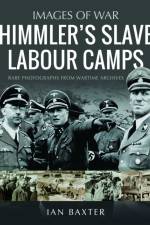
Shortly after their rise to power, the Nazis established specific Arbeitslager (labour camps) which housed Ostarbeiter (eastern workers), Fremdarbeiter (foreign workers) and other forced labourers who were rounded up and brought in from the east. These were distinct from the SS-run concentration camps.The use of forced labour grew significantly in 1937 due to rearmament requirements and again after the outbreak of warThe invasion of the Soviet Union in June 1941 further heightened demands for labour and the availability of new workers in areas under Nazi occupation. Vast numbers were deported to forced labour camps, where they worked either producing war materials or on construction projects.As in the Nazis' view, inmates were slaves pure and simple and replaceable with others, there was a complete disregard for the health of prisoners. Required to work long hours with little or no time for rest or breaks they were subject to insufficiencies of food, equipment, medicine and clothing. As a result of these conditions and brutal treatment, death rates were shockingly high.By 1945, more than fourteen million people had been exploited in the network of hundreds of forced labour camps that stretched across Nazi-occupied Europe. In true Images of War series style, this superbly illustrated book graphically describes the growth of the slave camp system and the conditions inflicted on the luckless labour force.
The remarkable history of the women who worked for Special Operations Executive across occupied Europe
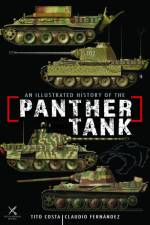
The origins of the Panzerkampfwagen Panther (sd.kfz. 171) beganwith the experimental series VK20 and VK30, designed by Daimler-Benz starting from September 1939, which continued their development until reaching the first prototype of the Panther, the Versuchs-Panther V1, completed by M.A.N. by the end of 1942.The design of the Panther had to ensure superiority over the Russian T-34 and KV-1 tanks, this superiority was based on its 75mm gun, boosted by the excellent quality of the German optics and the 80mm inclined front armor, being the first German tank to adopt this design improvement. Unlike the Tiger and the King Tiger, which were heavy tanks organised on independent battalions, the Panther was destined to fully equip all Panzer divisions, replacing the pre-war Pz.Kpfw.III and Pz.Kpfw.IV designs. Production capacities, however, were not capable of fulfilling this objective.The Germans classified the Panther as a medium tank though it was considerably heavier than the T-34 and Sherman tank in the Allied armies. More than 130 small and medium sized companies participated in the production program of the Panther.Going through several variants from the D, A, and G, the Panther is considered one of the best tanks of WW2, with a combination of armor, speed and armament more than a match for most Allied tanks.
"...we were bad-ass motherf*ckers in the baddest place in the universe. I understood how inane that macho-thinking was but as I soared high above the jungle with the cool air in my face I was as caught up in it as the rest of them."One of the most dangerous occupations during the Vietnam War was walking point, a role Ed Mann took on and specialized in. He served a tour of duty in Vietnam as an infantry soldier in the famed 1st Air Cavalry Division from June of 1969 to June of 1970. Mann was wounded several times, receiving several decorations including the Silver Star, while experiencing the extreme hardships of the war with his fellow soldiers. He would continue to walk point for his entire tour, becoming more like the jungle as the days turned into weeks and months.Mann acknowledges the conflicting emotions he felt during his time in Vietnam - "I was repulsed by the senselessness and savagery of the war and I was saddened by the price it exacted but I was seduced by it too; proud to be performing an important role in a deadly fight for survival and lured by the adrenaline rushes."An intensely immersive, gritty, and tension-filled account of his experience that will transport you to the war in the jungle in a way that sets it apart from other Vietnam memoirs.
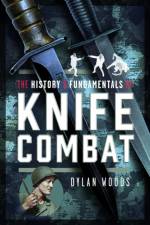
The History & Fundamentals of Knife Combat is the first installment of the most comprehensive and practical book on knife fighting and edged weapon combat that has ever been written. Spread out over two volumes, it serves to introduce the reader to every element of knife and edged weapon combat. In this volume you will be introduced to the history and development of knives and edged weapons throughout the ages, how the perception of society towards the knife changed and altered over time, and how tribes, cultures, and fighting forces all over the globe have relied upon this lethal tool for thousands of years.The reader will also be introduced to a vast number of various knives and edged weapons, either historic or modern, as they become familiar with the various designs and their unique applications. The book delves deep into human anatomy as it exposes the arterial and muscular structures of the body and those parts most suitable as a target to strike as well as the fundamentals of knife and edged weapon combat as basic strikes, footwork, movement, weapon retention, and accessibility are covered.This volume serves as a strong and profound introduction into the world of knife combat tactics and will swiftly and vastly increase the readers knowledge and skill. Whether you're a military operator, martial arts student, or simply a history or edged weapon enthusiast, you will find that this book has plenty to offer you.
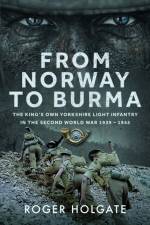
The King's Own Yorkshire Light Infantry fought in WWII across diverse terrains, demonstrating extraordinary bravery, sacrifice, and resilience.From 1939 to 1945, units of The King's Own Yorkshire Light Infantry were involved in some of the fiercest battles of the Second World War. From the snowy wastes of Scandinavia to the deserts of North Africa, and from the mountains of Italy to the steaming jungles of Asia, the men of the KOYLI fought against the forces of all three of the dictatorships that came so close to conquering the world.Before taking part in the fighting, three battalions of KOYLI had left the regiment to become 53rd, 57th, and 94th Anti-Aircraft Regiments within the Royal Artillery, and 149th Armoured Regiment of the Royal Armoured Corps. Thus, the KOYLI comprised five infantry battalions during the period of the world conflict. They were ordinary men from the quiet towns and villages of Yorkshire, who suddenly found themselves thrown into a deadly fight against the mightiest military machine the world had ever seen, and their story is one of incredible hardship, bravery, and sacrifice in some of the most daunting and inhospitable places on Earth.Illustrated throughout with over 100 photographs and maps, this new history offers a unique and detailed look at one of the Second World War's most extraordinary regiments.
At the start of 1967, Jim Wagner shipped out to Vietnam. As a UH-1D Huey crew chief and door gunner, Wagner was part of the 9th Aviation Battalion that would ferry infantry of the 9th Infantry Division into and out of combat in III Corps Tactical Zone in the Mekong Delta in South Vietnam. Interdicting the movements of Viet Cong kept Wagner and his unit in near constant combat with the author accumulating over 1800 air hours on combat operations. Day to day, Wagner flew direct support, combat assault, medical Evac, or low level aerial recon missions for platoon or company sized elements of the 9th Division. Wagner experienced it all, from the surreal of flying over Nancy Sinatra at a USO concert to secret missions flying special forces across the border into Cambodia to the Tet Offensive.
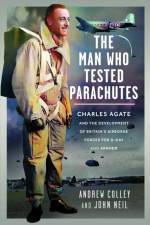
By 1940 the Allies had fallen behind the Axis powers in parachute design and research. Other than as a means of escape from a doomed aircraft, the British regarded parachuting as of little military value. All that changed when the Germans used paratroops, the Fallschirmjäger, to devastating effect in the invasion of the Low Countries, and Churchill demanded immediate action. The call went out for men who would be prepared to risk their lives testing parachutes, jumping and landing techniques.Charles Agate was a 34-year-old schoolteacher with a taste for adventure when he joined a pioneering group of mavericks at RAF Ringway in Manchester. The breath-taking risks they took alongside the essential work of the women of the WAAF changed the course of the war and the face of airborne warfare. Their work though often came at a terrible cost.Between 1941 and 1945 Agate and his fellow Parachute Jump Instructors (PJIs) completed thousands of jumps, often from low altitude or using prototype parachutes. They jumped carrying heavy kit bags, had sandbags strapped to their legs, and landed in deep freezing water. They also trained thousands of raw recruits for the key airborne operations of the war, as well as over 600 Special Operation Executive agents for dropping into enemy territory, frequently accompanying them as dispatchers on these hazardous flights. They were proud of the knowledge they were acquiring and imparting at Ringway, but, as the authors reveal, this led to disputes with the Americans over tactics and equipment as they prepared for the Allied invasion of France.Agate amassed a record 1,601 jumps and was awarded the Air Force Cross. He and his fellow PJIs at Ringway were also personally thanked by Churchill for their unique contribution to the war effort. His last jump, in 1946, with his flying suit stuffed with winnings won on a horse called Airborne at the Epsom Derby, was reported in the press worldwide.He acknowledged after the war that he had seen '21 good soldiers hit the deck' during training at RAF Ringway, and these tragedies, as well as the effects of risking his life on a daily basis, took a heavy emotional toll on him and many of the other PJIs. The Man Who Tested Parachutes explores Agate's 'lost' post-war years: his struggles with his mental health, and the impact on his family. It charts his journey to becoming the unconventional head teacher of a village school and his clashes with local authorities. Finally, it describes unflinchingly the last dark twist in the life of this complex man, alone in his flat overlooking the sea just before Christmas 1986.This book tells the story of an ordinary man who took extraordinary risks, and the men and women who served alongside him. It also remembers the young recruits who died before they were able to take part in the key battles for which they were being trained.
Reissued with a new preface by the author, The Paraguayan War is an engrossing and comprehensive account of the origins and early campaigns of the deadliest and most extensive interstate war ever fought in Latin America.
A revelatory new account of the Second World War—and how bitter competition between the Allies would shape the postwar world
An authoritative and original history of the Maginot Line that reshapes our understanding of interwar France and the events of 1940
How, for just over a century, Britain ensured it would not face another Napoleon Bonaparte—manipulating European powers while building a global maritime empire
Conventional narratives of the Cold War revolve around high-level diplomats and state leaders in Washington, Beijing, and Moscow, but this anthology challenges those narratives by revealing how ordinary people across Asia experienced the era. Heavily rooted in oral history, this study takes readers to the villages of rural Java; the jungles of northern Thailand; the indigenous tribal communities of Kerala, India; and many other places in this vast region.The essays in this collection demonstrate how the world took shape far away from the voluminously analyzed epicenters of the Soviet Union, the United States, and China. Masuda organizes each chapter around the theme of "many Cold Wars," or, more precisely, many local and social wars that were imagined as part of the global Cold War. These histories raise fundamental questions about standard Cold War narratives, encouraging readers to rethink why the Cold War still matters. Contributors are Mary Grace Concepcion, Simon Creak, Cui Feng, David Engerman, Prasit Leepreecha, Luong Thi Hong, Muhammad Kunhi Mahin Udma, Masuda Hajimu, Alan McPherson, Imam Muhtarom, Sim Chi Yin, Kisho Tsuchiva, Odd Arne Westad, Matthew Woolgar, Kinuko Maehara Yamazato, Bin Yang, and Taomo Zhou. InterConnections is home to innovative global, international, and transregional histories of the long twentieth century. Books emphasize interactions and connections across three principal areas of inquiry: governments, militaries, and nonstate actors, including businesses; international organizations, nation-states, and individuals; and foreign and domestic policies. The series showcases work that transcends conventional geographic, temporal, and disciplinary borders, offering fresh and original perspectives on the making of the contemporary world.
This book explores a distinctive neo-fascist movement that emerged in Latin America and Spain during the Cold War.
The full story of Josephine Baker’s wartime and intelligence work in France and North Africa
Abonner på vårt nyhetsbrev og få rabatter og inspirasjon til din neste leseopplevelse.
Ved å abonnere godtar du vår personvernerklæring.