







Gjør som tusenvis av andre bokelskere
Abonner på vårt nyhetsbrev og få rabatter og inspirasjon til din neste leseopplevelse.
Ved å abonnere godtar du vår personvernerklæring.Du kan når som helst melde deg av våre nyhetsbrev.

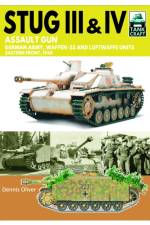
Explores the evolution, use, and technical details of the German Sturmgeschütz assault guns during World War II, focusing on the Eastern Front.From their introduction in 1940, the German army's Sturmgeschütz assault guns played a vital role in the campaigns of the Blitzkrieg era, the gargantuan struggles in Russia and the final defensive battles. Evolving from a mobile bunker-buster, armed with a short-barrelled howitzer, the Sturmgeschütz III was up-armoured and up-gunned and by 1943 its tank killing abilities were widely recognised. In 1944, largely as an emergency quick-fix, the Sturmgeschütz IV entered service and over 10,000 examples of both versions had been built by the end of the war. Although not as well known as the Tiger or Panther tanks, they were among the most frequently encountered German armoured vehicles and as the Wehrmacht's resources continued to decline, the assault guns were thrown into every operation and increasingly substituted for gun tanks in official unit establishments. In the second volume in the TankCraft series to examine the Sturmgeschütz, Dennis Oliver employs official documentation and unit histories to investigate the formations that operated these vehicles and uses archive photos and extensively researched colour illustrations to examine the markings, camouflage and technical aspects of the Sturmgeschütz III and Sturmgeschütz IV that served on the Eastern Fronts during what was almost certainly the pivotal year of the campaign. A key section of his book displays available model kits and aftermarket products, complemented by a gallery of beautifully constructed and painted models in various scales. Technical details as well as modifications introduced during production and in the field are also examined, providing everything the modeller needs to recreate an accurate representation of these historic vehicles.
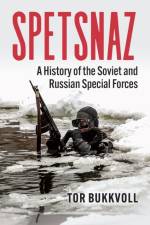
"In Spetsnaz, Tor Bukkvoll presents the first in-depth history of the Soviet, and, later, Russian special operations forces from their establishment in the early 1950s until today. He focuses on three broad topics: (1) Soviet and later Russian thinking on the use of special operations forces; (2) the actual process of constructing these forces and how this was facilitated or hampered by other agencies of the Soviet and Russian states; and (3) the use of these forces in combat"--
"On December 15, 1972, as rumors swirled of a pending peace agreement between the United States and North Vietnam, Governor Jimmy Carter issued an executive order creating the Georgia Advisory Committee on Vietnam Veterans (GACVV). His reasoning was simple: "the citizens of the State of Georgia and of the United States of America owe a debt of gratitude to these veterans who have served the Nation in an unpopular war." Carter's efforts followed trends occurring across the country as a host of states contemplated their responsibilities to Vietnam veterans by considering such benefits as cash bonuses, educational stipends, and free hunting licenses. Through his words and actions, Carter joined this broader debate regarding society's obligation to Vietnam veterans. In A Debt of Gratitude, Glenn Robins examines Carter's role in the creation of Vietnam veterans' issues as a national agenda item. Covering virtually the entire decade of the 1970s, from Carter's single terms as governor and president of the United States, Robins demonstrates that, throughout this period, Carter distinguished himself as one of the country's most important decision-makers concerning Vietnam veterans' policy. By addressing Vietnam veterans' issues and by communicating his positions and views, Carter made a substantial political investment in moving these items from the level of public debate to the level of policy prescriptions, thereby raising awareness, generating concern, and promising government attention to honor and thank Vietnam veterans"--
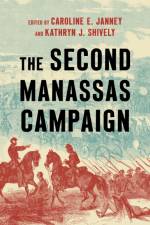
"Waged from June 26 to September 1, 1862, the Second Manassas campaign pitted the US Armies of Virginia and the Potomac against the Confederate Army of Northern Virginia and its new commander, Robert E. Lee. The campaign unfolded against a backdrop of momentous US political decisions regarding confiscation, emancipation, and Confederate civilians. These decisions dismayed and energized Confederates, sparking the debut of Lee's offensive strategy. Weeks of strategic movements were punctuated by savage fighting that culminated in a climactic battle from August 28-30. Second Manassas destroyed the careers of US army commander John Pope and corps commander Fitz John Porter. Despite the dramatic impact of the campaign, it is often forgotten in the larger history of the Civil War, and sorely understudied. The essays in this volume provide valuable attention to matters of strategy, tactics, and logistics; the performances of key commanders on each side; the campaign's political dimensions; the connections between home front and battlefield; and the memory of the campaign's aftermath. Contributors include John Hennessy, Gary W. Gallagher, Cecily N. Zander, Peter C. Luebke, James Marten, Keith S. Bohannon, and William Marvel"--
This is a comprehensive study of Holocaust memory in the digital age of social media. Focusing on the five most popular digital platforms in use today: Flickr, Instagram, YouTube, Twitter and Facebook, it examines how social technology affects the way history is made and circulated online.Social media has become a place where memories of the Holocaust take shape through user-driven content shared in elaborately interconnected communication networks. Alongside curated exhibits, documentaries and scholarly research, smartphone photos, short videos and online texts act as windows into the popular consciousness. They document how everyday people make sense of the crime of genocide, presenting unique challenges to historians. Does participatory media create a different understanding of genocide than more traditional forms of writing? How does expertise manifest in the digital public sphere? Do YouTube tourist videos and concentration camp selfies undermine the seriousness of the Holocaust and Holocaust Studies by extension? Holocaust Memory in the Digital Mediascape provides valuable answers to these questions and much more.The book comes with a range of helpful images and it also analyzes the way vernacular memory around the Holocaust and postwar reckoning and reconciliation is mobilized as well as contested in the digital sphere. It is an important volume for all scholars and students of the Holocaust, its history and memory.
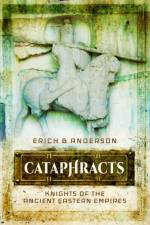
Explores the Parthian period, detailing their cavalry-dominated forces, tactics, and victories against Rome.Throughout most of the classical period, Persia was one of the great superpowers, placing a limit on the expansion of its Western rivals. Until the conquest by Alexander the Great, the Achaemenid Persian Empire was the greatest the world had yet seen, stretching from the Mediterranean to the Himalayas. After the collapse of Alexander's empire and that of his Seleucid successors, the Parthians once more established Persia as an independent power and it remained the most formidable rival to the Roman empire for the next seven centuries, until Persia, by then under the Sassanids, was overwhelmed by the Islamic conquests. Yet, the armies of ancient Persia have received relatively little detailed attention, certainly in comparison to those of Rome. This long-awaited second volume of Dr Kaveh Farrokh's comprehensive trilogy on Persian armies focuses on the Parthian period. An acknowledged expert on the military history of ancient Persia, the author draws on the latest research and archaeological evidence.In the late third and early second centuries BC, the Parni, a semi-nomadic tribe of Iranian herdsmen, ejected the Seleucids from the province of Parthia, and from that power base expanded to dominate the region. Led by the Arsacid dynasty, their cavalry-dominated armies proved a match for Rome's legions, most notably humiliating them at Carrhae in 53 BC. Relying chiefly on the winning combination of swift horse-archers and heavily-armoured cataphracts, they thwarted repeated Roman attempts at eastward expansion over the next two and half centuries. Kaveh Farrokh examines in unprecedented detail their weapons, armour and equipment, the composition of their armies, their tactics and strategies. A rich array of illustrations complements the text to present a complete portrait of one of the ancient world's great military powers.
A detailed biography of Emperor Nikephoros II Phokas, exploring his military reforms, campaigns, and influence on Byzantine success.Emperor Nikephoros II Phokas: TheWhite Death of the Saracens is the first ever English-language biography of the man who broke the stranglehold of Islam over Byzantine Rome so that by the year 968 his forces could invade the Muslim lands virtually unopposed. This was the result of his military reforms and remarkable gifts as a military commander. The text provides thorough analysis of how he reformed military equipment, tactics and strategy to achieve this. The ambushes, battles and military campaigns are discussed in unprecedented detail. Special attention is also paid to the influence of the ascetic Christian lifestyle of Nikephoros on the morale of the armed forces.In spite of his religiosity, Nikephoros was a military man through and through, and the civilian population of the Empire were constantly reminded of this. Soldiers were billeted in Constantinople and showered with favours and Nikephoros even pressured the Church to declare soldiers who died in combat as martyrs. Ilkka Syvänne meticulously explores the relationship between the Church and armed forces in the emperor's policies. Of course Nikephoros had his human weaknesses which led to his untimely assassination. Why and how this happened is also analysed in detail. The assassination of Nikephoros deprived the Byzantine Romans of their 'Bearer of Victory', but his military reforms and campaigns had paved the way for Byzantine Rome to reach its apogee under his immediate successors.
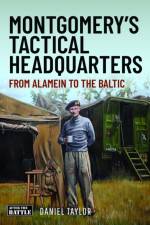
It seems fair to suggest that Bernard Law Montgomery remains a controversial and divisive figure, even fifty years after his death. Some see him as the greatest military commander and strategist of his generation, others as a deeply flawed character, solely responsible for all the ills that befell the troops under his command. In some estimates he was responsible for ponderous and overly cautious campaigning where he was unable or unwilling to admit to anything that might be construed as a failure. In others that he brilliantly conserved meagre manpower resources whilst overwhelming a series of consummate opponents.Added into the mix is Montgomery's singular character. He seems able to engender some form of adoration in some and the deepest loathing in others. Certainly, he could come across as abrasive and egotistical, abrupt and inclined toward condescension. At the same time, he was a committed and dedicated professional soldier who was widely respected and adept at nurturing junior officers. This account, then, is an opportunity to look in-depth at the three pivotal years that took him from El Alamein to the Baltic and projected him to world attention. To achieve this the reader is guided through the environment in which his tactical headquarters operated, its organisation and equipment whilst overlaying the campaigns it fought and, most particularly, the sometimes fractious relationships on which much of the history that is handed down is based.
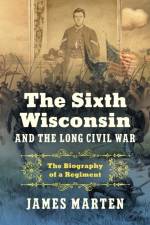
Reimagining one of the oldest genres of Civil War history, this book engagingly presents the story of the war and its aftermath through the lens of a single regiment, the Sixth Wisconsin. One of the core units of the famed Iron Brigade, the Sixth was organized in July 1861 and mustered out in the summer of 1865, playing major roles at Second Manassas, Antietam, and Gettysburg, and in the Overland campaign of 1864. But the regiment's full history is found in the stories of its men learning to fight and endure far from home amid violence, illness, and death, and in the lives of families that hung on every word in letters and news from the front lines. Those stories also unfolded long after the war's end, as veterans sought to make sense of their experiences and home communities struggled to care for those who returned with unhealed wounds.Marshaling a vast archive, James Marten has crafted a compelling and highly original biography of the Sixth Wisconsin in war and peace. In seeing the fight through the eyes of the regiment's roughly 2,000 men and those connected to them, readers will understand the long history of the Civil War as never before.
Abonner på vårt nyhetsbrev og få rabatter og inspirasjon til din neste leseopplevelse.
Ved å abonnere godtar du vår personvernerklæring.