





Gjør som tusenvis av andre bokelskere
Abonner på vårt nyhetsbrev og få rabatter og inspirasjon til din neste leseopplevelse.
Ved å abonnere godtar du vår personvernerklæring.Du kan når som helst melde deg av våre nyhetsbrev.

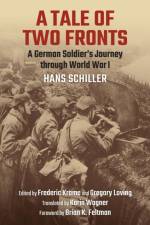
"In 2013, while helping her mother, Ingrid, comb through family possessions, Karin Wagner came across a large folio handwritten in German in the back of a dresser drawer. When Karin asked her mother what the document was, Ingrid replied, "Oh, that is your grandfather's Great War memoir. "Schiller was a seventeen-year-old student in Bromberg, Prussia, when World War I broke out in August 1914. He enlisted in the German army and was assigned to an artillery unit on the Eastern Front. From 1915 to 1917, Schiller saw action in what is now Latvia, Lithuania, and Poland. After the Bolshevik Revolution in October 1917 and Russia's withdrawal from the war, Schiller was transferred to the Western Front. He arrived in time for Germany's last great offensive in the west, where the attempt to break the Allied lines included what is believed to be the single greatest artillery bombardment in human history up to that point. After the German retreat and Armistice, Schiller reentered military service in the Freikorps, German mercenary groups fighting in former German territory in Eastern Europe, where the conflict dragged on even after the Treaty of Versailles. Schiller left military service in May 1920. Hans Schiller's Kriegserinnerungen (literally, "memories of war") was written in 1928 and based on diaries, since lost, that Schiller kept during the war. A Tale of Two Fronts, an edition of the memoir with historical context and explanatory notes, provides a vivid first-person account of German army life during World War I. It is a valuable resource for anyone interested in the experiences of common soldiers in World War I"--
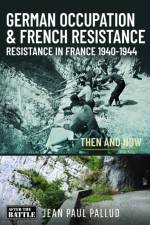
The French Resistance fought against Nazi occupation and Vichy collaboration, playing a pivotal role in France's liberation.Resistance was a refusal to accept the finality of the military defeat of 1940; a refusal to accept that Vichy was the legitimate voice of France; a refusal to accept Vichy policy of collaboration. 'Resisters' were those French men and women who decided to keep on fighting the Germans.Rare men and women joined the Resistance in 1940, soon after the signature of the armistice, individually or within small isolated groups, alone, with no links between them. Others placed themselves at the service of the British SOE networks or the Free French networks. In line with the Soviet-German Non-Aggression Pact of August 1939, the Communist Party first took a neutral stance, though uncompromisingly hostile toward the Vichy regime. The Party joined the Resistance at the end of June 1941, when Germany attacked the Soviet Union, and soon created a clandestine armed force, 'Francs Tireurs et Partisans' (FTP).The communists called for immediate action and on August 21, a two-man squad shot Fähnrich Alfons Moser, a clerk with the Kriegsmarine, in the underground Metro in Paris. Five days later, the Germans shot five communists in reprisal, the first hostages to be executed in France. Many more followed, and recent studies indicate that 834 hostages were killed by the Germans between 1941 and 1944, in addition to approximately 2,900 resistance fighters executed after trial.The resistance movements were gradually organised, in the Occupied Zone, as well as in the Free Zone south of the Demarcation Line. In January 1942, de Gaulle sent Jean Moulin to France with the mission of unifying the Resistance. Jean Moulin succeeded in this unification and a National Council of Resistance (CNR) was created in May 1943, with representatives of the resistance movements of the two zones, political parties, and unions. The Germans hit hard in June, arresting Moulin on the 21st. He was so badly tortured by his SD interrogators that he succumbed within a fortnight. He revealed nothing, and the Germans were unable to dismantle the CNR.At the beginning of 1944, the armed groups of the different resistance movements were unified within the French Forces of the Interior (FFI).Plans were developed to bring chaos behind the German lines during the Allied landing in Normandy, and the Resistance promptly went into action on D-Day. The rail-cutting program was extraordinarily effective with hundreds of individual operations carried out.The Germans became alarmed by the impressive increase of the Resistance actions all over France and from the beginning of 1944 they launched successive attacks, for example against Mont Mouchet in the Massif-Central and at Saint-Marcel in Brittany in June. In the Alps, the Resistance being too strong to be dealt with solely by the occupation forces, the Germans were compelled to switch the 157. Reserve-Division, nominally a training formation, to anti-guerrilla operations against the Glières in March, and against the Vercors in July.Resistance activities increased significantly after D-Day, and harried German units committed numerous atrocities and war crimes against the civilian population. The worst of their crimes was committed by the 2. SS-Panzer-Division which hanged 99 men in Tulle on June 9 and murdered 642 civilians, women and children included, in Oradour-sur-Glane the next day.In the summer of 1944, Resistance forces liberated most of south-west and centre of France. In Brittany, the FFI provided very valuable assistance to the rapid advance of the American Third Army in August while in the south-east they facilitated the advance of the forces of the 6th Army Group which landed in Provence. In Paris, the Resistance launched an insurrection which practically liberated the city on August 25, before the arrival of the forces of the V Corps.After the Liberation, resistance fighters joined the new French Army and continued the fight alongside the Allies, allowing France to be associated with the 1945 victory over Nazi Germany.Including the resistance fighters executed, those killed in combat and those who died in deportation, some 37,500 resistance fighters died for France. In addition, some 3,900 people engaged in civil resistance were killed, bringing the total death toll to approximately 41,500.
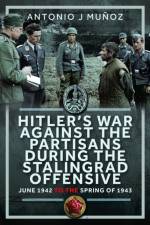
From the start of the war on the Eastern Front, Hitler's Ostheer, his Eastern Army, and its associated forces would wage a vernichtungskrieg, or war of annihilation, in the East. Never before had such a wide-reaching campaign been fought.The preparations for the war against the partisans began before the launch of Operation Barbarossa, during which the Axis forces immediately put their plans into effect. The effects upon the newly conquered territories were soon being felt.The end of the initial phase of the German invasion of the Soviet Union was met by a Red Army winter offensive which began on 5 December 1941. As the author shows, this had repercussions behind the German lines, where the nascent Soviet partisan movement was attempting to grow and gain a foothold. By the spring of 1942 those early Soviet partisan units were ready to expand. The Germans, aware of the military situation both on the frontlines and in the rear of their armies, also prepared to counter the growing partisan threat. The partisans undoubtedly made a significant contribution to Stalin's war effort by countering Axis plans to exploit occupied Soviet territories economically, as well as providing valuable assistance to the Red Army by conducting systematic attacks against Hitler's rear communication network.As the German military planned to continue the Russian campaign into the summer of 1942, new security forces were gathered together and sent to the Soviet Union, and a new headquarters specifically organized to fight the guerrilla menace, was established. In this follow-up study, author Antonio Muñoz picks up the partisan and anti-partisan struggle in the East, where Hitler's War Against the Partisans During Operation Barbarossa left off.The struggle behind the frontlines in Russia proved to be as grand and epic as the fight along the front lines. Dr. Muñoz describes this war of attrition along the entire breath of the USSR. In 1942 the Ostheer, acting on Adolf Hitler's orders, launched their 1942 summer offensive which was aimed at capturing the Caucasus Mountains and the Russian oil fields that lay there.Dr. Muñoz not only covers the war behind the lines in every region of the occupied USSR, but also describes the German anti-partisan effort behind the lines of Army Group South, as its forces drove into the Caucasus Mountains, the Volga River bend and Stalingrad. No other work has included the guerrilla and anti-partisan struggle specific to the Stalingrad campaign. Muñoz manages to accomplish this, but also to convey the story of the rest of the partisan and anti-guerrilla war in the rest of the USSR from the spring of 1942 to the spring of 1943.
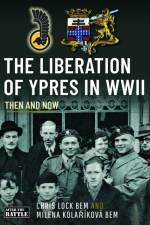
Walk in the tank tracks and footsteps of Major General Stanislaw Maczek and his 1st Polish Armoured Division (1PAD) soldiers who fought, fell or were wounded liberating the town of Ypres on 6th September 1944. Also revealed is the great support offered by local Resistance groups who supplied topographical assistance, information concerning enemy strong points and troop numbers, offered limited engagements, and finally assisted with the temporary gaoling of the many German prisoners of war. The book also commemorates those townsfolk including children who lost their lives over this period of short but intense fighting. Such was the cost of freedom for the beleaguered citizens of Ypres during WW2. Also remembered are those Czechoslovak officers attached to 1PAD from the Independent Czechoslovak Armoured Brigade Group commanded by Brigadier General Alois Liska, whose HQ was located at nearby Wormhout, France, in preparation for his own Battlegroup's 'Siege of Dunkirk' deployment.
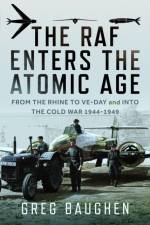
By September 1944 the Western Allies had reached the approximate positions they had held back in September 1939 at the outbreak of war. It had taken more than four years to claw back the territory lost in 1940. It was four years in which the strategic bomber had failed to deliver the victory the bomber advocated had promised. With Allied armies converging on Germany from all directions, they were running out of time to prove that countries could be bombed into defeat.Baughen describes the fierce battles that were fought right up to the German surrender in May 1945. He also explores the equally fierce debates behind the scenes about how air power should be used to complete the Allied victory, and analyses the lessons learned from six years of war.Even before Germany's surrender, thoughts were turning to the new enemy. The wartime alliance between Communist East and Capitalist West had always been one of convenience. Within weeks of the German surrender hostilities between the wartime allies were already a possibility. The seeds for post-war defence policy were already being sown.Meanwhile, in the Far East Hiroshima and Nagasaki had become the victims of the first atomic bombs. Days later Japan surrendered. The bomber advocates appeared to have the proof that bombing could win wars. But how related were the two events?Using contemporary documents, Baughen describes the how British air policy evolved in the late 1940s. Would the atomic bomb change the way wars were fought? Would conventional armies have any role in future wars? In the new atomic age, were there any lessons to be learned from the Second World War? How would the emerging cruise and ballistic missiles and associated guidance systems affect defence policy? Was a conventional defence to Soviet aggression possible?This is the story of the contribution air power made in the final battles of the Second World War, how the lessons of that conflict were misinterpreted and how the policies developed to incorporate the atomic bomb into Cold War defence thinking was leading the country into grave danger.
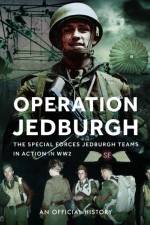
When Allied forces landed on D-Day, the Jedburgh teams went into action behind German lines. These usually three-man teams, often composed of one British, one American and one from the country into which they were sent to operate, spread chaos and confusion in the enemy's rear. Working with the marquis and other resistance groups, mainly in France, but also later in the Low Countries, the Jedburgh teams, each of which included a radio operator, were the vital link between the local groups and Allied high command. Their other main function was to organise airdrops of arms and equipment from the Special Operations Executive, via the RAF, to the resistance forces.This official history details the formation and the selection of these all-volunteer teams. It also details how the men were trained in parachuting, amphibious operations, skiing, mountain climbing, radio operations, Morse code, small arms, navigation, hand-to-hand combat, explosives, and espionage tactics.It also spells out the objectives of the Jedburghs. This was to impede the movement of the enemy's reserves to the battle front; to disrupt the enemy's lines of communication in the rear areas; and to compel the Germans to hold large reserves back from the front to contain the resistance operations. They provided leadership to resistance groups who had lost their own leaders and helped focus efforts against the Germans where the Allied forces were meeting stiff opposition.The effect the Jedburgh teams had on Operation Overlord was enormous and this history details the objectives of each Jedburgh team and their successes. This section of the book also lists the personnel of each team. In addition to their offensive actions, the Jedburghs set up hospital installations in the rear areas and mopped-up any remaining enemy positions by-passed by the main Allied forces.The Jedburgh teams also cooperated with the resistance forces in the south of France in Operation Dragoon, while four Jedburgh teams were also deployed in the Market element of Operation Market Garden.Supreme Allied Headquarters estimated that the contribution made by the Jedburghs and the groups they supplied and assisted was the equivalent of 'at least' one army division in the landings in and in the liberation of France.
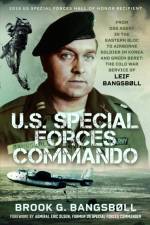
With the ending of the Second World War, Lief Bangsboll, after distinguished service with the O.S.S. behind enemy lines in Denmark, prepared himself for a life of peace and hopefully love with the young Canadian girl he had met while training at Camp X during the war. But the United States War Department and the Office of Strategic Services had other plans for the young soldier/agent.In September 1945, Lieutenant Bangsboll was secretly sent into Soviet-occupied Germany to assess and report upon Russian military activities in and around Berlin. In December 1945, a deadly incident occurred in which a KGB agent was killed, and Leif and his O.S.S. team were forced to escape back into the American sector of Germany. With his O.S.S. identity compromised and himself now target of the KGB, Lieutenant Bangsboll was re-assigned to the regular U.S. Army and became a member of the 82nd Airborne Division at Fort Bragg. With the outbreak of the Korean War, Leif was part of the first airborne operation in which he and the 187th Airborne Regiment Combat Team parachuted into North Korea as part of the US/United Nations force confronting the North Korean invasion.During his year of combat in Korea, Captain Bangsboll, the platoon leader for the Headquarters Intelligence & Reconnaissance platoon, worked under Lieutenant Colonel Aaron Bank, also a former OSS agent. During that assignment Leif led numerous special operations missions behind enemy lines, including a mission to recover a large cache of American gold bullion which had been left behind when the U.S. 8th Army was overrun during a North Korean offensive. He also led a secret parachute mission to rescue American /United Nations' prisoners of war held in North Korea and a daring assault on a North Korean base which earned him the Silver Star for 'extraordinary courage in combat'.Captain Bangsboll played a crucial role in the develop of the United States' first Special Forces unit and was appointed as one of the initial Company Commander of a Green Beret/Special Forces unit. Then, as the Army Liaison Officer to the 302nd Tactical Reconnaissance Wing in Sembach, West Germany, he flew as an observer, reporting on Soviet troop movements over Warsaw Pact held territory and instructed American pilots the skills of escape and evasion. As a Company Commander with the 10th Special Forces Group in Ulm, West Germany, he stood his ground, facing Soviet and East German combat troops poised to invade Western Europe during the tense days during the U2 spy plane incident and the Cuban Missile Crisis.
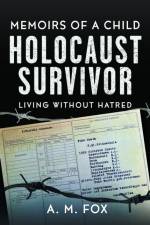
These are the memories of a man who had been a young Jewish boy in Central Poland. His 9th birthday came in mid July 1939. Less than two months later they are his memories of the Nazi era, from the very beginning of WWII until he was liberated by the Russians on the 8th May 1945. This age of death when Nazis attempted the absolute annihilation of all Jews in Europe regardless of age, character or gender, is now referred to as the Holocaust.These memories include those of his vibrant family life in Poland before the war. They are his homage and his memorial to his parents, his little sister and numerous uncles, aunts and cousins who were wiped out by the Nazis along with centuries of their culture.Arriving in the UK on 14th August 1945 he was in the first group of Concentration Camp child survivors brought into England at the invitation of King George VI. The story of these children's arrival and initial rehabilitation in the Lake District is told in the 2020 BBC film The Windermere Children.His memories conclude with some glimpses of his life immediately after liberation, and later when he was settled in the UK.From dozens of known relatives, he and his elder brother thought for a long time that they were the only family members to have survived from their town. Later they discovered there was a third survivor, an even younger cousin.The author married the Holocaust survivor of this memoir. He wanted the tale of how they met to be told and the book begins with this. All the material concerning life in Poland, life during the war and vignettes of post war life have simply been written down by the author. Everything was read and re-read by the survivor who felt that these recollections were true to what he remembered.
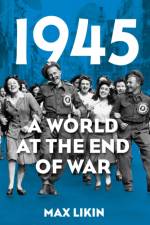
A vivid portrait of a world at the end of war, told through 12 months from around the globe
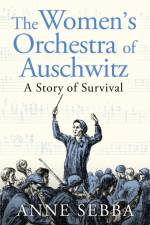
The first book on the Auschwitz women's orchestra by the bestselling historian of twentieth-century women's lives
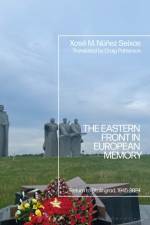
This is the first comprehensive study to examine the place of the Eastern Front or Soviet-German War in European memory from a truly comparative perspective across Europe; it encompasses the Soviet and post-Soviet space, Germany (both GDR and FRG, and the Berlin Republic after 1990), Western Europe and Finland. Covering the whole post-war period to the present, with a particular emphasis on recent events, this book offers a cultural perspective on the different ways in which the politics of memory dictated by states interact with and are sometimes counteracted by grass-roots memory initiatives.The Eastern Front and European Memory focuses on a diversity of sources and agents of memory, from monuments and public ceremonies to literary narratives, films and other aspects of popular culture that contribute to shaping the historical culture of the societies concerned.
Joseph Mallord William Turner's The Batt le of Trafalgar is one of the most famous and recognisable paintings in the collection of the National Maritime Museum. Published to coincide with the 250th anniversary of Turner's birth and 220 years aft er the batt le for which this monumental work is named, the book situates the painting alongside plans, sketches and artefacts from the National Maritime Museum's collection and examines Turner's contribution to maritime art and to Nelson's complicated legacy. The Batt le of Trafalgar was the only work Turner made 'by royal command' and the largest he painted. Although best remembered as an unconventional artist, with this commission Turner was tasked with producing a patriotic painting to adorn the halls of power. On completion, the piece was the subject of intense scrutiny, att racting criticism for perceived historical inaccuracies in the representation of the batt le. Yet it remains a powerful artwork, which combines a celebration of maritime victory with a tribute to national a hero, an ode to ordinary sailors and a meditation on the horrors of war. Three chapters consider: the artist and the batt le; the commissioning of the work, Turner's artistic process and specifi c elements and events within the fi nished piece; and the response to the work, including its display in the National Gallery of Naval Art at Greenwich Hospital.
This book tells the story of humanitarians working to safeguard refugee camps, agricultural colonies, trains, and harbours situated at the doors of Europe.
The dramatic story of a pivotal figure in the Haitian Revolution, who shook the Atlantic world to its core
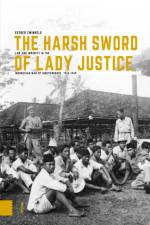
How the Dutch military legal apparatus did or did not act against extreme violence committed by its own soldiers between 1945 and 1950.
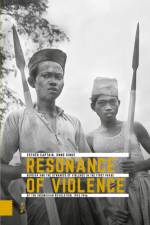
Views the terrifying Bersiap period against the backdrop of the violent first phase of the Indonesian National Revolution.
Abonner på vårt nyhetsbrev og få rabatter og inspirasjon til din neste leseopplevelse.
Ved å abonnere godtar du vår personvernerklæring.