







Gjør som tusenvis av andre bokelskere
Abonner på vårt nyhetsbrev og få rabatter og inspirasjon til din neste leseopplevelse.
Ved å abonnere godtar du vår personvernerklæring.Du kan når som helst melde deg av våre nyhetsbrev.

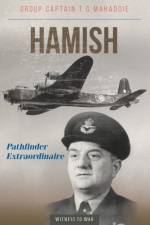
This is the lively autobiography of Group Captain Hamish Mahaddie who was at various times a Halton apprentice, bomber pilot, staff officer, station commander and technical adviser to the British film industry.In an animated narrative liberally laced with anecdotes, the author reflects on his formative years in Edinburgh and the part he played in the Trenchard Experiment at Halton in the late 1920s. We follow him to the outposts of the Empire during the 1930s with postings to Egypt and Iraq where he gained his wings. On his return to the UK in 1937, he found a very different Royal Air Force now frantically preparing for the inevitable cataclysm of war which was about to engulf the world.Hamish flew on two tours of operations with Bomber Command in the dangerous night skies over Europe in Whitleys and Stirlings before joining AVM Don Bennett's Staff at Pathfinder Force HQ. He finished the war as Station Commander at RAF Warboys where he transformed the Sergeants' and Airmen's Messes into meccas of popular entertainment with seating liberated from the Globe Theatre, Shaftesbury Avenue. At one stage he was the only Station Commander in Bomber Command with an elephant on the strength!Post war, he remained in the RAF and during this time helped introduce the Canberra into Bomber Command service. Upon retirement in 1958 he acted as a technical adviser on various feature films including The Battle of Britain and A Bridge Too Far.This is a well written, entertaining and very interesting account of the author's varied career in aviation, in peace and war, told by a raconteur par excellence, which will appeal to a wide range of readers.
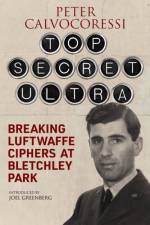
Shortly after the outbreak of the Second World War, a young Peter Calvocoressi was serving in the Ministry of Economic Warfare, his role largely consisting of reviewing shipping manifests day in day out. In 1940, he decided to volunteer for the War Office but was turned away on account of a recently-sustained head injury. The note on his file? "No good for anything - not even intelligence." In spite of this, Calvocoressi was able to apply to the Air Ministry, was commissioned in RAF intelligence and, by early 1941, found himself at Bletchley Park.Calvocoressi was assigned to a section of Bletchley dealing with Luftwaffe Ultra intelligence where - as deputy head and, from 1944, as head - he spent the rest of the war translating and interpreting decrypted Enigma signals.The codebreaking operations at Bletchley Park came to an end in 1946, however all information about this wartime enterprise was classified and remained a secret until the mid-1970s, after which Calvocoressi recounted his experiences at Bletchley in Top Secret Ultra, published in 1980. This comprehensive new edition of Calvocoressi's book features exciting new material from his son David and from renowned historian and author (specialising in signals intelligence) Dr Joel Greenberg. This is required reading for anybody with an interest in this utterly and indisputably fascinating aspect of the Allied war effort during World War II.
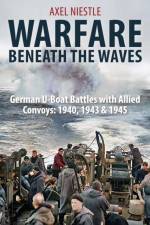
The longest continuous military campaign of World War II, the Battle of the Atlantic is widely considered one of the most complex naval battles in history. Between 1939 and 1945, German U-Boats and warships, together with the Luftwaffe, fought against the Royal Navy, the Royal Canadian Navy, the United States Navy and convoys of Allied merchant ships in a series of devastating battles. In Warfare Beneath The Waves, eminent naval historian Axel Niestlé focuses on three particular convoy battles that took place during this period: the German attacks on Allied Convoy SC 7 in October 1940, on Allied Convoy SC 118 in February 1943 and on Allied Convoys JW 66 and RA 66 in April and May 1945. Niestlé takes readers through these individual battles in incredible detail, with a host of photographs, maps and diagrams supporting his detailed explanation and examination of the history, tactics and key personages behind these campaigns. The end of secrecy embargoes and the increasing availability of online archives, together with Niestlé's unmatched expertise in this area of military history, have come together to make Warfare Beneath The Waves a meticulously researched and incredibly important piece of writing about the Battle of the Atlantic. This is a must-read not only for fans of naval history, but for all fans of military history in general.
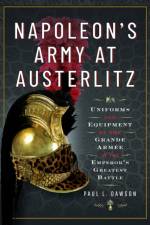
A snow-capped hill in modern day Czech Republic, dominated by a small church with black onion dome, stands on a field of battle that cemented Napoleon's position as Emperor of the French. His throne was secure. His power was limitless. Europe lay at his feet. The Battle of Austerlitz is almost universally regarded as the most impressive of Napoleon's many victories. The magnitude of the French achievement against a larger Russian and Austrian force was unprecedented, the great victory being met by sheer amazement and delirium in Paris, where, just days earlier, the nation had been teetering on the brink of financial collapse. It was a time when Napoleon's Grande Armée was at the apogee of its power.Trained on the Channel coast for over two years, the Grande Armée was considered to be the most powerful, and in many respects the most glamourous, fighting force in Europe. Using archive documents from the time, this book sets out to chart the story of the men who made up the army. Incorporating rare eye-witness reports, that have to date never been used in English or French histories, we assess if the army was indeed the best in the world. Men like Grouchy, Oudinot, Ney, D'hautpoul and many other famous names put the army through its paces - it is their judgements that confirm or deny the effectiveness of the army.These men also minutely examined the men's clothing and equipment. Using these reports we present for the first time the true story of the Grande Armée. This has been possible due to the author's access to a vast resource, as yet untapped by the vast majority of researchers and historians for understanding Napoleonic era in general. These are the regimental archive boxes preserved in the French Army Archives. From the regimental inspections, as well as the observations of Divisional commanders written at the time, these sources provide, potentially bias free empirical data - it is based on personal assessments thus is not error free - from which we can reconstruct the life story of a regiment, its officers and above all its clothing.More uniquely, the text is supported by an unrivalled collection of full colour illustrations, many of which have never been published before, including images of original items of equipment that are held in both museums and private collections to which the author has been granted special access.In this beautifully illustrated book, Paul Dawson critically re-examines the mythos and presents the judgement call made at the time about the army, that has ever since been overtly romanticised by both lovers and haters of Napoleon.
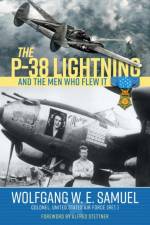
"The P-38 Lightning was one of the fastest operational fighters of World War II, famous for its successes in North Africa and the Pacific. In The P-38 Lightning and the Men Who Flew It, Wolfgang W. E. Samuel shares the stories of the young men who climbed into the cockpits of the P-38 to fight for freedom, and of those who created, tested, and deployed these fearsome machines. The P-38 was the product of the Lockheed Corporation, the first fighter they ever built, principally conceptualized by Kelly Johnson, whose design was to meet Air Corps specifications. To do that he came up with a twin-engine aircraft with a tricycle landing gear unlike any other military aircraft of the time. But it was no easy plane to fly. Many pilots died in training and routine flying before ever meeting an opponent in combat. P-38 units were formed quickly once the United States entered World War II in December 1941. Training was rushed to get pilots and planes to Europe as quickly as possible to serve as bomber escorts. Although the P-38 could fly at the high altitudes the bombers flew, it was not the right aircraft for the mission. At high altitudes without an engine in front of the cockpit to keep the pilot warm, the plane was frigid. Pilots suffered and were sometimes so weakened by the brutal cold that they had to be lifted out of the cockpit upon landing, and the bombers suffered severe losses. In North Africa's warmer air, however, the P-38 came into its own. With four 50-caliber machine guns and a 20mm cannon in its nose, the P-38 was a formidable adversary. With proven success in the Mediterranean, P-38 squadrons were transferred to the Pacific Theater, where they flourished. This book focuses on the men who flew this challenging aircraft and the men who designed and decided how to deploy it. Samuel shares stories of bravery and ingenuity alongside an aviation history long neglected. The P-38's Pacific deployment is covered in some detail, including the actions of Richard Bong, who became the US forces' ace of aces while flying a P-38. In the Pacific skies, the P-38, its pilots, and designers made the heroic history captured here"--
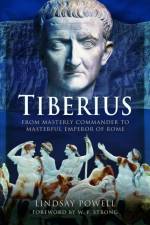
Lindsay Powell offers a fresh reassessment of Tiberius Caesar, highlighting his leadership, reforms, and misunderstood legacy as emperor.History has not been kind to the memory of Tiberius Caesar (42 BC-AD 37), second emperor of the Romans. His reputation for capable generalship and sensible civic leadership are marred by reports of cruelty, treason trials and sexual depravity. Some historians have described him as a 'tyrant' or even a 'monster'. But does he deserve this negative appraisal?In Tiberius, Lindsay Powell presents a fresh and penetrating reassessment of the life and legacy of the extraordinary man handpicked by Augustus to succeed him. He shows that Tiberius was the right man for the job, at the right time.Tiberius built upon the innovations of Augustus by bolstering the Roman Commonwealth's institutions and reining in its expenditures. He used his proven leadership skills in military and diplomatic affairs to avoid war whenever possible. A no-nonsense disciplinarian willing to eschew popularity for the good of the Res Publica, he respected the Senate's independence, recruited competent public administrators, rooted out malpractice in provincial government, and was generous to communities blighted by disaster.Tiberius examines the known facts of the personal and professional life of Ancient Rome's third longest serving emperor. He was a poet, a collector of art and an astrologer. Lindsay Powell explores how he dealt with success, disappointment and loss all while under the unrelenting pressure of serving Augustus, and then carrying out his ultimate duty by ruling the empire in his own right.Descended from a famous family, his standing has been undermined by his infamous appointees: right-hand man, Aelius Sejanus, who betrayed him; prefect of Judaea, Pontius Pilatus, who crucified Jesus of Nazareth; and his successor, Caius, better known as Caligula. Yet, when he died of old age (or was he murdered?), he left the Roman Empire both stronger and at peace.Meticulously researched, Tiberius is lucidly written by the author of the acclaimed biographies Marcus Agrippa and Germanicus.
The War of 1812 was one of a cluster of events that left unsettled what is often referred to as the Revolutionary settlement. At once postcolonial and neoimperial, the America of 1812 was still in need of definition. As the imminence of war intensified the political, economic, and social tensions endemic to the new nation, Americans of all kinds fought for country on the battleground of culture. The War of 1812 increased interest in the American democratic project and elicited calls for national unity, yet the essays collected in this volume suggest that the United States did not emerge from war in 1815 having resolved the Revolution's fundamental challenges or achieved a stable national identity. The cultural rifts of the early republican period remained vast and unbridged.Contributors: Brian Connolly, University of South FloridaAnna Mae Duane, University of ConnecticutDuncan Faherty, Queens College, CUNYJames M. Greene, Pittsburg State UniversityMatthew Rainbow Hale, Goucher CollegeJonathan Hancock, Hendrix CollegeTim Lanzendoerfer, University of MainzKaren Marrero, Wayne State UniversityNathaniel Millett, St. Louis UniversityChristen Mucher, Smith CollegeDawn Peterson, Emory UniversityCarroll Smith-Rosenberg, University of MichiganDavid Waldstreicher, The Graduate Center, CUNYEric Wertheimer, Arizona State University
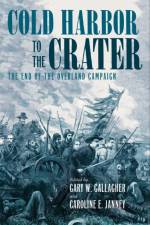
Between the end of May and the beginning of August 1864, Lt. Gen. Ulysses S. Grant and Gen. Robert E. Lee oversaw the transition between the Overland campaign-a remarkable saga of maneuvering and brutal combat-and what became a grueling siege of Petersburg that many months later compelled Confederates to abandon Richmond. Although many historians have marked Grant's crossing of the James River on June 12-15 as the close of the Overland campaign, this volume interprets the fighting from Cold Harbor on June 1-3 through the battle of the Crater on July 30 as the last phase of an operation that could have ended without a prolonged siege. The contributors assess the campaign from a variety of perspectives, examining strategy and tactics, the performances of key commanders on each side, the centrality of field fortifications, political repercussions in the United States and the Confederacy, the experiences of civilians caught in the path of the armies, and how the famous battle of the Crater has resonated in historical memory. As a group, the essays highlight the important connections between the home front and the battlefield, showing some of the ways in which military and nonmilitary affairs played off and influenced one another.Contributors include Keith S. Bohannon, Stephen Cushman, M. Keith Harris, Robert E. L. Krick, Kevin M. Levin, Kathryn Shively Meier, Gordon C. Rhea, and Joan Waugh.
Conventional narratives of the Cold War revolve around high-level diplomats and state leaders in Washington, Beijing, and Moscow, but this anthology challenges those narratives by revealing how ordinary people across Asia experienced the era. Heavily rooted in oral history, this study takes readers to the villages of rural Java; the jungles of northern Thailand; the indigenous tribal communities of Kerala, India; and many other places in this vast region.The essays in this collection demonstrate how the world took shape far away from the voluminously analyzed epicenters of the Soviet Union, the United States, and China. Masuda organizes each chapter around the theme of "many Cold Wars," or, more precisely, many local and social wars that were imagined as part of the global Cold War. These histories raise fundamental questions about standard Cold War narratives, encouraging readers to rethink why the Cold War still matters. Contributors are Mary Grace Concepcion, Simon Creak, Cui Feng, David Engerman, Prasit Leepreecha, Luong Thi Hong, Muhammad Kunhi Mahin Udma, Masuda Hajimu, Alan McPherson, Imam Muhtarom, Sim Chi Yin, Kisho Tsuchiva, Odd Arne Westad, Matthew Woolgar, Kinuko Maehara Yamazato, Bin Yang, and Taomo Zhou.
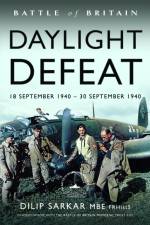
Sarkar's sixth volume examines the fourth phase of the Battle of Britain, detailing Luftwaffe failures and Britain's resilience.In this, the sixth of Dilip Sarkar's unprecedented eight-volume series, the day-by-day events occurring in the fourth phase of the Battle of Britain are chronicled and set within a much wide context, including the operations of Bomber and Coastal Commands and the Home Front. Renowned for his evidence-based approach, the author has returned to primary sources, the analysis arising often challenging our previous understanding and the popular narrative.In Volume 5, Target London: 7 September 1940 - 17 September 1940, the beginning of the Blitz was explored at length. This illuminated the inescapable fact that Luftwaffe air intelligence completely failed to understand how Fighter Command was organised and controlled, nor that it was replacement pilots, not aircraft, that was Air Chief Marshal Dowding's greatest concern. Indeed, on 15 September 1940, Luftwaffe aircrews were briefed to expect but a token resistance over London from the last handful of RAF fighters - their morale shattered when their first attack was met by over 300, the second by nearly as many. This convinced Hitler that the Luftwaffe could not achieve the aerial superiority needed for the invasion of Britain to proceed. Two days later Operation Seelöwe was postponed 'indefinitely'.Reichsmarschall Herman Göring, however, still believed that the Luftwaffe could prevail - and so continued attacking the UK, changing tack, yet again. As London had proved it 'could take it', the Luftwaffe, whilst continuing to bomb the capital by night, now focussed its daylight attacks on the British aircraft industry. Naturally the Supermarine Spitfire factory at Southampton was a primary target; it was subsequently badly hit, with great loss of life. Other factories, in the West Country, were also targeted, and, owing to a navigation error due to cloud cover, the picturesque town of Sherborne was devasted on 30 September 1940.By that date, however, it was clear that Göring's He 111 force was unable to continue absorbing such losses and the type was exclusively switched to night-bombing - thereby substantially reducing the German daylight bombing force. On 20 September 1940, Me 109 fighter-bombers attacked London, and going forward the next and final phase would see such attacks, and high-flying fighter sweeps, dominate the daytime arena.Such raids, though, were never going to defeat Britain, so it is fair to say that the period reviewed in this volume really did see the 'Daylight defeat' of the Luftwaffe over England in 1940 - and the events involved are interpreted and recounted in great detail.
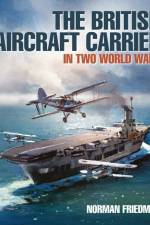
The Royal Navy invented the aircraft carrier and most of the key innovations which have enabled carriers to remain effective, exploiting continuing changes in aircraft technology, from biplanes to supersonic jets. This book tells (and explains) how that happened over more than a century of British carrier development, based largely on declassified official documents, both British and US. Major themes include British domination of the early years of carrier development, and the audacious and highly original plans for their use during World War I, which inspired later naval thinking on the potential of carrier aviation. The introduction of armoured flight decks in the 1930s was only the first of a sequence of British innovations, the most important of which made it possible for carriers to operate jet aircraft (the angled deck, the steam catapult, and the mirror landing sight). These British developments, particularly the steam catapult, were crucial to the survival of the US carrier force in the postwar era, to an extent often forgotten. Later the Royal Navy produced the first commando carriers, and played a crucial role in the VSTOL carrier revolution, and continues to demonstrate originality and innovation as seen in the current pair of large carriers. This book covers all British-built carriers, including those in Commonwealth and foreign service, with the historical context, both operational and technical, explained in detail, as is the connection to larger British national concerns. The book is heavily illustrated with photographs, but also reproduces official plans from the National Maritime Museum, many of which have never previously been published.
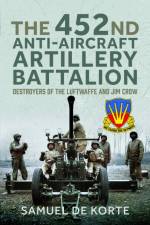
The 452nd Antiaircraft Artillery Battalion, staffed by Black soldiers, protected vital installations and shot down 68 enemy aircraft during WWII.During the Second World War, the airplane became a true menace. Flying faster, higher, and capable of carrying a heavier payload, air forces of the warring nations formed a formidable threat to the forces on the ground.To counter this, special anti-aircraft artillery battalions were created by the US Army. Several of these battalions, including the 452nd Antiaircraft Artillery (AAA) Battalion, were staffed by Black American soldiers. The 452nd AAA deployed in England in November 1943 and went ashore in Normandy, France, in June 1944. Assigned to XII Corps, part of General Patton's Third Army, the 452nd AAA was a valuable asset of the US Army. Armed with the deadly 40mm Bofor's gun and the .50 cal M45 Quadmount, these Black soldiers protected bridges, field artillery battalions and other vital installations during the Second World War. Some of the white soldiers from the field artillery battalions the 452nd AAA was protecting, doubted their abilities, but quickly came to appreciate the accuracy and coolness under fire of the Black soldiers.Credited with shooting down almost 68 hostile aircraft (one of the highest among AAA units in Europe), the 452nd AAA has rightfully earned its place in the history of the US Armed Forces during the Second World War. Although the battalion's motto was 'We Guard the Skyways', it would perhaps be more appropriate to call them 'Airplane Destroyers'.Almost 80 years after the war, this outstanding unit's history is finally made public.
Abonner på vårt nyhetsbrev og få rabatter og inspirasjon til din neste leseopplevelse.
Ved å abonnere godtar du vår personvernerklæring.