






Gjør som tusenvis av andre bokelskere
Abonner på vårt nyhetsbrev og få rabatter og inspirasjon til din neste leseopplevelse.
Ved å abonnere godtar du vår personvernerklæring.Du kan når som helst melde deg av våre nyhetsbrev.

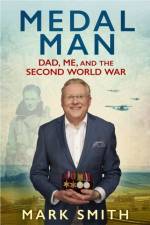
Pre-order the enthralling story from military museum curator and medal specialist Mark Smith, about his father's missions during the Second World War
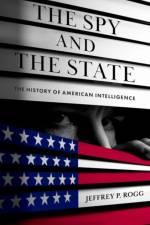
Is the NSA spying on Americans? It wouldn't be the first time. Does the CIA still assassinate people? Depends on what you mean by "assassinate." Is the intelligence community really a "deep state" that subverts American democracy? Not exactly, but it has interfered in politics too often in US history. These types of questions have preoccupied the American people and international audiences in recent years. But the origins of these and other controversies reach back even further in US history. The Spy and the State provides readers with the foundation to understand the past, navigate the present, and shape the future of American intelligence.
The Book of Raymond of Aguilers is one of a handful of eyewitness accounts of the First Crusade. This new translation is the first to be based on the critical edition of the Latin text produced by John France and is intended primarily for the benefit of undergraduates and to make Raymond more accessible in the classroom.
In this book David A.J. Richards offers an investigative comparison of two central figures in late 18th century constitutionalism, Edmund Burke and James Madison, at a time when two great constitutional experiments were in play, the Constitution of the Glorious Revolution of 1688 and the U.S. Constitution of 1787.
Andr Trocm is famous for his role in saving thousands of Jews from the Nazis as pastor of the village of Le Chambon-sur-Lignon, France, a story celebrated in literature and film. But who was the man behind the legend, and the how did he become an international hero and uncompromising advocate of nonviolence resistance? Appearing in English for the first time, his private memoirs give a colorful and honest account of a person determined to stay true to his faith and convictions, who despite his quirks was ready to stand his ground when world history came knocking.Written for his children in the 1950s and first published in French in 2020, these memoirs trace Andr Trocms extraordinary life: a bourgeois childhood; teenage years as a World War I refugee; studies abroad in New York City, where he met his future wife, Magda, and tutored the Rockefeller children; military service in Algeria, which cemented his pacifist stance; postings as a pastor in depressed areas of France; resisting fascism and hiding Jews in Le Chambon; a brief imprisonment and a stint underground; and globetrotting leadership in the International Fellowship of Reconciliation. Trocm also reveals the impact of personal tragedies: the untimely death of his mother in a car accident for which his father was responsible and, years later, his teenage sons suicide.This detailed first-person account from an eyewitness to pivotal moments in history will be of interest not just to scholars of the Holocaust, World War II, and domestic resistance to fascism, but also to those seeking to follow their conscience and the teachings of their faith in trying times.People who enjoyed Lest Innocent Blood Be Shed, A Good Place to Hide and Village of Secrets will appreciate reading the story in Trocm's own words.
English-language historiography traditionally disregards Italian military history with sweeping generalizations about ineptitude, cowardice, and an ethnic/cultural aversion to warfare. This dismissive and demeaning approach obscures thoughtful analysis and discourse on the strengths, weaknesses, and ways in which Italy's military history is not dissimilar from other nations. Italy experienced two anti-insurgent operations, two conventional wars against European powers, a civil war, and two colonial campaigns during its first fifty years as a nation. These encounters forced versatility. Italy entered World War One as a young nation with a fledgling industry and limited raw materials. Nevertheless, it progressed along the tactical learning curve of modern industrial warfare like other belligerents. The country's strategic aspirations in World War Two, like those of Nazi Germany and Imperial Japan, exceeded its war-making capabilities. The Italian Way of War synthesizes previous scholarship with original research to provide a balanced narrative and assessment of Italian military history from 1866 to 1943.
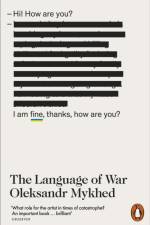
A TELEGRAPH BOOK OF THE YEARWhen everyday life becomes a state of emergency, how can yesterday's words suffice?'We were so happy and didn't know it...'A thirty-three-year-old writer lives in a quiet European suburb with his wife and his dog. His parents have bought an apartment nearby. On weekends they go out for brunch, cook and see friends. Life is good; it is normal. Then the invaders come.The Language of War is about what happens when your world changes overnight. When you wake up to the sound of helicopters and the smell of gunpowder. When your home is hit by shells or broken into by gunmen, and you spend another night in a basement-turned-bomb shelter. When, even though you've never held a weapon before, you realise the only choice is to fight back. It is about things one can never forget, or forgive.Bringing together Oleksandr Mykhed's vivid day-by-day chronicles of the invasion of Ukraine with a chorus of other voices - his family, friends in exile, those who have fought and have witnessed unimaginable atrocities - this book is both a record, and a reckoning. Haunting and timeless, it asks how it is possible to find the words to describe a new reality; how you can still make sense of the world when the only language you can speak is the language of war.
Imagine a world in which clothing wasn't superabundant - cheap, disposable, indestructible - but perishable, threadbare and chronically scarce. Eighty years ago, when World War II ended, a textile famine loomed. What would everyone wear as uniforms were discarded and soldiers returned home, Nazi camps were liberated, and millions of uprooted people struggled to subsist? In this richly textured history, Carruthers unpicks a familiar wartime motto, 'Make Do and Mend', to reveal how central fabric was to postwar Britain. Clothes and footwear supplied a currency with which some were rewarded, while others went without. Making Do moves from Britain's demob centres to liberated Belsen - from razed German cities to refugee camps and troopships - to uncover intimate ties between Britons and others bound together in new patterns of mutual need. Filled with original research and personal stories, Making Do illuminates how lives were refashioned after the most devastating war in human history.
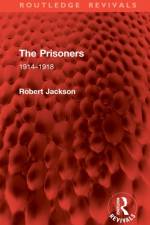
Originally published in 1989, Robert Jackson's outstanding book revealed a whole area of wartime experience which had been neglected. It was the first book of its kind to cover all aspects of the years behind the wire in Prisoner of War (POW) camps during the First World War.
An exploration of how 'spy fever' supposedly gripped the British nation during the First World War.
Abonner på vårt nyhetsbrev og få rabatter og inspirasjon til din neste leseopplevelse.
Ved å abonnere godtar du vår personvernerklæring.