


Gjør som tusenvis av andre bokelskere
Abonner på vårt nyhetsbrev og få rabatter og inspirasjon til din neste leseopplevelse.
Ved å abonnere godtar du vår personvernerklæring.Du kan når som helst melde deg av våre nyhetsbrev.

Reissue of the definitive and highly acclaimed history of The Boer War, first published in 1979
As the Allies broke out of Normandy in June 1944 and pushed into France and the Low Countries they soon found that their supplies lines became more and more extended. They needed a proper working port on the Channel that would enable them to bring in more men and materiel to fight the Germans in Europe and alleviate their supply issues. Antwerp was the prize they were after but the Germans had it covered so other ports needed to be captured as a matter of urgency. This is the story of the capture of Dieppe, Le Havre, Boulogne and Calais and the Siege of Dunkirk that the Allies decided to do while they concentrated on capturing and bringing only the port of Antwerp. It was a siege that was to last until the end of the war.
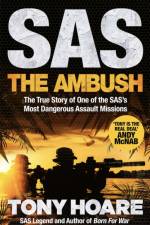
The explosive real-life story of the mission to ambush a dangerous rebel group in Sierra Leone, as retold by ex-SAS soldier and author Tony Hoare.
Improvement of Desert Ranges in Soviet Central Asia (1985) examines the progress made in the Soviet Union's attempts to increase desert vegetation without using irrigation or fertilizers. Prominent Soviet scientists analyse the use of ecological resources in desert ranges to produce more productive grazing land.
The Soviet Union (1989) examines the state of the Soviet Union at the end of the 1980s. It claimed to offer a new social, economic and political order and this book looks at the extent of its success. It surveys the major components of Soviet society and examines the principal issues and debates that surround its assessment.
The Soviet Secret Police (1957) depicts the main aspects of the development, structure and functions of the secret police of the Soviet Union forms a full and objective study of the secret police and its role in the Soviet system.
Gorbachev at the Helm (1987) analyses the policy decisions taken at the 27th Congress of the Communist Party of the Soviet Union in February-March 1986, declared at the time by the Soviet government as a major turning point in Soviet history.
This is the story of Churchill's relationships with the American Generals including Dwight Eisenhower and GeorgeMarshall. The story of an erratic impossible English genius pitted against thesuperb skills of his Generals in a battle which influenced the destiny of mankind.
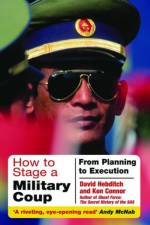
The coup remains the single most common form of power change throughout the world. How to Stage a Military Coup explores these violent and often bloody appropriations of authority, alongside the political, military, and social conditions out of which they arise. Taking into account factors such as timing, media control, popular support and government organisational structure, and by drawing on examples of coups from all over the world, both failed and successful, the authors reveal exactly what it takes to carry out a successful government take-over. This latest, updated edition includes a new foreword by David Hebditch.
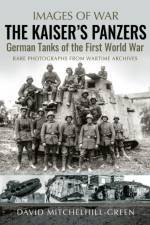
The Kaiser's Panzers charts the development of German armoured vehicles during the First World War. Late to adopt the tank as an offensive weapon, in a theatre characterized by bloody trench warfare, the Imperial German Army's fledgling tank force fielded only twenty A7V tanks by the time of the November 1918 Armistice. To address this shortcoming, the German Army pressed more captured British Mark IV tanks into service through a dedicated workshop facility in Belgium during the final year of the war. A handful of these vehicles later saw service in the Freikorps to suppress left-wing uprisings in Berlin and Leipzig. Although German tanks played an insignificant part in the conflict, two early commanders rose to prominence in the Third Reich: Ernest Volckheim a leading interwar armour theorist and later Panzer commander; Josef 'Sepp' Dietrich a SS Panzer general implicated in the 1945 Malmedy massacre. Drawing on contemporary records, newsreels and newspaper accounts, The Kaiser's Panzers is a heavily illustrated record of Germany's first tanks, the predecessor force to Adolf Hitler's vaunted Panzertruppen, and will be enjoyed by all military history enthusiasts.
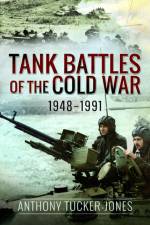
As Anthony Tucker-Jones shows in this highly illustrated, wide-ranging history, for most of the Cold War the tank retained its pre-eminence on the battlefield. The Arab-Israeli wars witnessed some of the biggest tank battles of all time, and tanks played key roles in conflicts in Korea, Vietnam and Afghanistan as well as in the Iran-Iraq War and the wars fought between India and Pakistan. But then in the mid-1960s anti-tank weapons became ever deadlier and the Mechanised Infantry Fighting Vehicle (MIFV), which was designed to support infantry and fight tanks, emerged and the heyday of the tank was over. Chapters cover each major phase in the evolution of the tank and of tank warfare during the period, from the battles fought in the late 1940s and 1950s with Second World War armoured vehicles like the T-34 and the Sherman, through to the designs common in the 1960s and 1970s like the T-55, Centurion, Challenger and M60 Patton, to the confrontation between the M1 Abrams and the T-72 during the Gulf War in 1991. Technical and design developments are important elements throughout the story, but so are dramatic changes in tactics and armaments which mean the tank has an increasingly uncertain role in modern warfare.
A graphic study of military and military revolution in the pivotal 17th century in the context of the Thirty Years War, shown by dramatic battle scenes, personal, heroic and tragic for all levels of society, and all strikingly brought to life. The first 'world war' in Europe was a global conflict, showing that early modern war, despite the Enlightenment argument which contrasts medieval military brutality with modern mores, early modern warfare was full of horror and innocent suffering, reinforced modern weaponry and state support. With striking quotes from commanders to foot-soldiers, readers feel 'involved' and the story moves from battle-field tactics to strategy, Grand Strategy and international relations. Here is the modern military state at the heart of the 17th century military evolution and revolution leading to modern and contemporary international warfare.
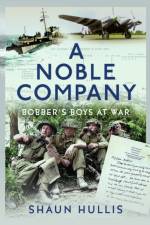
Major Malcolm 'The Bobber' Robertson OBE MC had been profoundly affected by his service in the First World War at Ypres and on the Somme, and prayed that the boys of Sunnyside, the Winchester College house that he ran, would be spared the like. By 1938, he knew that war was coming again, and as each set of boys left he tried to follow their fortunes and to support them and their families as best he could. The resulting correspondence between The Bobber and former pupils in every theatre of war, as well as to and from their parents and siblings, forms a precious and unique record of the impact of the Second World War on the Winchester community. Together with photographs, diaries, and memoirs from almost all the forty boys who sat down with The Bobber for the 1938 house photograph, their letters provide us with a vivid depiction of the wartime careers of the boys, for whom Robertson felt a huge personal responsibility. In this magnificent book these sources reveal the boys' doubts, successes, boredom, captures, narrow escapes, loves, lifechanging wounds, and - in the case of exactly one in four of them - their deaths. A Noble Company is an ambitious project which gives the reader an inspiring insight into these young men's wartime experiences.
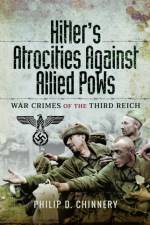
Seventy years ago, the Nuremberg Trials were in full swing in Germany. In the dock were the leaders of the Nazi regime and most eventually received their just desserts. But what happened to the other war criminals?In June 1946, Lord Russell of Liverpool became Deputy Judge Advocate and legal adviser to the Commander in Chief for the British Army of the Rhine in respect of all trials held by British Military Courts of German war criminals. He later wrote;'At the outbreak of the Second World War, the treatment of prisoners was governed by the Geneva Prisoner of War Convention of 1929, the Preamble of which stated that the aim of the signatories was to alleviate the conditions of prisoners of war. 'During the war, however, the provisions of the Convention were repeatedly disregarded by Germany. Prisoners were subjected to brutality and ill-treatment, employed on prohibited and dangerous work, handed over to the SD for "special treatment" in pursuance of Hitler's Commando Order, lynched in the streets by German civilians, sent to concentration camps, shot on recapture after escaping, and even massacred after they had laid down their arms and surrendered.'Tens of thousands of Allied prisoners of war died at the hands of the Nazis and their Italian allies. This book is for them - lest we forget.
'The infantryman always bears the brunt' according to Field-Marshal Wavell in 1945. The 'Poor Bloody Infantry,' 'The Grunts on the Ground,' the infantry have often been seen as the humble, indeed shunned, relations of others, from cavalry to tanks. This book is their story, one from the dawn of human conflict to the present day, a study that looks round the world to consider fighting, weaponry, recruitment, contexts and impact. Infantry as the shock of assault as well as firepower, as the force in state-to-state conflict and in civil warfare, in symmetrical and asymmetrical warfare, are considered, as are the different accounts of development that are offered. Central to the military and to combat, infantry has also served many non-combat roles, notably as the arm of government. Indeed, infantry can be crucial to political history and nation-building, from coups to iconic battles
Abonner på vårt nyhetsbrev og få rabatter og inspirasjon til din neste leseopplevelse.
Ved å abonnere godtar du vår personvernerklæring.