













Gjør som tusenvis av andre bokelskere
Abonner på vårt nyhetsbrev og få rabatter og inspirasjon til din neste leseopplevelse.
Ved å abonnere godtar du vår personvernerklæring.Du kan når som helst melde deg av våre nyhetsbrev.

Essays exploring the dynamics of rebellion across Europe - from Sweden and Slovakia to the Iberian Peninsula and Hungary - over five centuries.
A photographic tribute that highlights the stories behind remnants of Jewish communal life in post-war Poland, western Ukraine, Lithuania, and Latvia.In 1992 Canadian documentary filmmaker and photographer David Kaufman travelled to Poland to produce a television program about hidden child survivors of the Holocaust. A decade later, he returned to make films about the Warsaw Ghetto Uprising and the Łódź Ghetto. Kaufman was deeply moved by the quality of Jewish material culture—the physical remnants of Jewish life—that he saw on these early visits. In 2007 he set out on the first of many trips over two decades to record images of tenements, factories, synagogues, and cemeteries that were part of everyday Jewish life in pre-Holocaust eastern Europe. He also made photos of some of the places of despair and death where Jews were killed during the war.The Posthumous Landscape is more than an act of preserving memory. Kaufman brings his decades of documentary storytelling experience to bear, illuminating these places left behind. His photographs and accompanying texts describe a historic community that played a major role in the development of eastern European society and which left behind grand industrial complexes, urban neighbourhoods, architectural landmarks, beautiful synagogues, as well as vast cemeteries, and haunting memorials. The photographs also tell the stories of the afterlives of those places, many repurposed, some lovingly cared for by non-Jews who remember, and others slowly returning to the earth, but which are preserved in this book’s pages.Some readers will find here names from their own family histories. All will discover a visual landscape that bears witness to the vitality and creativity of Eastern European Jewry before its destruction.With introductory essays by political commentator Bernard Avishai and Polish journalist and heritage activist Joanna Podolska, The Posthumous Landscape is a tribute to a community that met a tragic end and a testament to how our internal landscapes are inextricably bound to the places of our past.
Now in paperback: A compelling and prismatic love story of one family's defiance in the face of injustice—and how their story echoes across generations."Beautifully woven together by Satsuki Ina's mother's diary and her father's haiku—through which they are both still speaking—[this] is memoir as healing, as self- and soul-determination, and as vigilance, the keeping vigil over past lives that are still becoming." —Brandon Shimoda, author of The Afterlife Is Letting GoIn 1942 newlyweds Itaru and Shizuko Ina were settling into married life when the United States government upended their world. They were forcibly removed from their home and incarcerated in wartime American concentration camps solely on account of their Japanese ancestry. When the Inas, under duress, renounced their American citizenship, the War Department branded them enemy aliens and scattered their family across the U.S. interior. Born to Itaru and Shizuko during their imprisonment, psychotherapist and activist Satsuki Ina weaves their story together in this moving mosaic. Through diary entries, photographs, clandestine letters, and heart-wrenching haiku, she reveals how this intrepid young couple navigated life, love, loss, and loyalty tests in the welter of World War II-era hysteria.The Poet and the Silk Girl illustrates through one family's saga the generational struggle of Japanese Americans who resisted racist oppression, fought for the restoration of their rights, and clung to their full humanity in the face of adversity. With psychological insight, Ina excavates the unmentionable, recovering a chronicle of resilience amidst one of the severest blows to American civil liberties. As she traces the legacies of trauma, she connects her family's ordeal to modern-day mass incarceration at the U.S.-Mexico border. Lyrical and gripping, this cautionary tale implores us to prevent the repetition of atrocity, pairing healing and protest with galvanizing power.
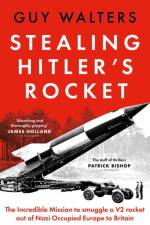
Adolf Hitler's plan to break British morale during the months after the D-Day landings in June 1944 involved the invention and implementation of the world's first rocket delivered warhead - the V1, or 'Doodle Bug' as it was christened by Londoners. Thousands were launched from their sites in the Low Countries against the British capital, killing 6,184 people and injuring 17,981.As the launch sites for the V1 were captured by Allied forces advancing through Belgium and into the Netherlands, a new, more terrifying rocket now hit London in mid-September, seemingly out of thin air - the V2. A streamlined rocket which stood as tall as a four-storey building, the V2 was highly advanced technology. Powered by a rocket engine burning a mix of alcohol-water and liquid oxygen, it blasted its way to the edge of space, before falling back to Earth at supersonic speed. Unlike the successes allied pilots and anti-aircraft crews had enjoyed shooting down the slower and more cumbersome V1, the V2 struck London almost undetected. It truly was Hitler's terror weapon made devastatingly real, causing over 30,000 casualties and leaving hundreds of thousands homeless, with the randomness of the strikes unnerving the British public even though their destructive capacity was less than the Blitz in 1940-41.But Winston Churchill's intelligence chiefs of SOE had known of the weapon weeks before it first struck the mainland as the Nazi boffins (led by Werner Von Braun who would go onto fame with the US Apollo Missions in the 1960s) tested the V2 in Eastern Europe. Away from prying eyes. Or, so they thought. In Stealing Hitler's Rocket, historian Guy Walters will reveal the true extent to how much we knew of this modern-day weapon and the operation by the Polish resistance to enable Britain and her allies to prepare for the day of reckoning.
The harrowing experience of an Artillery unit charged with an Infantry mission in one of the most hostile killing fields in Afghanistan--the Arghandab Valley
Ballybunion to the River Kwai is the remarkable story of Don Kennedy's harrowing experience as an Irish prisoner of war under the Japanese from 1942-45.
This work will argue that the operational intelligence (OpIntel) culture in the U.S. Navy now was codified in the Cold War. The work will also make the case that this existing OpIntel culture is rooted in aircraft carrier culture, a culture which accepts adaptation and favors a structure that has the principles of mission command built in. Additionally, I see this work as having two purposes: 1) making the case that the USN's OpIntel strengths now in an age of Great Power competition are the same as those which guided the USN during the Cold War, and 2) Making the case for the success of USN OpIntel (or viewed another cynical way, that because we are in an era of Great Power competition, that the old methods of OpIntel at sea work, so why change them?) One other argument outside the central argument is that USN OpIntel owes its success to carrier culture specifically, so there is an aviation culture angle here. One other point the author raises in his proposal is that this evolution of OpIntel at sea in the face of the Soviet threat fostered a culture of trust between USN commanding officers and their intel officers.
First Published in 1962, Russia under Kruschev is a comprehensive collection of articles from Problems of Communism, a journal published by U.S. Information Agency. They provide the broadest picture of the political, economic, and cultural trends of Kruschev's Russia.
Into the thick of the choking smoke and fury came a hero with a white cross on his helmet. 'Padre' to the Catholic, 'Rabbi Joe' to the Jewish boys, Chaplain O'Callahan was 'Father' to everyone on board. Father O'Callahan tells of his own experiences, recapturing the perilous and heroic drama of the Franklin, the most damaged ship to ever reach port.
This collection of poems explores the human spirit andcaptures the raw and unfiltered emotions of love, loss, war, and peace. Thispowerful anthology reflects on the meaning of existenceand guides through the highs and lows of the human experience. The theme ofresilience shines throughout and reminds of our ability to endure.
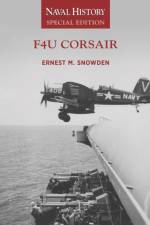
Building upon the expertise of the authors and historians of the Naval Institute Press, the Naval History Special Editions are designed to offer studies of the key vessels, battles, and events of armed conflict. Using an image-heavy, magazine-style format, these special editions should appeal to scholars, enthusiasts, and general readers alike. Rarely is an aircraft design so inspired that it brings forth near-universal recognition and acclaim. In more than 110 years of naval aviation history and more than 50 years of Vought Corsairs in active-duty squadrons, one Corsair model, the F4U, stands alone. In that time, only a few naval aircraft have been acknowledged as game changers that singularly tipped the balance in air combat. The Vought F4U Corsair heads a short list of such aircraft by dint of its supremely efficient lines—a melding of the highly developed Double Wasp powerplant, the outsized Hydromatic propeller that it drove, and the finely tuned airframe that wrapped it. Navy and Marine Corps aviators held the Corsair in high esteem for its ruggedness, speed, and adaptability as a fighter and a bomber, long after its first appearance in the South Pacific during World War II, through the closing weeks of the Korean War. The Corsair’s potency made it sought after by allied air forces long after its final days in U.S. inventory, rendering vital service in French livery at Dien Bien Phu and, finally, with South American air forces in the so-called “Soccer War” of the late 1960s. Here is the complete history of this storied aircraft, from early design through the legendary dogfights of Maj. Gregory “Pappy” Boyington’s Black Sheep Squadron over the Pacific, and in operations in Korea.
Much like Carol Reardon’s Launch the Intruders: A Naval Attack Squadron in The Vietnam War, 1972, this book will look at the War in the Pacific from August 1942 through January 1945 and demonstrate that one unit’s example was indicative of a wider whole. This book was birthed out of the August 2019 issue of Naval History titled “The Tale of Eleven,” which details the exploits of Carrier Air Group 11 during World War II. CVG-11 was composed of three to four squadrons of aircraft, most memorably fighter squadron VF-11, nicknamed the Sundowners for the dual nature of downing the rising sun of Japan and for the term indicating hard working sailor. CVG-11 saw action early in the war at Guadalcanal during its first tour and was later assigned to the USS Hornet in 1944 and fought at Leyte Gulf, Luzon, Mindoro, French Indochina, and Okinawa. The fighter squadron produced several aces during the war. The book will also demonstrate the exploits of the other two squadrons, illustrious in their own right: VB-11 and VT-11.
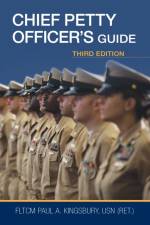
In this third edition of the Chief Petty Officer’s Guide, author Paul Kingsbury offers the same caliber of wisdom and advice that has helped Chief Petty Officers (CPOs) succeed for decades. Fully revised, this edition features updates to every chapter as well as a broader context, scope, and audience. With the addition of guidance for Navy and Coast Guard chiefs of all experience levels, aspiring petty officers seeking advancement to chief, and other leaders, this book is a vital tool for anyone who wants to understand how great chiefs think, manage, and lead.Those striving to improve as a chief, senior chief, or master chief will find this handbook an essential resource on how to lead and manage strong maintenance and operational teams. Kingsbury provides key perspectives on how chiefs can use power bases, influence tactics, and managerial skills to achieve mission success at all levels of Navy and Coast Guard leadership. Chapters feature tools for self-assessment, including explanations of the attributes, behaviors, and qualities that all petty officers (or any leader or manager) should strive for.
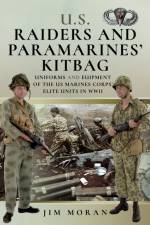
During World War II, the United States Marine Corps (USMC) evolved into a powerful multi-division force, playing a central role in the Pacific theater. Among its lesser-known units were the Paramarines and the Raiders. The Paramarines, the Marine parachute troops, were formed in 1942, with the first operational unit taking part in the Guadalcanal and Tulagi battles. Though their only combat jump occurred in southern France with an OSS unit, they saw action as infantry in the Solomons Campaign before being disbanded in 1944. The Raiders, modeled after the British Commandos, were a hard-hitting assault force trained to strike swiftly from any location. The initial group trained in Scotland became the foundation of the 1st and 2nd Raider Battalions. Pioneers in camouflage, they used black-dyed shirts and trousers, sprayed their green uniforms, and crafted helmet covers from burlap and netting. In this book, Jim Moran, a collector and researcher, delves into the uniforms and gear used by these elite units. Illustrated with over 200 photos, including close-ups of surviving items, it offers a detailed guide to their distinctive equipment. Supported by the US Marine Corps Historical Center, this work serves as an essential reference for collectors, historians, and enthusiasts.
Abonner på vårt nyhetsbrev og få rabatter og inspirasjon til din neste leseopplevelse.
Ved å abonnere godtar du vår personvernerklæring.