


Gjør som tusenvis av andre bokelskere
Abonner på vårt nyhetsbrev og få rabatter og inspirasjon til din neste leseopplevelse.
Ved å abonnere godtar du vår personvernerklæring.Du kan når som helst melde deg av våre nyhetsbrev.

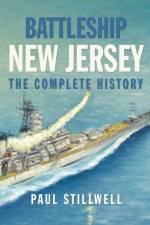
The saga of a gallant fighting ship that took on a battleship, cruiser, and destroyer and was the last to leave the fray.
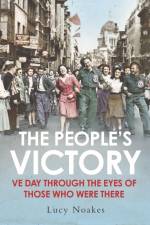
A brand-new social history of how Briton's felt about and celebrated VE Day, utilising the rich Mass Observation archives - published to coincide with the 80th anniversary of VE Day in 2025.
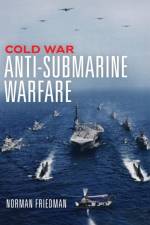
The huge Soviet submarine fleet was a defining naval element of the Cold War. This is the first full account of the Western - mainly US and British - struggle to master that massive force. That struggle largely defined Western navies during the Cold War. During that period, Western navies had to wrestle with many of the problems they now face, such as shrinking numbers and increasingly potent enemies. With the end of that war, anti-submarine warfare shifted dramatically, to the point that probably no one currently in the Navy recalls the past experience. Yet the past - the subject of this book -- is coming back, as the Chinese field a large and growing submarine force, and the Russians are trying to revive theirs. Although the technology is changing, the past revealed by this book is more and more relevant. This is the first book to describe the whole Cold War struggle against Soviet submarines from the points of view of shifting Western national and naval strategy, anti-submarine tactics, changing technology, and the changing character of both the Western and Soviet fleets, including the weapons they wielded. It is based largely on declassified U.S. and British documents (plus some French ones) and on Soviet accounts which appeared during the brief opening of Soviet naval publication after the Cold War.
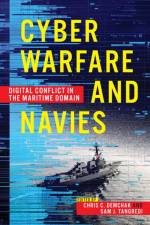
This book outlines the various threats that cyber warfare poses to operations in the maritime environment (defined broadly) and the abilities of modern navies to defend against those threats. It explains how navies are organized and equipped for cyber operations and the concepts and doctrine adopted by those navies. This includes not just the U.S. Navy, Marine Corps and Coast Guard, but also the navies of allies (NATO, the Quad), opponents (China, Russia) and others. It also explores the relationship between USN.USMC and USCYBERCOM. Specific issues that the USN and USMC face in conducting defensive and offensive cyber operations include: recruiting, training, and retaining cyber personnel; consolidation (ashore) and distribution (at sea) of command of cyber operations; operational relationship to artificial intelligence (AI); relationship to electromagnetic warfare (EMW) overall; combining cyber with kinetic operations; unique cyber aspects of surface, air, littoral, and undersea warfare; weaponized dependence on space; cyberattacks on naval supply chains; and fleet resilience and cyber security.
Post Transmittal: This will begin to be populated after the AQ is received and the descriptive copy is finalized
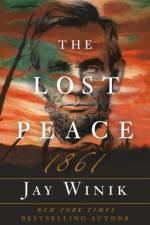
From award-winning historian and New York Times bestselling author of April 1865: The Month That Saved America Jay Winik, a gripping account of the weeks leading up to Abraham Lincoln's decision to go to war against the Confederacy.1861: The Lost Peace is the story of President Lincoln’s far-reaching, difficult, and most courageous decision, a time when the country wrestled with deep moral and political questions of epic proportions. Through Jay Winik’s singular storytelling, readers will learn about the extraordinary Washington Peace Conference at the Willard Hotel to avert cataclysmic war. They will observe the charismatic and farsighted Senator JJ Crittenden, the tireless moderate seeking a middle way to peace. Lincoln himself called Crittenden “a great man” even as Lincoln jousted with him. They'll be inside and among Lincoln’s cabinet—the finest in history—which rivaled the executive in its authority, a fact too often forgotten, and they will see a parade of statesmen frenetically grasping for peace rather than the spectacle of the young nation slowly choking in its own blood. A perfect read for the historically inclined, with haunting overtones to our current political climate.
Helena F. S. Lopes analyses the layers of collaboration that developed from neutrality in Macau during the Second World War. Exploring the intersections of local, regional and global dynamics, she unpicks the connections between a plurality of actors with competing and collaborative interests in the Portuguese-administered enclave of Macau.
Order and Rivalry traces the formation and development of multilateral trade structures in the aftermath of the First World War in response to the marginalization of Europe in global markets, the use of private commerce as a tool of military power and the collapse of empires in Central and Eastern Europe.
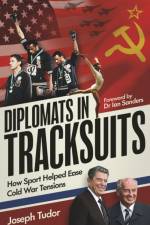
Discover how Cold War sports were more than just games - they were ideological battlegrounds. Through key events like the Fischer-Spassky chess match, the 1972 Olympic basketball final, the 1978 FIFA World Cup and many others, this book explores how athletes became unwitting ambassadors in the political clash between the USA and the USSR.
When the Germans took thousands of Allied prisoners during the catastrophic Greek campaign of 1941, a handful of Australian soldiers escaped from prison trains in occupied Yugoslavia. What awaited them was not passage home, but a brutal underground war where the fate of a nation was at stake.Told through the eyes of two of the Australian escapees - mineworker Ross Sayers and storeman Ronald Jones - Anzac Guerrillas is the incredible true story of how these men became resistance fighters, double agents and spies, evading the Nazis and exposing a group of genocidal collaborators.Yugoslav resistance against the Nazis was divided - royalist ¿etniks battled communist Partisans while the Germans retaliated with terror. The escaped Anzacs faced grave threats from all sides, and even as they came face-to-face with two of World War II's most divisive figures - Josip Broz Tito and Draa Mihailovi¿ - their sense of what was right never wavered.Finding allies and sympathisers among Jewish refugees, British agents and suffragette resistance fighters, those who made it home alive had to fight to have their work with British Intelligence recognised. Once recognition was granted, they seldom spoke of their experiences again. Instead they quietly raised families, shunning Anzac Day and their own traumatic memories of the war.None of these men began World War II as an officer or had been to school past the age of thirteen, but each proved himself with selfless courage and remarkable wisdom, working to save millions of lives. The war would continue to haunt them, and their stories would remain untold, even to those closest to them - until now.
Abonner på vårt nyhetsbrev og få rabatter og inspirasjon til din neste leseopplevelse.
Ved å abonnere godtar du vår personvernerklæring.