






Gjør som tusenvis av andre bokelskere
Abonner på vårt nyhetsbrev og få rabatter og inspirasjon til din neste leseopplevelse.
Ved å abonnere godtar du vår personvernerklæring.Du kan når som helst melde deg av våre nyhetsbrev.

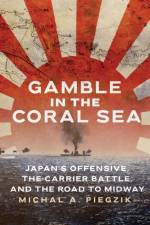
The bold initiative of Japan’s Combined Fleet to conquer Port Moresby from the sea led to the first aircraft carrier clash in history, known better as the Battle of the Coral Sea. This engagement unexpectedly became one of the pivotal points of the Pacific War's early stage, slowing the Japanese advance and influencing further developments. After the naval offensive in the Indian Ocean, the Kidō Butai maintained its high combat readiness in preparation for the decisive quest in the Central Pacific. However, on the eve of the battle of Midway, the Japanese navy planners decided to advance from newly established positions in New Britain and New Guinea towards the Solomon Islands and Port Moresby to cut off Australia and New Zealand from American supplies and military support. Nippon Kaigun’s forces in this area were limited to the 4th Fleet of Vice-Admiral Shigeyoshi Inoue and the 11th Air Fleet of Vice-Admiral Nishizō Tsukahara. Combined Fleet’s command remained focused on the strategic initiative in the Central Pacific yet agreed to temporarily reinforce the 4th Fleet with the 5th Carrier Squadron comprising Shōkaku and Zuikaku. An outline of the Japanese plan was intercepted by American cryptanalysts, who helped to deploy the carrier task force of Rear Admiral Frank J. Fletcher in the South Pacific. At the beginning of May, the vast area of the Solomon Islands and the northern part of the Coral Sea became the stage of a fierce struggle between the US Navy and the Nippon Kaigun. The devious invasion of Tulagi, Yorktown’s raid on the enemy positions on the island, the desperate search for the enemy task force, strikes against secondary targets, and the central part of the battle between two carrier task forces turned out to be the first major Japanese strategic defeat in the Pacific War. The 4th Fleet cancelled Operation “MO” and postponed the seizure of Port Moresby. The battle of the Coral Sea not only proved the high determination of the Allied to check the Japanese advance but also significantly boosted the US Navy morale in the decisive week before the clash off Midway. This book, which presents Nippons Kaigun’s offensive in the South Pacific during the first days of May 1942 from the Japanese perspective whilst also including Allied sources, is a worthy contribution for all WWII book collections.
The Greatest Naval War is about naval warfare during World War II. Its narrative will follow the conflict’s greatest naval engagements, and it will focus on recurrent themes like technology innovations, command and control, logistics, and intelligence. However, the book’s overriding theme is the practice of sea power—not in a one size fits all, formulaic sort of way—but as practiced by all nations with a port and a beach, big or small, as best fitted their own national imperatives. The book will demonstrate that sea power is not a matter of flight decks and big guns, but a combination of many elements, and that it is not the exclusive purview of big navies.
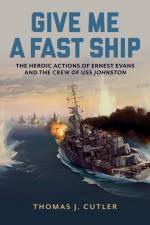
Ernest Evans and his ship USS Johnston (DD-557) are legendary for their exploits in the Battle of Leyte Gulf. Evans is an intriguing character in a number of ways, including his Native American heritage, and the USS Johnston under Evans—he was the sole commander from commissioning to sinking—served in various campaigns and operations prior to the action off Samar that earned him the Medal of Honor. The ship was active in the Carolines and bombarded the beaches at Kwajalein and Eniwetok and (with two other destroyers) sank a sub off Bougainville (earning Evans a Bronze Star). She also was active at Guam and Peleliu. Thomas Cutler brings both Evans and USS Johnston to life in a manner that places them into the context of the greater Pacific War but keeps the focus on these two relatively small—but ultimately so significant—entities. A ship and her captain are nothing without the crew, and the author ensures that—despite his larger-than-life status—Evans is portrayed as part of that larger “organism,” with appropriate emphasis on the other members of the crew.
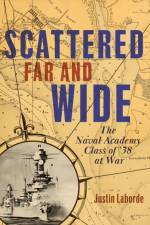
This book, framed in three parts to cover the contributions of these Naval Academy graduates in the Pacific Theater from the Sea, in the Air, and below the Surface – shares the experiences of a group of men who fought the full scope of the war against Japan. Opening with their lives on the Yard, chapters quickly follow the graduates to their first postings as the United States enters the war in December of ‘41. Driven by personal perspectives on a monumental scale of events, readers are taken from Pearl Harbor to the Coral Sea and Midway, to the Japanese home islands in June of 1945 to understand the experiences and contribution of these Naval Academy graduates in the most monumental conflict of the twentieth century.
Explores in depth the subject of subscribing for warships. Frederick Leiner explains how the idea materialized, who the subscribers and shipbuilders were, how the ships were built, and what contributions these ships made to the Quasi-War against France. Along the way, he also offers significant insights into the politics of what is arguably the most critical period in American history.
This book offers a micro-global history of humanitarianism and medical care during the 'long' Second World War, which challenges the traditional and Eurocentric chronological boundaries of 1939/1945. It takes as its starting point the Japanese invasion of Manchuria in 1931, which led to the progressive dislocation of the League of Nations, with the Japanese, German and Soviet departures in the 1930s. It ends with the termination of the Korean War in 1953, and the subsequent dismantlement of the first United Coalition and UN Peace enforcement operation. It considers the slow, messy and ambivalent transformation of humanitarian actors' relations to the suffering of distant others through a study of humanitarian encounters, practices, spaces and affects. Paying close attention to a variety of actors, such as French colonial doctors, Swiss ICRC delegates, Egyptian relief workers, Chinese-style physicians, Peruvian and Ecuadorian nurses or American member of the Unitarian Service Committee, the book provides a more holistic story of humanitarianism.
Highlights the importance of the Soviet Union and the socialist world in shaping the rise of the international political economy we know today. Sanchez-Sibony documents how the Soviets succeeded in helping bring about financialization and international market practices in Europe.
Combining history and biography with astute philosophical analysis, Nicolas de Warren explores and reinterprets the intellectual trajectories of ten German philosophers as they reacted to and experienced the First World War. His book will enhance our understanding of the intimate and invariably complicated relationship between philosophy and war.
The Nursing Diary kept by Katharine Asquith in 1918, when she worked under Millie, Duchess of Sutherland at a field hospital in France.
The first full reappraisal of one of Britain's great fighter aces, this book examines the truth behind Tuck's 1956 biography, Fly for Your Life. It looks at the evidence behind the myths, and reveals the real Stanford Tuck, a more complex man than the one-dimensional hero of the previous biography.
The sixth volume of this popular series focuses on the early months of the hugely significant air campaign against German assets across South-East Europe. Each are described in minute detail, including the actions of Germany's Axis allies such as Hungary, Rumania and Bulgaria that were encountered for the first time by the Western Allies.
This handbook explores the significance of Indo-Pacific in world politics. It shows how the re-emergence of the Indo-Pacific in international relations has fundamentally changed the approach to politics, economics, and security.
A fascinating exploration of a little-known subject--the government-in-exile of Poland which existed in London for over 50 years.In the wake of the German and Soviet invasions in September 1939, the Republic of Poland's government re-established itself abroad, first in France, then in the United Kingdom, where it functioned until the fall of communism in Poland. It never surrendered to the Germans, nor did it accept the communist government imposed by the Soviet Union. Despite diplomatic and financial pressures, the exiles maintained a government consisting of a president, prime minister, council of ministers, national council, judiciary, and treasury, and they regularly conducted elections. Throughout its existence it remained a constant reminder of Poland's plight during and after the war. This book provides an English language history of Poland's Government-in-Exile from its creation in 1939 through the dissolution of the last of its bodies in 1991, focusing on its relations with wartime allies, its loss of recognition in 1945, its postwar mission, relevance, and international reach, and its legacy in post-communist Poland. It explores internal conflicts and divisions in the exile community, the Government-in-Exile's advocacy for Poland throughout the Cold War, and its extensive support for the opposition in Poland.
The complete story of the Wannsee Conference, the meeting that paved the way for the Holocaust.
Into Nowhere: Bruce Springsteen and The Cold War Blues, by Marilisa Merolla--an internationally renowned professor focusing on rock and roll music's impact on world history--investigates the role played by Springsteen as a “Born in the U.S.A.” sound ambassador, particularly in Italy, and sheds light on the invisible trauma that affected the Cold War generation, a trauma profoundly interpreted by Springsteen.The groundbreaking book threads two separate perspectives: one inspired by the psychological interpretation of the effects of the “Blues” on contemporary societies, and another anchored to the current debate among historians about music and international relations. The author uses these two separate threads to investigate the role played by Bruce Springsteen as an American “sound ambassador” outside the US, particularly in Italy and the Mediterranean area; and sheds light on the invisible trauma that affected the Cold War generation. A trauma Bruce Springsteen interpreted, as a sort of “Born in the U.S.A” Dionysus.Through the lens of Springsteen’s Neapolitan roots and Italian heritage via his mother’s family, this book examines the diffusion of the Blues during fascist Italy, and goes deep into the impact of rock and roll music, from Elvis to Bruce, during the Cold War.Since World War II, the US Department of State had used jazz and the Blues as a “sonic weapon” to combat the perception of the US as a racist society. By the Fifties, rock and roll arrived in its raw version in the Mediterranean area through the U.S. soldiers at the Naples-based AFSouth (Allied Forces Southern Europe) Headquarters. Paradoxically, the military use of the Blues, now distilled in rock and roll, represented a double-edged sword which spread the seeds of the dark side of the American way of life among the youth.In the Sixties, with the upheaval of the Vietnam War, the split between the expectations of a more democratic and individualized society and a bipolar geopolitical order of an unexploded atomic war made the frustration of the youth even more unsolvable.From the Seventies to the fall of the Berlin Wall in 1989, Bruce Springsteen expressed the peculiar feeling of helplessness of so many people in Western society, offering a transnational Cold War generation a sense of connection. While giving an implicit, alchemical voice to different political identities—Atlanticist, Catholic, and Communist—his music makes the “Nowhere” recognizable in a geopolitical entity drawn by the Blues. His darkness provides redemption through the genuine religious experience of rock and roll. The performance of a collective trauma. A path to healing from the Cold War Blues.
Joining Up examines how the cultural legacy of the First World War affected young men's attitudes to service and subjective conceptions of wartime masculinity during the Second World War.Morley uses original and archival oral histories and the Mass Observation Archive to explore how young men in interwar Britain encountered and understood representations of the Great War in popular culture and day-to-day life. Interactions with Great War veterans are shown to be more important than previously acknowledged. By demonstrating the breadth of representations through which the cultural memory of the Great War was transmitted and the diversity of young men's responses Joining Up makes a significant intervention in the cultural history of the Great War.>Joining Up makes important contributions to, and connects, the history of the legacy of the First World War, and the history of gender and service in the Second World War.
For more than half of its existence, members of the Marine Corps largely self-identified as soldiers. It did not yet mean something distinct to be a Marine, either to themselves or to the public at large. As neither a land-based organization like the Army nor an entirely sea-based one like the Navy, the Corps' missions overlapped with both institutions. This work argues that the Marine Corps could not and would not settle on a mission, and therefore it turned to an image to ensure its institutional survival. The process by which a maligned group of nineteenth-century naval policemen began to consider themselves to be elite warriors benefited from the active engagement of Marine officers with the Corps' historical record as justification for its very being. Rather than look forward and actively seek out a mission that could secure their existence, late nineteenth-century Marines looked backward and embraced the past. They began to justify their existence by invoking their institutional traditions, their many martial engagements, and their claim to be the nation's oldest and proudest military institution. This led them to celebrate themselves as superior to soldiers and sailors. Although there are countless works on this hallowed fighting force, How the Few Became the Proud is the first to explore how the Marine Corps crafted such powerful myths.
Abonner på vårt nyhetsbrev og få rabatter og inspirasjon til din neste leseopplevelse.
Ved å abonnere godtar du vår personvernerklæring.