



Gjør som tusenvis av andre bokelskere
Abonner på vårt nyhetsbrev og få rabatter og inspirasjon til din neste leseopplevelse.
Ved å abonnere godtar du vår personvernerklæring.Du kan når som helst melde deg av våre nyhetsbrev.

Teddy Peacock-Edwards was one of eleven young men from Southern Rhodesia recruited into the RAF in 1938. This book, written by his acclaimed fighter pilot son, Rick Peacock-Edwards, describes his father's formative years and gives his overall impressions of his father as an individual, a father, and fighter pilot.
"Starting with a brief history of western naval medical care from the ancient Greeks and proceeding to modern times, this book chronicles the evolution of the Navy's first West Coast hospital, the Mare Island Naval Hospital, as it grew from a "palatial" but primitive facility in the 1860s to the Navy's premier amputee center for Marines and sailors returning from the brutal Pacific war. Located in the Navy's largest California shipyard, the hospital benefited from healthful California weather that permitted creation of a tent hospital to care for Spanish flu victims. Navy Yard engineering and mechanical skills helped create the Navy's first ambulance boats, and in World War II, the best limb prostheses available. Hospital commanders skillfully balanced their obligations as naval officers and as physicians to provide the best possible care for their charges. Damaged by the 1898 Mare Island earthquake, the original structure was replaced. The facility grew over time as structures representing new medical knowledge--laboratory science, neuropsychiatry, infectious diseases, internal medicine, the famous "brace shop"--came on line. Despite concerns that its proximity to the Navy Yard's industrial complex could lead to inadvertent (or intentional) bombing in wartime, at its peak, the hospital's 23 structures covered 48 acres and accommodated about 2,300 patients. This complete history of the Mare Island Naval Hospital draws heavily on primary sources and provides a detailed picture of this pivotal hospital."--
This compendium looks at pen portraits of a selection of soldiers on the Western Front who never returned home.
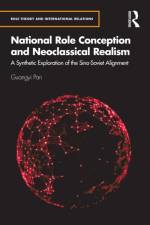
Despite China's alignment with Russia being one of the most significant factors shaping international order, the dynamics of their historic relationships and the sources of China's alignment policy remain under-explored. This book investigates this by analysing the changes in China's national role conception from a cross-level perspective.
Motin examines the intricate relationship between the rise of new powers in bipolar international systems and the policies of the existing great powers; exploring the understudied problem of the rarity of armed emergence after 1945, he proposes a novel theory of why and when states resort to military conquest to become great powers.
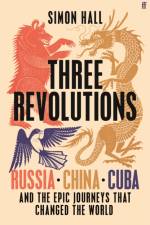
From the streets of Petrograd during the heady autumn of 1917, to Mao's stunning victory in October 1949, and Fidel's triumphant arrival in Havana, in January 1959, the history of the twentieth century was transformed in dramatic and profound ways by the Russian, Chinese and Cuban revolutions.Here, the stories of these epoch-defining events are told together for the first time. At the heart of each revolution was an epic journey: Lenin's 1917 return to Russia from exile in Switzerland; Mao's 'Long March' of 1934-35, covering some 6,000 miles across China; and Fidel Castro's return to Cuba in 1956 following his exile in Mexico. Told in tandem with these are the corresponding journeys of three extraordinary journalists - John Reed, Edgar Snow and Herbert L. Matthews - whose electric testimony from the frontlines would make a decisive contribution to how these revolutions were understood in the wider world. Together, these six journeys changed the course of the twentieth century. Here, in Simon Hall's masterful retelling, these exhilarating events are brought vividly to life. Featuring a stellar cast, extraordinary drama and an epic sweep, Three Revolutions raises fundamental questions about the nature of political power, the limits of idealism and the role of the journalist - questions that remain of utmost urgency today.
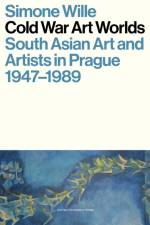
Prague as a vital Cold War hub for South Asian artists. During the Cold War, the Central-European capital of Prague, alongside other locations in the polarized post-war world, emerged as a key site where an art world of particular importance for artists from South Asia developed. By emphasizing cultural mobility as a catalyst for exchange and network building, this book challenges and complicates assumptions about Cold War binaries of East and West and the polarization between so-called totalitarian regimes and free cultures. Positioning Prague as a nexus where South-Asian modernisms intersected with multiple peoples, histories, and ideologies in the post-World War II era, it offers a narrative of decolonization that rejected rigid systemic alignment in favor of participation across blocs by prioritizing migratory aesthetics over nationalist parochialism. Well-researched and rich in archival materials, this book proposes new ways of writing art histories and makes a significant contribution to both Cold War studies and critical global modernism studies.
The action-packed story of the British Army's Long Range Desert Group in WWII, from one of the UK's most storied special forces operators.
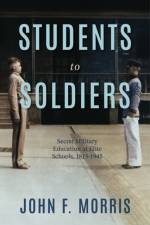
An expansive study of the brutal rites of initiation at elite institutions that shaped young men into military leaders Informed by his own experience as a cadet at West Point, John Morris offers the first transnational history of student life at elite military preparatory institutions in Europe and America and the unofficial, underground rituals, practices, and codes that formed a crucial part of the education there. Comparing British public schools, the monarchical cadet schools in Imperial Germany, Austria, and Russia, and the US Military Academy over the course of the nineteenth and into the twentieth century and the world wars, Morris presents critical insights on the unsanctioned methods employed to transform young students into leaders of men. Extracurricular traditions--including but not limited to severe hazing--Morris argues, shaped the officers-in-training much more than their official courses of study. He also shows how romantic and sexual relations between boys facilitated the cultivation of hypermasculinity at these institutions. Students to Soldiers offers a fascinating glimpse into the lives of the budding military elites of Europe and America, both unpacking the arcane rituals that eventually became codified into honored traditions and analyzing their influence over the long term.
Abonner på vårt nyhetsbrev og få rabatter og inspirasjon til din neste leseopplevelse.
Ved å abonnere godtar du vår personvernerklæring.