





Gjør som tusenvis av andre bokelskere
Abonner på vårt nyhetsbrev og få rabatter og inspirasjon til din neste leseopplevelse.
Ved å abonnere godtar du vår personvernerklæring.Du kan når som helst melde deg av våre nyhetsbrev.

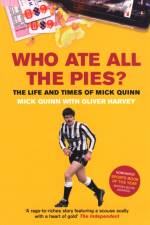
Mick Quinn, the boy from a Liverpool council estate dubbed 'Little Beirut', always loved his birds, booze and betting. They said Mick had a sixth sense for great accuracy in his playing days - he could find a party from any range. Quinn says he only put 50 on each horse race - but liked to stay in the bookies for twenty races a day!Sentenced in 1987 to three weeks in prison for twice driving whilst banned, Mick's been accused of punching Peter Schmeichel on the football pitch and John Fashanu off it. On retirement, though, Quinn switched to horse racing, the Sport of Kings, but controversy led the blue bloods of racing to hang the scouse oik out to dry and he was suspended from training for two and a half years.Who Ate All The Pies? is the funniest and most honest football book you'll read for a long, long time.
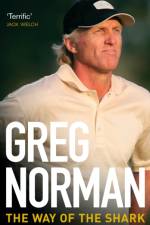
Greg Norman (known universally as the Great White Shark for his rugged blonde Aussie looks) will go down in golfing history as one of the greatest of all time - the finest performer to grace a golf course between the golden era of Jack Nicklaus and the modern era of Tiger Woods. Before Woods, Greg had occupied the Official World No. 1 Rankings far longer than any other player in the modern game, with an incredible 331 weeks at the top.Greg sensationally won The Open Championship twice, in 1986 and 1993, has 20 PGA and European Tour wins to his name and 29 top ten finishes in majors. But despite such huge success, he is perhaps best loved as the nearly man in so many other big tournaments: particularly The Masters, US Open, and PGA Championship. He was equally a victim of his own bad luck, and good luck on the part of his fellow golfers (losing a near-certain PGA Championship win in 1986 after Bob Tway holed a bunker shot, and losing The Masters the following year in a playoff by an even more miraculous 45-yard chip shot from Larry Mize), and a couple of infamous 'chokes' where Norman's wobble-prone putting got the better of him.But it's not just a story of the highs and lows of a golfing legend either. Greg Norman has made a huge success in business since leaving the top rank of golf, with an empire worth hundreds of millions of dollars, and he offers the motivational truths that have driven him to win on both the fairway and beyond.Using his familiar charm and humour, Greg's own book will be an honest look at the long and arduous path to success - a journey littered with hard work, hard decisions, knowing when to trust your instincts, handling failure, psychological doubts, finding self-belief and learning from mistakes - an inspiration to any sportsman.
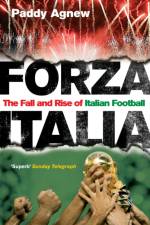
When journalist Paddy Agnew and his girlfriend Dympna touched down in Rome in 1985 in search of adventure, sunshine and the soul of Italian football (well, Paddy was looking for that), they were travelling into the uncharted terrain of a country they did not know and a language they did not speak.It soon became clear that neither Italy nor Italian football would be boring. In that first week in Italy, Michel Platini and Juventus won the Intercontinental Cup, whilst just days later the PLO killed 13 people in a random shooting at Rome's Fiumicino airport. Paddy covered both stories. The coming years saw the rise of TV tycoon Silvio Berlusconi, as he became owner of AC Milan and then Prime Minister of Italy, naming his political party 'Forza Italia' after a football chant. In that same period, Argentine Diego Maradona became the uncrowned King of Naples, leading Napoli to a first ever Scudetto title in 1987, notwithstanding a hectic, Hollywood-esque lifestyle that mixed footballing genius with off-the-field excess.Forza Italia is a fascinating tale of inspired players, skilled coaches, rich tycoons, glitzy media coverage, Mafia corruption, allegations of drug taking and fan power - culminating in the 2006 World Cup victory that delighted a nation and a match-fixing scandal that shocked the world. It is also a personalised reflection on the consistent and continuing excellence of Italian football throughout a period of huge social, political and economic upheaval, offering a unique insight into a society where football has always been much more than just a game.
'To be legendary you got to have heart... Ray's heart was bigger than all the rest' Muhammad AliSUGAR RAY LEONARD was one of the greatest boxers ever. An artist and a showman he was always willing to take the difficult fight: his gruelling encounters with Roberto Duran, Thomas Hearns and Marvin Hagler have become legendary.Ray's autobiography takes you into the ring - with the mind games, brutality and euphroia. But, outside of the ring, Ray's biggest opponent was himself. From early domestic violence and sexual abuse to a blur of fame, sex, greed, drink and drug addiction at the height of his career that cost him so much, The Big Fight is a remarkable portrait of the rise, fall and final redeption of a true fighter in every sense.
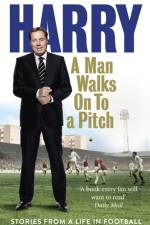
When a man walks on to a pitch there s always a chance something magic can happen, that s what keeps us coming back In A Man Walks On To a Pitch, Harry shares a lifetime s experience of obsessing over football, during which he has seen it all first hand the good, the bad and the unbelievable. Harry started in an age where players were ordinary blokes who might live on the same street as you and earn a similar wage. Now he manages in an era of player power, multi-million pound wages and teams assembled from around the globe.As he shares stories of some of the legends and journeymen he played, coached, argued and drank with, Harry picks a team for each decade from the 1950s to the present. He gets to the heart of what was right and wrong with each era and explores the changes in the game from lifestyle to tactics. He weaves his choices together with unforgettable tales from the training pitches, boot rooms and card schools.There are tales of the untutored genius of Duncan Edwards and Tom Finney, legendary tough Scots like Bobby Collins, Dave Mackay and Billy Bremner, the world-beaters of 1966, unpredictable one-off wizards from Sir Stanley Matthews to Matt Le Tissier, natural-born goalscorers from Greaves to Dalglish and the greatest foreign players to grace our game from Trautmann to Bergkamp. It is one of the best informal histories of the British game you ll ever read.
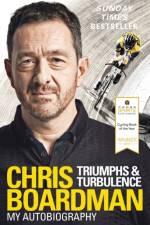
Chris Boardman is the 2017 winner of the Cross Sports Cycling Book of the Year for his autobiography Triumphs and Turbulence. The true inspiration was that Olympic gold won by Chris Boardman in Barcelona I was so in awe of Chris Boardman Sir Bradley WigginsYou may know him as the much-loved co-presenter of ITV s Tour de France coverage or enjoyed his BBC Olympic coverage, but beyond the easy charm Chris Boardman is one of our greatest, most inspiring cyclists.Boardman s lone achievements in the 80s and 90s Olympic track gold, the world hour record, repeatedly claiming the yellow jersey in the Tour de France were the spark that started the modern era for British cycling. His endeavours both on and off the bike have made him the founding father of current golden generation without him there would simply be no Hoy, Wiggins or Cavendish.It is a story full of intrigue: from Olympic success, to the famous duels with Graeme Obree and the insanity of the Tour de France. Chris became a legend for his combination of physical ability and technical preparation, almost single-handedly taking British cycling from wool shirts and cloth caps into the era of marginal gains. Indeed, after his career on the bike ended, a new chapter began as the backroom genius behind GB cycling. As head of the R&D team known as The Secret Squirrel Club, Chris has been responsible for the technical innovations that made the difference in 2012 and developed Boardman Bikes, which has become the country's bestselling premium bike range.
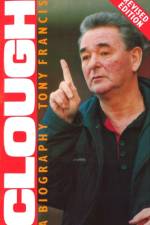
Brian Clough is no ordinary football manager. He has walked on water at Nottingham Forest and through hellfire at one or two other clubs without once conceding an inch to anybody. Even his enemies are mesmerized. Tony Francis has talked at length to more than 200 people about Clough, including former partner Peter Taylor and his current chairman Fred Reacher. Why, despite his television attacks on his own supporters, did he remain his people's choice as England manager for so long?. What is the Trent Enders view of the man they used to worship whose behaviour gets stranger and stranger and whose bloated face turns even more purple? Why did Fred Reacher feel he has to issue him a warning? This book traces Clough's life from early Middlesbrough days and the knee injury that crippled him as a centre forward to the outspoken Hartlepeool manager who toppled the chairman, the idolized Derby manager who resigned on the eve of glory, the Leeds manager who told Revie's men they had won all their trophies by cheating and the triumphant Nottingham Forrest manager who took his team from nowhere to the peak of Europe and seemingly back down again.
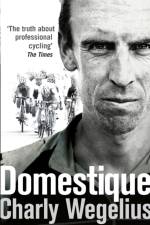
**Winner - Sweetspot Cycling Book of the Year** For 11 years I was a professional cyclist, competing in the hardest and greatest races on Earth. I was in demand from the world s best teams, a well-paid elite athlete. But I never won a race. I was the hired help.When my mum dropped me off in a small French town aged 17, I was full of determination to be a professional cyclist, but I was completely green. I went from mowing the team manager s lawn to winning every amateur race I entered. Then I turned pro and realised I hated the responsibility and pressure of chasing victory. And that s when I became a domestique.I learned to take that hurt and give it everything I had to give, all for someone else s win. When the order came in to ride I pushed out with the hardest rhythm I could, dragging the group faster and faster, until my whole body screamed with pain. There were times I rode myself to a standstill, clutching the barrier metres from the line, as the lead group shot past. But that s what made me a so good at my job.As my career took off, I started looking at the fans lining the route, cheering us like heroes. The passion for cycling oozed off them, but they couldn t know what it was really like. They didn t see the terrible hotels, the crazy egos or all the shit that goes with great expectations. Well, this is how it is
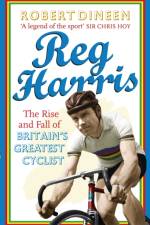
Reg Harris, whose statue overlooks the Manchester Velodrome, is the legend who all track cyclists want to emulate. He was a poor, working-class boy born in the Depression who escaped the Lancashire mills to utterly dominate his sport. He triumphed as world champion an incrediblefive times between 1947 and 1954 and performed medal-winning heroics at the London Olympics.At his peak he was the most adored sportsman in the country attracting huge crowds, sponsorship, and the company of the rich and famous. But, fiercely driven and ruthlessly single-minded, Harris had a dark side. His was a sensational life fuelled by an insatiable need for money, celebrity, fast cars and beautiful women that constantly threatened to destroy him. Following an exhaustive investigation, Robert Dineen has uncovered an epic sporting rise and fall a story more astounding than anyone had known.
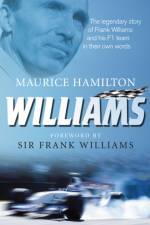
A story of true drive now the topic of a major documentaryFounded in 1977 by Sir Frank Williams and Patrick Head, Williams F1 represents the last of the true independent teams; a company devoid of corporate dogma and run by enthusiasts driven by a love of racing and the satisfaction that comes with beating the rest of the world. Since its first Grand Prix victory at Silverstone on 14 July 1979, the team has won a further 116 GPs, delivered seven World Champions - among them Nigel Mansell and Damon Hill - and won nine Constructors Championships.This is the definitive history of the Williams team as told by those who have worked for Williams past and present. At the heart of the book are Sir Frank's personal recollections, along with memories and anecdotes from those at every level: from the shop floor to the upper strata of management; from the mechanics and machinists to the drivers - Mansell, Hill, Alain Prost and Alan Jones among them. It relates both the incredible highs of winning against the odds while never shying the terrible lows - the tragic deaths of Piers Courage in 1970 and Ayrton Senna in 1994 among them.Conveying the history and soul of a unique band of people, Williams F1 explains exactly why the Williams team is held in more affection than any other team in Britain, if not the world.
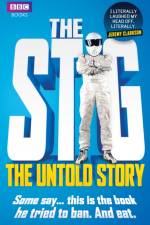
Who is The Stig? Where did he come from? Why does he never speak?To answer these questions, award-winning biographer Simon du Beaumarche spent a year chasing The Stig and talking to those closest to him, including Jeremy Clarkson, Richard Hammond, James May and leading figures from Formula 1, music, movies and the military.What he discovered is an explosive story of intrigue, influence and a sensational conspiracy that seeks to hide the truth about one of the 21st century s greatest icons.Get behind the visor of the man, the myth, the driver, the legend, THE STIG.This book contains adult humour and some themes that may be unsuitable for children.
Up-close, behind-the-scenes biography of the winningest coach in college basketball history.
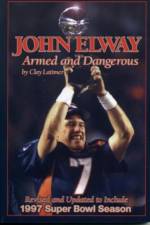
This is the first book on one of sport's greatest stars, a portrait of a man who has dedicated his life to becoming the greatest quarterback ever. It's the story of John Wayne in Cleats, a father of four who led his team to Super Bowl glory at age 37.
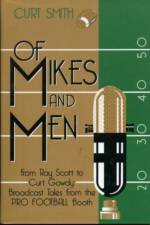
In this collection of anecdotes from the announcers of pro football, the Voices reminisce about a time before television, when the NFL was just making its floundering start and college ball held all the attraction. With the spread of television broadcasting, the Voices gain faces and the NFL gains an audience. Recall with the broadcasters the excitement of pivotal moments, the glory of the victors, and the great men who coached those champions. With their love of the work and lots of lighthearted memories about everything from the Heidi game to the glory of Green Bay to the birth of "e;Monday Night Football,"e; these men and women bring football to life.
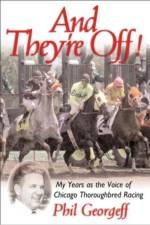
Beloved for his thunderous, commanding voice and affable personality, Phil Georgeff, known as "e;The Voice of Chicago Racing,"e; holds the world record for calling the most horse races-an astounding 96,131. During his fifty years in the sport, Georgeff brushed shoulders with every great jockey and saw just about every great horse, from 1948 Triple Crown winner Citation to 1973's Secretariat. Part memoir, part historical analysis, and part nostalgic remembrance, this book is the quintessential guide to the history of thoroughbred racing in the twentieth century.
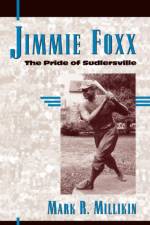
While major league baseball gained popularity in large American cities at the beginning of the twentieth century, it was still relatively unseen by small town inhabitants who could only read about it in the newspaper or catch an exhibition game as major league teams traveled through the United States. What was popular was "e;town baseball,"e; fierce competitions between local teams to best the other in all aspects of baseball, particularly power hitting. It was from this environment that Jimmie Foxx, one of major league baseball's most talented players, began his journey toward the majors.Jimmie Foxx: The Pride of Sudlersville, is the story of one of baseball's most ferocious hitters. Growing up in small town Maryland, Jimmie seemed destined to play major-league baseball. By age 16 he was already playing professionally and wowing fans with his ability to smash homers. During his major-league career he appeared in three straight World Series, played for the Philadelphia Athletics and the Boston Red Sox, and spent the 1932 baseball season closely pursuing Babe Ruth's single-season home run record. The comparison to Babe Ruth has not been lost on many baseball scholars, but goes relatively unknown by the general public and many baseball fans. The most inclusive biography of Jimmie Foxx to date, Millikin's book provides a complete picture of his subject.
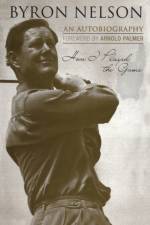
Byron Nelson was one of golfs greatest legends. He was one of the finest golfers ever to pick up a putter, and the man who had the most magnificent year any golfer has ever had1945, when he won an incredible eighteen PGA tournaments, including eleven in a row, and finished second in seven others.How I Played the Game is the beautifully told tale, in his own words, of a man determined to be the best ever: his hardscrabble rural Texas upbringing and his near-death experience with typhoid fever; his early years as a caddie at Fort Worths Glen Garden Country Club (where as a 15-year-old he beat another young caddie named Ben Hogan in the Caddie Championship); the lean years as an amateur and as a young pro during the Depression; and the golden years of the 1940s, when he invented the modern golf swing and forged the legend of Lord Byron.Even after his sudden retirement (the real reason for which is finally revealed here) his impact on the game never lessened. Besides his many years as an insightful TV golf commentator, he was mentor to several future golf champions, Ken Venturi and Tom Watson among them. And he continued to play top-caliber golf with the greats of the game, like Hogan, Jack Nicklaus, and Arnold Palmer, and some who were less than greatPresident Eisenhower, Bing Crosby, Bob Hope, and a host of others.Laced throughout with scores of priceless stories, anecdotes, opinions, and even golf tips, and with an in-depth, event-by-event recreation of his golden year, 1945, How I Played the Game is golf writing and remembrance of the highest orderirresistible reading for every golfer and fan.
It started on a cold, frosty morning in 1951 in Christchurch, New Zealand, with a seventeen-year-old-boy, a crate of sheeps' kidneys and a dream.The boss of the city's Belfast meatworks, had arrived an hour early to set up for the day, when he noticed one of his workers packing up a crate on the countertop. The young lad was battling to move it so the boss went over to help. When asked what time he'd started, the boy replied 'Five o'clock this morning'. Stunned, and amused, the boss told him he'd be earning a good bonus at the end of the week, and wondered aloud what he'd spend it on. But the boy knew, and immediately replied, 'I'm going to race speedway in England.'And he did. That boy was Barry Briggs, and it was just the start of his great adventure. Little did he know he was soon to become the legendary speedway racer more commonly known as Briggo, and later as Barry Briggs MBE. From dangerous encounters in the jungles of Liberia to teaching Steve McQueen to slide a speedway bike, Briggo's incredible story is one of strength, determination and a life lived firmly in the fast lane.
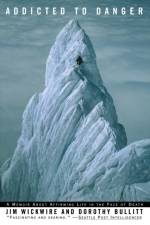
Adventurist Jim Wickwire has lived life on the edge -- literally. An eyewitness to glory, terror, and tragedy above 20,000 feet, he has braved bitter cold, blinding storms, and avalanches to become what the Los Angeles Times calls "e;one of America's most extraordinary and accomplished high-altitude mountaineers."e; Although his incredible exploits have inspired a feature on 60 Minutes, an award-winning PBS documentary, a Broadway play, and a full-length film, he hasn't told his remarkable story in his own words -- until now.Among the world's most intrepid and fearless climbers, Jim Wickwire has traveled the globe, from Alaska to the Alps, from the Andes to the Himalayas, in search of fresh challenges and new heights to conquer. Along the way he accumulated an extraordinary roster of historic achievements. He was one of the first two Americans to reach the summit of the 28,250-foot K2, the world's second highest peak, acknowledged as the toughest and most dangerous to climb. He completed the first alpine-style ascent of Alaska's forbidding Mt. McKinley, spending several nights without tents in snowcaves, crevasses, and open bivouacs. But with the triumphs came harrowing incidents of suffering and loss that haunt him still. On one climb, his shoulder broken by a fall, he watched helplessly as a friend slowly froze to death, trapped in an ice crevasse. Buffeted by storms, Wickwire spent two weeks utterly alone on a remote glacier before his rescue. On two other expeditions he witnessed three fellow climbers plunge thousands of feet, vanishing into the mountain mist.A successful Seattle attorney, Wickwire climbed his first mountain in 1960 and discovered the wonder of leaving behind the complexities of the civilized world for the pure life-and-death logic of granite, glacier, and snow. Deeply compelled by the allure of nature and the thrill of risk, he pushed himself to the limits of physical and mental endurance for thirty-five years, ultimately climbing into legend.After more than three decades of uncommon challenges, Wickwire faced a crisis of heart -- a turning point that threatened his faith in himself and his hope in the future. How he reassessed his priorities and rededicated his life -- to his family and to his community -- completes a unique and moving portrait of one man's courage, commitment , and grace under pressure. Addicted to Danger is a tale of adventure in its truest sense.
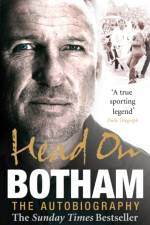
Voted the greatest English cricketer of the 20th century by the fans, Sir Ian Botham is the English game's one true living legend and his story both on and off the pitch reads like a Boy's Own rollercoaster ride.Born with a natural genius for cricket, Botham began breaking records with bat and ball from a young age and soon became the man English cricket expected most from. After a troubled period as England's captain, Botham rose once again to become a national hero with his display in the Miracle Ashes of 1981. But, with his confrontational nature and wild streak, he began regularly making the wrong kind of headlines. With accusations of drink and drugs, affairs and ball-tampering, he became hounded by the tabloid pack, never sure whether they wanted him to triumph or implode. Now a Knight and just as famous for his tireless charity work, Beefy gives us the definitive story of his never-dull life and times in his own no-nonsense words.
Bellies and Bullseyes is simply the greatest account there will ever be about the sport of darts - as told by one of its most legendary characters - Sid Waddell. It mixes Sid's own personal journey from the coalfields of the North East with the entire history of the sport. What is revealed is a hilarious yet epic Darts Babylon, covering every significant event and every character to walk the oche from Eric 'The Crafty Cockney' Bristow to Phil 'The Power' Taylor.In words as ripe as his commentaries, Sid brings an authentic whiff of fags, hard drink, hot tungsten and moist polyester to the whole cabaret. Sid has been friend and confidante to most of darts' stars over the years as well as being instrumental in the game's progress himself. Nobody is equipped to tell the story quite like he is. From the early days of hustling in bars and the 1960s money-race pub competitions that spawned the likes of John Lowe and Leighton Rees, to ITV's brilliantly daft The Indoor League and the glory days of BBC's coverage; from the bling of Bobby George and the belly of Jocky Wilson to the awesome professionalism of Phil Taylor; from smoky Northern working men's clubs to the Houses of Parliament; this is the complete, incredible story of darts.
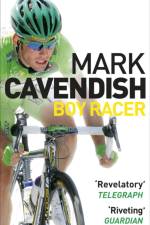
Boy Racer steps behind the scenes of the Tour de France. It unmasks the exotic, contradictory, hysterical and brutal world of professional cycling from the compellingly candid viewpoint of someone right in the thick of it.Written off as 'fat' and 'useless' in his youth, Mark Cavendish is now one of cycling's brightest stars and one of Britain's greatest ever cyclists. Some have called him cocky, but to anyone who doesn't like his style, Mark will simply shrug his shoulders and reply, 'I know I'm good. There's no point lying about it.'Peers say that they have never seen anyone with Cavendish's hunger for success and while this fearlessness - both in the saddle and on the record - has at times led to controversy, it has also earned him the respect of ever more fans.In Boy Racer we follow him through the mayhem of the Tour de France in a page-turning journey of pure exhilaration.
In 1937 an ordinary school teacher on the island of Maui took a group of under privileged children, most of Japanese ancestry, and trained them to become Olympic swimmers. He called his plan the 'Three-Year Swim Club' and he succeeded in producing true American heroes whose story has never been told.None of the barefoot children had ever laid eyes on a pool. Their only experience in water was playing naked in the filthy irrigation ditches that snaked down from the mountains and into the sugar cane fields. And the coach knew nothing about coaching and couldn't swim a lap to save his life. But, against all odds, and during a period of history marked by virulent racism and the Second World War, the children embarked on an unlikely path that led them to become celebrated swimmers from LA to London, and real-life American heroes.
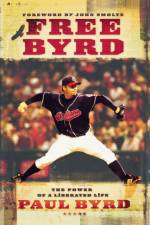
Cleveland Indians pitcher paul Byrd gives an honest account of how he has kept his faith in God despite all the trials and temptations associated with the Major league Baseball lifestyle. Paul Byrd has experienced many struggles, victories, and life lessons both on the diamond and off. Throughout his life, the one thing that has kept him focused on walking clean is the glimpses he has received of God's goodness. He addresses the issues he has faced -- such as the temptation to cheat while pitching, the unhealthy desire to cheer against fellow teammates so he could benefit from their failure, and his personal battle with pornography. Byrd gives readers Major League insight into the lifestyle of top-tier baseball players while showing how, even through a struggle, he was able to pick himself up and continue to believe and trust in a God who deeply loves us all. Paul's focus remains on the people we relate to every day and the significant conversations and interactions we can have with those we love, learning to build them up rather than tear them down. In Free Byrd, readers see how Paul's life was changed through the lessons he was taught, and how he discovered a freedom he never imagined through a dynamic relationship with Jesus Christ. And, most importantly, he invites everyone to experience the same transformation.
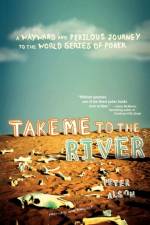
MEET PETER ALSON An overeducated underachiever, he's spent his postcollege decades doing his best not to grow up. Now, having just turned the incomprehensible (to him) age of fifty, and staring down his own mortality, this rambling- gambling bachelor decides it's time to settle down. After years of equivocating, he pops the question to his longtime girlfriend. A wedding date is set for just after Labor Day, and to pay for it, a plan is hatched involving poker and a trip to Vegas. Alson boards a plane bound for the neon desert on his way to the biggest game in town, the 2005 World Series of Poker. Thus begins Take Me to the River, a first-person account of one inveterate gambler and bad boy's quest to grow up while at the same time compete with more than 5,000 players vying for over $56 million in prize money during a scorching Vegas summer. Take Me to the River is a hilarious, heart-wrenching tale of Las Vegas and an exploration of what it means to be part of one of the fastest-growing and most popular sports in the United States, at the moment of its apogee, and of the lessons that poker has to teach about probability and luck, good and bad fortune, patience, perseverance, and -- most fitting for a man with marriage in his near future -- commitment.
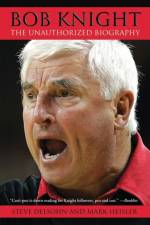
Brilliant, intimidating, charming, or profane, Coach Bob Knight is an enduring contradiction who has long fascinated and repelled basketball fans, for whom he has provided as much to dislike as to respect. Bob Knight: The Unauthorized Biography is the first comprehensive biography of Knight, one of the most successful and controversial coaches in the history of American sports. Detailing the entire scope of Knight's playing and coaching career through extensive interviews -- including many with people who have never gone on record about him before -- authors Steve Delsohn and Mark Heisler give a candid yet balanced account of the man who will likely end up as the all-time winningest coach in college basketball. In 1965, at age twenty-four, Bobby Knight became the head basketball coach at Army and began a career that would soon take him to Indiana University, where for the next twenty-nine years he would become the game's most famous and notorious coach. While there, he won three national championships (1976, '81, '87) and once compiled a perfect 32-0 record with an amazing 63-1 record over two seasons. Knight was NCAA Coach of the Year three times (1975, '76, '89) and coached U.S. teams to gold medals in both the Olympics and the Pan-Am Games. Yet he is equally, if not more, famous for some of his misbehaviors -- pulling his team off the court against the Soviets, making insensitive comments about rape to Connie Chung, putting a tampon in a player's locker to let him know that Knight thought he was a wimp -- and other alleged misbehaviors: kicking his own son Patrick during a game, stuffing an LSU fan into a trash can, assaulting a policeman in Puerto Rico -- and the list goes on. One of Knight's closest friends once said of him, "e;Bob Knight is an asshole. But he knows it and he tries like hell to make up for it."e; Unfortunately, over the years there has been more and more to make up for. The story of Bob Knight has moved on to Texas Tech, where he continues his quest to become the winningest college basketball coach of all time. He already is the most fascinating. Love him or loathe him, Knight keeps winning and forces you to watch him and have an opinion. Bob Knight: The Unauthorized Biography is an extraordinary look at a legendary coach with a monumental temper and an appetite for confrontation.
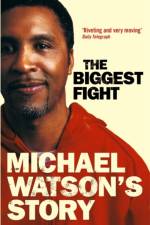
This is the autobiography of Michael Watson, the former Commonwealth Middleweight champion, whose career was tragically cut short. In 1991 he had a world title fight with Chris Eubank - the people's champion against the guy we love to hate. Eubank retained his belt, but it was one of the most controversial decisions in British boxing history. The Rematch was the biggest super middleweight title fight British boxing had ever seen. Tragically, in the eleventh round, Watson caught his neck on the back of the ropes after taking an uppercut from Eubank. He collapsed and suffered serious brain damage which left him paralysed. After years of intensive therapy, and with the same determination and strength of spirit that he showed in the ring, Michael Watson has made a remarkable recovery and won the biggest fight of all - the fight for his life.The Biggest Fight is a testament to why Michael Watson was, is, and always will be 'the people's champion'.
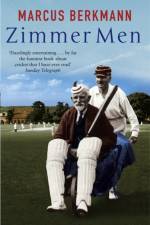
Ten years after his classic Rain Men - 'cricket's answer to Fever Pitch,' said the Daily Telegraph - Marcus Berkmann returns to the strange and wondrous world of village cricket, where players sledge their team-mates, umpires struggle to count up to six, the bails aren't on straight and the team that fields after a hefty tea invariably loses. This time he's on the trail of the Ageing Cricketer, having suddenly realised that he is one himself and playing in a team with ten others every weekend. In their minds they run around the field as fast as ever; it's only their legs that let them down. ZIMMER MEN asks all the important questions of middle-aged cricketers. Why is that boundary rope suddenly so far away? Are you doomed to getting worse as a cricketer, or could you get better? How many pairs of trousers will your girth destroy in one summer? Chronicling the 2004 season, with its many humiliating defeats and random injuries, this coruscatingly funny new book laughs in the face of middle age, and starts thinking seriously about buying a convertible.
Unflinching in its honesty, My Journey is the extraordinary memoir of Jim Stynes: Irishman, footballer, Brownlow Medallist, Reach co-founder and former president of Melbourne Football Club whose very public battle with cancer touched the lives of everyone who knew him. When Jim was diagnosed with cancer at the age of 43, he was given nine months to live. The diagnosis caught him by surprise and he didn't have time for illness. He was a busy father, husband, brother, mentor and businessman. Jim Stynes never took the easy road, on or off the field. He loved a challenge. He pushed himself, and worked hard to help others realise their potential. The same could be said about his cancer journey. Knowing his odds weren't good, Jim gave his all to trying to beat the disease. He embraced life, and made his journey public. His ability to use mind over matter, to never give in, to overcome pain, to believe in himself and his will to succeed gave him two extra years on the prognosis. He worked hard to keep hope alive for himself and his family, and for other cancer sufferers too, defying expectations time and time again. Jim died on 27 March 2012, a month shy of his forty-sixth birthday. A state funeral was held at St Paul's Cathedral in Melbourne, with thousands of mourners watching from Federation Square. A memorial service was also held at his local Ballyroan parish church in Dublin. Jim kept diary notes throughout his battle with cancer, and spent many months talking about his life with his long-time friend, journalist Warwick Green. My Journey celebrates the legacy of Jim Stynes, offering an intimate portrait of a man learning to face his fears and get the most out of every single day. 'If you don't have cancer, cherish life. If you do, cherish it even more.' Jim Stynes, My Journey For all media enquiries plase contact Anyez Lindop on 03 9811 2512 or on 0419008556 or by email anyez.lindop@au.penguingroup.com 'A moving account of his life before and after the June 2009 cancer diagnosis.'Sunday Mail 'Jim could not have left a better manual for life. [His] voice resonates from every page and he has a great capacity for savage self-reflection.'Sunday Herald Sun 'Here then is a story of immense courage, of being knocked down and getting up again only to be belted even harder.'Canberra Times
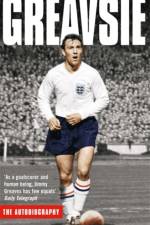
James Peter 'Jimmy' Greaves is one of the greatest footballers to have graced the English game, a goalscorer of legendary prowess. His gripping and characteristically humorous autobiography journeys from Jimmy's childhood in the East End, via his early career at Chelsea and his short and troubled stay at A.C. Milan, to his emergence as one of the great stars of sixties football while at Spurs and an outstanding England forward. Jimmy's record as a striker is extraordinary - he was the leading goalscorer in the First Division - now Premiership - for six seasons and during his playing career was never out of the top five. There are darker aspects too: the bitter disappointment of failing to make the World Cup-winning team of 1966, and the battle against the alcoholism that followed his retirement from the game.This book is both Jimmy's story and the story of football in the golden era of the fifties and sixties before money changed the game. It is populated by the great players whom Jimmy played with and against and animated by wonderful anecdotes about the game. It is an account of how football was then and how it has changed.
Abonner på vårt nyhetsbrev og få rabatter og inspirasjon til din neste leseopplevelse.
Ved å abonnere godtar du vår personvernerklæring.