



Gjør som tusenvis av andre bokelskere
Abonner på vårt nyhetsbrev og få rabatter og inspirasjon til din neste leseopplevelse.
Ved å abonnere godtar du vår personvernerklæring.Du kan når som helst melde deg av våre nyhetsbrev.

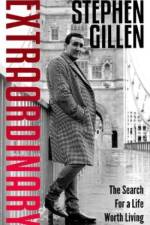
Delve into the harrowing true story of a man who was entrenched in London's criminal underworld, a tale as much about redemption as it is about crime.
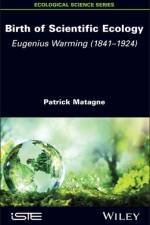
This book presents a biography of the Danish botanist Eugen Warming. As the author of a treatise on ecology that brought him international recognition, he was able to inspire the first generation of 20th-century European and American ecologists. His innovative approach to nature and his Arctic and tropical missions heralded the birth of a new science and an ecological awareness. As a professor at several Scandinavian universities during a period of intense debate and controversy over evolutionary theories, Eugen Warming vigorously asserted his convictions. Birth of Scientific Ecology presents the image of a man of knowledge and power, recognized by his contemporaries as a founder of ecology and a player in the ecological project of the Kingdom of Denmark at a time when the empires were clashing.
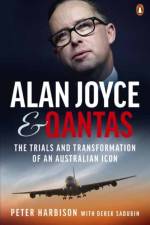
Alan Joyce & Qantas: The Trials and Transformation of an Australian Icon is the fascinating, unauthorised story of Alan Joyce's meteoric rise and turbulent 15-year tenure as the CEO of Qantas. The twists and turns of the last 15 years of the Qantas story contain all the ingredients of a corporate thriller, with constant shocks to the system, and boardroom dramas and disasters narrowly avoided. During this tumultuous period, as CEO of Australia's iconic airline, Alan Joyce became one of the best-known corporate figures in Australia, and one of the most polarising. He's had to steer the company through cyclones and bushfires, volcanic ash clouds and a tsunami, a pandemic, two fleet groundings, intense union battles and a bitter turf-war. He's been through mass sackings, defections from his inner circle, calls for his resignation, personal bust-ups and betrayals, and question-marks over the survival of the company.
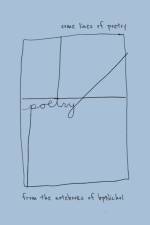
For bpNichol¿s 80th birthday, a selection of 80 pieces from his 1980s notebooks, an astounding trove of never-before-seen work.One of Canadäs most beloved poets, bpNichol (1944¿1988), left a huge legacy of poetry, prose, scripts, comics, and playful interrogation of language after his untimely passing in 1988. In celebration of what would have been Nichol¿s eightieth birthday, Some Lines of Poetry gathers excerpts from Nichol¿s journals across the 1980s to give a unique perspective on craft, process, and a writer¿s life. Featuring works in progress, insight into Nichol¿s thinking, previously unpublished prose and lyric, visual, and sound poems, Some Lines of Poetry documents Nichol¿s ¿apprenticeship to language¿ and his playful daily exploration of the limits of writing.Lovingly edited by noted poet-scholars Derek Beaulieu and Gregory Betts, who provide an afterword contextualizing Nichol¿s practice, Some Lines of Poetry is a map of hidden corners, a guidebook to poetic play, and a tribute to Nichol¿s ongoing influence.
Featuring more than a hundred maps and illustrations, Mapping the Adirondacks is the first book to focus solely onVerplanck Colvin's original survey of the Adirondack Region, a monumental project that would help define and protect the land for generations to come.
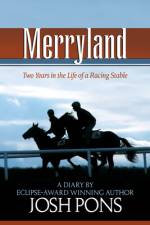
Acclaimed author and third-generation Maryland horseman Josh Pons describes the thrills, triumphs, and setbacks of prepping young Thoroughbred racehorses amid the uncertainties and pressures wrought by encroaching development, casino gambling, and political ennui.
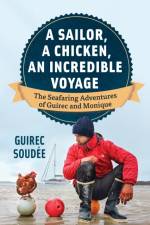
“Exciting, funny, and occasionally heart-stopping … readers can stay home and dry, but feel like they are on the high seas.”—BOOKLISTA man and his chicken sail 45,000 nautical miles in this powerful story of following your dreams no matter what stands in your way.When Guirec Soudée was 21 years old, he bought a 30-foot sailboat and set out across the Atlantic, despite having only sailed a dinghy before.His only companion? His plucky pet hen, Monique.Guirec never intended to sail the world with a chicken, but after reaching the Caribbean, he and Monique made for Greenland—and emerged from the pack ice 100 days later.Their next goal? San Francisco. Then, Antarctica. But first, could they navigate the treacherous Northwest Passage? One thing was for sure: Monique would help her trusty skipper by laying an egg!Heart-stopping adventure story: navigating treacherous icebergs with a chicken on the mast is just one of many nail-biting maneuvers from this action-packed book.Perfect for readers of The Art of Racing in the Rain: Guirec and Monique’s bond is unlike anything you’ve ever seen before.Inspirational: Guirec shows that all you have to do is believe to achieve something big.Photographs and maps: show the epic voyage and provide breaks in the text.Guirec and Monique’s unbelievable journey won the hearts of people all over the world and caused a social media frenzy when it happened. Now, in their long-awaited first book, readers will uncover their gripping voyage from start to finish.
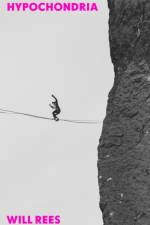
The Empathy Exams of health anxiety: a personal, literary, and cultural examination of hypochondria from Kafka to Seinfeld.A free-wheeling philosophical essay, Hypochondria combines incisive contemporary cultural critique, colourful literary history, and the author¿s own experience of chronic health anxiety to ask what we might learn from the hypochondriac¿s discomforting experience of their body.Hypochondria is unashamedly capacious in its range of references, from the writings of hypochondriacs such as Franz Kafka and Charlotte Brontë to novel yet accessible readings of theorists such as Lauren Berlant and Maurice Blanchot. Whether he is discussing Seinfeld, John Donne, Robert Burton, Susan Sontag, FitBits, sleep ¿hygiene,¿ or the so-called narcissism epidemic, Rees treats his topic with a mixture of humour and seriousness while revealing himself to be an astute reader of all sorts of texts ¿ not sparing even himself with his own astute and irreverent takes on this popular ailment.An exercise in what Freud calls ¿evenly suspended attention,¿ Hypochondria demonstrates the rewards ¿ and perils ¿ of reading (too) closely the common but typically overlooked aspects of our lives.
Hockey's most polarizing figure takes us inside the game, shedding light not only on what goes on behind closed doors, but also what makes professional athletes tick. Sean Avery is not afraid to break the rules laid down by hockey tradition. And the most respected of these is the code of silence. For the first time, a hockey player is prepared to reveal what really goes on in the NHL, in the spirit of what Ball Four did for baseball. The money, the personalities, the adultery, and the drugs--and also the little things that make up daily life in the league. Most athletes have little to say, but Sean doesn't have that problem. Yes, he tells us about the guys he's fought and the guys he's partied with, and he tells us where to find the best cougar bars in various NHL cities and what it's like to be hounded by the media when you're dating a celebrity. But Sean's job on the ice was always to get inside the heads of the guys he played against, and that insight on human nature is on full display in Offside.What makes millionaire athletes tick? What are their weaknesses? And in the end, what makes Sean Avery--once called "the most hated player in the NHL"--who he is? What is it like to make people hate you for a living? Sean Avery's misdeeds on and off the ice are well-documented, and he certainly has his detractors. But on the other hand, he has a lot of supporters, in part for things like being the first North American athlete to come out in favour of marriage equality, and in part just for being an interesting guy. Love him or hate him, he is one of the best-known players of the past few decades, and certainly one of the most colourful and outspoken. In Offside, he meets his accusers head-on, and gives them something to think about.
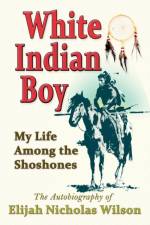
This is the true story of a pioneer boy who crossed the Great Plains by ox-team with his parents to a settlement in the Great Salt Lake basin. Unhappy with his circumstances, 11-year-old Nick Wilson ran away from home with an Indian who had befriended him. Nick spent the next two years with the Shoshone learning their language and culture and developing the skills of a hunter. He participated in buffalo hunts, fought off grizzly bears, witnessed Indian wars, and even survived being shot in the head with an arrow and left to die. Later, he became a trapper, Pony Express rider, stagecoach driver, army scout, and interpreter. He was often called to track down and negotiate peace with renegade Indians who had fled the reservation and threatened war. He found himself in danger numerous times and participated in many skirmishes with both Indians and outlaws. Growing up among the Shoshones taught him the skills he needed to survive the rough and wild west.
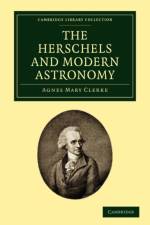
The Herschels in this biography are Sir William Herschel (1738-1822), his sister Caroline (1750-1848) and Sir John Herschel (1792-1871), William's son. Sir William was an astronomer and telescope-maker who discovered the planet Uranus in 1781. He was appointed 'the King's astronomer' to George III in 1782, and under his patronage built the then largest telescope in the world. Caroline Herschel worked as her brother's assistant for much of his career but was also an accomplished astronomer in her own right, discovering eight comets and producing a catalogue of nebulae. Her nephew Sir John Herschel was also a distinguished astronomer who made many observations of stars in the southern hemisphere. This book by the astronomer and writer Agnes Clerke (1842-1907), published in 1895, provides both an analysis of their work and an assessment of its contribution to later astronomical research.
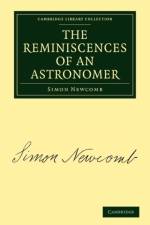
Simon Newcomb (1835-1903) was an astronomer and mathematician remembered for his work in recalculating the major astronomical constants to a new international standard. He was a founding member of the American Astronomical Society and became its first president in 1899. Although Newcomb's mathematical work is well known, this autobiography, first published in 1903, focuses on his achievements and work as an astronomer. In it he provides an account of his scientific research with comments on his approach, which together with his descriptions of scientific discoveries and collaborations occurring in Washington DC show the variety of scientific research being conducted in the United States in the late nineteenth century. His detailed descriptions of how telescopes were used, together with accounts of his experience of working conditions in various observatories, provide valuable insights into astronomical research methods in the late nineteenth century.
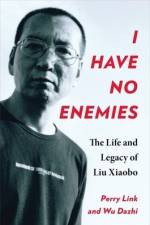
I Have No Enemies is the definitive biography of Nobel laureate Liu Xiaobo, offering a meticulously researched account of the twists and turns of a remarkable life.
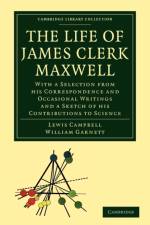
James Clerk Maxwell (1831-1879) was a Scottish physicist well-known for his extensive work with electromagnetism, colour analysis, and kinetic theory. Considered by many to be a giant in his field with significant influence on the physicists who would follow, Maxwell spent time as a professor at Aberdeen University, King's College, London, and Cambridge. This 1882 Life by his friend Lewis Campbell and natural philosopher William Garnett represents an important - and lengthy - investigation into Maxwell's life and thought. Part I is concerned with biographical matters while the second section focuses upon his scientific mind. A third part contains Maxwell's poetry, so included because the poems are 'characteristic of him' and have 'curious biographical interest'. At nearly 700 pages, the Life represents an important starting point for those curious about the state of theoretical physics and the person in whom it reached its culmination in the nineteenth century.
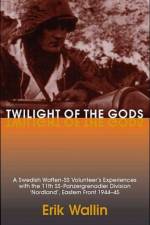
Few new personal accounts by Waffen-SS soldiers appear in English; even fewer originate from the multitude of non-German European volunteers who formed such an important proportion of this service's manpower. Twilight of the Gods was originally written in Swedish, and published in Buenos Aires shortly after the end of WWII. Erik Wallin, a Swedish soldier who volunteered for service with the Waffen-SS, and participated in the climactic battles on the Eastern Front during late 1944 and 1945, later telling his story to this book's editor, Thorolf Hillblad. Wallin served with the Panzer Reconnaissance Battalion, 11th SS-Panzergrenadier Division Nordland, a unit composed mainly of non-German volunteers, including Danes, Norwegians, and Swedes. The division enjoyed a high reputation for its combat capability, and was always at the focal points of the fighting on the Eastern Front in the last year of the war. During this period it saw combat in the Baltic, in Pomerania, on the Oder, and finally in defense of Berlin, where it was destroyed. Erik Wallin served with his unit in all of these locations, and provides the reader with a fascinating glimpse into these final battles. The book is written with a 'no holds barred' approach which will captivate, excite and maybe even shock the reader - his recollections do not evade the brutality of fighting against the advancing Red Army. Twilight of the Gods is destined to become a classic memoir of the Second World War. An outstanding new World War II memoir, and a first-hand account of the Waffen-SS on the Eastern Front Written in an exciting and direct style that is guaranteed to grab and hold the reader's attention Contains much new information on the personnel and actions of 11th SS Panzergrenadier Division Nordland.
FINDING HIDDEN COURAGEStories of Healing and StrengthAfter the loss of her daughter through Cancer, Liz Jamieson-Dunne's life fell apart. After losing two husbands, miscarriages, friends, and beloved animals, she found that death was a constant and unwelcomed visitor.She was inspired to reach others who endured their own 'dark night of the soul'. Their stories and artwork reveal individual journeys for healing and rejoining life. This collection of heartfelt life experiences is unique in offering art expression as a path to the heart, where human connection makes us whole. "One day you will tell your story of how you overcame what you went through and it will be someone else's survival guide" -Brene' Brown
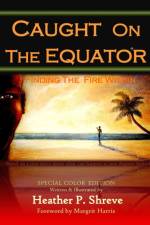
In 1983 - Kenya was on fire with corruption and at the height of ivory smuggling....Based on a true story, Caught On The Equator is about the amazing, and sometimes dangerous, trek through East Africa in 1983, seen through the eyes of a nineteen-year old. Follow Heather Shreve, a naïve American student, who struggles against the odds to see Africa...but upon arrival gets caught in the savage beauty, but also deep in a savage business--the illegal ivory trade. Eventually kid-napped and jailed by rogue police, find out how Heather was unknowingly caught in a country struggling to recover from the coup in 1982 and what can happen in the bush on the equator. WHO ARE YOU? WHAT DO YOU STAND FOR? HOW FAR WILL YOU GO? Authentic, moving, and beautifully written, this story shows us that BECOMING who you were meant to be is the essence of life.
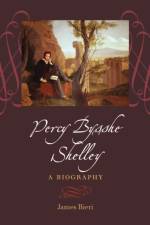
This biography offers a sympathetic and nuanced view of Shelley's tumultuous life, personality, and poetry.
During its more than a century as a Cleveland suburb, Cleveland Heights has been shaped by the natural topography, technology, enterprising developers, elected officials, and its residents of many backgrounds. The result has been a rich mosaic of places and people. In the 1890s, wealthy Clevelanders began to leave the city's smoky factories and congested neighborhoods for the "heights" in East Cleveland Township. In 1901, the heights became the hamlet of Cleveland Heights. As its population changed, so did the suburb's homes, shops, schools, parks, and places of worship. Today, Cleveland Heights is as diversified as its citizens, its eclectic architecture and neighborhoods, and its unique history.
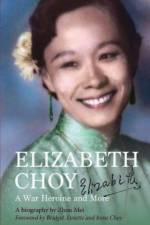
A biography of Elizabeth Choy, who had, by any standard, an extraordinary life, including her incarceration by the Japanese military police for 193 days, during which she was subjected to extreme deprivation, physical abuse and torture.
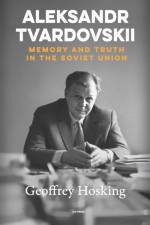
Alexander Tvardovskii was not only one of the finest, most popular and most important poets of his epoch, but also the editor of "Novy Mir", the most prominent Soviet literary journal of the post-war period until the 1970s. This book is a detailed biography of the writer and journal editor who probably changed the literary culture of the Soviet Union more than any other person in the two decades after Stalin's death. Geoffrey Hosking shows how Tvardovskii gradually evolved from being an ardent Stalinist who renounced his own so-called "kulak" family to becoming a convinced advocate of tolerance, an all-human morality, civil rights, and free literary creativity. By giving a balanced account of his strengths and weaknesses, his achievements and failures, the author succeeds in giving the fullest picture available anywhere of a controversial man who turns out to be more complex than he has been portrayed so far. To understand him better is to understand why the Soviet intelligentsia changed so fundamentally in the USSR's final decades, a change that helps to explain the rise of Gorbachev twenty years later. The study - which includes an in-depth analysis of Tvardovskii's major works - also helps to better understand the fate of culture under an authoritarian regime and the intricacies of the struggle against censorship.
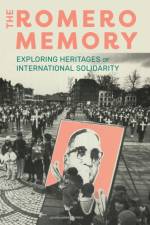
Óscar Romero's continuing legacy in various societies worldwide. On 24 March 1980, Salvadoran archbishop Óscar Romero was assassinated while celebrating mass in San Salvador. During the last years of his life, Romero had become an outspoken opponent of the oppression by El Salvador's dictatorial regime and a beacon of peace and hope in a country torn by injustice, inequality and violence. His assassination sparked global outrage and converged with a growing international awareness of the plight of Latin America. To this day, Romero continues to inspire resistance and liberation movements in Latin America and beyond, both inside and outside the Church. Bringing together perspectives from the fields of history, theology, sociology, law, and cultural studies, The Romero Memory aims to accomplish a polyphonic understanding of the archbishop's significance. His legacy transcends Western approaches to these disciplines and encompasses religious thought and practice, human rights activism, El Salvadoran mural iconography, Hollywood film, local social institutions and international aid, as well as transitional justice. Contributing authors: Jonas Van Mulder (KADOC-KU Leuven), Joren Janssens (RoSa/KU Leuven), Kim Christiaens (KU Leuven), Caroline Sappia (UCLouvain), Miguel Villela (University of El Salvador), Bradley Hilgert (Universidad de las Artes), Martin Maier (Jesuit European Social Centre), Sharon Erickson Nepstad (University of New Mexico), Kevin Coleman (University of Toronto), Zachary Dehm (Duquesne University), Rafaela Eulberg (University of Bonn), Valeria Vegh Weis (Buenos Aires University / Quilmes National University), Miryam Rivera Holguín (KU Leuven), Adriana Hildenbrand (Universidad de Lima / Pontificia Universidad Católica del Perú), Jozef Corveleyn (KU Leuven), Lucia De Haene (KU Leuven), Rudina Jasini (University of Oxford), Jacques Haers (KU Leuven). Ebook available in Open Access. This publication is GPRC-labeled (Guaranteed Peer-Reviewed Content).
Abonner på vårt nyhetsbrev og få rabatter og inspirasjon til din neste leseopplevelse.
Ved å abonnere godtar du vår personvernerklæring.