






Gjør som tusenvis av andre bokelskere
Abonner på vårt nyhetsbrev og få rabatter og inspirasjon til din neste leseopplevelse.
Ved å abonnere godtar du vår personvernerklæring.Du kan når som helst melde deg av våre nyhetsbrev.

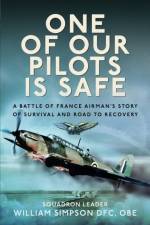
In the early hours of 10 May 1940, HitlerâEUR(TM)s armed forces launched their invasion of France and the Low Countries. Shattering the tense peace of the Phoney War, German troops poured west over the borders of France, Belgium, the Netherlands and Luxembourg, supported throughout by the Luftwaffe. Having been deployed to the Continent on the outbreak of war in 1939, the aircrew of the RAFâEUR(TM)s Advanced Air Striking Force had long trained and planned for, as well as anticipated, such a moment. Consequently, at 17.15 hours on that fateful Friday Flight Lieutenant William Simpson took off at the controls of his 12 Squadron Fairey Battle having been ordered to attack enemy transport advancing near the town of Junglinster, some ten miles from Luxembourg. It would prove to be SimpsonâEUR(TM)s only offensive sortie of the Second World War. As they rained their bombs down on the German column, Simpson and his crew were met by a ferocious hail of anti-aircraft fire. They pressed home the attack, scoring four direct hits on the enemy. Their Battle, however, was badly damaged and owing to a leak in the petrol tank Simpson was forced to make an emergency landing. As the Battle slewed to a halt, the cockpit quickly became enveloped in flames. Initially trapped in his seat, Simpson was rescued from the inferno by his two crew, his hands and face severely burnt. Initially helped to a nearby convent by Belgian peasants, Simpson was taken by ambulance back into France and handed over to French Army doctors at a casualty clearing station. At first it was not expected that Simpson would survive his wounds. Both of his eyelids had been burnt off, his nose was virtually destroyed, his eyes swollen and battered, and those of his fingers that remained had been reduced to charred talons. But against all odds, Simpson refused to give in to his shocking injuries. Over the next year-and-a-half, he endured treatment in no less seven French hospitals in both the Occupied and Unoccupied zones of France. Eventually the German and Vichy French authorities agreed to SimpsonâEUR(TM)s repatriation on medical grounds. His passage home, which involved him travelling through France, Spain and Portugal, finally began on 10 October 1941\. Back in Britain, Simpson soon found himself in the hands of the renowned plastic surgeon Sir Archibald McIndoe. The operations that followed over the next two years helped rebuild his shattered body. In _One of Our PilotâEUR(TM)s Is Safe_, Simpson graphically reveals his moving journey from operational pilot in the Battle of France to membership of the famous Guinea Pig Club.
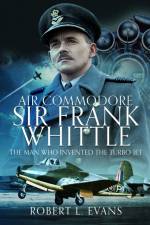
The invention by Whittle of the turbo-jet engine, and the determined effort to design, develop and demonstrate that such a novel new method of propulsion would replace piston engines in the air, was one of the most important technical achievements of the twentieth century. That one man accomplished this working with a small but dedicated team of engineers and craftsman in the middle of a war, and in the face of many doubters, was a truly monumental achievement. The jet engine envisaged by Frank Whittle, a young Royal Air Force cadet, changed aviation forever. It was an invention that has, in the years since, had the effect of shrinking the world we live in. We think nothing today of flying between continents in a few hours, when just a two or three generations ago this would have been a major expedition. In short, the jet engine, developed with great tenacity by Whittle, has made the world a village, and has introduced world-wide travel to ordinary people everywhere. This accomplishment was all the more remarkable given WhittleâEUR(TM)s humble background as the son of a highly skilled but largely uneducated mechanic and machinist. A young man from a working-class family, Frank Whittle wanted to become a pilot, but he was denied admission into the RAF due to his physical limitations. Nevertheless, he persisted until finally he was accepted on an air mechanicâEUR(TM)s (or fitterâEUR(TM)s) apprenticeship at RAF Cranwell. It was a course which was primarily used to train officer cadets. Cranwell included a flying training school and it was WhittleâEUR(TM)s secret hope that he may be one step closer to achieving his aim of learning to fly. The air mechanicâEUR(TM)s apprenticeship was a three-year course aimed at providing a thorough practical understanding of all aircraft structural components as well as a detailed knowledge of the different types of aircraft engines then in use. He was a diligent apprentice, and happily threw himself into every aspect of the rigorous training provided, while at the same time keeping an eye on the officer cadets on the flying courses. Inspired by his training, Frank Whittle developed an idea. He believed it was possible for aircraft to fly faster and higher âEUR" and he turned his vision into reality. This incredible accomplishment was not without considerable personal cost though, as Whittle had to face the realities of war, as well as personal and commercial issues that nearly turned his dream into a nightmare. In addition, this biography, written by someone who met Frank Whittle, includes details of his rather colourful personal life, which have not been previously documented.
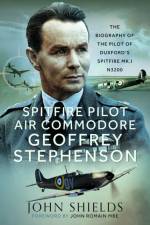
Under cloudless blue skies, the Oakwood Cemetery Annex in Montgomery, Alabama hosts the largest Commonwealth War Graves Commission cemetery in the United States. Most of the graves contain young RAF trainee pilots killed during their flying training at nearby Maxwell and Gunter airfields during the Second World War. However, there is another grave, located at the edge of the plot, not from the early 1940s but, from 1954\. The grave marks the final resting place of a 44-year-old senior RAF officer, Air Commodore Geoffrey Stephenson CBE. It begs the questions who was he and why is he buried there?This book sets out to answer both these questions. As a result, this is the remarkable story of not only StephensonâEUR(TM)s life but the people, planes and places that would leave an indelible mark on a seasoned fighter pilot. After growing up in Lincolnshire and Ireland, 18-year-old Stephenson joined the RAF in 1928 alongside Douglas Bader who would become a life-long friend. After leaving Cranwell, the pair both joined 23 Squadron. In the 1930s, Stephenson rose through the ranks to command 19 Squadron, a Duxford-based Spitfire unit, that would see his baptism of fire over Dunkirk in late May 1940\. Following the downing of a Junkers Ju 87 Stuka, Stephenson was himself shot down and crash landed on the beach at Sangatte. After a brief period on the run in France and Belgium, Stephenson was taken into captivity, spending the next five years as a prisoner of war, ending up at the iconic Colditz Castle where, ironically, he was reunited with his old friend Bader. Upon his release in April 1945, Stephenson quickly resumed his RAF career commanding, instructing, and flying the latest jet fighters, both at home and overseas. He was aide-de-camp to two monarchs, including escorting a young Queen Elizabeth II during her 1953 Coronation Review. However, his already eventful career would take a tragic turn. In 1954, Stephenson flew to the United States to review their latest acquisitions, which included a flight in the supersonic F-100 Super Sabre. It would be his last flight. Nevertheless, StephensonâEUR(TM)s legacy lives on at his former base at Duxford in the guise of the Imperial War MuseumâEUR(TM)s immaculately restored Spitfire Mk.I N3200\. This was the very aircraft in which he force-landed on 26 May 1940\. Recovered from the French beach, N3200 was painstakingly rebuilt and returned to flying condition. Today, N3200 is often referred to as a âEUR¿National TreasureâEUR(TM). This is the biography of a remarkable pilot, husband and father, revealing the planes he flew, the places he visited, and the incredible people he met along the way.
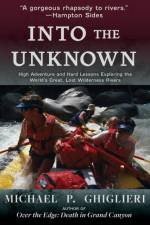
"What a venturesome life Michael Ghiglieri has lived--most of it in or on water--and what a gorgeous rhapsody to rivers he's written!"--Hampton Sides, New York Times bestselling author of The Wide Wide SeaVeteran wilderness guide Michael P. Ghiglieri takes you into the unknown--among white-water rapids, crocodiles, hippos, gorillas, lions, and impossible waterfalls. His riveting memoir not only serves up true high adventure, it also presents the ecology, natural history, conservation (or the lack of it), and exploration history of nine far-flung wilderness regions across the globe.Into the Unknown reveals what the natural world looks like through a professional's eyes during "adventure" travel, when things start sliding toward the edge. This insider memoir recounts ten sagas of extreme expeditions into Earth's most amazing wilderness regions to illustrate their realities, science, allure, history, risks to life and limb, and ultimate fates. Many of these regions have now vanished to "progress." Others are imperiled. Only a few are protected. But all are, or were, places where exotic beauty and danger are inseparable.
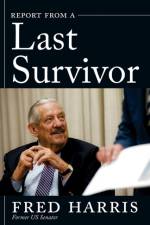
Fred Harris is the last surviving member of the Kerner Rights Commission, famously created by President Lyndon Johnson following the terrible riots, disorders, and violent protests that exploded in so many of America's cities in the "long hot summer" of 1967. He is the last survivor of the 1964 "Four Back Bench US Senators," which consisted of Walter Mondale of Minnesota, Joseph Tydings of Maryland, Fred Harris of Oklahoma, and Robert Kennedy of New York. He is also the senior surviving former member of the US Senate and one of two "last surviving" Democratic presidential candidates to run in 1976--the other being President Jimmy Carter Jr.Report from a Last Survivor tells Fred Harris's many stories: some serious, some funny, and all true. Each story forms a part of this report of a last survivor, a long look back over ninety-three years and counting of a rich life of public service and personal commitment.
A riveting oral biography of the proto-punk Detroit rockers MC5, based on original interviews with the band and key members of their inner circle
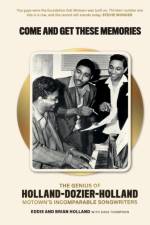
Featuring honest and open first-hand accounts, Come and Get These Memories is more than just a behind-the-scenes look at Motown Records at its peak: Eddie and Brian set the record straight on both their personal and professional lives and offer a revealing slice of pop-music history.
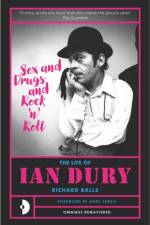
The abrasive Dury always met life head on, in his relationships and in his music, and this acclaimed biography does not shrink from chronicling some of his darker moments, as well as his triumphs. Author Richard Balls talked to more than 50 of his friends, as well as to Dury himself shortly before his death. This edition includes the continuing success of The Blockheads and tells the inside story of the biopic sex&drugs&rock&roll. Actors Andy Serkis, who played Dury, and Martin Freeman, are among the contributors, along with Dury's former minder and confidant Derek Hussey. There are vivid insights into harsh post-war schools for disabled children, the Fifties art school scene and the ramshackle pub rock circuit, plus a mixed bag of celebrities from Peter Blake to Omar Sharif. Dury's extraordinary life was always a battle. As rocker, lyricist, artist and actor he was unsentimental and uncompromising. As a man he was harder to fathom - until now. In this classic rock biography, the self-styled "diamond geezer" stands revealed as a real diamond after all.
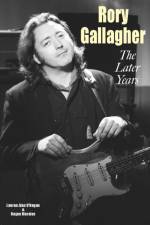
Although the book's focus is squarely on 1985 to 1995, occasionally it also encompasses important earlier achievements in the 1980s that have been overlooked in previous works on Gallagher. The book concludes with an epilogue reflecting upon Gallagher's legacy in the 21st century, particularly amongst a new generation of fans.
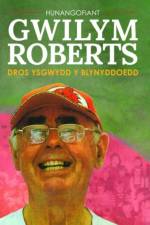
The autobiography of a Cardiffian who has made a unique contribution to the revival of the Welsh language in South-east Wales as leader of Aelwyd yr Urdd and as founder of a chain of Welsh learner classes and immersion courses at Llangrannog and Glan-llyn.
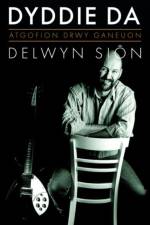
In this, the latest title in the popular series Atgofion drwy Ganeuon, we gain an insight into the life, music and muse of a unique singer and composer - Delwyn Siôn.
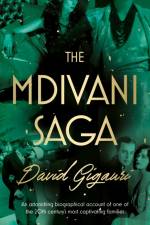
What do Chanel, Sherlock Holmes, Salvador Dali, and the world's richest heiress have in common? ...they were all part of the Mdivani entourage. The Mdivani Saga is an astonishing biographical account of one of the 20th century's most captivating families.
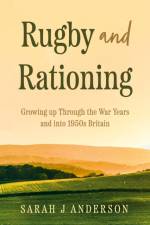
Rugby and Rationing explores Sarah Anderson's genealogical findings from pre World War Two to the early 1960s from her father's letters and diary entries. The book explores the thoughts and concerns of an ordinary, middle class, hardworking English family.
Colm Tóibín's personal account of encountering James Baldwin's work, published in Baldwin's centenary year. Acclaimed Irish novelist Colm Tóibín first read James Baldwin just after turning eighteen. He had completed his first year at an Irish university and was struggling to free himself from a religious upbringing. He had even considered entering a seminary and was searching for literature that would offer illumination and insight. Inspired by the novel Go Tell It on the Mountain, Tóibín found a writer who would be a lifelong companion and exemplar. Tóibín appreciates Baldwin, writer to writer: Baldwin was interested in the hidden and dramatic areas in his own being, and was prepared as a writer to explore difficult truths about his own private life. In his fiction, he had to battle for the right of his protagonists to choose or influence their destinies. He knew about guilt and rage and bitter privacies in a way that few of his White novelist contemporaries did. And this was not simply because he was Black and homosexual; the difference arose from the very nature of his talent, from the texture of his sensibility. "All art," he wrote, "is a kind of confession, more or less oblique. All artists, if they are to survive, are forced, at last, to tell the whole story, to vomit the anguish up." On James Baldwin is a magnificent contemporary author's tribute to one of his most consequential literary progenitors.
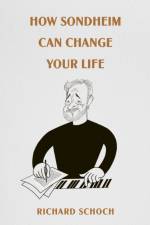
'The song is you.'For fans of musical theatre, Stephen Sondheim is one of the true titans - the genius who brought us Sweeney Todd and West Side Story, Into the Woods, and Company. With acclaimed revivals of his landmark shows regularly performed in London and New York, and new generations being introduced to the man who forever transformed musical theatre, Sondheim's legacy has only grown. What is it about such classic songs as 'Being Alive' from Company, 'No One Is Alone' from Into the Woods, or 'Send in the Clowns' from A Little Night Music (to name but a few) that still resonates for so many?In How Sondheim Can Change Your Life, Richard Schoch shows how Sondheim's greatness (beyond the clever lyrics and adventurous music) lies in his ability to tell stories that speak to all of us. From Louise's desire for freedom as Gypsy Rose Lee to Sweeney Todd's thirst for revenge, the struggles we see in Sondheim's characters are ones we all have - and we can learn valuable lessons from how those struggles are resolved.Following the arc of Sondheim's extraordinary career, How Sondheim Can Change Your Life is rich with stories and insights into the master's creative process, and reveals the many ways that Sondheim's works can enrich the lives of all of us.
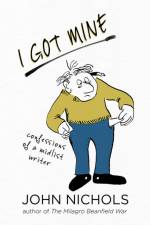
I Got Mine: Confessions of a Midlist Writer is the memoir of Nichols' extraordinary life, as seen through the lens of his writing. Everything that went into making him a writer and eventually found an outlet in his work-his education, family, wives, children, friends, enemies, politics, and place-is told from the point of view of his daily practice of writing.Beginning with his first novel, The Sterile Cuckoo, published in 1965 when he was just twenty-four, Nichols shares his highs and lows: his ambivalent relationship with money; his growing disenchantment with the hypocrisy of capitalism; and his love-hate relationship with Hollywood-including the years-long struggle of working with director Robert Redford on the film version of The Milagro Beanfield War, which was filmed around Truchas and featured many of Nichols' northern New Mexico neighbors.Throughout I Got Mine Nichols spins a shining thread connecting his lifelong engagement with progressive political causes, his passionate interest in and identification with ordinary people, and his deep connection to the land.
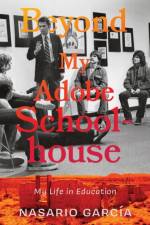
Nasario García has spent a lifetime dedicated to educating others in a variety of settings, including universities and prisons. A native of rural New Mexico and a beloved writer and folklorist, in Beyond My Adobe Schoolhouse García reflects on his experiences of being educated and of being an educator. He takes readers from his childhood in a one-room schoolhouse through graduate school and to universities and other settings in Pennsylvania, Illinois, Colorado, and New Mexico, all places in which he spent time teaching in various capacities. Beyond My Adobe Schoolhouse is a love song to education and a reminder to everyone that it is possible to find a life, love, and purpose beyond the circumstances into which they were born.
Abonner på vårt nyhetsbrev og få rabatter og inspirasjon til din neste leseopplevelse.
Ved å abonnere godtar du vår personvernerklæring.