





Gjør som tusenvis av andre bokelskere
Abonner på vårt nyhetsbrev og få rabatter og inspirasjon til din neste leseopplevelse.
Ved å abonnere godtar du vår personvernerklæring.Du kan når som helst melde deg av våre nyhetsbrev.

First published in 1991, Forsake Fear is the history of historians in post-war Soviet society.
This book examines the relationship between several of the most prominent American biblical archaeologists and Zionism, exploring their views on objectivity versus relativism. Suitable for students and scholars of Biblical and Near Eastern archaeology, American religious history, and the Palestinian-Israeli conflict.
By the age of 14, I decided I would be a photographer. 'It's what I will do for the rest of my life, until I drop dead.' I knew when I was very young. It was a definite decision. Don't ask me why. I just knew it was the right thing.When Martin Parr was fourteen, his teacher wrote that he was 'utterly lazy and inattentive' in a school report. He went on to become one of the most successful and sought-after photographers in the world. Martin has published over one hundred photobooks on many different subjects, from seaside resorts to smoking, over his career. Now, for the first and only time, Martin has produced a book about himself, telling his own story, in his own words.This autobiography combines over 150 of Martin's photographs - from his earliest snapshots to the work he is doing today - with his recollections and reflections on each image. We meet a boy growing up in suburbia, who collects obsessively and notices everything. We see him exploding into the public consciousness in the late eighties with a series of startling, ultra-saturated colour images of the British seaside - and scandalising the photography establishment in the process. We see society changing over the decades, from the demise of steam trains, through the opening of the first McDonald's in Moscow, to the transformations of the post-pandemic world.As Martin shares his story, his distinctive voice delicately captured by his friend, the writer Wendy Jones, he also reveals his approach to work and commissions; his tricks for gaining access and getting the shot; and he divulges his particular passions: for crowds and queues, fetes and placards, bad weather on beaches, and more.This is the definitive account of a great photographer's career, curating the work that has defined his life. By looking at the world through his eyes and his lens, we come away seeing Martin Parr - and ourselves - a little differently.
From awe-inspiring Norman castles, to the homes we live in, Simon Thurley explores how the architecture of this small island influenced the world.
"[Sh]ould take a prominent place on the shelf of literature about the man who changed 20th century America." Publishers Weekly, Starred Review - In the first biography of Martin Luther King to look at his life through the prism of his evolving faith, Paul Harvey examines Mart...
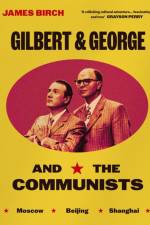
The much-anticipated sequel to Bacon in Moscow, Gilbert & George and the Communists charts daring art dealer James Birch's next implausible transcultural mission.
Dr J.S.Nagra is a retired Inspector of schools. He played a leading role in in getting Asian Languages and Asian studies introduced in British schools. .He has written around fifty books that are used around the world
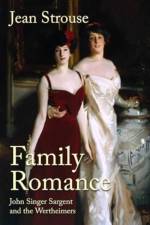
A brilliant new account of John Singer Sargent and his relationship with the Wertheimers, an eminent Jewish family in Edwardian London. -- .
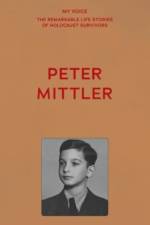
Peter's book is part of the My Voice Project, a collection of firsthand accounts of Holocaust survivors and refugees from Nazi persecution who settled in the UK. Peter Mittler was born in Vienna and escaped to England on the Kindertransport. He became an authority in policy and provision for adults and children with intellectual disabilities. -- .
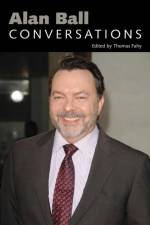
Collected interviews with the screenwriter of the Academy Award-winning film American Beauty and creator of the Emmy Award-winning television series Six Feet Under and True Blood
Honest, moving and of course very funny: award-winning comedian Suzi Ruffell tells the story of a life afflicted with anxiety, and asks the experts to answer some of life's big questions along the way. Perfect reading for fans of Strong Female Character by Fern Brady, How to Fail by Elizabeth Day and No Shame by Tom Allen.
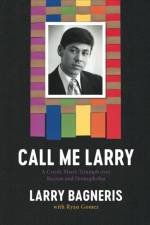
"Larry Bagneris was raised in a large, loving Creole family during the 1950s and early 1960s. In his memoir, Bagneris recalls his activist career, starting in New Orleans as a student leader in the struggle against racial injustice, later as founder of Houston's Pride Parade, and then, following a return to his hometown, as a political organizer and mainstay of the local gay community. Bagneris also relates his observations as he travels, builds community, and finds family in queer spaces around the world-from San Francisco to New York, Tel Aviv to Bangkok"--
In TELLIN' IT LIKE IT IS, William Scatterty bares his soul wi' relentless honesty and a lash o' dark humour. Growing up in Huntly, in the North o' Scotland, William enjoyed a happy childhood surrounded by a loving family until he was torn awa' and placed in a care home, where he faced abuse and neglect.Years later, William found camaraderie and purpose on the rails as a train driver, balancing the demands o' work wi' the joys and heartbreaks o' family life. He shares poignant memories o' his wife, Angie, and their son, Adam, whose tragic deaths drove him to confront his past and seek answers.Now in his twilight years, William has returned to Huntly, seeking peace and closure, wi' maybe a wee bit o' mischief makin' in between! Wi' his niece Fiona as his only remaining kin, he reflects on a life lived without compromise, always ready to stand up for himsel' and others.TELLIN' IT LIKE IT IS is a no-holds-barred, hilarious account o' resilience, community, and the search for truth, all told in William's unique Doric voice.
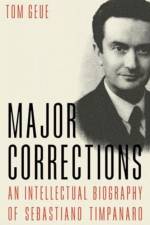
A trenchant analysis the thought of Sebastiano Timpanaro, one of the most original leftist thinkers of the 20th century
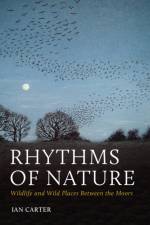
Time outdoors is always well spent. It raises the spirits, sparks the imagination and, as research increasingly shows, measurably improves our physical and mental wellbeing. Rhythms of Nature celebrates this fundamental relationship with the natural world, and considers some ways we might rediscover it.After a career in conservation, Ian Carter moves to a secluded farmhouse tucked away in the low hills of mid-Devon between Exmoor and Dartmoor.Here he tries new approaches to exploring the local countryside. He learns the edible species, follows streams (wherever they may lead) and slips unseen through private estates. He experiments with rewilding the garden, goes on night-time rambles and watches the changing seasons in super high definition.Following on from the author's acclaimed Human, Nature, this engaging and thought-provoking book offers simple suggestions for how to enliven a sense of wonder in our surroundings. A paean to the 'neglected' and untidy places that can enrich our lives, it will appeal to anyone wishing to develop a deeper connection with wildlife or who has a desire to seek out the wilder corners of our landscape.
The three directors gathered in this volume all approach theatre-making in part as an act of citizenship. Jesusa Rodríguez, Peter Sellars, and Reza Abdoh differ markedly in many important respects, but they all come to the theatre as an intervention in the public sphere. Rodríguez, Sellars, and Abdoh blend a spirit of social critique with acts of democratic community building. These essays examine how theatre, for them, is not a sphere of aesthetic experience insulated from the divisions, antagonisms, and alliances of a conflicted society. It is a way to forge fleeting but consequential communities that might reverberate through that society and affect its future development. The Great North American Stage Directors series provides an authoritative account of the art of directing in North America by examining the work of twenty-four major practitioners from the late 19th century to the present. Each of the eight volumes examines three directors and offers an overview of their practices, theoretical ideas, and contributions to modern theatre. The studies chart the life and work of each director, placing his or her achievement in the context of other important theatre practitioners and broader social history. Written by a team of leading experts, the series presents the genealogy of directing in North America while simultaneously chronicling crucial trends and championing contemporary interpretation.
This volume assesses the work of Meredith Monk, Richard Foreman, and Robert Wilson, three artists who have revolutionized the craft of directing and the art of theatre in both related and unique ways. Though their early artistic backgrounds differ, ranging from architecture, music and dance to writing, they are similar in that none of them began their career as a director per se or received formal training as such. They each assumed the director's role based on the demands of their complex artistic visions, which combine art forms, but resist synthesis, finding expression in the differences and tensions between the forms. The essays in this volume explore how these auteur directors combine text, movement, film, sound and music, installation and visual arts to achieve their visions, employing multi-perceptual modes to evoke full and rich theatrical experiences. The Great North American Stage Directors series provides an authoritative account of the art of directing in North America by examining the work of twenty-four major practitioners from the late 19th century to the present. Each of the eight volumes examines three directors and offers an overview of their practices, theoretical ideas, and contributions to modern theatre. The studies chart the life and work of each director, placing his or her achievement in the context of other important theatre practitioners and broader social history. Written by a team of leading experts, the series presents the genealogy of directing in North America while simultaneously chronicling crucial trends and championing contemporary interpretation.
From the streets of Edwardian London rose a Hollywood star: Charlie Chaplin. But even at the peak of global fame, his work and outlook were still shaped by the world he came from, a place of cheap entertainments and the threat of the workhouse, radical politics and desperate poverty. Hard Streets is a portrait of working-class London at the turn of the twentieth century, framed through the life of its most iconic success story. Acclaimed historian Jacqueline Riding brings to life the voices of those written out of history - mothers and sons, workers and actors, vagrants and sex workers - to paint a striking portrait of a nearly-vanished London. A story of suffering, survival and success against the odds, Hard Streets also reveals how Chaplin's London became the incubator for a movement to address the causes of poverty - one which would ultimately change, for the better, the future of every British citizen.
In Artists' Journeys that Shaped Our World, follow in the footsteps of some of the world’s most famous painters, and the journeys which inspired some of their greatest works.
Covering Geoffrey Chaucer's life and work, David Wallace considers the influence and enduring appeal of his body of writing, explores the wide ranging geography and iconic characters in his stories, and discusses how Chaucer's own experiences contributed to his literature.
Abonner på vårt nyhetsbrev og få rabatter og inspirasjon til din neste leseopplevelse.
Ved å abonnere godtar du vår personvernerklæring.