



Gjør som tusenvis av andre bokelskere
Abonner på vårt nyhetsbrev og få rabatter og inspirasjon til din neste leseopplevelse.
Ved å abonnere godtar du vår personvernerklæring.Du kan når som helst melde deg av våre nyhetsbrev.

Who were these parents who had lived in a tent on an island in the Potomac River during the Depression, while the father wrangled WPA guidebooks toward publication, and later wrote speeches for the Senator investigating cartels during World War II, wrote the book on foot-and-mouth disease, and crossed swords with Joe McCarthy's inquisition? Who was the mother who hadn't worked in thirty years yet fended off financial disaster after her husband's early death?Seventeen years later, those questions still lingered, with his mother's death leaving a void that Jim McConkey fills with a compelling narrative. From 'drinking wet and voting dry' during Prohibition to starving as a freelance writer in the Depression, the WPA Writer's Project, the early days of commercial air travel, and the international cartels that thwarted America's war mobilization and led to civilian rationing, McConkey's story captivates and informs.And finally, that gorgeous farm in the foothills of Virginia's Blue Ridge Mountains is vividly preserved. The family's history, stored in a four-drawer filing cabinet stuffed with family papers, is brought to life in this loving parental biography.
In Search of My America is one of the few Korean American women's autobiographies published in the United States. Being a woman of color trying to rise in an academia dominated by the white male, I had to play an all-American negating her ethnic background. Being a non-native speaker teaching English to native speakers, I had to play a consummate professional in denial of her accent. Being an Asian woman whose sexuality has been historically objectified and has been equated to that of a Madame Butterfly, I had to play a fiercely independent woman without an ounce of a submissive attitude. In In Search of My America, I describe the intimate details of the mask I had to wear to cope with cultural and racial stereotypes. In Search of My America is about a spectrum of issues, including my naïve American dream and rude awakening, my process of Americanization, my loneliness as an expatriate, my endeavors to reconcile the conflicting demands of human sexuality and intellect, and my attempt to build bridges between different worlds. I weave a giant piece of embroidery with all these components and set them against a series of tales created from Korean myths, bilingual metaphors, folklore, and legends.
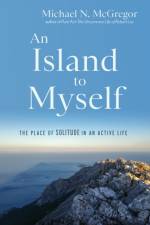
A memoir about how solitude can deepen a life.In his twenties, writer and activist Michael McGregor traveled to the remote Greek island of Patmos to spend two months alone. It was 1985, before cellphones or the internet, when even a phone call home was costly. Those days transformed his understanding of himself, his God, and his purpose—and in this book he offers, for others, how finding a place of solitude can change a life.McGregor had spent three years writing about the world’s poorest people and five months traveling when he chose, at 27, to live for two months in total solitude, 6,000 miles from home. He went primarily to write a novel, but from the moment he stepped onto the ferry to begin the 11-hour ride to Patmos, he knew his time would be meaningful. As he settled into a routine that included hours of writing each day, walks through fierce wind in the evenings, and nights that brought on dreams, memories, and unexpected spiritual encounters, he soon realized that solitude can be difficult and even dangerous but also awe-inspiring and life-altering.McGregor immerses the reader in particulars of the simple life he lived for two winter months on an island where he knew no one. He reflects on authors and spiritual teachers before showing the ways in which his returns to solitude in subsequent decades reflected or altered his earlier experiences of being alone.In the book’s final section, McGregor returns to Patmos during the same January dates he visited four decades earlier. He attempts to replicate his earlier experience. His reflections on the changes in his life, the island world, and his understanding of both God and solitude add another dimension to this multifaceted book.
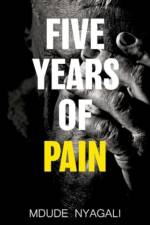
Mdude Nyagali is a well-known Tanzanian activist. Mdude has worked tirelessly to fight and advocate for human rights and good governance in Tanzania for over a decade. During the brutal rule of President John Magufuli, Mdude was targeted repeatedly and suffered illegal arrest, torture by the Tanzanian police and security forces, abductions, and racketeering charges, including drug trafficking. This book, Five Years of Pain, is written by him in English for an international audience. Mdude Nyagali's book, Five Years of Pain, includes his narration of incidents of police brutality including abduction, torture, and false charges. The book also has detailed recollections of Mdude's four hundred fourteen days in prison, including a recount of how the case was conducted from his arrest to the final judgment.
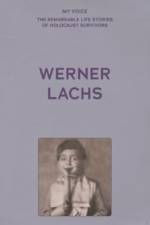
The My Voice Project is a unique initiative by The Fed, Manchester's leading social care charity serving the Jewish community. The My Voice Project empowers Holocaust survivors and refugees from Nazi persecution who settled in the UK to share their entire life stories including experiences before, during and after the war years. This project involves a bespoke methodological approach, producing books that preserve their unique voices. The My Voice Project ensures firsthand accounts are remembered and valued for future generations, highlighting the critical role of individual perspectives in ensuring a deeper historical understanding. Werner Lachs was born in Cologne, Germany in 1926 and had a happy childhood. However, by 1938, there were many laws restricting Jews, and after Kristallnacht, the family planned to emigrate. In June 1939, Werner escaped to England with his parents and older sister. Unbeknown to the family, they had been helped by a spy, Frank Foley, who had signed and issued their visas without financial guarantees. After arriving in England, Werner was separated from his family at first and placed with different families. He worked in clothing manufacturing for over 50 years. In 1953, he married Claire, and they had a daughter, but Claire died tragically before their daughter turned two. Werner married Ruth in 1962, a fellow Holocaust survivor, and they had two children. Werner's book is part of the My Voice book collection.
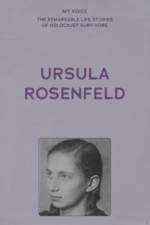
Ursula's book is part of the My Voice Project, a collection of firsthand accounts of Holocaust survivors and refugees from Nazi persecution who settled in the UK. Ursula Rosenfeld escaped from Germany to England on the Kindertransport, and went on to work as a nurse, health visitor and magistrate in Manchester. -- .
Tomi's book is part of the My Voice Project, a collection of firsthand accounts of Holocaust survivors and refugees from Nazi persecution who settled in the UK. Tomi Komoly was born in Budapest, experienced the ordeals endured there by Hungarian Jews. He fled to Vienna and then England and went on to receive the British Empire Medal. -- .
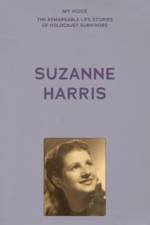
The My Voice Project is a unique initiative by The Fed, Manchester's leading social care charity serving the Jewish community. The My Voice Project empowers Holocaust survivors and refugees from Nazi persecution who settled in the UK to share their entire life stories including experiences before, during and after the war years. This project involves a bespoke methodological approach, producing books that preserve their unique voices. The My Voice Project ensures firsthand accounts are remembered and valued for future generations, highlighting the critical role of individual perspectives in ensuring a deeper historical understanding. Suzanne Harris was born in Paris in 1919. When World War II broke out, her father signed up for the Foreign Legion and later became a prisoner of war. Suzanne, her sister and mother stayed in Paris for 2 years during the war, but it became too difficult and risky for Jews there. In 1943, they fled to Argenty in the countryside to join their extended family, only reaching it safely with the help of brave strangers. After liberation, Suzanne and her family returned to Paris, to find that her grandparents' flat had been given to French collaborators by the Germans. After moving to England in 1947, Suzanne married, settled down and started a family. She was very active in Manchester's Jewish community and was closely connected with many charities and her local synagogue. Suzanne's book is part of the My Voice book collection.
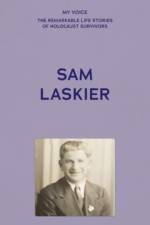
Sam's book is part of the My Voice Project, a collection of firsthand accounts of Holocaust survivors and refugees from Nazi persecution who settled in the UK. Sam Laskier experienced terrible ordeals at labour camps and then Auschwitz-Birkenau. He was brought to Windermere in England after WWII for rehabilitation, and later settled in Manchester. -- .
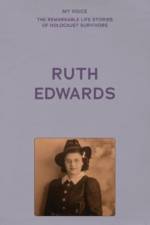
Ruth's book is part of the My Voice Project, a collection of firsthand accounts of Holocaust survivors and refugees from Nazi persecution who settled in the UK. Ruth Edwards escaped to England during World War II, which meant a difficult separation from her parents. She went on settle in Manchester, marry and have children. -- .
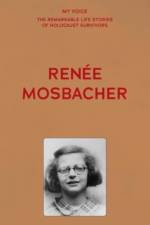
Renée's book is part of the My Voice Project, a collection of firsthand accounts of Holocaust survivors and refugees from Nazi persecution who settled in the UK. Renée Mosbacher was born in Vienna and witnessed the growth of antisemitism in Austria and the horror of Kristallnacht. After a dangerous journey to England, she made her home there. -- .
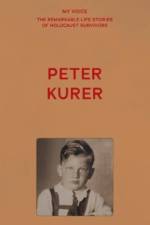
Peter's book is part of the My Voice Project, a collection of firsthand accounts of Holocaust survivors and refugees from Nazi persecution who settled in the UK. Peter Kurer's family were helped by a Quaker couple to gain safe passage to England in 1938. Peter later married and had children, and had a successful career in dentistry. -- .
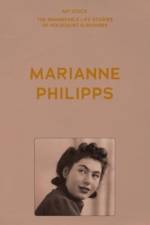
Marianne's book is part of the My Voice Project, a collection of firsthand accounts of Holocaust survivors and refugees from Nazi persecution who settled in the UK. Marianne Phillips began life in Berlin in 1924, came to England on the Kindertransport, and went on to live in Maidenhead and Manchester, running a dressmaking business and volunteering for many Jewish causes. -- .
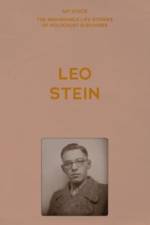
The My Voice Project is a unique initiative by The Fed, Manchester's leading social care charity serving the Jewish community. The My Voice Project empowers Holocaust survivors and refugees from Nazi persecution who settled in the UK to share their entire life stories including experiences before, during and after the war years. This project involves a bespoke methodological approach, producing books that preserve their unique voices. The My Voice Project ensures firsthand accounts are remembered and valued for future generations, highlighting the critical role of individual perspectives in ensuring a deeper historical understanding. Leo Stein was born in 1922 in the German town of Pforzheim. Growing up in a Jewish family in Germany, Leo witnessed first-hand the rise of the Nazi regime and the horrors of Kristallnacht. Thanks to a Jewish school in Liverpool who granted Leo the promise of a scholarship, he was able to get a visa and escape Germany just before the outbreak of war. Leo describes the kindness of families in Liverpool who provided food and shelter for the new arrivals, as well as the support from entities like the Jewish Refugee Committee. Leo settled in Manchester and was later joined by his uncle and brother, with whom he grew a successful menswear clothing company in Salford. He married Helen and had two children. Leo's book is part of the My Voice book collection.
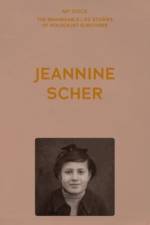
The My Voice Project is a unique initiative by The Fed, Manchester's leading social care charity serving the Jewish community. The My Voice Project empowers Holocaust survivors and refugees from Nazi persecution who settled in the UK to share their entire life stories including experiences before, during and after the war years. This project involves a bespoke methodological approach, producing books that preserve their unique voices. The My Voice Project ensures firsthand accounts are remembered and valued for future generations, highlighting the critical role of individual perspectives in ensuring a deeper historical understanding. Jeannine Scher was born in Paris in February 1935. She was the second of seven children in a religious Orthodox family. At the outbreak of war, her family moved to Laprugne in the Allier department of Vichy. When Nazis rounded up foreign Jews in the Vichy Zone, the family moved to Broût-Vernet, where her father became director of a home for refugee children, and eventually escaped to Switzerland. Post-war, the family moved back to Paris, where Jeannine attended a lycée and went on to study Maths at university, after which she taught Maths and Jewish Studies at a secondary school. Jeannine married Naftoli Scher (Tuli) and moved to England in 1958. They had eight children and later moved to Manchester, enjoying being surrounded by many grandchildren and great-grandchildren. Jeannine's book is part of the My Voice book collection.
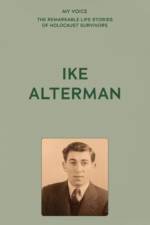
Ike Alterman's book is part of the My Voice Project, a collection of firsthand accounts of Holocaust survivors and refugees from Nazi persecution who settled in the UK. Ike was born in Poland in 1928, survived forced labour camps including Auschwitz-Birkenau, and went on to live in Manchester and build a career in the jewellery business. -- .
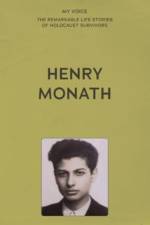
Henry's book is part of the My Voice Project, a collection of firsthand accounts of Holocaust survivors and refugees from Nazi persecution who settled in the UK. Henry Monath was born in Kraków, and his mother arranged escape to England for Henry and his sister. He experienced the war in Manchester and as an evacuee in Blackpool. -- .
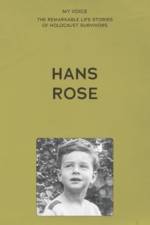
Hans's book is part of the My Voice Project, a collection of firsthand accounts of Holocaust survivors and refugees from Nazi persecution who settled in the UK. Hans Rose witnessed the devastating impact of Kristallnacht in Germany before his family moved to England and his father was interned on the Isle of Man. He later worked in textiles. -- .
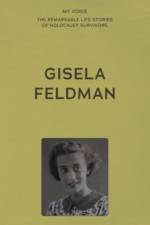
Gisela's book is part of the My Voice Project, a collection of firsthand accounts of Holocaust survivors and refugees from Nazi persecution who settled in the UK. Gisela Feldman grew up in Berlin, escaped Germany on the SS St Louis, a liner bound for Cuba, but finally found refuge in England, where she went on to have a long career as a teacher. -- .
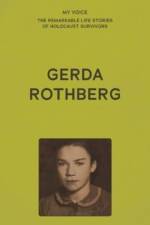
Gerda's book is part of the My Voice Project, a collection of firsthand accounts of Holocaust survivors and refugees from Nazi persecution who settled in the UK. Gerda Rothberg's father was taken away after Kristallnacht and her family arranged for Gerda and her sisters to escape to the UK on the Kindertransport. She went on to work in dressmaking. -- .
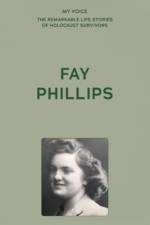
Fay's book is part of the My Voice Project, a collection of firsthand accounts of Holocaust survivors and refugees from Nazi persecution who settled in the UK. Fay Phillips was born in Belgium, escaped to France with her family when war broke out and was later hidden by the Resistance. She went on to work in London as a nurse after the war. -- .
Ernest's book is part of the My Voice Project, a collection of firsthand accounts of Holocaust survivors and refugees from Nazi persecution who settled in the UK. Ernest Hirsch was born in East Prussia, moved to Berlin and eventually escaped to England with his siblings on the Kindertransport. He later had a successful career in the textile sector. -- .
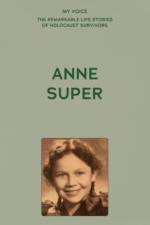
Anne's book is part of the My Voice Project, a collection of firsthand accounts of Holocaust survivors and refugees from Nazi persecution who settled in the UK. Anne Super was born in Warsaw and experienced a traumatic separation from her parents. She was later adopted by an uncle in South Africa, became an optician and moved to Manchester. -- .
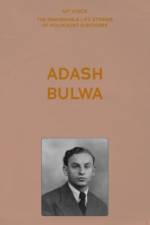
The My Voice Project is a unique initiative by The Fed, Manchester's leading social care charity serving the Jewish community. The My Voice Project empowers Holocaust survivors and refugees from Nazi persecution who settled in the UK to share their entire life stories including experiences before, during and after the war years. This project involves a bespoke methodological approach, producing books that preserve their unique voices. The My Voice Project ensures firsthand accounts are remembered and valued for future generations, highlighting the critical role of individual perspectives in ensuring a deeper historical understanding. Adash Bulwa was born in Poland in 1926. After the outbreak of war, he recalls the Germans entering his home city of Piotrków Trybunalsk and the establishment of the Jewish ghetto, which had terrible living conditions. Adash recounts his harrowing ordeals in the concentration camps of Belzec and Buchenwald. Most of his family were killed in Treblinka, and he worked and suffered in factories and labour camps, all while he was still a teenager. Following liberation, Adash returned briefly to Poland and then emigrated to England, eventually settling in Manchester. He made a living as a tailor, married his wife Zena, and they had two daughters. Post-war, Adash searched for his brother David, who had been smuggled out of Poland before the war, and they were reunited in the 1950s. Adash's book is part of the My Voice book collection.
Abonner på vårt nyhetsbrev og få rabatter og inspirasjon til din neste leseopplevelse.
Ved å abonnere godtar du vår personvernerklæring.