















Gjør som tusenvis av andre bokelskere
Abonner på vårt nyhetsbrev og få rabatter og inspirasjon til din neste leseopplevelse.
Ved å abonnere godtar du vår personvernerklæring.Du kan når som helst melde deg av våre nyhetsbrev.

How Africa’s most notorious tyrant made his oppressive regime seem both necessary and patriotic
The gripping story of Indira Gandhi’s premiership—and the profound influence she had on India
Fully authorised by The Film and Television Charity and by Buckingham Palace, this book will celebrate the iconic Royal Film Performances
A major new biography of French polymath Blaise Pascal and how his philosophy can help us live well today.
A thought-provoking account of the life and work of Franz Boas and his influential role in shaping modern anthropology Franz Boas (1858–1942) is widely acknowledged for his pioneering work in the field of cultural anthropology. His rigorous studies of variations across societies were aimed at demonstrating that cultures and peoples were not shaped by biological predispositions. This book traces Boas’s life and intellectual passions from his roots in Germany and his move to the United States in 1884, partly in response to growing antisemitism in Germany, to his work with First Nations communities and his influential role as a teacher, mentor, and engaged activist who inspired an entire generation. Drawing from Boas’s numerous but rarely read writings, Noga Arikha brings back to life the man and the ideas he developed about the complex interplay of mind and culture, biology and history, language and myth. She provides a comprehensive picture of the cultural contexts in which he worked, of his personal and professional relationships, and of his revolutionary approach to fieldwork. He was celebrated in his lifetime for the cultural relativism he developed and the arguments he marshaled against entrenched racialism, but his was a constant battle, and Arikha shows how urgently relevant his voice and legacy have become again today.
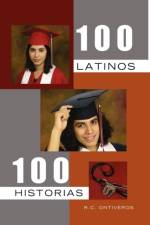
Narrates the stories of 100 hispanic students who, despite great challenges, manage to graduate from high school.
A richly drawn biography of Jane Austen, from a beloved 20th-century English novelist Elizabeth Jenkins
The full story of Josephine Baker’s wartime and intelligence work in France and North Africa
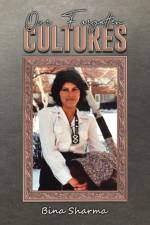
In the 1980s, Sasi finds herself playing the role of involuntary trailblazer, as the first Nepali woman to immigrate to her small community in Eastern Canada.There is no guidebook on how to navigate life, identity, and motherhood in this strange new place. Nor is she prepared for the triple whammy of racism, sexism, and ageism that confronts her as she seeks to gain a footing in the workplace and society.Weaving together personal recollections with those of family members, Sasi takes the reader on a journey that is strikingly honest, emotional, and ultimately hopeful.
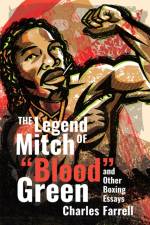
Mitch ‘Blood’ Green hadmore things going for him to make big money in boxing than nearly any fighterin history. A six-foot-six, 225-pound heavyweight with a chiseled physique anda traffic-stopping look, Green had street credibility for days—he was the gang leaderof the Black Spades—and four New York Golden Gloves heavyweight titles.But his penchant formayhem, drugs, and chaos, while keeping him in the news, torpedoed his pro boxingcareer. He lost a high-profile decision to Mike Tyson at Madison Square Garden,got into a tabloid-grabbing late-night street fight with Tyson at anafter-hours boutique in Harlem, and then disappeared.Until Charles Farrellfound him.In The Legend of Mitch "Blood" Green and Other Boxing Essays, Farrell captures life in the boxingbusiness from its deepest interior, and offers additional portraits of charactersas wide-ranging as Donald Trump, Floyd Patterson, Bert Cooper, Charley Burley, PeterMcNeeley, and Muhammad Ali. Trenchant, fearless, and often flat-out funny, there has neverbeen a boxing book like this, and there will never be another.
In turn bleak, tender and darkly funny, Clare Dempsey's debut memoir takes us inside the Intensive Care Unit during the Covid outbreak.
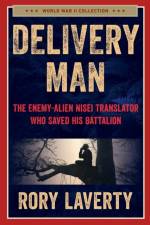
The American battalion was trapped, under siege and under fire, and one man was their best, last hope.Delivery Man: The Enemy-Alien Nisei Translator Who Saved His Battalion in World War II is the suspenseful, tragic and true story of a combat translator in a pioneering American special operations force, sent into the heart of a forgotten jungle war in which he fought soldiers of his own ancestry and put his life on the line to save hundreds of his brothers. U.S. Army Sgt. Roy Matsumoto was born in Los Angeles and lived for seven years in Hiroshima. His family remained in Japan in 1929, when he returned to Southern California alone and took a job delivering groceries. Like all Japanese-Americans, Roy’s life was upended by Japan’s attack on Pearl Harbor, followed by his internment by his own country – first at the Los Angeles horse-racing track on which Sea Biscuit had triumphed two years before, and then at another concentration camp in Arkansas. In exchange for his freedom, Roy volunteered to join the U.S. Army, which trained him and sent him into northern Burma. That’s where the American commando force known as Merrill’s Marauders braved a malarial jungle to engage a tenacious enemy force on a winning streak. Though contact with his family in Japan would be impossible for the duration of the war, Roy took comfort that their home city of Hiroshima, sheltered by an inland sea, was considered relatively safe from attack.
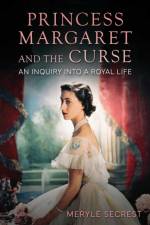
A Groundbreaking New Perspective of Princess Margaret by Renowned Biographer Meryle Secrest Meryle Secrest, distinguished biographer in the arts and humanities, and recipient of a White House Medal, has turned her focus to royalty. In Princess Margaret and the Curse, she has put the conventional view of a much-reviled Princess on its head. Her latest study, which she considers more of an investigation than a biography as such, proposes that nobody knows the truth about the fabled, doomed Princess. She is the first person to have looked at Princess Margaret in a particular family context. That is to say with reference to her mother, Elizabeth Bowes-Lyon, the daughter of a famous, hard-drinking Scottish family that had inhabited an ancient dwelling, Gamis Castle, for centuries. Her older brothers were already renowned for their prowess in alcohol consumption. Decades later, once she became Queen Mother, this Elizabeth would begin to imbibe by eleven in the morning. She was already lamenting the loss of her "drinking powers" when, because of severe bouts of morning sickness during her first pregnancy with the future Queen Elizabeth in 1926, she could not drink. Four years later, while pregnant with Princess Margaret in 1930, she was not so handicapped. Doctors believed it was perfectly safe for a mother-to-be to drink, so she drank. The doctors were wrong. But it took another forty-three years, until 1973, before new studies established that alcohol in any amount was poisonous to the developing human being. The effect is lifelong. We now know that victims’ growth is stunted (Margaret stopped growing at five feet), and their skeletal structures are fragile. They get sick sooner and age faster. There are characteristic emotional differences, too. They never develop maturity of mind. They remain subject to sudden tantrums, rages, are poor judges of character, and particularly prone to run and hide, as Princess Margaret tried to do all her life. They may be as intelligent and gifted as she was, but mulish and fly into a rage. They are, it turns out, exactly like the person she became. None of this has ever been recognized, let alone understood. With this study, the author places Margaret's life in its proper perspective. It seems particularly sad that someone expected to be perfection itself in her manners and behavior should have been born in the one situation where perfection was, in fact, impossible. It is time we looked at this public figure from a new and more forgiving frame of mind, and with a new understanding.
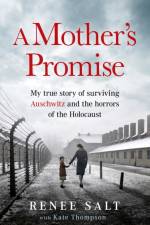
'My name is Renee Salt. I am 94 years old, I am a witness to history. I am a survivor.This is my attempt to make sense of a story which I can scarcely believe happened to me. Some of these pages are drenched in horror, but every so often a little light of hope and humanity shines through.There is love, too - so much love.'Renee and her mother Sala never left each other's sides. From invasion to liberation, September 1939 to April 1945, as Renee was marched, herded and shoved from ghetto to camp, there was one constant. One hand which clutched hers - her mother's. Every day for six years, mother and daughter were tangled together in hell. From ghettos to slave labour, from Auschwitz to Bergen-Belsen, they were a powerful source of solace and hope to one another. Renee knows that she is only alive today because of her mother, that it was the sheer force and power of her love that gave them both something fragile but beautiful to cling to in an ugly, depraved world. It was her mother who hid her, lied to the SS, went right when she was directed left - whose small actions had lifesaving consequences. Now, for Renee, the need to share has finally overcome the desire to forget. This is a love letter to a mother eighty years in the making.
Abonner på vårt nyhetsbrev og få rabatter og inspirasjon til din neste leseopplevelse.
Ved å abonnere godtar du vår personvernerklæring.