











Gjør som tusenvis av andre bokelskere
Abonner på vårt nyhetsbrev og få rabatter og inspirasjon til din neste leseopplevelse.
Ved å abonnere godtar du vår personvernerklæring.Du kan når som helst melde deg av våre nyhetsbrev.

Collected interviews with the recipient of numerous major literary awards and fellowships, including two National Book Awards, for Salvage the Bones and Sing, Unburied, Sing
The dramatic story of a pivotal figure in the Haitian Revolution, who shook the Atlantic world to its core
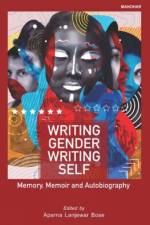
Many of the essays in this book focus on how the progress of the self is often impeded by the society it finds itself in. With an enlightening foreword by Dr. E.V. Ramakrishnan and a detailed, critical introduction by Aparna Lanjewar Bose, this anthology is useful for all those who wish to learn more about this genre of writing.
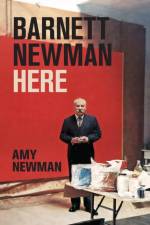
The first major biography of a brilliant American artist and the city that shaped himBarnett Newman (1905-1970), a founding member of the abstract expressionist movement, was a contemporary of such figures as Jackson Pollock, Willem de Kooning, Mark Rothko, and Clyfford Still. He left behind only 118 finished paintings, six sculptures, and fewer than 140 drawings, yet is often regarded as the greatest painter to have emerged after the Second World War. Barnett Newman is the definitive biography of a charismatic New Yorker who by defying the rules created an art of the sublime. Drawing on original research conducted over decades, scores of interviews and oral histories, and previously unseen correspondence, this book paints a richly textured portrait of a creative sage who became an exemplar of the artist-citizen. Born in New York to Polish Jewish immigrant parents, he grandly aspired to involve himself in every detail of the city's life. He was a crusader for the civil service, ran against La Guardia for mayor, worked as a teacher, wrote poetry, criticism, and manifestos, produced political plays, and promoted other artists-all before painting a mature work of his own in his early forties. Newman began with none of the qualities once considered indispensable for a master artist, such as training, apprenticeship, or natural facility. But he possessed a galvanizing intellect and a conviction that aesthetic expression is an ecstatic declaration of existence and an assertion of human dignity. Beautifully illustrated and replete with previously unpublished information gleaned from full access to Newman's archives, here is the landmark account of a maverick who became an influential mentor and who created some of the most enduring works of the twentieth century.
The most complete and rounded picture of Matt Busby - the man and the manager - ever written, from an author widely regarded as the best Manchester United historian alive today. Contains never-before-heard interviews with Matt Busby, Sir Alex Ferguson and other key Manchester United figures.
Through the eyes of one of convicted paedophile Bill Kenneally's many victims, Ireland's Protected Predator takes readers on a harrowing journey through his brutal reign of terror. This shocking story explores the former basketball coach and Fianna Fä il activist's warped obsession with handcuffs and how he blackmailed powerless children into silence by threatening to circulate Polaroid images taken during these depraved attacks. Masquerading as a respected member of the community, he escaped justice for more than three decades with the help of many in our society who are meant to protect us. Jason Clancy recounts his journey from his traumatised teenage years to successfully campaigning for a Commission of Investigation to examine how Bill Kenneally was allowed to continue roaming the streets preying on innocent boys decades after admitting to torturing them. For the first time, this book delves into the more sinister question of how Bill Kenneally escaped justice for decades - and whether the those in authority positions were complicit in covering up his crimes.
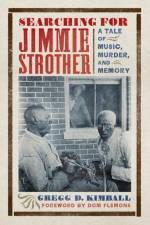
The incredible true story of a blind musician, a brutal crime, and the making of an American folk legend In June 1936 James Lee Strother performed thirteen songs at the Virginia State Prison Farm for famed folklorist John Lomax and the Library of Congress. Rooted in the rich soil of the Piedmont region, Strother's repertoire epitomized the Black songsters who defy easy classification. Blinded in a steel mill explosion, which only intensified his drive to connect to the world through song, Strother drew on old spirituals and country breakdowns as readily as he explored emerging genres like blues and ragtime. Biographer Gregg Kimball revives this elusive but singular talent and the creative and historical worlds in which his dramatic life unfolded. Myths surround Strother but, as Kimball reveals, the facts of Strother's life are just as compelling as the fanciful embellishments proffered by early folklorists. Musician, murderer, and beloved family member-Strother somehow played each of these roles, and more. And while the songster's comedic ditties, spirituals, and blues tunes reached a wide range of listeners (and were later covered by musicians like Pete Seeger and Jefferson Airplane), they carried a dark undercurrent that spoke directly to the experiences of Black Americans: sundown towns, Jim Crow segregation, and labor exploitation. As Kimball shows, Strother's powerful songs and remarkable, tumultuous life continue to influence and remain deeply relevant to American culture to this day.
Four-time New York Times bestselling sportswriter Ian O'Connor takes on four-time NFL MVP Aaron Rodgers, delivering the definitive biography of the legendary yet mysterious quarterback who has astonished, befuddled, yet always captivated fans of America's #1 sport.Aaron Rodgers is regarded by some as the most talented player to ever hold the most important job in American team sports--quarterback. He also stands among the most mysterious and polarizing figures in the modern-day national pastime that is pro football. From his controversial Covid stance to his methods of spiritual awakening to his estrangement from his family to his high-profile romances to his devastating Achilles injury a mere four plays into his New York Jets career, Rodgers has long dominated the NFL's news cycle. At thirty-nine, in search of a challenge that would rejuvenate him, Rodgers divorced the iconic Green Bay Packers of Vince Lombardi fame for the Jets, who haven't appeared in a Super Bowl since Neil Armstrong stepped on the moon. The trade made Rodgers the biggest story in the biggest league in the biggest market. By far.That story only got bigger when Rodgers shockingly went down on the night of 9/11, in front of a packed house that roared for him when he took the field carrying an American flag, and in front of the biggest Monday Night Football audience in ESPN history--peaking at more than 25 million viewers. As Rodgers launches his comeback and his bid to lead the Jets to a championship, acclaimed sports biographer Ian O'Connor uses hundreds of original interviews to pull back the curtain and answer the most penetrating questions about perhaps the country's most famous and most enigmatic athlete. Just like he did in his previous works on Bill Belichick, Mike Krzyzewski, Derek Jeter, Arnold Palmer and Jack Nicklaus, O'Connor reveals all sides of an all-time great and delivers a portrait of a complex man and four-time NFL MVP that will forever shape the way football fans view him.
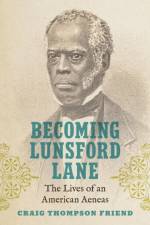
By challenging the rules of enslavement and, later, pushing the boundaries of free citizenship in North Carolina, Lunsford Lane (1803-79) became a folk hero to many enslaved Southerners, as well as a generation of abolitionists. Author of a unique "slave narrative" and a speaking partner with some of the era's greatest orators, including William Lloyd Garrison, Henry Highland Garnett, William Wells Brown, and Frederick Douglass, Lane became a celebrity who watched as the persona he created gradually faltered and failed him and his family. Yet even as his influence waned, it was still powerful enough to cause many to see him in light of their own purposes: as a fugitive from slavery, an entrepreneur, a Christian minister, and even an abolitionist (an identity he rejected). Lane's enemies also continued their efforts to silence him--a white mob determined to tar and feather him, reformers who saw his contributions to abolition as a threat to their causes, and a neighbor who attempted to set fire to the Lane home while Lunsford and his family slept within.In the first biography of Lunsford Lane based on original and extensive research, Craig Thompson Friend portrays a man who dreamed beyond his enslavement, delivered himself and his family from bondage, and spun a story of his life that brought him lasting freedom and fleeting fame. Friend casts light on Lane's family origins as well as his complex relationships with his wife, parents, children, enslavers, fellow abolitionists, and nation. Lane's story is a biography for our times: a man searching to define life, liberty, and the pursuit of happiness in a changing American society scarred by contentious politics, economic challenges, class tensions, loss of political rights, and racial violence.
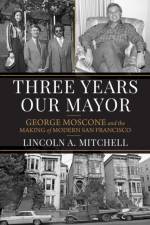
"Through illustrating the life of Mayor George Moscone, author Lincoln A. Mitchell explores how today's San Francisco came into being. Moscone-through his work in the State Senate, victory in the very divisive 1975 mayor's race, and brief tenure as mayor-was a key figure in the city's evolution. The politics surrounding Moscone's election as mayor, governance of the city, and tragic death are still relevant issues. Moscone was a groundbreaking politician whose life was cut short, but his influence on San Francisco can still be felt today"--
Abonner på vårt nyhetsbrev og få rabatter og inspirasjon til din neste leseopplevelse.
Ved å abonnere godtar du vår personvernerklæring.