
















Gjør som tusenvis av andre bokelskere
Abonner på vårt nyhetsbrev og få rabatter og inspirasjon til din neste leseopplevelse.
Ved å abonnere godtar du vår personvernerklæring.Du kan når som helst melde deg av våre nyhetsbrev.

"In 2013, while helping her mother, Ingrid, comb through family possessions, Karin Wagner came across a large folio handwritten in German in the back of a dresser drawer. When Karin asked her mother what the document was, Ingrid replied, "Oh, that is your grandfather's Great War memoir. "Schiller was a seventeen-year-old student in Bromberg, Prussia, when World War I broke out in August 1914. He enlisted in the German army and was assigned to an artillery unit on the Eastern Front. From 1915 to 1917, Schiller saw action in what is now Latvia, Lithuania, and Poland. After the Bolshevik Revolution in October 1917 and Russia's withdrawal from the war, Schiller was transferred to the Western Front. He arrived in time for Germany's last great offensive in the west, where the attempt to break the Allied lines included what is believed to be the single greatest artillery bombardment in human history up to that point. After the German retreat and Armistice, Schiller reentered military service in the Freikorps, German mercenary groups fighting in former German territory in Eastern Europe, where the conflict dragged on even after the Treaty of Versailles. Schiller left military service in May 1920. Hans Schiller's Kriegserinnerungen (literally, "memories of war") was written in 1928 and based on diaries, since lost, that Schiller kept during the war. A Tale of Two Fronts, an edition of the memoir with historical context and explanatory notes, provides a vivid first-person account of German army life during World War I. It is a valuable resource for anyone interested in the experiences of common soldiers in World War I"--
This is an illustrated edition containing illustrations, a summary, an author biography, and a list of characters.The Souls of Black Folk by W.E.B. Du Bois is a groundbreaking work that combines history, sociology, and personal reflection, offering profound insights into the African American experience in the post-Civil War United States. First published in 1903, this book is a powerful exploration of race, identity, and the enduring struggles for equality. Du Bois introduces the concept of "double consciousness," the internal conflict faced by African Americans who must reconcile their African heritage with their American identity.This illustrated edition enriches Du Bois's original text with visual depictions that bring his poignant reflections to life. Readers will find not only Du Bois's critical essays but also a comprehensive summary that enhances understanding, an author biography that highlights Du Bois's significant contributions to civil rights and sociology, and a list of key figures discussed throughout the work.Perfect for readers seeking to grasp the complexities of race relations in America, The Souls of Black Folk remains a timeless and essential read for anyone interested in social justice and African American history.
This volume covers aspects of Ludwig Wittgenstein's time in Swansea between 1942 and 1947. It considers his interaction with Rush Rhees, his stimulus for the Swansea School, and his broader influence on students, academics and a plethora of writers from a range of disciplines and interests. The contributors view Wittgenstein's philosophy and legacy from different perspectives, which include explanations and assessments of Wittgenstein's time and work at Swansea; historical and cultural scene setting; analyses of the Swansea School; literary comparisons; ideological evaluations; and a range of intimate reflections and commentaries. The volume editor additionally offers some psychogeographical observations in consideration of Wittgenstein's present-day significance to Swansea.
Love is a Journey is the remarkable story of Albino Luciani, known to the world as Pope John Paul I, or The Smiling Pope, from his harrowing birth to his tragic death just 33 days into his 1978 pontificate--the shortest pontificate in history.
A prevailing narrative goes: Bob Dylan, the voice of Sixties counterculture, disappeared in the 1970s in a haze of substance abuse, made arguably the worst music of his career, and was finally put to bed in the 1980s-only to be resurrected in 2016, when he was awarded the Nobel Prize in Literature. Dylan's concerts once began with an announcer intoning a deadpan version of just such a narrative. That is not this story.Drawing on thousands of pages of archival materials, After the Flood reveals Dylan's output during the last three decades as his most ambitious yet. Across an abecedarium of chapters surveying his albums, performances, films, and books since the early 1990s, celebrated poet Robert Polito shows how Dylan evolved a late musical style that has embodied and resisted its era-interweaving Ovid and Americana, film noir and the Civil War. Imaginatively researched, After the Flood is both an essential revision and continuation of the Dylan saga.
The life, dramatic reign, and enduring legacy of the pharaoh Ramesses the Great, with lessons for the present, from internationally acclaimed Egyptologist Toby Wilkinson
The stranger-than-fiction story of the Enlightenment visionaries who discovered the unexpected effects of inhaling nitrous oxide At the Pneumatic Institution in Bristol, England, founded in the closing years of the eighteenth century, dramatic experiments with gases precipitated not only a revolution in scientific medicine but also in the history of ideas. Guided by the energy of maverick doctor Thomas Beddoes, the institution was both laboratory and hospital—the first example of a modern medical research institution. But when its members discovered the mind-altering properties of nitrous oxide, or laughing gas, their experiments devolved into a pioneering exploration of consciousness with far-reaching and unforeseen effects. This riveting book is the first to tell the story of Dr. Beddoes and the brilliant circle who surrounded him: Erasmus Darwin, Samuel Taylor Coleridge, and Robert Southey, who supported his ideas; James Watt, who designed and built his laboratory; Thomas Wedgwood, who funded it; and the dazzling young chemistry assistant, Humphry Davy, who identified nitrous oxide and tested it on himself, with spectacular results. Medical historian Mike Jay charts the chaotic rise and fall of the institution in this fast-paced account, and reveals its crucial influence—on modern drug culture, attitudes toward objective and subjective knowledge, the development of anesthetic surgery, and the birth of the Romantic movement.
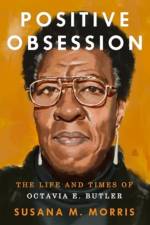
A magnificent cultural biography that charts the life of one of our greatest writers, situating her alongside the key historical and social moments that shaped her work. As the first Black woman to consistently write and publish in the field of science fiction, Octavia Butler was a trailblazer. With her deft pen, she created stories speculating the devolution of the American empire, using it as an apt metaphor for the best and worst of humanityour innovation and ingenuity, our naked greed and ambition, our propensity for violence and hierarchy. Her fiction charts the rise and fall of the American projectthe nations transformation from a provincial backwater to a capitalist juggernautmade possible by chattel slaveryto a bloated imperialist superpower on the verge of implosion.In this outstanding work, Susana M. Morris places Butlers story firmly within the cultural, social, and historical context that shaped her life: the Civil Rights Movement, Black Power, womens liberation, queer rights, Reaganomics. Morris reveals how these influences profoundly impacted Butlers personal and intellectual trajectory and shaped the ideas central to her writing. Her cautionary tales warn us about succumbing to fascism, gender-based violence, and climate chaos while offering alternate paradigms to religion, family, and understanding our relationships to ourselves. Butler envisioned futures with Black women at the center, raising our awareness of how those who are often dismissed have the knowledge to shift the landscape of our world. But her characters are no magical martyrs, they are tough, flawed, intelligent, and complicated, a reflection of Butlers stories.Morris explains what drove Butler: She wrote because she felt she must. Who was I anyway? Why should anyone pay attention to what I had to say? Did I have anything to say? I was writing science fiction and fantasy, for Gods sake. At that time nearly all professional science-fiction writers were white men. As much as I loved science fiction and fantasy, what was I doing? Well, whatever it was, I couldnt stop. Positive obsession is about not being able to stop just because youre afraid and full of doubts. Positive obsession is dangerous. Its about not being able to stop at all.
Abonner på vårt nyhetsbrev og få rabatter og inspirasjon til din neste leseopplevelse.
Ved å abonnere godtar du vår personvernerklæring.