













Gjør som tusenvis av andre bokelskere
Abonner på vårt nyhetsbrev og få rabatter og inspirasjon til din neste leseopplevelse.
Ved å abonnere godtar du vår personvernerklæring.Du kan når som helst melde deg av våre nyhetsbrev.

John Potts Slough, the Union commander at the Battle of Glorieta Pass, lived a life of relentless pursuit for success that entangled him in the turbulent events of mid-nineteenth-century America. As a politician, Slough fought abolitionists in the Ohio legislature and during Kansas Territory's fourth and final constitutional convention. He organized the 1st Colorado Volunteer Infantry after the Civil War broke out, eventually leading his men against Confederate forces at the pivotal engagement at Glorieta Pass. After the war, as chief justice of the New Mexico Territorial Supreme Court, he struggled to reform corrupt courts amid the territory's corrosive Reconstruction politics.Slough was known to possess a volcanic temper and an easily wounded pride. These traits not only undermined a promising career but ultimately led to his death at the hands of an aggrieved political enemy who gunned him down in a Santa Fe saloon. Recounting Slough's timeless story of rise and fall during America's most tumultuous decades, historian Richard L. Miller brings to life this extraordinary figure.
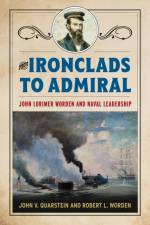
This comprehensive biography details the life of Rear Admiral John Lorimer Worden, who commanded the ironclad USS Monitor during the 1862 Battle of Hampton Roads and went on to co-found the U.S. Naval Institute.Throughout his 52-year career, Rear Adm. John Lorimer Worden was always the right officer for the job. The epitome of an innovative commander who helped move the U.S. Navy out of the age of sail and into the era of ironclad technology, Worden’s contributions extended beyond the Battle of Hampton Roads and shaped the future of the Navy. He demonstrated exceptional leadership in both combat and peacetime. Worden immediately proved himself a capable choice for key assignments, leading a successful rescue mission and capturing a prize ship during the Mexican-American War. Three tours at the U.S. Naval Observatory established him as a scientific officer. After delivering secret dispatches in 1861 that kept Fort Pickens in Florida for the Union, Worden attempted to return to Washington, D.C., and was arrested by Confederate authorities, thus becoming the first prisoner of war during the Civil War. After six months in captivity, he returned to command the USS Monitor—the “little ship that saved the nation”—at the historic Battle of Hampton Roads. There, he faced the Confederate CSS Virginia in the first-ever clash of ironclads, suffering severe wounds while fighting the battle to a standstill. Upon recovery, he returned to command the USS Montauk, where his unparalleled expertise in ironclad design and combat tactics continued to set him apart. From testing ships in battle to overseeing the innovative production of ironclads at the Brooklyn Navy Yard, he consistently refined his craft. Confronted with multiple ship design failures, he relentlessly drove improvements, pushing the boundaries of naval technology and securing lasting progress in the development of modern warships. After the war, Worden became superintendent of the U.S. Naval Academy, where he trained the next generation of naval officers and co-founded the U.S. Naval Institute. His five-year tenure at the academy was not without controversy that tested his leadership. He deftly handled a nationally embarrassing hazing scandal, resulting in congressional authority for the superintendent to directly discipline and expel errant midshipmen. Worden also managed sensitive issues surrounding the appointment of the first African American midshipman and the first Japanese midshipman while he helmed the academy. Worden capped his career by ably serving as commander-in-chief of the European Squadron during a time of upheaval on that continent. Displaying courage, commitment, and diplomacy, Worden skillfully led U.S. European naval forces from 1875 to 1877. From Ironclads to Admiral’s thorough examination of Worden’s life and leadership emphasizes his strategic insights, innovative spirit, and dedication to service. Readers will uncover the profound impact of an officer of great achievement who inspired others to say, “Let Worden do it!”
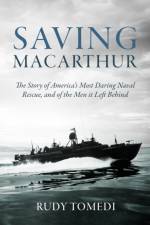
The escape of General MacArthur from the Philippines after the initial Japanese onslaught in World War II is well known. This is the story of the gallant PT-boat men who rescued him, only to be abandoned in enemy-occupied territory.
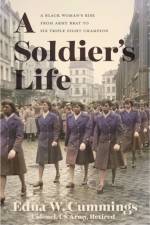
"A memoir of one woman's extraordinary personal journey in the US military and her work to honor her predecessors with the Congressional Gold Medal. Chronicling Cummings's unlikely but successful path to leadership roles in the US Army and afterward, this book also tells the story of the 6888th Central Postal Directory Battalion (known as the Six Triple Eight)-a trailblazing African American World War II Women's Army Corps unit-and of the grassroots campaign Cummings led to honor them"--
When he returned to the Netherlands in 2009, decades after World War II, Jefferson Wiggins realized that no one he met knew about the segregated US Army during the war, nor did they know about the contribution of Black American soldiers to the liberation of the Netherlands. They were not mentioned anywhere in Dutch history books or in archives. Together with oral historian Mieke Kirkels, Wiggins sat down to record his memories. Wiggins passed away in 2013, and his widow, Janice Wiggins-Paterson, continued the project in his memory. With newly discovered archival material, and richly illustrated, this book gives a lively account of an undocumented story of WWII, Black American, and Dutch military history.
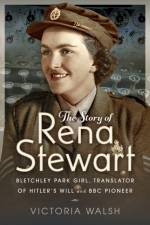
Soldier, journalist and centenarian: a triple badge of honour, especially for a woman. Introducing Rena Stewart (1923-2023), a remarkable, 100-year-old Bletchley Park Girl who translated Hitler's will and blazed a trail for women at the BBC. The Story of Rena Stewart narrates Rena's fascinating tale, in her own words, and is a testament to a life that was seriously well lived. On graduating from St Andrews University in 1943, Scottish linguist Rena and her friend Agnes decided to 'do something about the war'. They signed up for the Auxiliary Territorial Service and were posted to Bletchley Park, where Rena processed secret German messages. At the end of the war, Rena and her Bletchley chums were sent to Germany, to translate the statements of captured Nazi officers. There, she and another friend, Margery, were also given a top-secret task: to translate Hitler's personal will. Career woman Rena had, however, always wanted to work in the media. On her return to England, she managed to secure a position as a lowly clerk at the BBC World Service. She worked her way up from there, including spending ten years listening in to Russian Cold War broadcasts. Finally, she became the first female Senior Duty Editor in the World Service newsroom. 'My greatest achievement,' she declared with pride, 'has been getting people to recognise that a woman can be as good a journalist as a man'. Alongside Rena's story, this book delves into the lives of her closest Bletchley friends and uncovers intriguing historical mysteries from her remarkable century of life.
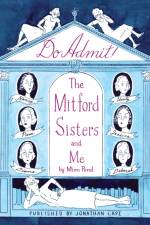
Outrageous, passionate and glamorous, the Mitford sisters beguiled their peers, the press and then the rest of the world throughout their lives and still captivate us today - celebrated cartoonist Mimi Pond brings to them to life in this sparkling graphic biography.As a young girl living in sun-bleached 1960s suburban California, Mimi Pond fell in love with the Mitford sisters. Nancy, Pamela, Diana, Unity, Jessica and Deborah Mitford brought society glitz, pageantry, scandal, and real (rainy) weather to her own prosaic life.High society debutantes known for rubbing shoulders with some of history's most infamous fascists and communists, the sisters were also, in turn, gifted writers, inveterate nicknamers, chicken-raising homebodies, scathing wits, and passionate adventurers in the maelstrom of the 20th century.Drawn with inimitable artistic flair and a mischievous affinity for the decadent and grandly declining aristocracy, Mimi Pond brings the Mitfords to life in this glittering and lovingly researched family biography.
[Not final] Intimate afterlives of empire is the first comprehensive study of post-imperial autobiography as an important genre of cultural memory. investigate the relationship between individual and cultural memory at the end of empire as voiced through the practice of autobiographical writing. Through close readings of more than a dozen autobiographies and memoirs/Through close readings of almost twenty autobiographies written after the break-up of the British Empire, it examines how individuals engage with the changing narrative landscape brought about by decolonisation/ it examines how changes to cultural narratives about the imperial past manifest themselves in personal life stories. . It argues that individuals navigate the changing narrative landscape of decolonisation by way of personal memory work, repositioning themselves in relation to a contemporary audience. The book conceives of decolonisation as a narrative shift, though not a total break, from the logics of the colonial era. /The narrative changes brought about by decolonisation has previously been studied at the level of collective or national memory. Intimate afterlives of empire is the first book to examine how individuals have responded to this changing narrative landscape. It argues that authors are at once affected by and seek to affect cultural memories of the colonial past. /It argues that authors respond dialogically to shifts in the cultural memories of empire, inserting themselves in a wider narrative. As decolonisation brought changes to the narrative landscape, individual writers ... Studying the dialogues between individual and cultural memory, the book argues that autobiographers are at once influenced by and seek to influence the cultural memory of empire and its legacies (and the authors' own position in both)/ trace the responses to the moment of decolonisation as a narrative eventEach chapter focuses on one trope and one autobiographical sub-genre so that the result is an anatomy of the genre of the end of empire autobiography as a whole.
In June 1983 Margaret Thatcher won the biggest increase in a government's Parliamentary majority in British electoral history. Over the next four years, as Charles Moore relates in this central volume of his uniquely authoritative biography, Britain's first woman prime minister changed the course of her country's history and that of the world, often by sheer force of will.The book reveals as never before how she faced down the Miners' Strike, transformed relations with Europe, privatized the commanding heights of British industry and continued the reinvigoration of the British economy. It describes her role on the world stage with dramatic immediacy, identifying Mikhail Gorbachev as 'a man to do business with' before he became leader of the Soviet Union, and then persistently pushing him and Ronald Reagan, her great ideological soulmate, to order world affairs according to her vision. For the only time since Churchill, she ensured that Britain had a central place in dealings between the superpowers.But even at her zenith she was beset by difficulties. The beloved Reagan two-timed her during the US invasion of Grenada. She lost the minister to whom she was personally closest to scandal and almost had to resign as a result of the Westland affair. She found herself isolated within her own government over Europe. She was at odds with the Queen over the Commonwealth and South Africa. She bullied senior colleagues and she set in motion the poll tax. Both these last would later return to wound her, fatally.In all this, Charles Moore has had unprecedented access to all Mrs Thatcher's private and government papers. The participants in the events described have been so frank in interview that we feel we are eavesdropping on their conversations as they pass. We look over Mrs Thatcher's shoulder as she vigorously annotates documents, so seeing her views on many particular issues in detail, and we understand for the first time how closely she relied on a handful of trusted advisors to help shape her views and carry out her will. We see her as a public performer, an often anxious mother, a workaholic and the first woman in western democratic history who truly came to dominate her country in her time.In the early hours of 12 October 1984, during the Conservative party conference in Brighton, the IRA attempted to assassinate her. She carried on within hours to give her leader's speech at the conference (and later went on to sign the Anglo-Irish agreement). One of her many left-wing critics, watching her that day, said 'I don't approve of her as Prime Minister, but by God she's a great tank commander.' This titanic figure, with all her capacities and all her flaws, storms from these pages as from no other book.
Lady Nijo's A Tale Unasked (Towazugatari) is the last, and arguably the finest, among classical Japanese literature's famous 'women's diaries'. Thought to have been completed around 1307, when the author was in her late forties, the first two thirds of this autobiographical work document in rich and compelling detail the experiences of an imperial concubine whose time at court was ruled and finally ruined by her passionate and complicated love life. The final third of the work equally memorably describes her peripatetic life after the emperor expelled her from the court in her mid-twenties and she became a nun, wandering the roads of Japan as a form of Buddhist austerity.Meredith McKinney's superb translation breathes new life into Lady Nijo's fascinating diaries, which survived her era in a single copy and were only rediscovered in the 1940s.
A biography of a woman whose contribution to the musical life of Britain transcended the sadnesses in her life. Also a woman whose life confronts some of the key issues of the 20th century. WW2 refugees, legality of homosexuality, changes in royal attitudes to divorce and privilege in the legal system.
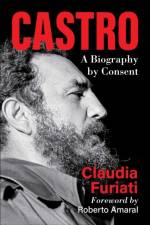
Castro: A Biography by Consent offers the most comprehensive and in-depth life history of one of the most iconic and controversial revolutionary leaders of the modern world. Respected by some, despised by others, Fidel Castro was a force to reckon with. Claudia Furiati spent nine years of intensive research unraveling and chronicling his story through seven decades of Cuban history. Castro granted Furiati his consent to write this biography and gave his assurance that he would not read it until the book was completed and published. He allowed her access to his personal (confidential and secret) archives and official files. Through these and multiple interviews with Castro’s friends and enemies alike, Furiati fills in gaps missing from other biographies and provides, through extensive narrative and photos, a powerful portrayal of this charismatic yet enigmatic head of state.
Abonner på vårt nyhetsbrev og få rabatter og inspirasjon til din neste leseopplevelse.
Ved å abonnere godtar du vår personvernerklæring.