



Gjør som tusenvis av andre bokelskere
Abonner på vårt nyhetsbrev og få rabatter og inspirasjon til din neste leseopplevelse.
Ved å abonnere godtar du vår personvernerklæring.Du kan når som helst melde deg av våre nyhetsbrev.

Based on four interviews conducted by Paul Stillwell in October and November 1986, the volume contains 364 pages of interview transcript plus an index and appendices. The transcript is copyright 1989 by the U.S. Naval Institute; the interviewee placed no restrictions on its use.
Based on ten interviews conducted by Paul Stillwell from September 2004 to March 2006. The volume contains 927 pages of interview transcript plus a comprehensive index. The transcript is copyright 2011 by the U.S. Naval Institute; the interviewee placed no restrictions on its use.
Based on three interviews conducted by John T. Mason and Paul Stillwell. The volume contains 434 pages of interview transcript plus three appendices and an index. The transcript is copyright 1990 by the U.S. Naval Institute; the interviewee has placed no restrictions on its use.
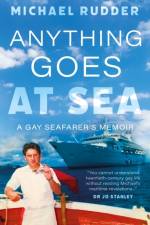
Anything Goes at Sea explores gay life aboard British ships from 1969 to 1990. It chronicles a tender, enduring love story that survived a turbulent beginning and spans 50 years.
Based on five interviews conducted by Paul Stillwell in January 1998, the volume contains 436 pages of interview transcript plus a comprehensive index. The transcript is copyright 2006 by the U.S. Naval Institute; the interviewee placed no restrictions on its use.
Based on two interviews conducted by Paul Stillwell in October 1986 and July 1988, the volume contains 130 pages of interview transcript plus an index. The transcript is copyright 1990 by the U.S. Naval Institute; the interviewee placed no restrictions on its use.
Based on five interviews conducted by Etta-Belle Kitchen from June 1969 through September 1969. The volume contains 364 pages of interview transcript plus an index. The transcript is copyright 1970 by the U.S. Naval Institute; the restrictions originally placed on the transcript by the interviewee have since been removed.
Based on five interviews conducted by Paul Stillwell from September 1984 through May 1981. The volume contains 365 pages of interview transcript plus an index. The transcript is copyright 1995 by the U.S. Naval Institute; the interviewee has placed no restrictions on its use.
Based on four interviews conducted by Paul Stillwell from October 1982 through September 1984, the volume contains 434 pages of interview transcript plus an index. The transcript is copyright 1995 by the U.S. Naval Institute; the interviewee placed no restrictions on its use.
After graduation from the Naval Academy in 1932, Waters served in the heavy cruiser USS Augusta (CA-31) and destroyer USS Downes (DD-375) before taking postgraduate training in ordnance engineering. He then went to England as a special naval observer in the period when Britain was engaged in hostilities but the United States was not yet in the war. That led directly to his assignment to set up the Navy's first mine disposal school in Washington after his return. He served later in the light cruiser USS Memphis (CL-13) and on the staff of Vice Admiral Jonas Ingram, both in the South Atlantic and when Ingram commanded the Atlantic Fleet. Waters was skipper of the destroyer USS Laffey (DD-724) during the Bikini atomic bomb tests in 1946. He later commanded the attack transport USS Glynn (APA-239) and Destroyer Squadron Two. While commanding the Naval Weapons Station at Yorktown, Virginia, he was selected for rear admiral and then served as Commander Destroyer Flotilla One. After duty as Commander Mine Force Pacific Fleet and Naval Base Los Angeles, he began a long tour of duty as Oceanographer of the Navy, up to his retirement in 1970.
After graduation from the Naval Academy in 1920, Admiral Wellborn served in the USS New Mexico (BB-40) and USS Nevada (BB-36), then in the USS West Virginia (BB-48) as aide and communications officer, Commander Battleships, followed by similar service in the USS California (BB-44). In 1933 he served three years at BuOrd, then returned to sea as CO of the USS Perry (DD-340). He later was navigator in the light cruiser USS Concord (CL-10) and gunnery officer for ComCruBatFor in the Honolulu (CL-48). During World War II, he first served as Commander Destroyer Division 16, involved in amphibious landings in Sicily, and then with the Fifth Amphibious Force in the Pacific. After a tour as Director of Officer Personnel at BuPers, he assumed command of the USS Iowa (BB-61), participating in the first landing and occupation of Japan in 1945. Later highlights in his naval career included: Chief of Staff to CinCPac; Commander Second Fleet, Commander Eastern Sea Frontier; and Chairman of U.S. Delegation, UN Military Staff Committee.
In a career marked by a great deal of administrative work rather than parish duty, Faulk is probably best known for his spirited--and eventually successful--campaign against compulsory church attendance in the Navy. Among his varied duties were service in the battleship Idaho (BB-42) in the late 1930s, at the Cavite Navy Yard in the Philippines as World War II approached; in the battleship Missouri (BB-63) at the end of the war and the immediate postwar period; as chaplain at the Recruit Training Center, Bainbridge, Maryland; as fleet chaplain for the Pacific Fleet; and at the Eleventh Naval District. Faulk's recollections of service during World War II are important because of his observations concerning Rear Admiral Robert Workman, wartime Chief of Chaplains, and because of Faulk's role in recruiting chaplains through the V-12 program. He has much to say also on collateral duties of chaplains and on the Navy Relief Society. Based on four interviews conducted by John T. Mason Jr. in November 1974, the volume contains 465 pages of interview transcript plus an index and numerous appendices. The transcript is copyright 1990 by the U.S. Naval Institute; the interviewee placed no restrictions on its use.
Admiral Miller was designated a naval aviator in 1938. He was assigned as flight instructor at NAS, Ellyson Field, Florida, where he trained Colonel Doolittle's "Tokyo Raiders" in carrier takeoffs and accompanied them in the USS Hornet (CV-8) in 1942. He then commanded Air Group 23 in the USS Princeton (CVL-23) and Air Group Six in the USS Hancock (CV-19). After graduation from the Industrial College in 1953, he was assigned to the CNO's Strategic Plans Division. He then was Commander Fleet Air, Philippines, followed by tours as Director of the Progress Analysis Group, CNO, and CO of the USS Hancock (CVA-19) . This volume concludes with a discussion of the scope of his command of Carrier Division Fifteen, an antisubmarine hunter-killer task group, in 1961 and 1962. The second volume picks up the admiral's career in 1961 when he was assigned as Chief of Staff for Plans Joint Staff, CinCPac at the time of the buildup in Vietnam. In 1964 he had command of Carrier Division Three and Task Force 77 of the Seventh Fleet in Vietnam. As CTF, he launched the first of a succession of aircraft carrier strikes on North Vietnam from the USS Ranger (CVA-61), USS Coral Sea (CVA-43), and USS Hancock (CVA-19). In 1966 he returned to Washington to serve as Navy Chief of Information and tells of his efforts and programs to project a better image of the Navy. In 1968 he reported as Commander, Naval Air Test Center, Patuxent River, with additional duty as Fleet Air, Patuxent and Naval Air Systems Command Test and Evaluation Coordinator. His last interview is concerned with drug abuse and his attendance at the White House Youth Conference in 1971. Based on five interviews conducted by John T. Mason, Jr., from April 1971 through August 1971. The volume contains 243 pages of interview transcript plus an index and appendices. The transcript is copyright 1973 by the U.S. Naval Institute; the interviewee has placed no restrictions on its use.
Covers his service from 1942 to 1945. In 1942 served at Headquarters, Commander in Chief, U.S. Fleet, Washington, D.C., where one duty was making a study of the Northern Passage from Japan, around northern Russia to Murmansk to see what prospects of developing it might be. Was then assigned as Chief of the Naval Division of the U.S. Military Mission to USSR. Handled naval activities in Soviet ports in connection with Lend-Lease shipments; established a complete exchange of weather information between USSR and US; made arrangements for American delegation at the Yalta Conference. Worked closely with Ambassador Averell Harriman. Based on a single interview conducted by John T. Mason, Jr., in June 1970. The volume contains 53 pages of interview transcript plus an index. The transcript is copyright 1972 by the U.S. Naval Institute; the interviewee has placed no restrictions on its use.
Based on interviews conducted by Paul Stillwell from, the volume contains 566 pages of interview transcript plus an index. The transcript is copyright 1995 by the U.S. Naval Institute.
Based on five interviews conducted by Dr. John T. Mason Jr. from August 1971 through February 1972, the volume contains 278 pages of interview transcript plus an index. The transcript is copyright 1974 by the U.S. Naval Institute; the interviewee has placed no restrictions on its use.
A series of interviews with extraordinary people to explore the reasons for and impact of their faith in their lives.
Based on seven interviews conducted by John T. Mason Jr. and Paul Stillwell from December 1978 through December 1984, the volume contains 286 pages of interview transcript plus an index. The transcript is copyright 2018 by the U.S. Naval Institute; the interviewee placed no restrictions on its use.
Based on seven interviews conducted by John T. Mason, Jr., from December 1974 through August 1978. The volume contains 456 pages of interview transcript plus an index. The transcript is copyright 1990 by the U.S. Naval Institute; the interviewee has placed no restrictions on its use.
Based on 22 interviews conducted by Paul Stillwell between September 1990 and March 1991, the volume contains 612 pages of interview transcript plus a comprehensive index. The transcript is copyright 2011 by the U.S. Naval Institute; the interviewee placed no restrictions on its use.
Based on two interviews conducted by Paul Stillwell in November 1989 and March 1990, this volume contains 164 pages of interview transcript plus a comprehensive index. The transcript is copyright 1998 jointly by Carl Maxie Brashear and the U.S. Naval Institute; the interviewee has placed no restrictions on its use.
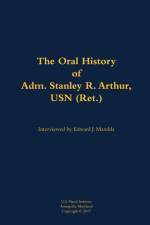
Arthur attended Miami University (Oxford, Ohio), on a Navy ROTC scholarship. Graduating in 1957, he entered flight training and in 1958 earned his wings as a naval aviator. During the Vietnam War, he completed 514 combat missions, many as Commanding Officer of Attack Squadron 164 on board the attack aircraft carrier Hancock (CVA-19). He commanded the combat stores ship San Jose (AFS-7) and the aircraft carrier Coral Sea (CV-43) and served as Commander Carrier Group Seven. Admiral Arthur's staff tours included assignments with Commander in Chief, Pacific Fleet in Hawaii, the Rapid Deployment Joint Task Force, Commander in Chief, Central Command (twice), and the Bureau of Naval Personnel. He served as the Deputy Chief of Naval Operations for Logistics before being selected to command the U.S. Seventh Fleet based in Yokosuka, Japan. In that capacity, he led U.S. and multinational forces in Operation Desert Storm. Admiral Arthur capped his 38-year career in the Navy as the Vice Chief of Naval Operations.
Based on 18 interviews conducted by Paul Stillwell from October 2007 to March 2009, the oral history contains 643 pages of interview transcript plus a comprehensive index. The transcript is copyright 2012 by the U.S. Naval Institute; the interviewee placed no restrictions on its use.
Based on four interviews conducted by Paul Stillwell from 1987 through November 1988. The volume contains 371 pages of interview transcript plus an index and appendix. The transcript is copyright 1990 by the U.S. Naval Institute; the interviewee must give permission for material from the oral history to be quoted or cited in a published work.
Based on four interviews conducted by Paul Stillwell from September 1987 through November 1987. The volume contains 351 pages of interview transcript plus an index. The transcript is copyright 1990 by the U.S. Naval Institute; the interviewee must give permission for material from the oral history to be quoted or cited in a published work.
Based on five interviews conducted by Dr. John T. Mason Jr., from August 1970 through September 1974. The volume contains 212 pages of interview transcript plus an index and appendices. The transcript is copyright 1976 by the U.S. Naval Institute; the interviewee has placed no restrictions on its use.
Lillian Beynon Thomas' suffragist campaign succeeded where all others had failed. This full-length biography fills an important gap in the history of the 'votes for women' movement, a campaign which saw Manitoba become the earliest federal or provincial Canadian jurisdiction to grant women the franchise. To achieve the franchise, she eschewed the then traditional tools of back-room, partisan party politics by instead developing a broadly-based, grass-roots movement which stands as a forerunner of modern political campaign techniques. Facing hostile opposition to her pacifist views in Winnipeg during World War One, she and her husband went into voluntary exile in New York City. Returning home, she became a leading Canadian short-story writer, playwright, and public advocate for a Canadian cultural identity, distinct from that of Britain or America. This is the story of how a young girl came with her settler family to a desolate part of the hardscrabble prairie and who, despite these humble origins, succeeded in engineering a fundamental Canadian democratic reform and championing the emerging Canadian cultural nationalism.
For years Robert Newton Baskin (1837-1918) may have been the most hated man in Utah. Yet his promotion of federal legislation against polygamy in the late 1800s and his work to bring the Mormon territory into a republican form of government were pivotal in Utah's achievement of statehood. The results of his efforts also contributed to the acceptance of the Church of Jesus Christ of Latter-day Saints by the American public. In this engaging biography--the first full-length analysis of the man--author John Gary Maxwell presents Baskin as the unsung father of modern Utah. As Maxwell shows, Baskin's life was defined by conflict and paradox.
Based on eight interviews conducted by John T. Mason, Jr., and Etta-Belle Kitchen from May 1969 through September 1970. The volume contains 369 pages of interview transcript. The transcript is copyright 1979 by the U.S. Naval Institute; any restrictions originally placed on the transcripts by the interviewees have since been removed.
Based on eight interviews conducted by Paul Stillwell from May 1985 through July 1987. The volume contains 514 pages of interview transcript plus an index. The transcript is copyright 1996 by the U.S. Naval Institute; the interviewee has placed no restrictions on its use.
Abonner på vårt nyhetsbrev og få rabatter og inspirasjon til din neste leseopplevelse.
Ved å abonnere godtar du vår personvernerklæring.