









Gjør som tusenvis av andre bokelskere
Abonner på vårt nyhetsbrev og få rabatter og inspirasjon til din neste leseopplevelse.
Ved å abonnere godtar du vår personvernerklæring.Du kan når som helst melde deg av våre nyhetsbrev.

Reagan's War Storiesexamines the relationship betweenRonald Reagan, the public and popular culture. From an overview of Reagan's youth and the pulp fiction he consumed, we get a sense of the future president's good/evil outlook. Carrying that over into Reagan's reading and choices as president, Griffin situates narrative at the center of Reagan's political formation and leadership providing a compelling account of both Reagan's life, his presidency, and a lens into non-traditional strategy formulation. AuthorBen Griffintells three stories about an American president who ushered in the end of the Cold War. A survey of Reagan's youth and the fiction he consumed and created as an announcer and actor, reveals how the future president'sworldviewdeveloped. A look at the rise of fiction and popular culture rife with pro-Americanism in the 1980s details a uniquely symbiotic relationship between the chief executive and popular culture in framing the Cold War as a struggle with an ';Evil Empire' in the Soviet Union.Finally, Griffin outlines how presidential personality and readingpreferences shaped President Reagan'spursuit of the ';Star Wars' initiative and belief in the transformative combination of freedom and technology. Griffin demonstrates thatnovelsbyTom Clancy, LouisL'Amour, andscience fictioninfluencedReagan'sview of 1980s geopolitics. His identification with fictionledRonaldReagan toviewEuropeanCold Warissueswith more empathybut harmedthe presidentspolicymakingwhen the narrowness ofhis reading led himto apply a white-hat/black-hat framework that did not match the reality of conflict in Latin America. Reagan treated fictional portrayals seriously, believing they shaped public views and offered valid ways to think through geo-political issues. Seeking to shape the reading habits of the public, hisadministration sought to highlight authors who shared his worldview like Tom Clancy, LouisL'Amour, and Allen Druryover other popular writers likeRobert Ludlum and John LeCarre who portrayed the Cold War in less stark moral terms.The administration's favored popularauthors in turn intentionally incorporated Reagan-era policies into their worktoadvocate for them through fiction, thus reaching abroader audience thanviaofficial government releases and speeches. Showinghow Reaganusednarrative asbotha consumer andacommunicator, Griffin notesthat Reagan identified with certainstoriesand they shaped him as a political leader and later and influenced his approach to complex issues.Whenhandled deftly, incorporatingfiction created a common language across the administration andprovided a way toconveymessagesto the masses in a memorable fashion.
Mastering the Art of Commandis a detailed examination of Admiral Chester W. Nimitz's leadership during World War II. It describes how he used his talents toguidethe Pacific Fleetfollowing the attacks onPearl Harbor, win crucial victories against the forces of Imperial Japan, and then seize the initiative in the Pacific. Once Nimitz's forces held the initiative, they maintained it through an offensive campaign of unparalleled speed that overcame Japanese defenses and created the conditions for victory. As acommand and operational history,Mastering the Art of Commandexplores how Nimitz used his leadership skills, command talents, and strategic acumen to achieve these decisive results. Hone recounts how Nimitz, as both Commander-in-Chief of the Pacific Fleet (CINCPAC) and Commander-in-Chief of the Pacific Ocean Areas (CINCPOA), revised and adapted his organizational structure to capitalize on lessons and newly emerging information.Honeargues that Nimitzbecause he served simultaneously as CINCPAC and CINCPOAwas able to couple tactical successes to strategic outcomes and more effectively plan and execute operations that brought victory at Midway, Guadalcanal, the Marshall Islands, the Philippines, Iwo Jima, and Okinawa. As a study of leadership,Mastering the Art of Commandusesmodern management theories, and buildsupon the approach in his award-winningLearning War.Trent Hone explores the challenge of leadership in complex adaptive systems through Nimitz's behavior andcauses us toreassess the inevitability of Allied victory and the reasons for its ultimate accomplishment. A new narrative history of the Pacific war,this bookdemonstrates effective patterns for complexity-informed leadership by highlighting how Nimitz maintained coherence within his organization, established the conditions for his subordinates to succeed, and fostered collaborative sensemaking to identify and pursue options more rapidly.Nimitz's ';strategic artistry' is a pattern worthy of study and emulation, for today's military officers, civilian leaders, and managers in large organizations.
"e;Without dedicated public servants, as yourself, at the local level, our efforts here in Washington would be for naught. I am very much aware of your personal commitment in this regard and I thank you for it...."e; Jimmy Carter, former U.S. President, writing to Al Delbello in 1977."e;Al's legacy is bigger than all of us, touching each of our lives, even today. A kind, generous and brilliant man who was a mentor to me, (Al) proved that anything is possible for a boy from Yonkers."e; Michael Spano, mayor, city of Yonkers As mayor of his native Yonkers-the third largest city in New York-Alfred Delbello defied an ingrained, corrupt, inefficient patronage system to bring fiscal sanity and better living conditions to Yonkers' citizens. Delbello then became the first Democrat to be elected Westchester County Executive, where he balanced fiscal conservatism and an innovative approach to funding with improvements to health care, the environment, the criminal justice system, and equal rights.Delbello brought a bipartisan approach to his role as New York State Governor Mario M. Cuomo's first lieutenant governor in the early 1980s. Even after his resignation in 1985, he continued to pursue many of his political passions in business and, in so doing, become what Socrates would have called "e;a citizen of the world."e; In an age in which climate change, health care, and social injustice are key issues and bipartisanship an endangered species, one politician remains a not-so-distant mirror of how to work across party lines to ensure quality of life for all Americans.
Author Faith McClung Kline O'Brien's paternal grandparents, Albert McClung and Mattie Fitzgerald, met at a small, country church in Oklahoma in 1907, the year that territory became a state. Albert's ancestors included Revolutionary patriots "e;Saucy Jack"e; McClung, of Scotch-Irish descent, and Abraham Kuykendall, of Dutch lineage, who, around 1740, relocated from New York to North Carolina, where he settled and accumulated a fortune in gold coins. Mattie descended from two former sea captains who became merchants in Brooklyn, New York-Edward Card from Maine and Nathaniel Grafton from Newport, Rhode Island, whose seafaring ancestors had sailed the Atlantic Ocean since the mid-1600s.In Move On! O'Brien chronicles her extended family's history, with each chapter focusing on one of Albert's or Mattie's seventeen ancestral branches-the Fitzgerald and McClung Clans and their allied lines: the Anthony, Barry, Card, Dods, Forman, Grafton, Kuykendall, Longstreet, Miller, Reid, Thompson, Tidwell, Trigg, Wilbore, and Wyckoff families. Ten of these lines include Revolutionary patriots, and ten have roots in America extending as far back as the 1600s. Move On! tells how descendants of these disparate families met, united in marriage, and eventually became pioneers on the Southwestern prairies.Glimpses of religion in the lives of everyday Americans appear throughout Move On!, which combines genealogical details with personal stories, many taking place during pivotal events in US history.Stories from the nineteenth and early twentieth centuries told firsthand by O'Brien's late grandparents help bring Move On! to life through the eyes of real-life characters, her ancestors.
Patrick Floyd Garrett, widely known as "e;Pat,"e; (1850-1908) had tracked down and killed the outlaw Billy the Kid but also became a victim of the tangled politics of the time. He has been maligned by writers, libeled by Hollywood and deprecated by many of his contemporaries. But despite them, all his deeds retain for him a niche in the gallery of fast shooting peace officers who helped to bring law and order to the frontier West. When he died, there was rejoicing in some quarters and relief in others--as might be expected in the case of a controversial figure. There was also genuine and profound sorrow in the rugged hearts of many in New Mexico, Texas and Arizona, as well as farther afield, and the circumstances surrounding his death, ostensibly at the hands of a most unlikely cowboy named Wayne Brazel, have puzzled and intrigued historians since that spring day in 1908 when he was shot to death and left lying in a sand drift on a lonely road. But was Pat Garrett shot by Wayne Brazel, or hired killer Jim Miller? Brazel confessed, but few believed his story and he was acquitted. Colin Rickards' book sheds light on this unhappy affair which still remains a source of controversy. Colin Rickards has done extensive research on Pat Garrett including checking official court records, investigating contemporary accounts and conducting interviews. He separates fact from fantasy in this meticulously documented account. An authority on frontier history, the author has written numerous articles and books on the Old West. A journalist by profession, Rickards has applied the same techniques to ferreting out the true stories of life and death adventures in western history. More information on this controversial period in American Southwestern history, the heroes and the villains can be found in these and other Sunstone Press books: "e;Alias Billy the Kid"e; by Donald Cline and "e;Sheriff William Brady"e; by Donald R. Lavash. www.sunstonepress.com
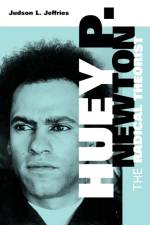
Huey P. Newton's powerful legacy to the Black Panther movement and the civil rights struggle has long been obscured. Conservatives harp on Newton's drug use and on the circumstances of his death in a crack-related shooting. Liberals romanticize his black revolutionary rhetoric and idealize his message. In Huey P. Newton: The Radical Theorist, Judson L. Jeffries considers the entire arc of Newton's political role and influence on civil rights history and African American thought. Jeffries argues that, contrary to popular belief, Newton was one of the most important political thinkers in the struggle for civil rights. Huey P. Newton's political career spanned two decades. Like many freedom fighters, he was a complex figure. His international reputation was forged as much from his passionate defense of black liberation as from his highly publicized confrontations with police. His courage to address police brutality won him admirers in ghettos, on college campuses, and in select Hollywood circles. Newton gave Black Power a compelling urgency and played a pivotal role in the politics of black America during the 1960s and 1970s. Few would deny that Newton's life (1942-1989) was strewn with incidences of violence and that his police record was long. But Newton's struggles with police took place in a rich and troubled context that included urban unrest, police brutality, government repression, and an intense debate over civil rights tactics. Stripped of history and interpretation, the violence of Newton's life brought emphatic indictments of him. Newton's death attracted widespread media attention. However, pundits offered little on Newton as freedom fighter or as theoretician and activist. Huey P. Newton: The Radical Theorist dispels myths about Newton's life, but the book is primarily an in-depth examination of Newton's ideas. By exploring this charismatic leader, Jeffries's book makes a valuable contribution to the scant literature on Newton, while also exposing the core tenets and evolving philosophies of the Black Panther Party.
A captivating biography that celebrates the audacious, inspiring life and works of John Milton, revealing how he speaks to our times.John Milton is unrivalled-for the music of his verse and the breadth of his learning. In this brisk, topical, and engaging biography, Stephen B. Dobranski brushes the scholarly dust from the portrait of the artist to reveal Milton's essential humanity and his unwavering commitment to ideals-freedom of religion and the right and responsibility of all persons to think for themselves-that are still relevant and necessary in our times.Milton's epic poem, Paradise Lost, is considered by many to be English poetry's masterpiece. Samuel Johnson, not one for effusive praise, claimed that from Milton's "e;books alone the Art of English Poetry might be learned."e; But Milton's renown rests on more than his artistic achievements. In a time of convulsive political turmoil, he justified the killing of a king, pioneered free speech, and publicly defended divorce. He was, in short, an iconoclast, an independent, even revolutionary, thinker. He was also an imperfect man-acrimonious, sometimes mean. Above all, he understood adversity. Afflicted by blindness, illness, and political imprisonment, Milton always sought to "e;bear up and steer right onward"e; through life's hardships.Dobranski looks beyond Milton's academic standing, beyond his reputation as a dour and devout purist, to reveal the ongoing power of his works and the dauntless courage that he both wrote about and exemplified.
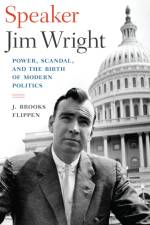
The rise and fall of a Texas Democrat: ';A definitive, richly detailed biography [and] an engrossing history that sheds light on our own fractious times.' Kirkus Reviews (starred review) A former Golden Gloves boxer and WWII bombardier, Jim Wright entered Congress to fight a different kind of battle, making his mark on virtually every major policy issue of the later twentieth century: energy, education, taxes, transportation, environmental protection, civil rights, criminal justice, and foreign relations among them. He played a significant role in peace initiatives in Central America and in the Camp David Accords, and was the first American politician to speak live on Soviet television. A Democrat representing Texas's twelfth district (Fort Worth), he served in the US House of Representatives from the Eisenhower administration to the presidency of George H.W. Bush, including twelve years as majority leader and speakerand his long congressional ascension and sudden fall in a highly partisan ethics scandal spearheaded by Newt Gingrich mirrored the evolution of Congress as an institution. Speaker Jim Wright traces the congressman's long life and career in a highly readable narrative grounded in extensive interviews with Wright and access to his personal diaries. A skilled connector who bridged the conservative and liberal wings of the Democratic Party while forging alliances with Republicans to pass legislation, Wright ultimately fell victim to a new era of political infighting, as well as to his own hubris and mistakes. J. Brooks Flippen shows how Wright's career shaped the political culture of Congress, from its internal rules and power structure to its growing partisanship, even as those new dynamics eventually contributed to his political demise. To understand Jim Wright in all his complexity is to understand the story of modern American politics.
Quiet, little reminiscences of simple slices of life cleverly connected by the aisles where the stories began. It is a frame story held together by an observant owner of a hardware store. Through Karen's eyes, you will fall in love with the people within the pages. She invites us to return and remember the simple pleasantries of what life is meant to be...a listening ear, a willing hand, a gentle touch, a caring heart. What a delightful look into the lives of a most remarkable community. Whether reading about a free acting lesson by Ted Levine in Aisle 12, a canine door greeter with a long memory, or appreciating the stunning photography of a breathtaking setting, this book has something to offer everyone who has ever traveled country roads and wondered what people are like who live in rural America. Read these 57 love letters to the hardware store business and its customers and you'll want to visit your own neighborhood home improvement retailer and drink in the human experience.
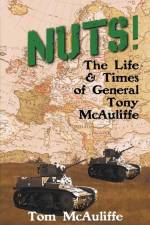
Get ready to be inspired and amazed as you discover the true story of General Tony McAuliffe, the hero who helped save America from Nazi invasion during World War II. Through the eyes of his family, his writings, and rare photographs, you will be transported back in time to the crucial Battle of the Bulge in Bastogne, Belgium where McAuliffe and his men bravely faced off against the enemy. But that's not all, this book also delves into the 35+ year career of the beloved general, including his role in inventing tools to defend our nation and his pivotal leadership during the Battle of the Bulge. You will be inspired by the true story of an American hero who helped change the course of history. It's a uplifting and lovingly written tribute to General McAuliffe and you'll gain a new perspective on WWII and the sacrifices made by the men who defended freedom. In this book, you'll find: - Rare insights from McAuliffe's family and personal writings.- Never-before-seen photographs from his time in the military.- A detailed account of the Battle of the Bulge and its significance in WWII.- Info on McAuliffe's career and his contributions to American defense.- An intimate look at the man behind the hero. Don't miss out on this incredible story and tribute to a true American hero. Buy now before the price changesand be inspired by the bravery and determination of WWII hero General Tony McAuliffe!
An extraordinarily brave and moving memoir from one of the world's most famous transparency activists and trans women.In 2010, Chelsea Manning was working as an intelligence analyst for the US Army in Iraq. She disclosed 720,000 classified military documents that she had smuggled out via the memory card of her digital camera. By far the largest leak in history, these documents revealed a huge number of diplomatic cables and footage of atrocities. She was sentenced to 35 years in military prison.The day after her conviction, Chelsea declared her gender identity as a woman and began to transition. She was sent to a male prison, spent much of that time in appalling conditions in solitary confinement and attempted suicide multiple times. In 2017, after a lengthy legal challenge and an outpouring of support, President Obama commuted her sentence.README.txt is a story of personal revolt, resilience and survival. Chelsea details the challenges of her childhood and adolescence in Oklahoma and in her mother's native Wales. She writes revealingly and movingly about a period of homelessness in Chicago, living under 'Don't Ask, Don't Tell' in the US Army, and the experience of coming to terms with her gender identity and undergoing hormone therapy in prison. We witness her Kafkaesque trial and heroic quest for release.This powerful, courageous and observant memoir sheds light on the big themes of today - identity, authenticity, technology, the authoritarian state - and will stand as one of the definitive testaments of our digital, information-driven age.'Chelsea Manning is the biggest hero that ever lived' Vivienne Westwood'Searing ... uplifting ... redemptive' The New York Times'Electrifying ... an insider confessional turned inside out for the 21st century' Washington Post
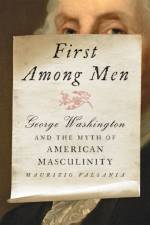
Dispelling common myths about the first US president and revealing the real George Washington.George Washington-hero of the French and Indian War, commander in chief of the Continental Army, and first president of the United States-died on December 14, 1799. The myth-making began immediately thereafter, and the Washington mythos crafted after his death remains largely intact. But what do we really know about Washington as an upper-class man?Washington is frequently portrayed by his biographers as America at its unflinching best: tall, shrewd, determined, resilient, stalwart, and tremendously effective in action. But this aggressive and muscular version of Washington is largely a creation of the nineteenth century. Eighteenth-century ideals of upper-class masculinity would have preferred a man with refined aesthetic tastes, graceful and elegant movements, and the ability and willingness to clearly articulate his emotions. At the same time, these eighteenth-century men subjected themselves to intense hardship and inflicted incredible amounts of violence on each other, their families, their neighbors, and the people they enslaved. In First Among Men: George Washington and the Myth of American Masculinity, Valsania considers Washington's complexity and apparent contradictions in three main areas: his physical life (often bloody, cold, injured, muddy, or otherwise unpleasant), his emotional world (sentimental, loving, and affectionate), and his social persona (carefully constructed and maintained). In each, he notes, the reality diverges from the legend quite drastically. Ultimately, Valsania challenges readers to reconsider what they think they know about Washington.Aided by new research, documents, and objects that have only recently come to light, First Among Men tells the fascinating story of a living and breathing person who loved, suffered, moved, gestured, dressed, ate, drank, and had sex in ways that may be surprising to many Americans. In this accessible, detailed narrative, Valsania presents a full, complete portrait of Washington as readers have rarely seen him before: as a man, a son, a father, and a friend.
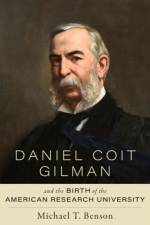
One of the most remarkable education leaders of the late nineteenth century and the creator of the modern American research university finally gets his due.Daniel Coit Gilman, a Yale-trained geographer who first worked as librarian at his alma mater, led a truly remarkable life. He was selected as the third president of the University of California; was elected as the first president of Johns Hopkins University, where he served for twenty-five years; served as one of the original founders of the Association of American Universities; and-at an age when most retired-was hand-picked by Andrew Carnegie to head up his eponymous institution in Washington, DC.In Daniel Coit Gilman and the Birth of the American Research University, Michael T. Benson argues that Gilman's enduring legacy will always be as the father of the modern research university-a uniquely American invention that remains the envy of the entire world. In the past half-century, nothing has been written about Gilman that takes into account his detailed journals, reviews his prodigious correspondence, or considers his broad external board service. This book fills an enormous void in the history of the birth of the "e;new"e; American system of higher education, especially as it relates to graduate education. The late 1800s, Benson points out, is one of the most pivotal periods in the development of the American university model; this book reveals that there is no more important figure in shaping that model than Daniel Coit Gilman.Benson focuses on Gilman's time deliberating on, discussing, developing, refining, and eventually implementing the plan that brought the modern research university to life in 1876. He also explains how many university elements that we take for granted-the graduate fellowships, the emphasis on primary investigations and discovery, the funding of the best laboratory and research spaces, the scholarly journals, the university presses, the sprawling health sciences complexes with teaching hospitals-were put in place by Gilman at Johns Hopkins University. Ultimately, the book shows, Gilman and his colleagues forced all institutions to reexamine their own model and to make the requisite changes to adapt, survive, thrive, compete, and contribute.
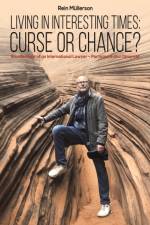
These are the memoirs and reflections on the most acute issues of the contemporary world by a boy from the Estonian countryside who, through accident and pure ambition, ended up as a professor at Moscow University and adviser to President Gorbachev on matters of international law. After a stint as head of Estonian diplomacy at crucial moments in the restoration of its independence, he later became a centennial professor at the LSE and chair of international law at King's College London. This is not a traditional autobiography. Besides reflecting on issues he dealt with while advising Soviet leaders, such as Yakovlev in his speech on the Molotov-Ribbentrop Pact or the status of the Kuril Islands, and their repercussions in today's world, the book analyses the roots of the crisis within liberal democracy, the upsurge of populism, the rise of China and the re-emergence of Russia as a great power. A Marco Polo fellow at Jiaotong University in China and recently awarded the highest Russian Order for foreigners - the Friendship Order by President Putin, Professor Mullerson, who lives in London, feels equally at home discussing the renewal of great-power competition, the problems of the European Union including Brexit, the conflict in Ukraine, as well as the negative impacts of political correctness both in the former USSR and today's West. Having lived equal thirds of his life in three different worlds and worked in and visited many countries as a UN diplomat, he is a man who understands small country mentality, though being 'spoilt' by great-power mindset.
During the Coronation of King Charles III and Queen Camilla, the Christian Church will take centre stage once again, as the established religion in England. But why does the Church have such prominence in state affairs, and should it keep this privileged position in 21st Century, multi-faith Britain?In 1953, millions across the world watched the first televised coronation of a British monarch. What they witnessed was a deeply religious, medieval Christian ritual. Elizabeth II's reign was profoundly shaped by her faith, expressed not only in her coronation vows but also in her 70 years as Queen, from her role as supreme governor of the Church of England, to her annual Christmas broadcasts, her encounters with Popes, Islam and the other religions. Like her late husband, Prince Philip, the Queen's faith was described as her 'strength and stay' amid the turmoil of a nation becoming increasingly secular at the same time as her subjects became increasingly more varied in their religious beliefs. During Queen Elizabeth's coronation she was anointed by the Archbishop for her role in serving the country as Queen. But what part will Christianity play in the reign of King Charles III, who as Prince of Wales once said he'd prefer to be defender of faith? Plans for the coronation are now in full swing and speculation is mounting as to whether this is the moment to jettison an ancient rite and reinvent the Coronation to appeal to multicultural Britain, or whether our nation ought to embrace tradition and reassert its Christian heritage in the new Carolean age. Defenders Of The Faith explores the powerful connection between religion and the British monarchy from its earliest times, through to the Reformation, the Civil War, and the reconfigured wholesome family monarchy of Victoria and her successors, down to Her Late Majesty Queen Elizabeth II -- and into the future when the new Defender of the Faith is crowned.
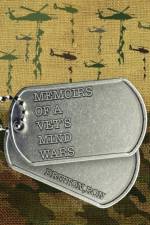
This book is dedicated to the men and women of the armed forces, those heroes who defended their homeland from both foreign and domestic threats. I wrote this book because I wanted to talk about trauma from many different angles. Trauma comes in many forms, including physical, emotional, and psychological abuse. Military families often experience financial crises that put their mental and physical well-being at risk. The goal of writing this book was to express my concern about vets and their families, and how I feel they should receive all the support we can give them. If even one family member falls through the cracks, the rest of the family suffers with them. I am proud to have served in the United States Military. It was one of the greatest choices I have ever made, and I salute every soldier who proudly wore their uniform.
Mary Fullerton (1868-1946) and Mabel Singleton (1877-1965) met in Melbourne as suffrage and peace activists in Vida Goldstein's Women's Political Association. They remained together for thirty-five years as loving friends, raising Mabel's son born in 1911. Through her literary friendship with Miles Franklin (1879-1954), Mary Fullerton's last two volumes of poetry were published in the 1940s. Rescued from near destruction, a box of Mary's manuscripts eventually made its way to the Mitchell Library. It contained poems she never sent to Miles Franklin. These poignant poems, many dedicated to Mabel, trace a love story that sheds light on how women of the early twentieth century may have understood their love for each other.
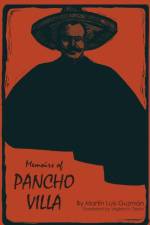
';A frequently fascinating and probably fairly accurate insight into the most controversial character of the Mexican Revolution.' Time Martn Luis Guzmn, eminent historian of Mexico, knew and traveled with Pancho Villa at various times during the Revolution. When many years later some of Villa's private papers, records, and what was apparently the beginning of an autobiography came into Guzmn's hands, he was ideally suited to blend all these into an authentic account of the Revolution as Pancho Villa saw it, and of the General's life as known only to Villa himself. This is Villa's story, his account of how it all began when as a peasant boy of sixteen he shot a rich landowner threatening the honor of his sister. This lone, starved refugee hiding out in the mountains became the scourge of the Mexican Revolution, the leader of thousands of men, and the hero of the masses of the poor. The assault on Ciudad Jurez in 1911, the battles of Tierra Blanca, of Torreon, of Zacatecas, of Celaya, all are here, told with a feeling of great immediacy. This volume ends as Villa and Obregon prepare to engage each other in the war between victorious generals into which the Revolution degenerated before it finally ended. The Memoirs were first published in Mexico in 1951, where they were extremely popular. This volumetranslated by Virginia H. Taylorwas the first English publication. ';This biographical history presents as revealing a historical portrait of the Revolution as the author's earlier historical novel, The Eagle and the Serpent.' The Hispanic American Historical Review
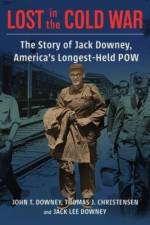
In 1952, John T. "e;Jack"e; Downey, a twenty-three-year-old CIA officer from Connecticut, was shot down over Manchuria during the Korean War. The pilots died in the crash, but Downey and his partner Richard "e;Dick"e; Fecteau were captured by the Chinese. For the next twenty years, they were harshly interrogated, put through show trials, held in solitary confinement, placed in reeducation camps, and toured around China as political pawns. Other prisoners of war came and went, but Downey and Fecteau's release hinged on the United States acknowledging their status as CIA assets. Not until Nixon's visit to China did Sino-American relations thaw enough to secure Fecteau's release in 1971 and Downey's in 1973.Lost in the Cold War is the never-before-told story of Downey's decades as a prisoner of war and the efforts to bring him home. Downey's lively and gripping memoir-written in secret late in life-interweaves horrors and deprivation with humor and the absurdities of captivity. He recounts his prison experiences: fearful interrogations, pantomime communications with his guards, a 3,000-page overstuffed confession designed to confuse his captors, and posing for "e;show"e; photographs for propaganda purposes. Through the eyes of his captors and during his tours around China, Downey watched the Great Leap Forward, the Cultural Revolution, and the drastic transformations of the Mao era. In interspersed chapters, Thomas J. Christensen, an expert on Sino-American relations, explores the international politics of the Cold War and tells the story of how Downey and Fecteau's families, the CIA, the U.S. State Department, and successive presidential administrations worked to secure their release.
A perceptive introduction to the mind of one of German's greatest writers, in a new translation for the first time in 150 years'The best German book there is' Nietzsche By the turn of the nineteenth century, the poet, novelist and thinker Johann Wolfgang von Goethe was one of the most famous people in the world. In 1823 he became friend and mentor to the young writer Johann Eckermann, who, for the last nine years of Goethe's life, recorded their wide-ranging conversations on art, literature, science and philosophy. This rich portrait of Germany's literary elder statesman, now in its first new translation for over 150 years, gives a fascinating glimpse into a great mind as well as 'many insights and invaluable lessons about life.'Translated by Allan Blunden with an Introduction by Ritchie Robertson
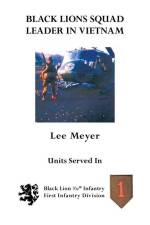
As a squad leader for the First Infantry Division (The Big Red One), Sergeant Meyer was involved in several major battles at Du Dop, An My, the Tet Offensive and Thu Due. This book describes the combat action as well as the daily routine of the infantry soldier in Vietnam. It neither glorifies nor condemns the war but highllights the sacrifices made by ordinary men.
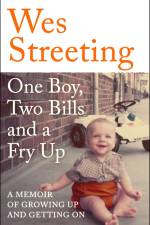
One Boy, Two Bills and a Fry Up, is a compelling masterpiece penned by the talented Wes Streeting. Published in 2023 by Hodder & Stoughton, this book has taken the literary world by storm. The genre of the book is not just confined to one, it's a beautiful amalgamation of emotions, experiences, and events that will keep you hooked from the first page to the last. The story revolves around a boy, his journey through life, the challenges he faces, and how he overcomes them. The narrative is beautifully intertwined with humor and wit, making it a delightful read. The author, Wes Streeting, has done a commendable job in portraying the characters and setting the plot. The book was published in the summer of 2023, and since then, it has been receiving rave reviews from readers and critics alike. Hodder & Stoughton, the publisher, is known for its diverse range of books and has once again lived up to its reputation by bringing this book to the readers. In conclusion, 'One Boy, Two Bills and a Fry Up' is a must-read for everyone who loves a good story with a blend of humor and life lessons.
The first full-length biography in English of Aspar, the eastern Roman general and statesman, this book explores his central role in the history and politics of the fragmenting Roman Empire in the fifth century. It also considers what his life and career may suggest as to the differing fates of the eastern and western parts of the empire.Taking a chronological approach, Bleeker guides us through what is known of Aspar's life and his changing influence in the eastern Roman army and court. Born and raised in Constantinople, Aspar primarily viewed and presented himself as a Roman general, consul, and senator. Yet he also stood outside the Roman mainstream in two important ways-as a member of the empire's "barbarian" military leadership and as a devout Arian Christian. Early chapters treat his formative military experiences with the Persians, a Roman usurper in Italy, the Vandals in Africa, and the Huns of Attila, while later chapters focus on Aspar's political role in resolving the two imperial succession crises that struck the eastern Roman empire in the mid-fifth century and his extended struggle to control the succession to Leo I.Bleeker builds on earlier studies in three ways. First, previous work has largely concentrated on the role of "barbarian" generals in the western Roman empire, while much less attention has been paid to similar figures (such as Aspar) in the east. Secondly, while important recent work has explored the prevalence of "child-emperors" in the late-fourth and early-fifth centuries, this book suggests a further evolution of the imperial role in the mid-fifth century. Finally, while previous studies of this period have focused on Aspar's late career role in the succession struggles, a full study allows us to see how and why his relations with other key figures within and outside the eastern Roman government changed over the course of his lengthy career.
Abonner på vårt nyhetsbrev og få rabatter og inspirasjon til din neste leseopplevelse.
Ved å abonnere godtar du vår personvernerklæring.