







Gjør som tusenvis av andre bokelskere
Abonner på vårt nyhetsbrev og få rabatter og inspirasjon til din neste leseopplevelse.
Ved å abonnere godtar du vår personvernerklæring.Du kan når som helst melde deg av våre nyhetsbrev.

A major new three-volume set exploring the work of, and collating biographical information for, over five-thousand generals and admirals of the Third Reich.
In his first book, Time to Talk, Michael Healy-Rae established himself as part of the great tradition of Kerry storytellers with his chronicles of life in rural Ireland. Now, in his second book, his superior storytelling skills come to the fore once again as he shares more stories of what he¿s witnessed and heard in the heart of the country.From his Kerry childhood to musings on rural Ireland today, A Listening Ear brings readers back to the countryside and characters that we have grown to love. With his quick wit and remarkable observations, Michael is a consummate chronicler of country life and the charm of local heroes.
To mark the coronation of King Charles III, The Sun looks back on 100 extraordinary moments that have shaped Charles into the man - and monarch - he is today. With articles and images from The Sun's archive, and a foreword written by leading royal photographer Arthur Edwards, this book is a special tribute to Britain's new King.
*New Edition of the Leading Work on Modern Turkey* In a world of rising tensions between Russia and the United States, the Middle East and Europe, Sunnis and Shiites, Islamism and liberalism, Turkey is at the epicentre. And at the heart of Turkey is its right-wing populist president, Recep Tayyip Erdogan. Since 2002, Erdogan has consolidated his hold on domestic politics while using military and diplomatic means to solidify Turkey as a regional power. His crackdown has been brutal and consistent - scores of journalists arrested, academics officially banned from leaving the country, university deans fired and many of the highest-ranking military officers arrested. In some senses, the nefarious and failed 2016 coup has given Erdogan the licence to make good on his repeated promise to bring order and stability under a 'strongman'. Here, leading Turkish expert Soner Cagaptay will look at Erdogan's roots in Turkish history, what he believes in and how he has cemented his rule, as well as what this means for the world. The book will also unpick the 'threats' Erdogan has worked to combat - from the liberal Turks to the Gulen movement, from coup plotters to Kurdish nationalists - all of which have culminated in the crisis of modern Turkey.
A fascinating history of Bill Stirling and 2SAS - pioneering founders of modern special forces. Draws on recently declassified files and interviews with veterans.David Stirling is the name synonymous with the wartime SAS, but the real brains behind the operation was in fact Bill Stirling, David's eldest brother. Now for the first time the truth - and the triumph - of 2SAS is revealed.Having originally joined the SOE in March 1940, Bill Stirling sailed for Cairo in 1941 and there had the idea for a small special forces unit to be led by his mercurial brother. David allowed 1SAS to drift under his leadership but after his capture 2SAS reverted to parachuting behind enemy lines to attack lines of communication and gather intelligence. But Bill could rub up against authority, which led to his dismissal as CO of 2SAS shortly before D-Day. However, he had laid the foundations for 2SAS to thrive in the final year of the war. This fully illustrated history details how 2SAS fought with ingenuity and aggression, from Italy and then into France before heading through Holland into Germany. 2SAS was capable of attacking by parachute, jeep or landing craft establishing a template for future special forces' operations. Their feats have been overshadowed by the many books that have focused on David and 1SAS. 2SAS corrects this oversight, revealing that the real innovator was Bill Stirling - the true pioneer of Who Dares Wins.
Perhaps the defining event of the 20th century in America was the Great Depression of 1928. Following on the heels of the Roaring 20s, the Depression smashed the dreams and hopes of many who thought the good times would never end. It impacted the lives of most Americans, destroying some, bankrupting others, but in many cases, it created men and women of the highest strength and character. One such man emerged from the eastern Kentucky hills to meet the considerable challenges of his day and went on to build a legacy of love and wisdom that overcame it all. And like a pebble tossed into a pond, Russel Bradford Hall's life and its ripple ei ect reached out to touch the lives of so many in a myriad of profound ways. By discovering his purpose, overcoming adversity and turning it into opportunity and success, by finding love and building a family, and especially in living for others, he left the world a better place than he found it. His is a journey that focuses on small things done well, and on gaining wisdom over material wealth.This is Russel Bradford Hall's story.
A brilliant student, an accomplished lawyer, a reluctant politician, a surprise presidential candidate who was controversially elected and incessantly criticised; Levy Mwanawasa posthumously enjoys high approval ratings. As if he were a prophet, he told some of his confidants that Zambians would only appreciate him when he was gone. Who was he? What did he stand for? What did he set out to achieve in his presidency? Howdy the people he worked wit judge him? Where did he succeed? Where did he fail? What could he have done differently or better? What sort of legacy did he bequeath Zambia?
Eine Jugend im Schatten des Holocaust: Ein bewegendes Buch uber das Schicksal eines jungen litauischen Juden, der nach jahrelangem Martyrium auf oberbayerischem Boden befreit wird.
1942. Der 20jahrige Walter Richter ist als deutscher Obergefreiter und in Norwegen stationiert. Dort erlebt er das Ende des Zweiten Weltkrieges. Ab diesem Zeitpunkt beginnt fur ihn eine Odyssee zwischen Internierungslagern und Arbeitseinsatzen, bis er den Weg nach Hause antreten kann. Und inmitten des hoffnungslosen Kriegsalltags entsteht die schwierige Liebesgeschichte zu einem norwegischen Madchen. Gunnar Walter Richter Johansen erzhlt die Geschichte seines Vaters, den er selbst erst 1989 zum ersten Mal traf. Im Gegensatz zu manch anderen "e;Wiedervereinigungen"e; zwischen norwegischen Kindern und deutschen Vtern, war diese eine glckliche. Mit Hilfe der Berichte seines Vaters und dessen Fotos erzhlt er eine Geschichte von einem Soldaten, der nach einem verlorenen Krieg nicht mehr gebraucht und in einem fremden Land noch viel weniger geduldet wird. Er begibt sich auf die lange und mhsame Heimreise nach Senftenberg. Doch auch dort ist er ein Soldat, den niemand will, der die toten Shne, Brder oder Geliebten nicht ersetzen kann. Trotz des Schmerzes ist es ein wichtiges Buch ber den Menschen hinter der Uniform.
Ausgehend von dem heutigem Museumshof "e;Grodollnerhof"e; in Rechberg/Osterreich, in dem Marianne Giesert's Gromutter Maria Windischhofer geboren wurde, erzahlt sie in ihrem neuesten Buch die Ahnengeschichte uber drei Jahrhunderte. Sie gibt damit einen Einblick in die Geschichte einer Familie und gleichzeitig auch in die allgemeinen Arbeits- und Lebensbedingungen der jeweiligen Zeitetappen. Im Fokus steht die Geschichte ihrer Mutter, Maria Wastler, die ihr Leben von Rechberg ausgehend nach Berlin verlegt hatte, aber nie den Bezug zu ihrer Heimat Rechberg im Mhlviertel verloren hat. Durch die konkrete Geschichte der Familie mit ihren spannenden Facetten wird die Vergangenheit mit Leben gefllt und damit fassbar und nachvollziehbar gemacht.
Erzahlung mit autobiographischen Elementen uber den Start in ein neues Leben, in und mit der Natur, Erfahrungen und Erlebnisse mit den Menschen und der Kultur auf Sardinien, mit unvergesslichen Exkursionen ins Landesinnere, wo es nicht nur zahlreiche archaologische Sehenswurdigkeiten zu bestaunen gibt sondern auch eine Vielfalt an kulinarischen Genussen auf den Besucher wartet. Es ist ein Buch, das spannend und unterhaltsam zugleich ist und den Leser mitnimmt und fur diese Insel begeistert, auch wenn es nicht ohne Hurden und Probleme geht.
First major biography of Ukraine's leader written for aWestern audienceTopical, up-to-date covering the Russian invasion of Ukraine'Start here' book for those interested in the Ukraine war and inspirational leadership
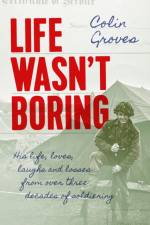
Soldiering is a serious, frequently bloody business. That aspect has been documented endlessly. But behind the blood, thunder and de-humanising aspects of conflict are people - people in uniform and people supporting them. All of them have personal feelings and aspirations and they experience the humdrum assortment of daily occurrences that closely match those of their counterparts in civil society. Those aspects of their lives are not widely reported, or appreciated, and it is on those that this book has its focus.'Life Wasn't Boring' relates the life, times, successes, failures and, most importantly, the personal inter-actions and loves of a professional infantry officer and his family, over more than a third of the century that was his service. Some parts are as serious as can be expected of a military account. Other parts might surprise, entertain and even amuse the reader. Together they hold up a mirror to reveal the human side of being a soldier.
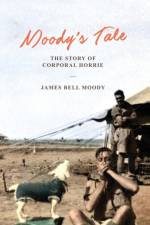
James Moody of the 2/1st Machine Gun Battalion found an Egyptian dog in 1940, who became Horrie, the Battalion's mascot. He wrote it first as a simple tale, augmented by his own photographs of Horrie and his mates in action in Greece, Crete and Palestine. This was sent to Ion Idriess, who developed the book with a series of questions, to finally develop the classic tale of man's best friend: Horrie the Wog Dog (ETT Imprint 2017).Published here for the first time is Moody's original tale, and extended.response to Idriess' questions, which gives a much stronger picture of members of the Battalion itself, the Rebels, written and lived in than Australian larrikin manner. Introduced by Tom Thompson, it also includes many pictures of Horrie in action, never before published.
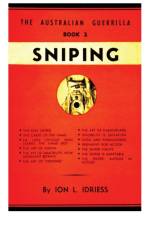
Ion Idriess was a spotter for the famous Australian sniper, Billy Sing, and this book draws on his own experiences in the Gallipoli trenches during World War One. Sing had a reputation as an excellent marksman, lurking in the dark and silently sneaking up on the enemy. One day he was shot by a Turkish soldier. The bullet travelled down the barrel of his telescope, wounding both hands then went through his mouth, out his cheek and into his shoulder. He recovered from the injury, but was never really the same... Idriess was a trooper with the Light Horse at Gallipoli, all the way to Beersheba, and his diary was published as The Desert Column. Drawing on his military experience, this is one of six manuals written for soldiers and civilians in 1942, when invasion by the Japanese seemed imminent.
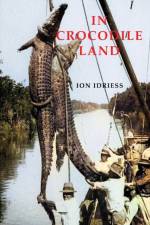
In Crocodile Land is principally the story of travels by lugger through northern waters and into slimy creeks where the huge crocodiles abound. The author took part in many hunting expeditions and enlightens us on the various methods adopted for catching these fearsome creatures. The party had more than a little success, to the great glee of the blackfellows who accompanied them.We journey next into the country of the buffaloes. Here on sunlit clearings through thickets of pandanus palms the buffaloes were to be found in hundreds... There is plenty of risk in hunting the buffalo... Once the shooting starts, the horse must continue his gallop, faster than the buffaloes and alongside them, keeping them going. One stumble and the end is near for horse and rider. - Western Mail, Perth 1946Although it has the thrill of crocodile shooting and trapping as its central theme, the book also affords a sympathetic and fascinating study of the aborigines and their tribal customs, slants on the dangerous sport of buffalo hunting, and vivid pen pictures of Wyndham, Darwin and other far northern towns. - Adelaide Advertiser, 1946Introduced by Tony McKenna
In 1932, Ion Idriess was one of those who set out from tiny port of Derby with the ending of the Wet season, moving through the rugger Kimberleys towards the developing goldfield of Tennant's Creek. This is the story of his wanderings in the 1930s and what he heard and saw along the way; at a time when wireless and air and motor transport were rapidly changing life in the North and North-west: but when the age of pioneers, of heroic journeys, terrifying loneliness, and violent death, had not yet passed away.Back in print after 60 years.
American-born Gus Pierce arrived in Australia in 1860 and promptly deserted, swimming ashore at Port Phillip. He worked as a photographer for Batchelders and painted scenery for the Lyceum theatre before hunting for snakes with Joe Shires - the inventor of a snake-bite cure. He compiled a strip map of the Murray River from Albury to Goolwa, by navigating it in a canoe with an Aboriginal dancer and a tracker in 1863, eventually skippering several steamboats along the Murray between 1868 and 1876.In 1869 in Echuca he began painting historical panoramas and toured scenes, with musical accompaniment to Wagga Wagga, and a further series showing at his Hill End Tent Theatre in 1872 in a musical recue with William Gill, who went on to write the first Broadway musical. His Mirror of Australia panoramas were toured to Geelong and Castlemaine - where he added the male impersonator, Ellen Tremayne in 1881. Impresario, navigator, photographer and artist of Austral scenes - here is his confounded life with his own illustrations.
The first biography of JR Ralph Casimir (1898-1986), a Pan-Africanist and poet from the Caribbean island of Dominica. This biography, lovingly written by his grand-daughter, explores his political and personal life. In particular it examines his involvement with Marcus Garvey's Universal Negro Improvement Association (UNIA) of which he was a founding member, organiser and agent for Garvey's Black Star Line. He committed his life to opposing the discrimination woven in to the British colonial system. A teacher, bookbinder, and lawyer's clerk, he was also a prolific poet and editor of Dominica's first poetry anthology.
From Ireland, England, France, Austria, Greece, Turkey and Italy to America and the West Indies, overflowing with historic events, from the French Revolution to the Great Irish Famine, with a cast of the famous and infamous, Howe Peter Browne, 2nd Marquess of Sligo, lived life to the absolute limits. Privileged yet compassionate, charismatic yet flawed, Regency Buck, Irish landlord, West Indian plantation owner, Knight of St Patrick, Privy Counsellor, intrepid traveller, intimate of kings, emperors and despots, favoured guest in the fashionable salons of London and Paris, patron of artists and pugilists, founder of the Irish Turf Club, friend and fellow traveller of Lord Byron, treasure-seeker, spy, sailor and jailbird, as well as the father of fifteen children, the astonishing range and diversity of Sligo's life is breathtaking.From a youth of hedonistic self-indulgence in Regency England to a reforming, responsible, well-intentioned legislator and landlord, Sligo became enshrined in the history of Jamaica as 'Emancipator of the Slaves' and in Ireland as 'The Poor Man's Friend' during the most difficult of times.Eight years in the writing and sourced from over 15,000 primary contemporary manuscripts located by the author in private and public archives around the world,From Rake to Radical sheds new light on significant historical events and on the people who shaped them in Ireland, England, Europe and the West Indies during a period of momentous political turbulence and change.
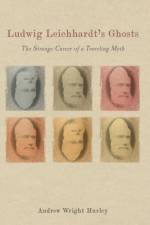
A fascinating cultural studies account of the "e;afterlife"e; of Leichhardt, revealing both German entanglement in British colonialism in Australia, and in a broader sense, what happens when we maintain an open stance to the ghosts ofthe past.After the renowned Prussian scientist and explorer Ludwig Leichhardt left the Australian frontier in 1848 on an expedition to cross the continent, he disappeared without a trace. Andrew Hurley's book complicates that view by undertaking an afterlife biography of "e;the Humboldt of Australia."e; Although Leichhardt's remains were never located, he has been sought and textually "e;found"e; many times over, particularly in Australia and Germany. He remains a significant presence, a highly productive ghost who continues to "e;haunt"e; culture. Leichhardt has been employed for all sorts of political purposes. In imperial Germany, he was a symbol of pure science, but also a bolster for colonialism. In the 20th century, he became a Nazi icon, a proto-socialist, the model for the protagonist of Nobel laureate Patrick White's famous novel Voss, as well as a harbinger of multiculturalism. He has also been put to useby Australian Indigenous cultures. Engaging Leichhardt's ghosts and those who have sought him yields a fascinating case study of German entanglement in British colonialism in Australia. It also shows how figures from the colonialpast feature in German and Australian social memory and serve present-day purposes. In an abstract sense, this book uses Leichhardt to explore what happens when we maintain an open stance to the ghosts of the past. Andrew Wright Hurley is Associate Professor in German Studies at the University of Technology Sydney. His book Into the Groove: Popular Music and Contemporary German Fiction was published by Camden House in 2015.
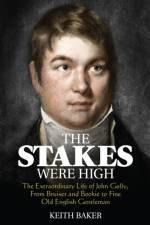
The son of a poor butcher, John Gully rose to the height of Victorian respectability, whose death in ripe old age was mourned by all classes from paupers to princes. It's the story of an extraordinarily varied life - a bare knuckle fighter and champion of England, a publican, a hugely successful gambler, bookmaker, racehorse and colliery owner, and finally a Member of Parliament. Set at a time when fortunes were won and lost on the turn of a dice, Gully saw the greed and corruption, the rogues and rascals. Remarkable sporting characters of the age feature, such as William Crockford, the Betting Shark; the chivalrous prize fighter Henry Pearce; the mighty Tom Cribb, bare knuckle champion of the world; and Colonel Mellish, prolific gambler and finest of the Corinthians. Enemies saw Gully as a cunning man, a schemer who corrupted the betting world. To others he was a man with impeccable judgement and integrity, to whom royalty would trust their fortunes. The Stakes Were High is the fascinating story of his life.
This book challenges the recently established consensus that the trial was a carefully prepared and executed judicial process in which the judges were amenable to reasonable arguments.Thomas More's treason trial in 1535 is one of history's most famous court cases, yet never before have all the major documents been collected, translated, and analyzed by a team of legal and Tudor scholars. This edition serves asan important sourcebook and concludes with a 'docudrama' reconstructing the course of the trial based on these documents. Legal experts H. A. Kelly and R. H. Helmholz take different approaches to the legalities of this trial, and four experienced judges [including Justice of the Queen's Bench Sir Michael Tugendhat] discuss the trial with some disagreements - notably on the meaning and requirement of 'malice' called for in the Parliamentary Act of Supremacy. More's own accounts of his interrogations in prison are analyzed, and the trial's procedures are compared to and contrasted with 16th-century concepts of natural law and also modern judicial practices and principles. The book is a 'must read' not only for students of law and Tudor history but also for all concerned with justice and due process. As a whole, the book challenges Duncan Derrett's conclusions that the trial was conducted in accord with contemporary legal norms and that More was convicted only on the single charge of denying Parliament the power to declare Henry VIII Supreme Head of the English Church [testified to by Richard Rich] - a position that has been uniformly accepted by historians since 1964. HENRY ANSGAR KELLY is past Director of the Center for Medieval and Renaissance Studies, UCLA. LOUIS W. KARLIN is an attorney with the California Court of Appeal and Fellow of the Center for Thomas More Studies, University of Dallas. GERARD B. WEGEMER is Director of the Center for Thomas More Studies.
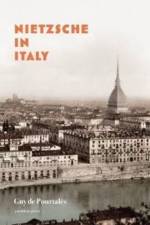
A fascinating classic account of Nietzsche's travels in Italy at the end of the nineteenth century, where he found inspiration for his major worksFor fifteen years, after his first visit to the country in1876, Nietzsche was repeatedly and irresistibly drawn back to Italy's climate and lifestyle. It was there that he composed his most famous works, including Thus Spake Zarathustra and Ecce Homo.This classic biography follows the troubled philosopher from Rome, to Florence, via Venice, Sorrento, Genoa, Sicily and finally to the tragic denouement in Turin, the city in which Nietzsche found a final measure of contentment before his irretrievable collapse. Endlessly fascinating and highly readable, Nietzsche in Italy will enthral anyone interested in Nietzsche's relationship with the country that enriched his soul more than any other.
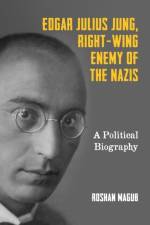
Fills a serious gap in German historical literature by providing the first political biography of Jung, a leading figure of the anti-Nazi Right.By the time of his death, Edgar Julius Jung (1894-1934) was well known in Germany and Europe as one of the foremost ideologues of the political movement that called itself the Conservative Revolution and as a right-wing opponent of the Nazis. He was speechwriter for and confidant of Franz von Papen (first Hitler's predecessor as chancellor, then Hitler's vice-chancellor), which put him at the center of political events right up until the Nazi seizure of power. Considered by Baldur von Schirach and Goebbels to be one of the worst enemies of the Nazis, Jung was assassinated by the Nazi regime in June 1934. The eleven years of Nazi rule that followed contributed to Jung's neglect by historians, as did distaste, since the war's end and the founding of the Federal Republic on democratic principles, for his strongly antidemocratic stance. Although there have been several studies on Jung's political thought,there has been until now no biography in German or English. Roshan Magub's book therefore fills a serious gap in German historical literature. It shows that Jung's opposition to National Socialism dates from the earliest days andthat he had a very close relationship with the Ruhr industry, which supported him financially and enabled him to reach a nationwide audience. Magub uses, for the first time, all the available material from the archives in Munich,Koblenz, Cologne, and Berlin, and the whole of Jung's Nachlass. Her book sheds new light on Jung and demonstrates his importance in Germany's political history. Roshan Magub holds a PhD from Birkbeck College, University of London.
Excerpt from the book:"e;In the issue of The Outlook for June 18 there was a quotation from a letter of an Anti-Imperialist correspondent, who, in speaking of Egypt and the Philippines, stated that the proper course to pursue was to protect countries of this nature by international agreement, the writer citing in support of his theory the way in which many small powers had their territories guaranteed by international agreement.The trouble is in the confusion of ideas which results in trying to apply the same principle to two totally different classes of cases. A State like Switzerland or Holland differs only in size from the greatest of civilized nations, and in everything except size stands at least on a level with them. Such a State is absolutely competent to preserve order within its own bounds, to execute substantial justice, and to secure the rights of foreigners. All that is necessary, therefore, is to guarantee it against aggression; and when the great Powers have thus guaranteed it, all covenanting to protect it from the aggression of any one of their own number, their duty is done and the needs of the situation completely met. In such a State the people themselves guarantee stability, order, liberty, and protection for the rights of others. There is not the slightest need of interfering with them, of seeking to develop them, of protecting them from themselves. The needs of civilization and humanity are sufficiently met by protecting them from outside aggression."e;
Anatomy of a False Conviction by Kurt P. Radder--Taking place in Austin Texas beginning in 2008, Kurt finds himself in the middle of a false sexual assault allegation that turns his world upside down as he twists and turns through the unjust and unprofessional criminal justice system in the state of Texas.Deceived by his lawyer into taking a plea bargain, Kurt winds his way through prison, trying to free himself, and once successful, Kurt realizes that his fight is only half over as he struggles to combat a legal system where lawyers prefer money over justice, and the "e;system"e; prefers incarceration over truth. Kurt's story is cogent and compelling and all the more chilling because it could happen to you.
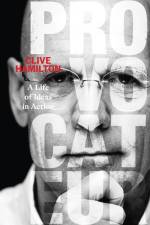
Clive Hamilton has spent a life asking why. In his unique memoir, Provocateur, he shows us why questioning the status quo matters, how powerful arguments can change the country, and how the life of ideas in action actually works. From why climate change matters to how we understand ourselves as Australians and the dangers to us of the new authoritarianism all this and more has been shaped, for better or worse, by public researchers and writers like Hamilton. His work, and that of the Australia Institute he founded, made him many friends as well as powerful enemies. He's been denounced in federal parliament, black-handed by the Chinese Communist Party and sued by an angry corporation. He's had to call in the police after death threats and take a crash course in counter-surveillance techniques. But he has also influenced the quality of the air Australians breathe, the cost of our education and how we see Australia's place in the world. In Provocateur, we see the passions, the doubts, the strategising, the fears, the victories, the mistakes and the questioning. Here is a blueprint for changing public debate in our increasingly uncertain times proof that ideas are powerful and that a different way into the future is possible.
Abonner på vårt nyhetsbrev og få rabatter og inspirasjon til din neste leseopplevelse.
Ved å abonnere godtar du vår personvernerklæring.