









Gjør som tusenvis av andre bokelskere
Abonner på vårt nyhetsbrev og få rabatter og inspirasjon til din neste leseopplevelse.
Ved å abonnere godtar du vår personvernerklæring.Du kan når som helst melde deg av våre nyhetsbrev.

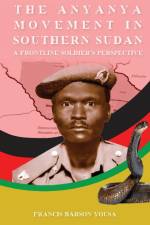
This book discusses the Anyanya Movement as seen through the eyes of a common soldier. An o shoot of the Torit Mutiny of 1955, the Anyanya Movement waged a protracted guerilla war against the Sudanese state from 1963 up to the signing of the Addis Ababa Agreement in 1972. The author takes the reader through a journey into Sudanese history by focusing on events that led to the birth of the Anyanya. Notably, he focuses on the shortchanging of the aspirations of Southern Sudanese by the Northern Sudanese political establishment. The redivision of Southern Sudan into three regions, the imposition of Islamic Sharia Law, and the abrogation of the Addis Ababa Agreement are some of the issues he sheds light on. Francis Barson Yousa, who served in the Anyanya as a corporal and adjutant to a commander, offers an unparalleled window into the life of an ordinary soldier in the frontlines in a book that is the ¿ first of its kind on the Anyanya. He details his participation in military operations and role in the clerical section of the guerrilla camp of Su'bi in present-day Central Equatoria State in South Sudan. Mr. Yousa, who narrowly escaped death in Juba when he sneaked into the town in the late 1960s, was able to complete his studies and graduated from the University of Khartoum with distinction in 1976. He subsequently held senior roles in the private sector and as a minister in the government of the Central Equatoria State.
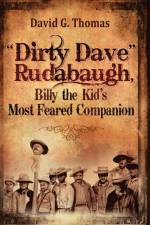
This book is about David Rudabaugh, a man whose life is both obscure and wildly mythologized.One myth about Rudabaugh is that he was a "nasty, treacherous bully" who "stole and killed and brutalized people... Dirty Dave would try anything, as long as it was crooked." Not true. Another fictitious accusation is that Rudabaugh shot a jailer in cold blood. The true account of jailer Antonio Lino Valdez's fatal shooting is presented for the first time in this book, based on the never-before-published trial transcript. The unquestionable trial evidence shows that it was another man who shot the ill-fated jailer, not Rudabaugh.Following the jailer's killing, Rudabaugh fled. Now a wanted man, Rudabaugh teamed up with Billy the Kid and participated prominently in Billy's final gun battles with authorities. Famously, Rudabaugh was captured along with Billy at Stinking Springs by Deputy Sheriff Pat Garrett and his posse.After his capture, Rudabaugh was tried for Valdez's killing and sentenced to death by hanging. He escaped jail and went to Mexico.On February 18, 1886, Rudabaugh was killed by a Winchester rifle shot to the chest in Parral, Mexico, by a grocery man named José. Following his killing, Rudabaugh was decapitated by José. His head was placed on a pole and paraded around the Parral plaza. Present at Rudabaugh's beheading was Albert W. Lohn, a nineteen-year-old photographer.Lohn took four photographs of Rudabaugh's decapitated head. The two negatives he printed were confiscated by Mexican authorities. The other two negatives remained in Lohn's files for 57 years, entirely forgotten by him. The story of how these two negatives were acquired by an avid collector of Western memorabilia is given in the book.Rudabaugh's life story is mesmerizing. It is as adventurous as that of any Wild West figure. The events of his life include being both a wanted man and a lawman. They include a failed train robbery and two successful stage hold-ups. They include saying nothing when three innocent men were convicted of one of his stage robberies. They include the aforementioned accusation of murder and being sentenced to death by hanging. They include a successful; ingenious jail escape and numerous attempted escapees. They include an eight month association with Billy the Kid, an association that made him almost as famous in Wild West outlaw history as Billy.
A gripping exploration of the intense psychology and character of Benedict Arnold, arguing that he was essential to victory before he was a traitorBenedict Arnold committed treason- for more than two centuries, that's all that most Americans have known about him.Yet Arnold was much more than a turncoat-his achievements during the early years of the Revolutionary War defined him as the most successful soldier of the era. GOD SAVE BENEDICT ARNOLD tells the gripping story of Arnold's rush of audacious feats-his capture of Fort Ticonderoga, his Maine mountain expedition to attack Quebec, the famous artillery brawl at Valcour Island, the turning-point battle at Saratoga-that laid the groundwork for our independence.Arnold was a superb leader, a brilliant tactician, a supremely courageous military officer. He was also imperfect, disloyal, villainous. One of the most paradoxical characters in American history, and one of the most interesting. GOD SAVE BENEDICT ARNOLD does not exonerate him for his treason-the stain on his character is permanent. But Kelly's insightful exploration of Arnold's career as a warrior shines a new light on this gutsy, fearless, and enigmatic figure. In the process, the book offers a fresh perspective on the reasons for Arnold's momentous change of heart.
Abonner på vårt nyhetsbrev og få rabatter og inspirasjon til din neste leseopplevelse.
Ved å abonnere godtar du vår personvernerklæring.