





Gjør som tusenvis av andre bokelskere
Abonner på vårt nyhetsbrev og få rabatter og inspirasjon til din neste leseopplevelse.
Ved å abonnere godtar du vår personvernerklæring.Du kan når som helst melde deg av våre nyhetsbrev.

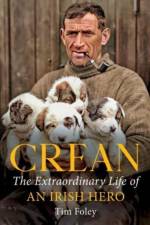
Tom Crean is one of the most iconic figures in Irish history. Born in 1877 in County Kerry, he enlisted in the Royal Navy at the age of sixteen, a career that would bring him to the most extreme environments on Earth. We all think we know the Crean story, but this book charts his full naval career in rich new detail, from his start in the Americas, where he was faced with rebellions and life-threatening storms, to Australia, where he faced the Black Death and threats from cannibals. But it was Robert Scott's decision to employ him that led him to Antarctica, where his feats of heroism on two expeditions saw him help save the lives of crewmates on three dramatic occasions, most famously on Ernest Shackleton's ill-fated Endurance, when the vessel sank leaving the crew stranded on the ice for almost 500 days. Tom Crean's is an extraordinary tale, one of an unassuming but quietly strong man who showed remarkable bravery in the harshest conditions on the planet. This was a man who lived a life unlike others. Crean is the story of a true Irish hero.
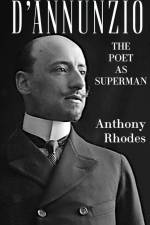
Gabriele D'Annunzio was one of the most flamboyant, brilliant and altogether incalculable personalities of the 19th and 20th centuries. His talents were enough to make the most accomplished Renaissance man flinch: he was a poet, lover, soldier and patriot. He was a well-known poet at the age of 17; thereafter he also wrote plays and novels and became the best-known writer in Europe. He was deservedly the most publicized lover of his time; his affair with Eleonora Duse is legendary. Throughout his life he was a leader in all Italian causes. When the First World War broke out, he was 52, yet embarked upon a spectacular career as an aviator. The climax of D'Annunzio's public career came in 1919 when he led an army and captured Fiume and began a 15 months' rule over the disputed Adriatic port.Anthony Rhodes spent three years on the research for this book. He interviewed people who knew D'Annunzio, delved into Italian archives which had been closed to scholars since Mussolini's accession to power and visited the scenes of D'Annunzio's triumphs.
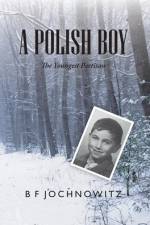
A terrified six-year-old Polish Boy runs through the woods. His mother shouts, "Go faster my love." He does, and the Nazis kill her.Chielik is plagued by unanswered questions. He is a Jew.In 1945, after the war and surviving in the Black Forest, Chielik struggles to come to terms with his life.The Polish Boy is now a man who fought with the partisans and won his own freedom.
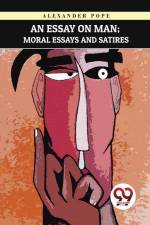
Alexander Pope published a poem titled "An Essay on Man: Moral Essays and Satires" between 1733 and 1734. The opening line, "Awake, St. John," refers to Henry St. John, 1st Viscount Bolingbroke, which is pronounced, "Bull-en-brook." In the opening lines of Paradise Lost, John Milton claims that he will "justify the methods of God to men," and this is an attempt to "vindicate the ways of God to man" (l.16) (1.26). It is focused on the natural order that God established for mankind. Man cannot protest about his place in the great chain of being since he cannot understand God's designs (ll. 33-34). Instead, he must accept that "Whatever is, is right," a subject that Voltaire parodied in Candide (1759). It spread optimistic thought more broadly than any other book throughout England and the rest of Europe. Pope intended for his Essay on Man and Moral Epistles to serve as the constituent pieces of poetic ethical philosophy. Ethic Epistles and Moral Essays are a couple of additional names for Moral Epistles. An Essay on Man was widely praised when it was first published in Europe. The most majestic didactic poetry is ever written in any language.
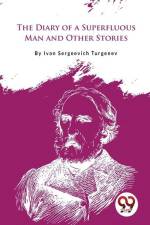
Tchulkaturin, a guy who has learned that he has two weeks left to live, is the person we encounter at Sheep's Springs. He alternates between sharing the events of his life, upbringing, relationships with his family, and experiences, but he believes these activities are just unrelated to where he is right now. Yegor's final cow passed away the night before, and he says of the guy, "That man understands how to bear in quiet," in 1058. If one were to do the arithmetic, that would be everyone suffering in the world. Asanov's letters are given to our narrator by his buddy Pasinkov, who discovers that they are from the same female who has expressed interest in him. When he broaches the subject with her, he discovers that he has been despised and stumbles off pitifully. With Turgenev's justification that "the man who leaves a woman at that great and bitter moment when he is forced to recognize that his heart is not entirely, not fully, hers, has a truer and deeper comprehension of the sacredness of love," Kosolov ultimately succeeds in his claim to be a remarkable man (2070). This is a correspondence between Marya Alexandrovna and Alexy Petrovitch. 15 letters were sent over around two years, in which each party confides and fears the other.
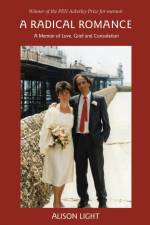
A luminous memoir of love and grief from the author of Common People First U.S. EditionAlison Light met the radical social historian, Raphael Samuel, in London in 1986. Twenty years her senior, Raphael was a charismatic figure on the British Left, utterly driven by his work and by a commitment to collective politics. Within a year they were married. Within ten, Raphael would pass away.Theirs was an attraction of opposites- he from a Jewish Communist family with its roots in Russia and Eastern Europe, she from the English working class. In this chronicle of a passionate marriage, Alison Light peels back the layers of their time together, its intimacies and its estrangements."...more than just some summing-up: it is a work of art." -GUARDIAN "Remarkable, moving, illuminating. A memoir of cauterizing honesty. This is a book that deserves to be widely read." -MARK BOSTRIDGE, SPECTATOR "An inspiring account of ... deep love..." -TLS "Beautifully crafted...it casts a light on the lightness of love and the profound depression of loss. A truly gifted writer." -HERALD "The portrait of Spitalfields is superb, and so is the account of Raphael's astonishing mother Minna." -MARGARET DRABBLE, TLS, BOOK OF THE YEAR "Compulsively readable. Light is a shrewd narrator...She reflects with careful psychological and philosophical insight on the reality of loneliness and profound loss following ten years of marriage...Light is also a poet and it shows in certain suppositions and propositions..." -RTE
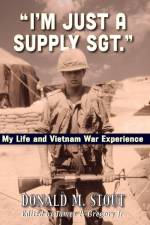
"I'm Just a Supply Sgt." is a compelling narrative of the Vietnam War with a very personal, psychological perspective that is difficult to find in most histories. Don Stout's ability to comprehend and record his feelings during the war, and his struggles after the war, provide not only a window into the suffering of many veterans but also a tool for catharsis for those afflicted with PTSD. Without a doubt, Don's story provides one of the most unique perspectives on the war and is not only a history of his service but a psychological epic.
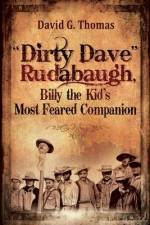
This book is about David Rudabaugh, a man whose life is both obscure and wildly mythologized. One myth about Rudabaugh is that he was a "nasty, treacherous bully" who "stole and killed and brutalized people... Dirty Dave would try anything, as long as it was crooked." Not true. Another fictitious accusation is that Rudabaugh shot a jailer in cold blood. The true account of jailer Antonio Lino Valdez's fatal shooting is presented for the first time in this book, based on the never-before-published trial transcript. The unquestionable trial evidence shows that it was another man who shot the ill-fated jailer, not Rudabaugh. Following the jailer's killing, Rudabaugh fled. Now a wanted man, Rudabaugh teamed up with Billy the Kid and participated prominently in Billy's final gun battles with authorities. Famously, Rudabaugh was captured along with Billy at Stinking Springs by Deputy Sheriff Pat Garrett and his posse. After his capture, Rudabaugh was tried for Valdez's killing and sentenced to death by hanging. He escaped jail and went to Mexico. On February 18, 1886, Rudabaugh was killed by a Winchester rifle shot to the chest in Parral, Mexico, by a grocery man named José. Following his killing, Rudabaugh was decapitated by José. His head was placed on a pole and paraded around the Parral plaza. Present at Rudabaugh's beheading was Albert W. Lohn, a nineteen-year-old photographer. Lohn took four photographs of Rudabaugh's decapitated head. The two negatives he printed were confiscated by Mexican authorities. The other two negatives remained in Lohn's files for 57 years, entirely forgotten by him. The story of how these two negatives were acquired by an avid collector of Western memorabilia is given in the book. Rudabaugh's life story is mesmerizing. It is as adventurous as that of any Wild West figure. The events of his life include being both a wanted man and a lawman, a failed train robbery, two successful stage hold-ups, being sentenced to death by hanging, an ingenious jail escape, and an eight month association with Billy the Kid - an association that made him almost as famous in Wild West outlaw history as Billy.
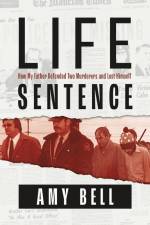
A riveting blend of true crime and memoir, following the unravelling of a New Brunswick family after a brutal murder. On December 15, 1974, when Amy Bell was one year old, the city of Moncton, New Brunswick, was consumed with the search for two missing police officers -Corporal Aurèle Bourgeois and Constable Michael O'Leary. They had been abducted by petty criminals Richard Ambrose and James Hutchison after a kidnapping that had scored them $15,000. The search would lead to a clearing in the woods where the officers were found -- murdered, and buried in shallow graves. Amy's father, Ed Bell, stepped up to defend the killers. His unpopular stance-"every person accused of a crime deserves a defence" -- eventually led to the ruin of his career and his marriage, and Amy and her brother lived with the aftereffects: poverty and isolation. Ed Bell never spoke of his involvement in this case. It wasn't until forty-two years later, when he lay dying, that Amy, now a crime historian, stumbled upon a Polaroid photograph of one of the killers among her father's things. That discovery led her on a search for answers. Life Sentence: How My Father Defended Two Murderers and Lost Himself is a riveting work that fuses personal and criminal justice history to tell the story of a horrific crime and examine its terrible costs. Includes personal and archival news images.
In 2009, the Brushy Mountain State Penitentiary ended its 113-year run as Tennessee's most infamous prison. But the staff and prisoners didn't just go home, no, most of them migrated over the mountain to the newly-expanded Morgan County Correctional Complex. Brushy's old-school guard was about to clash with gang-bangers from the west ... and no one saw it coming. Complicated by a hostile administration in Nashville, MCCX employees and prisoner staff alike found themselves caught in a power struggle by invading forces on every side. The end result changed Tennessee corrections forever. This book takes you inside the gate and gives you a perspective the outside media never had. Through the pages of the facilities' prisoner-run publication, Mountain Review, you'll get a taste of what the men on the inside experienced through these turbulent times. This book is not a narrative, but a collection of the thoughts, experiences, and first-hand knowledge of the convicted within Tennessee's correctional system.
This is a story about a Navy commander and his hatred toward the Marine Corps. As commander of a patrol boat base in Vietnam, he would do anything to keep his record clean. Even though the Marines were fighting for their lives, Higgins would not send help. Captain Hunt and his men were putting up a good fight even though they had little chance of surviving. Only one man would put his career on the line to try and save them.This book is largely fictional, but some parts of the story are experiences the author had while in the Marine Corps.
Las Vegas is a melting pot of different cultures and races. This is a place where a special culture called casino is located. People who visit this place enjoy this atmosphere and deviate from daily life. However, the people who live here are struggling to create a better future and environment for Las Vegas. Beyond Vegas as a tourist city, we hope to become a place that gives comfort and beauty to everyone, a place that gives vitality to those who are tired of boredom, a place where families enjoy together, and a place where young people radiate youth and gain vitality. It is a place with a duality that embraces a lot of decadence and absurdity. The author have his own point of view, and he analyzes and talks about this subtle and complex place. Author Sam Kim was born and raised in Korea, received religious education in a Christian family, and studied at the Presbyterian College in Korea. And when he came to America, he was influenced by Neville Goddard and Eckhart Tolle, and their ideology approached with an oriental thought that was not unfamiliar to him, who was familiar with Eastern culture and life. The author honestly talks about his experiences coming to the United States and settling in Las Vegas. With the culture and consciousness of Asians, he interprets and disassembles life and the environment in Las Vegas, where American society and casinos are lined up, from his own point of view, and expresses himself. To be made into a story.
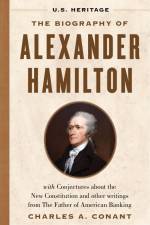
THE FIRST BIOGRAPHY OF ALEXANDER HAMILTON, THE FATHER OF AMERICAN BANKING. Also includes:The Federalist PapersConjectures About the New ConstitutionThe Biography of Alexander Hamilton: with Conjectures About the New Constitution, The Federalist Papers and Other Writings from The Father of American Banking is part of the U.S. Heritage series and is a collection of the key writing from and about Alexander Hamilton that helped establish and form the United States of America. The revolutionary ideas and inspirational writings are included in this book for everyone, for students of all ages, to people who are actively involved in politics and their community and anyone interested in the amazing birth and history of America. LEARN WHAT IT MEANS TO BE AN AMERICAN!HUMANIX BOOKS U.S. Heritage series is the definitive collection of political writings and history of the Founding Fathers that paved the way for the United States of America to become the indispensable nation and THE example of Democracy, Liberty and Freedom in the world.
THE MEMOIRS AND OTHER KEY WRITINGS OF BENJAMIN FRANKLIN: THE FIRST AMERICAN. Also includes:The Way of WealthThe Book of VirtuesThe Letters of Silence DogoodThe Declaration of Rights and Grievances of 1765On Civil WarAn Edict by the King of PrussiaRules by Which a Great Empire May Be Reduced to a Small OneBenjamin Franklin's Articles of ConfederationInformation to Those Who Would Remove to AmericaMake Manifest Our Unanimity The Autobiography of Benjamin Franklin: The Way of Wealth, Book of Virtues and Other Writings from The First American is part of the U.S. Heritage series and is a collection of the key writings from Benjamin Franklin that helped establish and form the United States of America. The revolutionary ideas and inspirational writings are included in this book for everyone, for students of all ages, to people who are actively involved in politics and their community and anyone interested in the amazing birth and history of America. LEARN WHAT IT MEANS TO BE AN AMERICAN!HUMANIX BOOKS U.S. Heritage series is the definitive collection of political writings and history of the Founding Fathers that paved the way for the United States of America to become the indispensable nation and THE example of Democracy, Liberty and Freedom in the world.
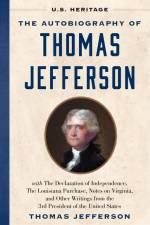
THE MEMOIRS AND OTHER KEY WRITINGS OF THOMAS JEFFERSON, PRIMARY AUTHOR OF THE DECLARATION OF INDEPENDENCE. Also includes:The Declaration of IndependenceThe Louisiana Purchase,Notes on VirginiaThomas Jefferson's First Inaugural AddressLetter to Congress Regarding Lewis and Clark ExpeditionThe Louisiana Purchase TreatyThomas Jefferson's Second Inaugural AddressThe Autobiography of Thomas Jefferson: with The Declaration of Independence, The Louisiana Purchase, Notes on Virginia, And Other Writings from the 3rd President of the United States is part of the U.S. Heritage series and is a collection of the key writings from President Thomas Jefferson that helped establish and form the United States of America. The revolutionary ideas and inspirational writings are included in this book for everyone, for students of all ages, to people who are actively involved in politics and their community and anyone interested in the amazing birth and history of America. LEARN WHAT IT MEANS TO BE AN AMERICAN!HUMANIX BOOKS U.S. Heritage series is the definitive collection of political writings and history of the Founding Fathers that paved the way for the United States of America to become the indispensable nation and THE example of Democracy, Liberty and Freedom in the world.
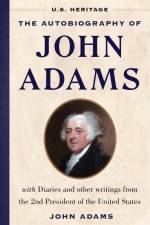
THE MEMOIRS AND OTHER KEY WRITINGS OF JOHN ADAMS, A LEADER OF THE AMERICAN REVOLUTION. Also includes:A Dissertation on the Canon and Federal LawInstructions of the Town of Braintree to Their RepresentativeNovanglus and MassachusettensisThoughts on GovernmentThe Constitution of Massachusetts of 1780A Defence of the Constitution of Government of the United States of AmericaThree Letters to Roger Sherman on the Constitution of the United StatesDiscourses on DavilaLetters to John TaylorThe Autobiography of John Adams: with Diaries and Other Revolutionary Writings from the 2nd President of the United States is part of the U.S. Heritage series and is a collection of the key writings from President John Adams that helped establish and form the United States of America. The revolutionary ideas and inspirational writings are included in this book for everyone, for students of all ages, to people who are actively involved in politics and their community and anyone interested in the amazing birth and history of America. LEARN WHAT IT MEANS TO BE AN AMERICAN!HUMANIX BOOKS U.S. Heritage series is the definitive collection of political writings and history of the Founding Fathers that paved the way for the United States of America to become the indispensable nation and THE example of Democracy, Liberty and Freedom in the world.
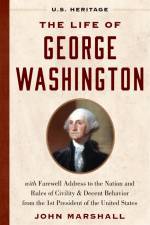
THE FIRST BIOGRAPHY OF GEORGE WASHINGTON BY HIS FRIEND CHIEF JUSTICE JOHN MARSHALL. Also includes:George Washington's First Inaugural AddressGeorge Wshington Second Inaugural AddressGeorge Washington's Farewell Address to the People of the United StatesRules of Civility and Decent BehaviorMarshall's The Life of George Washington is the first biography about a U.S. president ever published. The Life of George Washington: with Farewell Address to the Nation, Rules of Civility and Decent Behavior and Other Writings from the 1st President of the United States is part of the U.S. Heritage series and is a collection of the key writing from and about President George Washington that helped establish and form the United States of America. The revolutionary ideas and inspirational writings are included in this book for everyone, for students of all ages, to people who are actively involved in politics and their community and anyone interested in the amazing birth and history of America. LEARN WHAT IT MEANS TO BE AN AMERICAN!HUMANIX BOOKS U.S. Heritage series is the definitive collection of political writings and history of the Founding Fathers that paved the way for the United States of America to become the indispensable nation and THE example of Democracy, Liberty and Freedom in the world.
From parental tyranny to communist control and finally freedom in a new world. What a life, I am glad I do not have to go thru all that again.
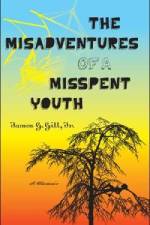
The author was born by parents with divergent backgrounds the father from poor protestant and Irish Catholic parents and the mother with a genteel Southern Plantation heritage. He enters life in the Roaring 20's when the times were good and grows up in the depression of the 1930's recounting life in a big city - the good, the bad, the humorous and the sad that many families endeared. However, his independent and devilish nature will show that the Huckleberry Finn and Dennis the Menace types are alive and well and don't just exist in fiction form.
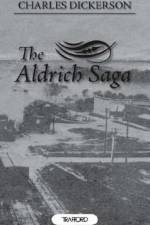
The Sac River flowed gently through the valley, circling Aldrich on the west. The author accompanied by his father, came from the city to make his home with Sara Dickerson. Charles, being ten-years old upon his arrival in Aldrich, would live with his grandmother until 1939, when he graduated from high school. The last frontier had passed in 1890. The population was about 120 million people. The stock market had crashed in 1929, and the U.S. was facing a major depression. The Aldrich Saga is set in a Bible-belt village of varied people; religious zealots, political pundits, town drunks, and all of the other kind that inhabit, including the church-going folk. It wsa the author's eight years with Sara that he was privy to so many pleasant stories, events and happenings. Halloween was celebrated with gusto in Aldrich, and the different personalities made news. There were the visiting Gypsies, the politikin of the town loafers, and the certain pseudo-intellaectuals who would trash Franklin Roosevelt, and make dire predicitons about Hitler being the Anti-Christ. Two misers in Polk County engendered much conversation. Medicine shows, drumming their wares in bottles that were suspect, brought laughs. There were the old gentlemen telling of their exploits in the Civil War, followed by WWI veterans who also got out their message. Clarence Alden was a superb ventriloquist that nearly scared a man to death by throwing his voice into a coffin that was being unloaded by men at the Springfield Frisco Station. The words of Solomon are interesting for people unfamiliar with him. The author being an ex-teacher presents his views on politics. Then, there is the snow bound train in 1918 that foundered on the way to Kansas City, as told by Ralph Dickerson. The story of the Aldrich Bank being robbed is told by the infamous Henry Star in 1908. The author remembers Granny's copper wire, the only dishonesty I can remember her committing, to keep the light bill to the one dollar minimum. Ralph Dickerson caught the Spanish Flu, which killed twenty three million people. Sara, with her mysterious medicines, cured him. There is also the story of Bill Akard, a world champion shooter, who had put on shooting exhibitions for the King of England and the Russian Czar, and who persuaded Henry Starr not to rob the bank. For many years the Aldrich village has been gone with the winds.
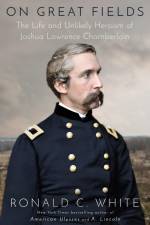
"Before 1862, Joshua Lawrence Chamberlain had rarely left his home state of Maine, where he was a trained minister and mild-mannered professor at Bowdoin College. His colleagues were shocked when he volunteered for the Union army, but he was undeterred and later became known as one of the North's greatest heroes: On the second day at Gettysburg, after running out of ammunition at Little Round Top, he ordered his men to wield their bayonets in a desperate charge down a rocky slope that routed the Confederate attackers. Despite being wounded at Petersburg--and told by two surgeons he would die--Chamberlain survived the war, going on to be elected governor of Maine four times and serve as president of Bowdoin College. How did a stuttering young boy come to be fluent in nine languages and even teach speech and rhetoric? How did a trained minister find his way to the battlefield? Award-winning historian Ronald C. White delves into these contradictions in this definitive, cradle-to-death biography of General Joshua Lawrence Chamberlain, from his upbringing in rural Maine to his tenacious, empathetic military leadership and his influential post-war public service, exploring a question that still plagues so many veterans: How do you make a civilian life of meaning after having experienced the extreme highs and lows of war?"--
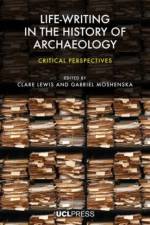
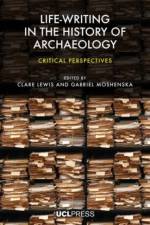
A study of life-writing as a vital part of the history of archaeology and a growing field of scholarship within the discipline. Travels and adventures of the "great archaeologists" have generated centuries worth of bestselling books that, in turn, have shaped the public perception of archaeology. The lives of archaeologists are entangled with histories of museums and collections, developments in science and scholarship, and narratives of nationalism and colonialism into the present. In recent years, life-writing has played an important role in the surge of new research in the history of archaeology, including ground-breaking studies of discipline formation, institutionalization, and social and intellectual networks. Sources such as diaries, wills, film, and the growing body of digital records are powerful tools for highlighting the contributions of hitherto marginalized archaeological lives including many pioneering women, hired laborers, and other "hidden hands." This book brings together critical perspectives on life-writing in the history of archaeology from leading figures in the field. These include studies of archive formation and use, the concept of "dig-writing" as a distinctive genre of archaeological creativity, and reviews of new sources for already well-known lives. Several chapters reflect on the experience of life-writing, review the historiography of the field, and assess the intellectual value and significance of life-writing as a genre. Together, they work to problematize underlying assumptions about this genre, foregrounding methodology, social theory, ethics, and other practice-focused frameworks in conscious tension with previous practices.
A study of life-writing as a vital part of the history of archaeology and a growing field of scholarship within the discipline. Travels and adventures of the "great archaeologists" have generated centuries worth of bestselling books that, in turn, have shaped the public perception of archaeology. The lives of archaeologists are entangled with histories of museums and collections, developments in science and scholarship, and narratives of nationalism and colonialism into the present. In recent years, life-writing has played an important role in the surge of new research in the history of archaeology, including ground-breaking studies of discipline formation, institutionalization, and social and intellectual networks. Sources such as diaries, wills, film, and the growing body of digital records are powerful tools for highlighting the contributions of hitherto marginalized archaeological lives including many pioneering women, hired laborers, and other "hidden hands." This book brings together critical perspectives on life-writing in the history of archaeology from leading figures in the field. These include studies of archive formation and use, the concept of "dig-writing" as a distinctive genre of archaeological creativity, and reviews of new sources for already well-known lives. Several chapters reflect on the experience of life-writing, review the historiography of the field, and assess the intellectual value and significance of life-writing as a genre. Together, they work to problematize underlying assumptions about this genre, foregrounding methodology, social theory, ethics, and other practice-focused frameworks in conscious tension with previous practices.
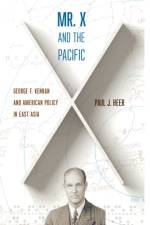
George F. Kennan is well known for articulating the strategic concept of containment, which would be the centerpiece of what became the Truman Doctrine. During his influential Cold War career he was the preeminent American expert on the Soviet Union. In Mr. X and the Pacific, Paul J. Heer explores Kennan's equally important impact on East Asia.Heer chronicles and assesses Kennan's work in affecting U.S. policy toward East Asia. By tracing the origins, development, and bearing of Kennan's strategic perspective on the Far East during and after his time as director of the State Department's Policy Planning Staff from 1947 to 1950, Heer shows how Kennan moved from being an ardent and hawkish Cold Warrior to, by the 1960s, a prominent critic of American participation in the Vietnam War.Mr. X and the Pacific provides close examinations of Kennan's engagement with China (both the People's Republic and Taiwan), Japan, Korea, and Vietnam. Country-by-country analysis paired with considerations of the ebb and flow of Kennan's global strategic thinking result in a significant extension of our estimation of Kennan's influence and a deepening of our understanding of this key figure in the early years of the Cold War. In Mr. X and the Pacific Heer offers readers a new view of Kennan, revealing his importance and the totality of his role in East Asia policy, his struggle with American foreign policy in the region, and the ways in which Kennan's legacy still has implications for how the United States approaches the region in the twenty-first century.
Abonner på vårt nyhetsbrev og få rabatter og inspirasjon til din neste leseopplevelse.
Ved å abonnere godtar du vår personvernerklæring.