

















Gjør som tusenvis av andre bokelskere
Abonner på vårt nyhetsbrev og få rabatter og inspirasjon til din neste leseopplevelse.
Ved å abonnere godtar du vår personvernerklæring.Du kan når som helst melde deg av våre nyhetsbrev.

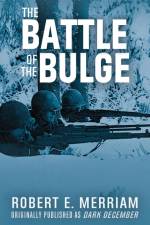
The Battle of the Bulge, first published in 1947 as Dark December (and published here in a slightly abridged edition), is a detailed account of the German Army's last major offensive of World War II. Presented from both Allied and German viewpoints, the book examines events leading up to the offensive, the massive engagement of German forces against unprepared American units, and finally the turning back of the defeated German Wehrmacht. Author Robert E. Merriam, former chief of the Ardennes section of the U.S. Army Historical Division, had the unique opportunity-both during and after the battle-to interview leaders and sit in on important staff meetings. When the war ended, he was able to talk to German officers and to examine battle records of both sides. Included are 8 pages of maps.
I have included the article written by me on Mahatma Gandhiji, Netaji Subhashbabu, Sardar Vallabhbhai Patel, Shaheed Bhagat Singh, Rajguru, Sukhdev, Kutch Gujarat's well-known leader Kantiprasad Antani, scholar Professor Shalatsingh Jadeja, Udhogpati Kantisenbhai Shroff in the book of important persons.
"It was never a question of if it would happen, but when."- Patricia May In a gripping and heart-wrenching tale, this book takes you inside the walls of James T Vaughn Correctional Center on February 1, 2017. As inmates take control of C Building and hold four people hostage, including Counselor Patricia May and Guards Joshua Wilkinson, Winslow Smith, and Sgt. Steven Floyd, we are given an intimate look into the twenty-hour siege that resulted in brutal beatings and one tragic loss. Survivors and witnesses share their firsthand accounts of the chaos and violence that unfolded, while also delving into the tumultuous history of the prison and the underlying factors that led to this horrifying event. This is a must-read for anyone seeking to understand the true cost of our broken criminal justice system.
This book provides promising reading for those who wish to see a world ruled by goodness and wisdom, and at the same time it is a dependable source for whom seek to know man in genuine sense and Islam as well as Islam in its pure form.
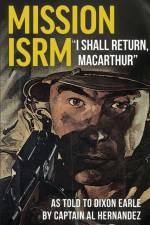
Mission ISRM - I Shall Return, MacArthur, details the vital intelligence gathering and reporting operations of American and Filipino soldiers on the island of Mindoro during World War II. The mission's code-name, "ISRM," was derived from the famous slogan of General MacArthur, "I shall return," his promise to liberate the Philippines from the Japanese. The book was first published in 1961 as Bahala Na...Come what may: The Story of Mission ISRM, An Army-Navy Intelligence Mission in the Pacific. The objective of Mission ISRM was primarily to provide intelligence on enemy movements - on ground, sea and air - in and around Manila and the Manila Bay region. Members of the mission and their equipment were transported secretly by submarine to Mindoro, where they went about the dangerous task of establishing observation posts and radio transmission sites in enemy-held territory. Information was transmitted to allied headquarters in Australia, and would prove invaluable in planning for the coming invasion of Philippines by the allies. A secondary objective was the harassment of the enemy and sabotage of Japanese supply and communication lines. Included are a Foreword by Douglas MacArthur, a map, and 8 pages of photographs.
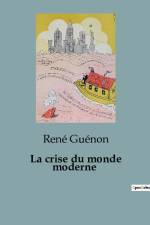
" Lorsque nous avons, il y a quelques années, écrit Orient et Occident, nous pensions avoir donné, sur les questions qui faisaient l¿objet de ce livre, toutes les indications utiles, pour le moment tout au moins. Depuis lors, les événements sont allés en se précipitant avec une vitesse toujours croissante, et, sans nous faire changer d¿ailleurs un seul mot à ce que nous disions alors, ils rendent opportunes certaines précisions complémentaires et nous amènent à développer des points de vue sur lesquels nous n¿avions pas cru nécessaire d¿insister tout d¿abord. Ces précisions s¿imposent d¿autant plus que nous avons vu s¿affirmer de nouveau, en ces derniers temps, et sous une forme assez agressive, quelques-unes des confusions que nous nous sommes déjà attaché précisément à dissiper ; tout en nous abstenant soigneusement de nous mêler à aucune polémique, nous avons jugé bon de remettre les choses au point une fois de plus. Il est, dans cet ordre, des considérations, même élémentaires, qui semblent tellement étrangères à l¿immense majorité de nos contemporains, que, pour les leur faire comprendre, il ne faut pas se lasser d¿y revenir à maintes reprises, en les présentant sous leurs différents aspects, et en expliquant plus complètement, à mesure que les circonstances le permettent, ce qui peut donner lieu à des difficultés qüil n¿était pas toujours possible de prévoir du premier coup."
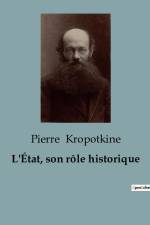
" En prenant pour sujet de ce¿e conférence, l'État et son rôle historique, j'ai pensé répondre à un besoin qui se fait vivement sen¿r en ce moment : celui d'approfondir l'idée même de l'État, d'étudier son essence, son rôle dans le passé et la part qu'il peut être appelé à jouer dans l'avenir.C'est surtout dans la questi¿on de l'État que se trouvent divisés les socialistes. Dans l'ensemble des frac¿tions qui existent parmi nous, et qui répondent aux différents tempéraments, aux différentes manières de penser, et surtout au degré de confiance dans la prochaine révolüon, deux grands courants se dessinent."
" Mon cher André, ce n¿est pas moi qui te donne ce livre, le plus impor- tant, peut-être, de tous ceux que j¿ai pu écrire jusqüà ce jour.C¿est mon fils André qui te le donne, mon douloureux fils André que Dieu m¿a repris dans son innocence baptismale et qui a dix-huit ans, au- jourd¿hui, dans le Paradis.Il en eût été le dédicataire et il convient que tu prennes sa place, en cette manière. Je veux croire que telle est sa volonté.Il eût aimé Napoléon comme tu l¿aimes, et votre commun Patron, le grand Apôtre de la Croix, te fera comprendre, si tu l¿interroges avec amour, ce qüil y avait de désirable et de magnifique dans la souffrance du plus glorieux de tous les mortels. Nous sommes au soir du monde, mon cher enfant ; tu seras témoin, peut-être, des divines et terribles choses que le vainqueur des rois semble avoir si grandiosement préfigurées.Puisse l'Ame de Napoléon agrandir ton c¿ur et te servir de réconfort pour les épreuves inconnues.LÉON BLOY. 5 mai 1912."
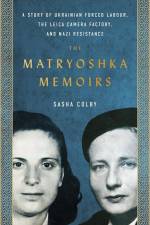
The relatively unknown story of the Leitz family, the Third Reich's use of Gentile forced labor, and its prisons. It is a life-affirming story of survival, resilience, and the ways World War II continues to influence our present moment.
This book is specifically for the enlisted Marine. The officers have their books. Who will tell our stories of what happens and maybe why? What could have been done differently? This book contains a story part and a dialogue aspect. It dares asks so many essential questions; left for the young Marine (that all deserve deeper explanations and answers for some of the things that are not always so obvious)? The story itself, begins with boot camp and the dialogue centers around how we can possibly improve the single greatest elite fighting force in history. This book is obviously an American tale and it is ours. It is brutal, profane, and all too real. The few, the proud; the Marines. Semper Fi
My parents' determination to survive gives strength to our spirits. Their laughter echoes through the generations, and I see shadows of their gentle smiles on the faces of their great-grandchildren. The blood of our ancestry forever runs through our hearts, and their songs give peace to our souls. We cannot simply disappear, one by one, but must live on in these pages forever. Without our roots we die.A story of strength and tenacity, war and peace, The Empty Sleeve is a heartfelt memoir by the youngest daughter of Latvian immigrants.The author begins her memoir with tales of her parents growing up in the hidden gem of Latvia, a place that for many years was not recognized as a sovereign nation. When WWII breaks out, Germany and Russia battle over the small and defenseless Baltic States, bringing sorrow and wartime hardships.Amid personal tragedy, several years of displacement in Germany, and immigration to the United States, readers get a firsthand and personal look at the courage and strength of one family and their ability to develop roots to grow and flourish in the United States.
A fascinating and deeply compelling collection of 67 letters written to Alfred Whitman, a model for the character of Laurie in Louisa May Alcott's best-loved novel, Little Women. The letters are written by Louisa May Alcott and two of her sisters, Anna and Abby May, along with Anna's husband, John Pratt, who all met and befriended Whitman while living in Concord, Massachusetts. Housed at Harvard University, most of the letters have never before been published. They tell poignant stories of struggles with depression and loneliness, marriages, births, deaths, achievements, and losses, giving readers a personal glimpse into the writers' lives and characters. Woven throughout are many of the family's famous friends and neighbors, such as the Emersons, Thoreaus, and Hawthornes. This captivating book brings the five correspondents to vivid life as real people, not just characters in the pages of a novel.
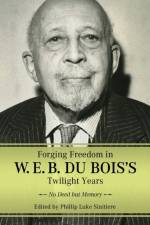
Contributions by Murali Balaji, Charisse Burden-Stelly, Christopher Cameron, Carlton Dwayne Floyd, Robert Greene II, Andre E. Johnson, Werner Lange, Lisa J. McLeod, Jodi Melamed, Tyler Monson, Eric Porter, Reiland Rabaka, Thomas Ehrlich Reifer, Camesha Scruggs, and Phillip Luke Sinitiere Although the career of W. E. B. Du Bois was remarkable in its entirety, a large majority of scholarship focuses on the first five or six decades. Overlooked and understudied, the closing three decades of Du Bois's career reflect a generative period of his life in terms of teaching, travel, activism, and publications. Forging Freedom in W. E. B. Du Bois's Twilight Years: No Deed but Memory proposes to narrate the political, social, and cultural significance of Du Bois's career during the controversial closing three decades of his life. Du Bois's twilight years were tremendously controversial: his persistent criticism of the collusion between capitalism and racism and his choice to join the Communist Party in late 1961 raised the ire of many. At the time, Du Bois's strident advocacy of socialism and turn to communism during the Cold War oriented most scholars away from delving into his late career. While only a few scholars have engaged the productivity of Du Bois's later years, the fact is that an anticommunist, antiradical animus has followed Du Bois in the half century since his death. As a result, Du Bois scholarship remains impoverished to the extent that academics neglect his later years. The essays in Forging Freedom in W. E. B. Du Bois's Twilight Years detail selected aspects of Du Bois's later decades and their particular connection to American social, political, and cultural history between the 1930s and the 1960s. While international concerns and a global perspective also fundamentally defined Du Bois's latter years, chronicling his final decades in a US context presents fresh insight into his twilight years. Du Bois's commitment to freedom's flourishing during this period animated the Black freedom struggle's war against white supremacy. Ultimately, this book demonstrates that the durability of Du Bois's intellectual achievements remains relevant to the twenty-first century.
Contributions by Murali Balaji, Charisse Burden-Stelly, Christopher Cameron, Carlton Dwayne Floyd, Robert Greene II, Andre E. Johnson, Werner Lange, Lisa J. McLeod, Jodi Melamed, Tyler Monson, Eric Porter, Reiland Rabaka, Thomas Ehrlich Reifer, Camesha Scruggs, and Phillip Luke Sinitiere Although the career of W. E. B. Du Bois was remarkable in its entirety, a large majority of scholarship focuses on the first five or six decades. Overlooked and understudied, the closing three decades of Du Bois's career reflect a generative period of his life in terms of teaching, travel, activism, and publications. Forging Freedom in W. E. B. Du Bois's Twilight Years: No Deed but Memory proposes to narrate the political, social, and cultural significance of Du Bois's career during the controversial closing three decades of his life. Du Bois's twilight years were tremendously controversial: his persistent criticism of the collusion between capitalism and racism and his choice to join the Communist Party in late 1961 raised the ire of many. At the time, Du Bois's strident advocacy of socialism and turn to communism during the Cold War oriented most scholars away from delving into his late career. While only a few scholars have engaged the productivity of Du Bois's later years, the fact is that an anticommunist, antiradical animus has followed Du Bois in the half century since his death. As a result, Du Bois scholarship remains impoverished to the extent that academics neglect his later years. The essays in Forging Freedom in W. E. B. Du Bois's Twilight Years detail selected aspects of Du Bois's later decades and their particular connection to American social, political, and cultural history between the 1930s and the 1960s. While international concerns and a global perspective also fundamentally defined Du Bois's latter years, chronicling his final decades in a US context presents fresh insight into his twilight years. Du Bois's commitment to freedom's flourishing during this period animated the Black freedom struggle's war against white supremacy. Ultimately, this book demonstrates that the durability of Du Bois's intellectual achievements remains relevant to the twenty-first century.
America's Youngest Soldier, originally published in 1958 as In Spite of Hell, is the gripping account of Ernest L. Wrentmore, the youngest soldier in the American Expeditionary Force during World War One. Wrentmore served with honor despite his age (two months shy of his thirteenth birthday at the time of his enlistment in September 1917), and despite the horrors he witnessed in the trenches in France. Wrentmore saw front-line service on three battle fronts, and was cited for bravery for delivering a message, under fire, that made it possible for his unit to advance. Wrentmore was wounded twice and severely gassed; and on the night of October 17, 1918, he was evacuated from the field of battle during the first phase of the Meuse-Argonne offensive.When World War Two began, the author was recalled to active duty from a successful business career, and served as an officer with the Air Force in the North African and Mediterranean campaigns. He continued his service in the Korean War and retired as a Colonel in the U.S. Air Force. Wrentmore passed away on December 11, 1983, and is buried in Arlington National Cemetery. The back surface of his tombstone reads: "Youngest soldier to have served with American Expeditionary Forces in WWI, 12 years of age."
"Pourquoi ? peut-être parce qüil a plu un jour à Sainte-Beuve d¿écriredans son Tableau de la poésie française au XVI e siècle, « qüil n¿y avait pas de restes authentiques de l¿ancien manoir du poète, et que tout ce que l¿onsavait de lui , à Liré, c¿est qüun grand homme y avait vécu jadi ».C¿est pourtant ainsi que se font les légendes. Je me demande où Sainte-Beuve avait puisé ces renseignements."
" D'aussi loin qu'il me souvienne, je vois devant mes yeux, au Midi là-bas, une barre de montagnes dont les mamelons, les rampes, les falaises et les vallons bleuissaient du matin aux vêpres, plus ou moins clairs ou foncés, en hautes ondes. C'est la chaîne des Alpilles, ceinturée d'oliviers comme un massif de roches grecques, un véritable belvédère de gloire et de légendes."
" LE titre seul de cet essai indique la pensée deson auteur. Il s¿agit de signaler les noms et les ¿uvres des artistes français qui ont travaillé à l¿étranger, et de préparer ainsi les matériaux qui serviront à l¿histoire de l¿influence que nos artistes ont exercée à plusieurs époques sur l¿art des diverspeuplesdel¿Eu rope.Habitués comme nous le sommes depuis si long-temps à entendre parler de l¿influence de l¿art italien sur l¿art français, on s¿étonnera peut- être d¿entendre parler ici de l¿influence et des travaux des artistes français en Europe; et cependant cette influence et ces travaux ont été et sont encore considérables."
" Il peut paraître singulier que de longues études soient consacrées à un simple individu, au chat, qui, quoique résumant une partie des facultés des félins, ne saurait cependant donner une idée complète des êtres plus considérables de la même race; mais les habitudes sédentaires de l'animal permettent à l'homme de cabinet de l'étudier à tout instant, sans inter- rompre son travail. De l'atelier des alchimistes, le chat a passé chez les écrivains; il fait partie de leur modeste intérieur, & il offre ceci de particulier avec les gens de lettres, qu'il a presque autant de détracteurs que si, lui-même ,le chat écrivait."
Social Cause is a collection of issues that plague modern society frequently and that many individuals work to resolve. It frequently results from external causes that are out of a person's control. Social issues are conditions or behaviours that have a detrimental effect on society's constituents and call for a remedy. That is, these social issues affect both individuals and big groups of people, causing disturbance or misery. On the basis of what is viewed as morally right or wrong personal life or interpersonal social life decisions, social issues are the source of divergent perspectives. Although social and economic concerns are distinct from one another, some issues (like immigration) contain both social and economic components. There may be differences of opinion regarding which social problems are more important to address than others. There are several perspectives held by people and communities. Thomas Paine discusses the responsibility of each person to "grant the same rights to others as we give ourselves" in Rights of Man and Common Sense. Failure to do so results in the development of a social problem. People utilise a range of strategies to address societal challenges. In a democracy, some elect officials to further their ideals. People give or share their time, money, energy, or other resources outside of the political process. The most common form of this is volunteering. The sole objective of non-profit organisations is frequently to address a societal problem. There is more to social action than just a reality check in present times according to the prevalent societal circumstances. More action is becoming the new paradigm. It involves thinking creatively and strategically about your objective and potential implementation methods. Initiatives for social causes are about pushing the boundaries of what is possible and doing more.
Abonner på vårt nyhetsbrev og få rabatter og inspirasjon til din neste leseopplevelse.
Ved å abonnere godtar du vår personvernerklæring.