






Gjør som tusenvis av andre bokelskere
Abonner på vårt nyhetsbrev og få rabatter og inspirasjon til din neste leseopplevelse.
Ved å abonnere godtar du vår personvernerklæring.Du kan når som helst melde deg av våre nyhetsbrev.

Following the discovery of the decapitated corpse of Arthur Rochford Manby in his nineteen-room mansion in Taos, New Mexico, there quickly arose two schools of thought as to the event. One sect accepted that he was gruesomely murdered, while the second held to the belief that he had staged his death and left behind the cadaver of a stranger. The case was a bizarre enigma wrapped in riddles, confusion, betrayal and greed. Finally for posterity, and as relief to the guilty, it was labeled an unsolved crime. Today it is referred to as the "e;Manby Mystery of Taos."e; This book contains very little mystery. Rather, it is the tragic account of Manby and his 35-year career in manipulation, extortion, high-grading and murder. Arriving in New Mexico from England in 1883, the 24-year-old Manby began his personal odyssey for El Dorado: the dream of building a vast empire in the Southwest. He finally does so in 1913 when becoming the owner of the 61,000 acre Martinez Grant of Taos. But after three years it slips from his grasp and he is left nearly penniless. In his last years he gradually decays mentality and emotionally. Looked upon as an eccentric, no one realizes how ill he has become. Finally having a falling out with a quartet of compatriots, in July, 1929, he is murdered and decapitated.
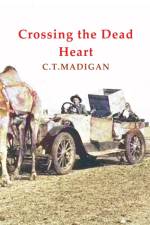
This book is a classic narrative of modern exploration; a story of adventure, enterprise and patient scientific exploration, illustrated by photographs taken on the expedition.The Simpson is a sand-ridge desert extending 200 miles (322 km) west to east, the ridges running parallel from north to south at roughly quarter-mile (0.4 km) intervals, some reaching as high as 100 feet (30 m). Madigan planned a ground crossing in the winter of 1939. A party of nine, including a biologist, a botanist, a photographer and a radio operator, with nineteen camels, made the exhausting crossing from Andado station in the Northern Territory to Birdsville in twenty-five days. It verified Madigan's previous conclusions that the area was a wasteland. This last classic Australian exploration adventure pioneered the use of mobile radio communication; national broadcasts were made through the Australian Broadcasting Commission from desert camps. The scientific results were published and also a popular accound, Crossing the Dead Heart (Melbourne, 1946). He saw the 'Dead Heart' as a land of everlasting sand-ridges and salt-encrusted clay-pans; while his conclusions seemed correct then, within twenty years the area was criss-crossed by petroleum explorers.- Australian Dictionary of Biography
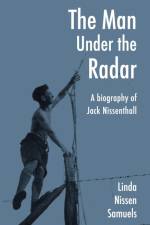
This biography of Jack Maurice Nissenthall, written by his daughter, Linda Nissen Samuels, draws heavily on Jack's own writings: The Wizard War, an unpublished autobiographical account of his part in the development of radar before and during WW2 and its impact on the eventual outcome, and original letters and photos. Through them, we hear this Unsung War Hero telling his own story in his own words.At the heart of Jack's story is the written order that he accepted, as the anonymous "RDF (Range and Direction Finding, an early term for radar) expert" - that he was to be "adequately protected" by bodyguards from the South Saskatchewan Regiment because "under no circumstances" was he to be allowed to fall into enemy hands. Effectively, this meant that ten Canadian soldiers specifically tasked to assist him, were also, in Jack's own words, "a sort of negative safeguard", "my execution squad". That he was not captured and did indeed survive was due partly to his physical fitness and the "cheerful and resourceful courage that shows in this book." (From the Foreword to Jack's own manuscript- written by Prof R. V. Jones, Britain's Assistant Director of Air Intelligence in World War II.)This present book answers the question: what made him do it?It also recounts many episodes which demonstrate how Jack's whole life exemplifies dictionary definitions of a hero - as a person of high moral integrity, resourceful, passionate and patient, energetic, courageous, confident and caring who willingly takes risks and makes sacrifices for others. But Jack is not a common-or-garden, rough, tough hero. You'll be charmed to read how, as a love-struck twenty-something, he wears his heart on his sleeve, writing to his girlfriend Dally about their first kiss.Why is it then, that this exceptional person was undervalued and overlooked by the powers-that-be at the end of World War II? And why was he not decorated for bravery? Indeed, an article proposes that he is "The VC that never was."This book gives an insight into why, nearly eighty years later, Jack Nissenthall's extraordinary war service is still largely unknown and unsung (except in Canada), and why there are still so many unanswered questions about it.But in the end, readers will surely acknowledge this hero's modest and cheerful embodiment of integrity - and want to sing his well-deserved praises.
In recent years, Social Epistemology has emerged as a captivating and dynamic field of study, revolutionizing our understanding of knowledge and its acquisition within social contexts. As societies continue to become increasingly interconnected through technology and communication, the significance of social factors in shaping beliefs, justifications, and disseminating information has become more evident.Social Epistemology focuses on how collective agents, such as communities, institutions, and cultures, generate, transmit, and validate knowledge. The field delves into how social interactions, norms, trust, and shared beliefs impact individual cognition and contribute to forming communal knowledge structures.The ascent of Social Epistemology promises to bring many benefits to diverse disciplines. By illuminating the interplay between individual epistemic agents and social systems, this field enriches our comprehension of knowledge production, scientific progress, and the dynamics of belief formation. It also offers insights into misinformation, knowledge polarization, and epistemic injustices plaguing modern societies.As researchers delve deeper into Social Epistemology, the prospects of its ascent seem promising. By fostering interdisciplinary collaborations, incorporating insights from cognitive science, sociology, and philosophy, and utilizing advanced analytical tools, Social Epistemology holds the potential to reshape the way we perceive knowledge, truth, and rationality in the interconnected world of tomorrow. Darby Roy's exploration of this burgeoning domain encourages a thoughtful examination of the complex interplay between individuals and societies, enriching our epistemic landscape for years to come.
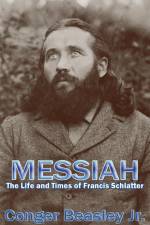
While living in Denver in the early 1890s, Francis Schlatter, a poor immigrant cobbler from Alsace-Lorraine, heard a voice inside his head that told him to put down his tools and go outside and walk east. For several years Schlatter, a deeply pious man, had been aware that he possessed the potential to cure people of their afflictions if he could only muster enough faith; the time to test that faith had arrived. So began a grueling two-year journey on foot that took him as far east as Hot Springs, Arkansas, then back across the Southwest to San Diego, north to San Francisco, then east to Arizona and New Mexico. In the summer and fall of 1895, first in Albuquerque then in Denver, he began to treat hundreds of people a day. Word of his miraculous power ran like wildfire all over the Southwest. Appalled by the carnival atmosphere he encountered in Denver, Schlatter slipped away into the wilds of New Mexico, finally into Old Mexico, where he died under mysterious circumstances in the spring of 1897. Charlatan or saint? Healer or fraud? The question remains. Even his detractors acknowledged the genuine compassion that people felt in his presence. Most telling was the fact that he never took a dime for the therapies he performed. A hundred years ago Francis Schlatter was one of the best-known figures in the Southwest; since then he has literally fallen off the map. In this gripping and powerful narrative, based on contemporary newspaper accounts and a memoir that Schlatter dictated to a friend before he died in Mexico, Conger Beasley, Jr. reconstructs the life and times of this remarkable man.
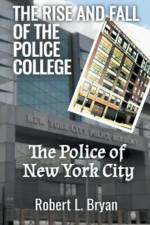
Professional, formalized training for police in the United States is a relatively new concept. Formal police training programs didn't begin appearing until the latter part of the 19th century, and the NYPD, considered one of the best trained police forces in the world, did not establish a meaningful training program until 1909. The NYPD quickly recognized the relationship between training and professionalism, and two police commissioners during the early 20th century also recognized the correlation between education and professionalism. Their efforts led to increased levels of technical police training, as well as an effort to elevate the level of police education to the status of an institution on higher learning, like a college. In fact, for a brief period of time their efforts became reality with the establishment of a police college. This is the story of that institution-the rise and fall of the New York Police College.
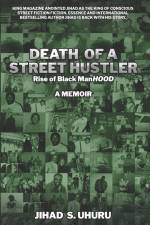
death of a street hustler: RISE OF BLACK MANHOOD As a young man growing up in the streets of Indianapolis, Indiana and Atlanta, Georgia Elbert Lee Frazier learned the hustle game early on - hustle to get ahead, hustle to thrive, hustle to survive. Despite a strong-willed mother who worked tirelessly to get him to tap into his potential, and a hard-nosed father determined to beat him onto a straight and narrow path.... it would be the streets where Elbert would get his education. Told in three stages, book; DEATH OF A STREET HUSTLER is a riveting coming of age autobiography about an Urban African-American boy's journey from maleHOOD 2 manHOOD.Book 3 DEATH OF A STREET HUSTLER: Rise of Black ManHOOD takes a critical and introspective look into ideals and ideas surrounding Black maleness and Black manhood. Hip-hop culture, urban life, African-American culture, spirituality, racism, fatherhood, classism, sexism, and ideology/politics are explored as Elbert navigates a path that re-awakens the Black manHOOD within him. This remarkable story of Elbert Lee Frazier, now known as Jihad Uhuru, as he moves from maleHOOD to manHOOD, will guide you into a better understanding of the African-American male psyche and the psychic trauma that many males face growing up, or growing down, in America today. People from all walks of life will be inspired by how Jihad went from a bully who embraced the Street Life, reformed himself in his Penitentiary Life and is now enlightening others through Academic Life as an Africana Studies University professor. Jihad has condensed forty years of hard-learned lessons on growing into manHOOD, into three page turning books and 45 minute to 1 hour podcasts that will entertain, educate and most importantly, AWAKEN the royalty in us all.
When his parents expressed the desire for them to help his sibling and the next generation, he accepted that as a mission of his life. They developed a plan that was incentive based and lasted for over 25 years. They refused to hand out freebees, that will make a dependent class out of them. Hence the title of the book. They now have 150 plus family members who benefitted from the plan. The family includes many physicians, engineers, MBAs, other professionals and business owners. Read how two people achieved all of this.
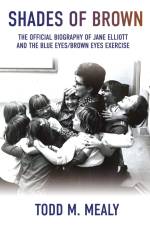
What if, by eight years old, children could possess the mechanism to disrupt prejudicial tendencies? That is an argument posited by Jane Elliott for more than five decades. She initially made the claim the day after the assassination of Martin Luther King Jr.-first with elementary school students in Riceville, Iowa, then with adults in seminar rooms full of corporate, correctional, educational, and military personnel. Elliott is famous for placing learners of all ages into a manufactured society of hate, oppression, and in-group synchrony. In Shades of Brown, historian Todd M. Mealy offers a fascinating, never-before-told reconstruction of Elliott's life as a child on a Depression-era farm in Iowa to her rise as one of the world's leading voices on the anatomy of prejudice.Loved and despised by millions, this schoolteacher invested most of her life trying to expose the root cause of bigotry: ignorance. Racism is not new. It will likely never end. However, in 1968, Elliott discovered a method to mitigate racist inclinations. She calls it the "Blue Eyes/Brown Eyes Exercise," a controversial role-play on discrimination that separates learners by the color of their eyes. Elliott contends that a short period of discomfort and alienation will teach her central lesson that we are one race.Based on rarely tapped sources, especially never discovered family documents, Shades of Brown offers the full context of the origin, use, and implications of the Blue Eyes/Brown Eyes Exercise.
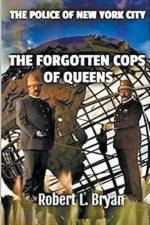
Today, residents of the Borough of Queens are fortunate enough to be protected by the New York City Police Department - but that wasn't always the case. There was a time when Queens County was not a part of New York City, and the towns and villages provided their own law enforcement through an assortment of constables, marshals, special officers, and watchmen. What happened to these Queens lawmen when the county was pulled into the Greater City of New York? This is the story of the policemen of the independent county of Queens and their fight to keep their jobs when Queens became a Borough in the City of New York.
South Sudan became independent in 2011, but the hope for a peaceful future was short-lived. By 2013, the world's youngest nation was engulfed in a brutal civil and tribal war.Deployed as a Military Liaison Officer as part of the United Nations Mission in South Sudan, John Vintar recounts the harsh realities of how the United Nations conducts peacekeeping operations in Africa.With stories that are descriptive, shocking, and at times poetic, Vintar illustrates humanity at its best and its worst, in a war waged with impunity.Experience the dangers, frustrations, and sense of isolation that come with serving in a UN mission, and the difficulty returning home to a country indifferent to the suffering in South Sudan.
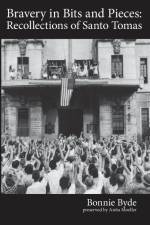
On December 7, 1941, Bonnie Byde and her husband Eric woke to explosions. Their children slept in the next room. They had heard the news of the Japanese bombing of Pearl Harbor, but assured themselves that they would be safe in the Philippines. If trouble did come, the Americans would take care of it.Bravery in Bits and Pieces is Bonnie Byde's account of her family's day-to-day life in the Santo Tomas Japanese internment camp. Bonnie risked her life to journal her family's story. Written on scraps of paper and hidden in the bottom of the children's mattresses, Bonnie kept a record so that her family back in Australia would know her fate.Bonnie's daughter, Ann, preserved her mother's memoir for over 45 years. Bravery in Bits and Pieces is a chronicle of frustrations and horrors of the prison camp. It is also a rare first-person account of a mother and wife's wartime experience.
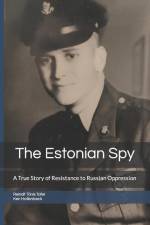
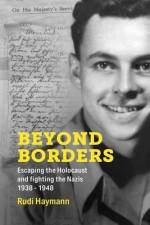
In this remarkable true story, follow the transformation of Estonian Tom Saar from childhood refugee to Special Forces soldier. Born in 1934, Tom is forced to flee Estonia at age 5 and is recruited into Hitler's Youth before ultimately escaping to Sweden. Seeking to avenge the loss of his family, he enlists in the U.S. Army and becomes one of the founding Special Forces "Green Berets". His exploits behind enemy lines include sabotage, kidnapping, assassination, and even a wedding infiltration. But when a close call leaves him staring death in the face, he is forced to choose between his quest for vengeance and the safety of civilian life. Will he escape the violence of Europe to settle in America? Or will he be sucked back into the war?
If a day comes when humans begin to lose the desire to reach harmony in dignified freedom, unconscious fatalism will put them in a mechanical life
A life without the religion of God is not life at all; it is idiomatically, a caricature of life
Nowadays, the interdisciplinary study, for its part, has put another arena in front of religious scholars, and all these issues together place new and important responsibilities on traditional and religious sciences centers, as well as academic hubs that work in the field of religious studies.Today, more than ever, we need thinkers and scholars of theology like Allameh Jafari, who lived and investigated in the traditional atmosphere of, and also faced the new approaches to, theology. While adhering to the old fundamentals of religious studies, he tried to have an interdisciplinary view of traditional religious studies and, based on those lofty and solid foundations, to open new horizons in the field whenever facing new problems and approaches in theological studies. Therefore, it is appropriate and necessary today that his individual performance become a movement of religious studies in our centers for religious sciences. In the current era, the centers for religious sciences need to nurture religious scholars who are both experts in the traditional fields of theological studies and familiar (even proficient) in the fields of modern religious studies, so that they can provide appropriate solutions and profound religious answers when faced with new issues in those fields. The present book is an example of religious study that a religious scholar, specialized in traditional seminary sciences and proficient in modern human sciences, has tried with continuous jurisprudence to utilize the facilities of Islamic tradition and culture and modern thoughts in facing new issues. Therefore, this book is worthy of deliberation for religious scholars who wish to seek a base both in the traditional as well as in the modern world.
Dr. Fanny Reading arrived in Australia in 1889 as a migrant child and felt the loneliness of the newcomer. A brilliant musician and compassionate medical doctor, she created the National Council of Jewish Women of Australia, mentoring thousands of women, bringing them out of their kitchens into the worlds of public debate and policies. A leader on Australia's home-front during World War II, she was a trailblazer, feminist and courageous activist for the disadvantaged at home and abroad."This illuminating biography makes a significant contribution to Australian history, politics and culture." -- Emeritus Professor Konrad Kwiet, Resident Historian at the Sydney Jewish Museum"Few leaders are endowed with the vision and ability to transform their society. One such catalyst of change was Dr. Fanny Reading..." -- Professor Andrew Markus, Emeritus Professor of Monash University's Australian Centre for Jewish Civilisation"Sarzin's book, a labor of love, is a precious gift - not only to a great woman whose legacy has justly been restored but especially to readers, who will emerge with a greater knowledge of critical chapters in Jewish and Australian history, and an appreciation for someone they can cherish as a role model and source of inspiration." -- Dr. Daniel Polisar, Executive Vice-President, Shalem College, Jerusalem
In Cocoon, TEDx Talk speaker and therapist Sarri Gilman tells the story of how she started a shelter in Everett, Washington, to protect the community's homeless teens.
Abonner på vårt nyhetsbrev og få rabatter og inspirasjon til din neste leseopplevelse.
Ved å abonnere godtar du vår personvernerklæring.