
Gjør som tusenvis av andre bokelskere
Abonner på vårt nyhetsbrev og få rabatter og inspirasjon til din neste leseopplevelse.
Ved å abonnere godtar du vår personvernerklæring.Du kan når som helst melde deg av våre nyhetsbrev.

In the tradition of `Agent Zigzag' comes a breathtaking biography of WWII's `Scarlet Pimpernel' as fast-paced and emotionally intuitive as the best spy thrillers. This celebrates unsung hero Robert de La Rochefoucauld, an aristocrat turned anti-Nazi saboteur, and his exploits as a British Special Operations Executive-trained resistant
At the age of only 36, Sir Mark Sykes was signatory to the Sykes-Picot agreement, one of the most reviled treaties of modern times. A century later, Christopher Sykes' lively biography of his grandfather reassesses his life and work, and the political instability and violence in the Middle East attributed to it.
A dramatic and compelling quest to solve one of the great mysteries of the twentieth century: the ultimate fate of Russia's last tsar and his family.
Ernest Shackleton is one of history's great explorers, who became a leading figure in Antarctic discovery. This first comprehensive biography in a generation brings a fresh perspective to the heroic age of Polar exploration dominated by Shackleton's complex, compelling and enduringly fascinating story.
Continuing the author's study of the careers, peronalities and personal uniforms of the greatest French generals and marshals of the Napoleonic Wars, this volume describes and illustrates those leaders who made their names largely in the later years of the Empire, from 1809 to 1815.
The extraordinary story of an obscure German princess who became one of the most powerful women in history.
On 26 January, 2009, during the depths of the financial crisis and having just completed five years as President of the Federal Reserve Bank of New York, the author was sworn in by President Barack Obama as the seventy-fifth Secretary of the Treasury of the US. This book takes you behind the scenes during the darkest moments of the crisis.
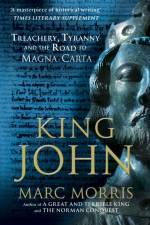
King John is familiar to everyone as the villain from the tales of Robin Hood - greedy, cowardly, despicable and cruel. Was he truly a monster, or a capable ruler cursed by ill luck? This book offers a compelling portrait of an extraordinary king, whose reign marked a momentous turning point in the history of Britain and Europe.
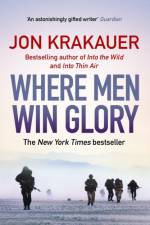
Where Men Win Glory is a profoundly eloquent and affecting account of heroism - a millionaire sports star who gave it all up after the terrorist attacks of 9/11, to fight for his country with the US Army in Afghanistan: only to be killed by one of his own platoon. The gripping story of the life and death of a true American hero.
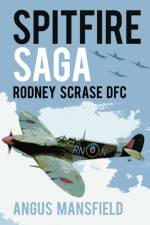
He learnt to fly at a BFTS in America and went on the fly Spitfires with No 72 and No 1 Squadrons, finally being awarded the Distinguished Flying Cross in 1944.
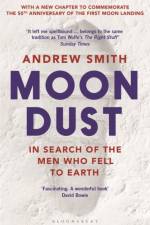
A powerful, moving and gripping book about the lives of the men who walked on the moon, re-issued with a new preface and afterword to coincide with the fortieth anniversary of the first landing.
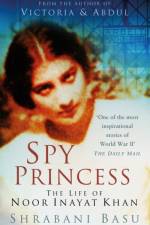
This is the riveting story of Noor Inayat Khan, a descendant of an Indian prince, Tipu Sultan (the Tiger of Mysore), who became a British secret agent for SOE during World War II. Noor was one of only three women SOE agents awarded the George Cross and, under torture, revealed nothing, not even her real name.
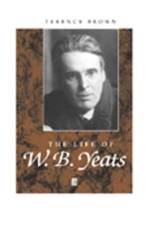
W.B. Yeats is widely regarded as the greatest English-language poet of the twentieth century. This new critical biography seeks to tell the story of his life as it unfolded in the various contexts in which Yeats worked as an artist and as public figure.
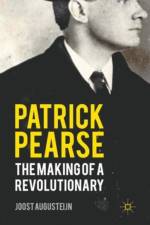
Patrick Pearse was not only leader of the 1916 Easter Rising but also one of the main ideologues of the IRA. Based on new material on his childhood and underground activities, this book places him in a European context and provides an intimate account of the development of his ideas on cultural regeneration, education, patriotism and militarism.
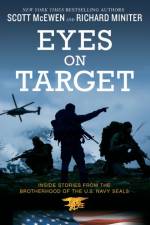
New York Times bestselling author, Richard Miniter, joins forces with #1 New York Times bestselling co-author of American Sniper, Scott McEwen, to write the provocative true history of the most controversial and top-secret unit in the American Armed Forces, the Navy SEALs.
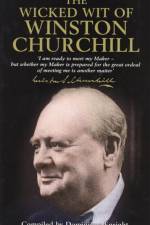
This enchanting collection brings together hundreds of Winston Churchill's wittiest remarks, as a record of all that was best about this endearing, conceited, talented and wildly funny Englishman.
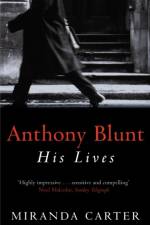
The highly acclaimed, award-winning biography of Sir Anthony Blunt - aesthete, homosexual, communist, spy.
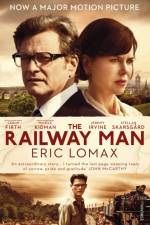
During the second world war Eric Lomax was forced to work on the notorious Burma-Siam Railway and was tortured by the Japanese for making a crude radio. Left emotionally scarred and unable to form normal relationships Lomax suffered for years until, with the help of his wife Patti and the Medical Foundation for the Care of Victims of Torture.
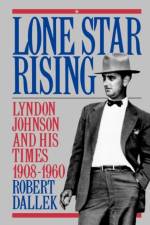
In Lone Star Rising, Robert Dallek offers a brilliant, definitive portrait of a great American politician. Based on seven years of research in over 450 manuscript collections and oral histories, as well as numerous personal interviews, this first of a two-volume biography follows Johnson's life from his childhood to his election as vice-president under Kennedy.
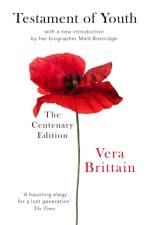
* A unique record of one woman's experience of twenty-five of the most cataclysmic years in modern history - and a Virago Classic bestseller - with a new introduction by Mark Bostridge
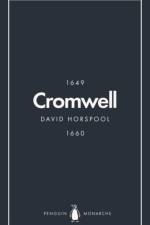
Although he styled himself 'His Highness', adopted the court ritual of his royal predecessors, and lived in the former royal palaces of Whitehall and Hampton Court, Oliver Cromwell was not a king - in spite of the best efforts of his supporters to crown him.Yet, as David Horspool shows in this illuminating new portrait of England's Lord Protector, Cromwell, the Puritan son of Cambridgeshire gentry, wielded such influence that it would be a pretence to say that power really lay with the collective. The years of Cromwell's rise to power, shaped by a decade-long civil war, saw a sustained attempt at the collective government of England; the first attempts at a real Union of Britain; the beginnings of empire; a radically new solution to the idea of a national religion; atrocities in Ireland; and the readmission to England of the Jews, a people officially banned for over three and a half centuries. At the end of it, Oliver Cromwell had emerged as the country's sole ruler: to his enemies, and probably to most of his countrymen, his legacy looked as likely to last as that of the Stuart dynasty he had replaced.
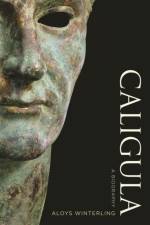
The infamous emperor Caligula ruled Rome from A.D. 37 to 41 as a tyrant who ultimately became a monster. An exceptionally smart and cruelly witty man, Caligula made his contemporaries worship him as a god. He drank pearls dissolved in vinegar and ate food covered in gold leaf. He forced men and women of high rank to have sex with him, turned part of his palace into a brothel, and committed incest with his sisters. He wanted to make his horse a consul. Torture and executions were the order of the day. Both modern and ancient interpretations have concluded from this alleged evidence that Caligula was insane. But was he? This biography tells a different story of the well-known emperor. In a deft account written for a general audience, Aloys Winterling opens a new perspective on the man and his times. Basing Caligula on a thorough new assessment of the ancient sources, he sets the emperor's story into the context of the political system and the changing relations between the senate and the emperor during Caligula's time and finds a new rationality explaining his notorious brutality.
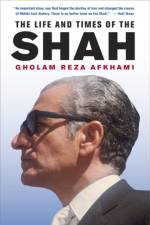
This epic biography, a gripping insider's account, is a long-overdue chronicle of the life and times of Mohammad Reza Shah, who ruled from 1941 to 1979 as the last Iranian monarch. Gholam Reza Afkhami uses his unparalleled access to a large number of individuals-including high-ranking figures in the shah's regime, members of his family, and members of the opposition-to depict the unfolding of the shah's life against the forces and events that shaped the development of modern Iran. The first major biography of the Shah in twenty-five years, this richly detailed account provides a radically new perspective on key events in Iranian history, including the 1979 revolution, U.S.-Iran relations, and Iran's nuclear program. It also sheds new light on what now drives political and cultural currents in a country at the heart of today's most perplexing geopolitical dilemmas.
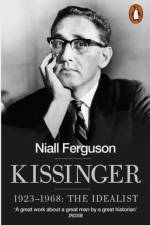
SPECTATOR, NEW STATESMAN, TELEGRAPH, SUNDAY TIMES and FINANCIAL TIMES BOOKS OF THE YEAR 2015No American statesman has been as revered and as reviled as Henry Kissinger. Hailed by some as the "e;indispensable man"e;, whose advice has been sought by every president from John F. Kennedy to George W. Bush, Kissinger has also attracted immense hostility from critics who have cast him as an amoral Machiavellian - the ultimate cold-blooded "e;realist"e;.In this remarkable new book, the first of two volumes, Niall Ferguson has created an extraordinary panorama of Kissinger's world, and a paradigm-shifting reappraisal of the man. Only through knowledge of Kissinger's early life (as a Jew in Hitler's Germany, a poor immigrant in New York, a GI at the Battle of the Bulge, an interrogator of Nazis, and a student of history at Harvard) can we understand his debt to the philosophy of idealism.And only by tracing his rise, fall and revival as an adviser to Kennedy, Nelson Rockefeller and, finally, Richard Nixon can we appreciate the magnitude of his contribution to the theory of diplomacy, grand strategy and nuclear deterrence. Drawing not only on Kissinger's hitherto closed private papers but also on documents from more than a hundred archives around the world, this biography is Niall Ferguson's masterpiece. Like his classic two-volume history of the House of Rothschild, Kissinger sheds dazzling new light on an entire era.
Of the three revisionist works John Charmley has written about British foreign policy in the mid-twentieth century this is the centrepiece. The author argues that Churchill deserves more credit for 'their finest hour' than has been granted, but just as his virtues were built on the heroic scale, so too were his faults and failures. The statesman who had struggled to destroy Nazism and restore Europe's balance of power ended by allowing Stalin to dominate central and eastern Europe.This is no mere exercise in debunking, in many ways the complex man presented in these pages is more interesting than the more hagiographical portraits.'This is not instant history run up to cause a sensation, but a meticulously documented reappraisal of Churchill's war leadership and of the career that led up to it. Nor is its tone contemptuous or vindictive. The author accepts that Churchill was a great man. His starting point is that even great men make mistakes.' John Keegan, Daily Telegraph 'Probably the most important revisionist text to be published since the war.' Alan Clark, The Times
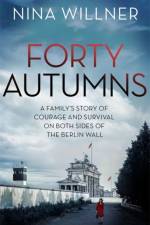
In Forty Autumns, Nina Willner recounts the history of three generations of her family - mothers, sisters, daughters and cousins - separated by forty years of Soviet rule, and reunited after the fall of the Berlin Wall.Shortly after the end of the Second World War, as the Soviets took control of the eastern part of Germany, Hanna, a schoolteacher's daughter, escaped with nothing more than a small suitcase and the clothes on her back. As Hanna built a new life in the West, her relatives (her mother, father and eight siblings) remained in the East. The construction of the Berlin Wall severed all hope of any future reunion. Hanna fell in love and moved to America. She made many attempts to establish contact with her family, but most were unsuccessful. Her father was under close observation; her mother, younger sister Heidi and the others struggled to adjust to life under a bizarre and brutal regime that kept its citizens cut off from the outside world. A few years later, Hanna had a daughter - Nina - who grew up to become the first female US Army intelligence officer to lead sensitive intelligence collection operations in East Berlin at the height of the Cold War. At the same time, Heidi's daughter, Cordula, was training to become a member of the East German Olympic cycling team. Though separated by only a few miles, Nina and her relatives led entirely different lives. Once the Berlin Wall came down, and the families were reunited, Nina Willner discovered an extraordinary story. In Forty Autumns she vividly brings to life many accounts of courage and survival, set against the backdrop of four decades that divided a nation and the world.
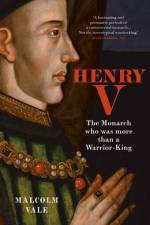
More than just a single-minded warrior-king, Henry V comes to life in this fresh account as a gifted ruler acutely conscious of spiritual matters and his subjects' welfare Shakespeare's centuries-old portrayal of Henry V established the king's reputation as a warmongering monarch, a perception that has persisted ever since. But in this exciting, thoroughly researched volume a different view of Henry emerges: a multidimensional ruler of great piety, a hands-on governor who introduced a radically new conception of England's European role in secular and ecclesiastical affairs, a composer of music, an art patron, and a dutiful king who fully appreciated his obligations toward those he ruled. A Historian Malcolm Vale draws on extensive primary archival evidence that includes many documents annotated or endorsed in Henry's own hand. Focusing on a series of themes-the interaction between king and church, the rise of the English language as a medium of government and politics, the role of ceremony in Henry's kingship, and more-Vale revises understandings of Henry V and his conduct of the everyday affairs of England, Normandy, and the kingdom of France.
Abonner på vårt nyhetsbrev og få rabatter og inspirasjon til din neste leseopplevelse.
Ved å abonnere godtar du vår personvernerklæring.