














Gjør som tusenvis av andre bokelskere
Abonner på vårt nyhetsbrev og få rabatter og inspirasjon til din neste leseopplevelse.
Ved å abonnere godtar du vår personvernerklæring.Du kan når som helst melde deg av våre nyhetsbrev.

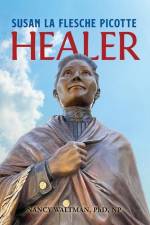
Dr. Susan La Flesche Picotte became the first Native American doctor in 1889. After medical school back East, she returned to serve her Omaha people in Nebraska. She provided medical help and leadership, as a healer and advocate for justice.
"A Test Of Human Decency" is a collection of poemsauthor Louis Karno wrote while incarcerated for fiveyears in the Louisiana DOC 'Department OfCorrections" penal system. In this situation where heexperienced 26 months in extended lockdown wherein a normal situation where a person would fold heprospered and learned to turn the negative situationhe was in into a positive. The transformation thattook place is written down in these poems asenlightenment slowly showed itself. This book waswritten in hopes that someone could gain someperspective or insight in whatever situation they arein. Enjoy...
Marilyn Fayre Milos was a nursing student on the obstetrical unit in 1979 when she first witnessed a baby being circumcised. The only person to step forward to comfort the infant as it writhed and screamed in pain during the surgery, she was shocked when the doctor said to her: "There is no medical reason for doing this." From that moment on, Marilyn became an advocate for ending medically unnecessary circumcision, protecting our children, and educating parents, the public, and medical professionals about this cultural fraud and violation of human rights. She founded the National Organization of Circumcision Information Resource Centers (NOCIRC); organized fifteen international symposia; and became a spokesperson for promoting the genital integrity of all children. A story of determination, service, and love, Marilyn's memoir describes the myths, misinformation, and economic forces driving non-religious infant circumcision in the United States, where it has become standard practice. Readers may find their own beliefs and assumptions challenged, and their hearts touched by this story of a life devoted to justice for babies and the adults they will become.
This is the real-life story of families that fled Europe in the mid-1800s to set up life in the New World. They were not rich people, but mainly farmers who were looking for new opportunities. If you've read the back of the dust cover of this book you'll hear the voice of August Wirth in 1832, whose ideas fermented and boiled among the common folk such as these fleeing family groups. Their lives were not easy in America; they toiled in new soils, lived in places that were strange to them, and learned a new language. These were the new Americans that molded their new country to fit them.
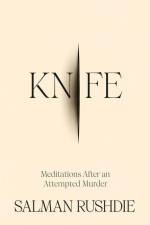
From internationally renowned writer and Booker Prize winner Salman Rushdie, a searing, deeply personal account of enduring--and surviving--an attempt on his life thirty years after the fatwa that was ordered against him.
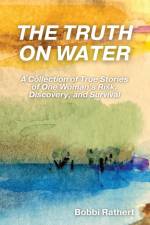
"I did not die on the river. I lived."She thought, why am I doing this?Despite the possibilities on this river journey, Bobbi knew the only certainty was her unknowing. She felt relief when the downstream current was smooth and tame, but she knew the water had a mind of its own. Its change came by the moment.Fears rose about sleeping in mysterious places alone or what was around a bend in the river. Some days, the good weather turned and was suddenly frightening. What good might be squeezed from fear? What rose from it was life. When a tornado tore through, she lay heavy in the tent and pressed down from a fear she might rise high in the air. Flooding was fast and frantic. When sucked into deep and thick mud, she rinsed off and emerged to tell of it. She confronted polarities that were troubles but not tragedies, hazards yet not deadly. They were alarming but still bearable.She loved the boldness and freedom of water, which was not shared with humans. She loved how the top water moved seamlessly, going from smooth to rolling to perilous. Even afraid, she loved the river's temper and moods.She will never forget the river trip when she launched and just went.Bobbi Rathert lives in the Midwest. She worked in clinical mental health in Chicago for twenty-five years and on her sheep farm in southwest Wisconsin for twenty years. She solo kayaked six hundred and fifty miles of the Mississippi River at sixty-eight and then retired. She writes stories of the river and her many other life adventures.
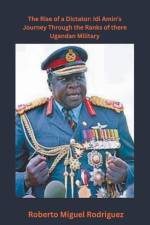
"The Rise of a Dictator" chronicles the enigmatic ascent of Idi Amin, from his humble beginnings to becoming one of the most notorious dictators of the 20th century. This comprehensive account delves deep into the social, political, and historical backdrop of Uganda, providing a framework to understand the environment that facilitated Amin's rise to power.Key elements of the book include:Early Life: Exploring Amin's formative years, his family background, and the early influences that shaped his character.Military Beginnings: Detailing his initiation into the King's African Rifles, his experiences during World War II, and the initial steps of his military career.Climbing the Ladder: Unpacking Amin's calculated maneuvers within the Ugandan military, showcasing his strategic alliances, betrayals, and ruthless elimination of rivals.Coup and Consolidation: An in-depth analysis of the 1971 coup that saw Amin seize power and the subsequent methods he used to solidify his rule.Reign of Terror: A stark account of the human rights abuses, extrajudicial killings, and purges that characterized Amin's regime, with estimates suggesting hundreds of thousands lost their lives.International Relations: Examining Amin's tumultuous relationship with foreign nations, including his expulsion of Asians from Uganda and the controversial raid on Entebbe airport.Downfall and Exile: Tracing the events that led to the collapse of his dictatorship and his eventual exile to Saudi Arabia.Legacy and Impact: Reflecting on the long-term consequences of Amin's rule on Uganda and assessing his place in the annals of world history.Through meticulous research, "The Rise of a Dictator" offers a balanced yet unflinching portrayal of Idi Amin's life and rule. It serves as both a biography of a man and a study of the broader historical and political contexts that allowed for the emergence of one of modern history's most brutal dictators.
Jaanbaz was an itinerant door-to-door salesman from Afghanistan, one of many from that country who, have over the twentieth century, been known as Kabuliwallahs in India
Like the millions it affected, for Indira Varma too, the Partition was a scar that would remain, even as the wound healed with the passing of time.
The larger-than-life story of Britain's foremost writer on intelligence and espionage.
The definitive biography on Meriwether Lewis by Thomas C. Danisi and John C. Jackson now in paperback for the first time.October 11, 2009 marks the bicentennial of Meriwether Lewis's death. As the leader of the Lewis and Clark expedition, an epic exploration of uncharted territory west of the Mississippi, Lewis has been the subject of several biographies, yet much of the published information is unreliable. A number of myths surrounding his life and death persist. Now independent scholars Thomas C. Danisi and John C. Jackson have written this definitive biography based on twelve years of meticulous research. They have re-examined the original Lewis and Clark documents and searched through obscure and overlooked sources to reveal a wealth of fascinating new information on the enigmatic character and life of Meriwether Lewis. Instead of focusing on the Lewis and Clark expedition, the authors concentrate on what Lewis was doing immediately before and after the journey through Western territory. They assess his role as a natural scientist and as governor of the Louisiana Territory. His lifelong mentor, Thomas Jefferson, thrust the latter role upon Lewis during a time of crisis. As Danisi and Jackson reveal, he would much rather have devoted this time compiling his notes and scientific findings into a vivid narrative of the expedition's adventures. Finally, using medical documentation, the book reveals the actual cause of Lewis's untimely death. The authors address both the conspiracy theories regarding murder as the cause of Lewis's death and the longstanding belief that he committed suicide. The Meriwether Lewis that emerges from this thoroughly researched biography is a man of honorable intentions who met severe challenges and handled difficult confrontations with patience and diplomacy. Both professional historians and armchair devotees of American history will want to add this important new work to their libraries.
It offers a deeply personal insight into the thoughts, struggles, momentous events and emotions that have shaped India''s history, as seen through his life and his incarceration in the forbidding Cellular Jail in the Andamans.
What does it take to report from conflict zones? What good is neutrality in the face of suffering, and how much difference can one person make?From her first journalistic assignment in Gaza to covering the Arab Spring in Egypt, Sherine Tadros searched for ways to change people's lives for the better.It wasn't until her life fell apart that she found the courage to pursue her true purpose. With compassion and verve, Tadros now shares her remarkable journey, from witnessing injustice to fighting it in the corridors of power. In probing the line between journalism and activism, her memoir Taking Sides demonstrates why stories matter - and how we can all use our voices to inspire meaningful change.
Published in 1923, Vanished Arizona offers a vivid glimpse into a frontier world that has long since disappeared. Author Martha Summerhayes draws readers into the remote outposts and rugged landscapes of Arizona's territorial years through her captivating firsthand account of life as an army wife. Accounts of danger, lawlessness, and the untamed environment are balanced with charming portraits of fellow pioneers, creating a fascinating look at life on the western frontier.Summerhayes' flair for detail and storytelling brings this colorful era to life. She takes readers bumping along in dusty stagecoaches to recount harrowing tales of Apache raids and bandit threats. We can nearly smell the smoke of campfires where she cooked under the stars while stationed at remote forts. Her prose invites us into the cramped quarters she transformed into homes. Throughout, Summerhayes' wit and wisdom shine through, making even the harsh conditions sometimes described vivid yet enchanting.With insightful observations and poignant anecdotes, Summerhayes captures the vanished world of frontier army outposts and fledgling mining towns. She chronicles characters like the legendary Lieutenant Cushing who swore to vanquish the Chiricahua Apache threat, only to meet a tragic end. Details on vanished landscapes, battles, mining camps, settlements, and soldiers grant future generations a treasured window into Arizona's past.Part memoir and part history, Vanished Arizona brings to life a disappeared time and place through the eyes of a pioneering woman who lived it. Summerhayes' engaging account grants us the chance to experience the Old West as the army wives knew it - with grit, grace, terror and triumph.
Our Founder's Wisdom explores the people in our lives that we trust for information, the people that we elevate to expert status whether they deserve it or not. If we are honest, we find that many maybe even most fail us at some point because they are fallible and cannot know everything. The Founding Fathers of our nation knew that they could not rely on mankind to always do right. They saw the shortcomings in each other, the changeable nature of man, the tendency toward pride, greed, anger, mob mentality and so forth. They chose a less volatile, more consistent, more solid foundation. They chose to seek God and the Bible for guidance for our nation. They had their differences, but they generally respected the Bible. They felt it was the best source of information about God and His creation. Was their choice real Wisdom?
The Achiever: The Story of Mayor Norman S. Edelcup and the City of Sunny Isles Beach chronicles the life and contributions of a small Florida beach town's longest-serving and most-impactful mayor. A former Chicago native who moved to Sunny Isles Beach in 1968, Norman S. Edelcup witnessed a slow decline for decades as tourists moved on to greener pastures. With a lifetime of knowledge and experience as a successful accountant, businessman, banker, and philanthropist, Norman became determined to turn his adopted hometown into a grand coastal city. One of Sunny Isles Beach's founding fathers, he served first as a city commissioner, and then as the city's second mayor, ushering in spectacular citywide transformations. A meticulously researched biography and historical record, The Achiever is an inspiring testament to the visionary power of genuine civic leadership.
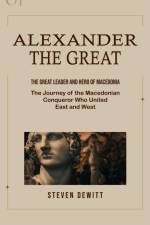
Everything you need to know about the greatest conqueror!There are a number of historic people who have lead a life of power and impact. They have contributed so much in history that up until now, their accomplishments resound in our ears very well, and remain unforgettable.One of the greatest people to ever live is the famous alexander the great, well known as the conqueror of persian empire and considered to be one of the most significant military geniuses of all time. Inside you will read about...IntroductionThe genius of philip of macedonAlexander, king of macedonConquest of persiaGaugamela and king of asiaThe death of alexanderAnd much more!This biography takes you on an exhilarating adventure, delving into the triumphs and trials of a leader who conquered empires, but whose vision extended far beyond mere conquest. Alexander believed in the unifying power of hellenistic culture, fostering cultural exchange and dialogue among diverse peoples under his rule. His legacy would shape the course of history, leaving an indelible mark on politics, philosophy, and culture.
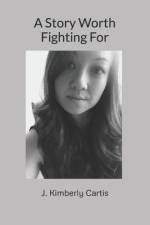
In A Story Worth Fighting For, the granddaughter of a Japanese WWII heroine fights to keep her family's legacy of resilience alive, grappling with adversity while holding tightly to the enduring bond that unites them.As Jennifer faces her own share of hardships and challenges, she draws inspiration from her grandmom's unwavering spirit. Through their intertwined narratives, this memoir explores the timeless themes of survival, hope, and the profound impact of family and friendship.This book is an inspiring testament to the human spirit, reminding us all that even in our darkest hours, our own stories are worth the fight.
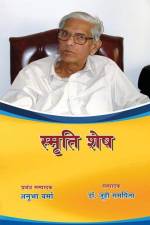
Late U.N. Sinha was a freedom fighter who fought against the Britishers for the independence of India. He was sent to jail several times where he used to write poetries. These poems are compiled by his daughter Anubha Varma and edited by Dr. Joohi Samarpita.This book - Smriti Shesh is in memory of the freedom fighter Upendra Narayan Sinha which consists of glorious tributes paid by his family and friends who have also shared some interesting stories of the British days.
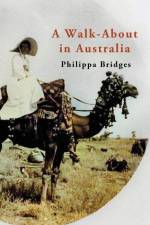
Philippa Bridges crossed Australia one hundred years ago, supported by an Aboriginal Tracker, Macumba Jack and a Lubra named Topsy. Over 600 of those miles, from Macumba Station in South Australia, to Darwin, she travelled by camel.Her most ambitious undertaking was to cross Australia from south to north, approximately along the route of the transcontinental telegraph line. Her companions were an aboriginal boy and lubra. She was profoundly impressed by the loneliness of the great empty spaces, but even more so by the courage and kindliness of those who dwell in these solitudes. Darwin has a somewhat invidious reputation, of which Miss Bridges was not unaware, but she has a good word for the town. "Certain it is," she writes, "that one hears the worst of it, but none of the best of it, long before may arrives there." But she can only speak of it as she found it like other parts of Australia. a place of real hospitality and pleasant friendships."Sydney Morning Herald, 1926
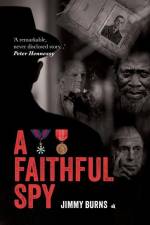
"A remarkable, never disclosed story..." Peter Hennessy"A must-read book for those interested in a personal drama at the frontline of international relations"Dr Calder Walton, author & historian"A rare look behind the scenes of British intelligence... this story is not only well-told but also true" Nicholas Reynolds, former CIA officer, New York Times bestselling authorDrawing on previously undisclosed personal papers, this biography of Walter Bell gives a remarkable insight into the working of British Intelligence. He was at heart of the emerging intelligence special relationship between Britain and America before, during and immediately after WW2 - the very time that MI6 had been penetrated by Russian intelligence. He was acquainted with Philby, Burgess and Maclean.Moving to MI5 Bell had postings in Kenya, India, and the West Indies, playing a crucial role in the passing power of power to newly independent governments, and developing close ties with agents of influence at the highest levels in the former colonies, from journalists and judges to generals and independence heroes.Back home he was intimately involved in operations to limit the reputation damage provoked by the media outcry over the Cambridge Five affair and suspected KGB misinformation about further alleged Soviet agents at the highest level of the British state.He was rewarded for his service with a CMG and the US Medal of Freedom.
Abonner på vårt nyhetsbrev og få rabatter og inspirasjon til din neste leseopplevelse.
Ved å abonnere godtar du vår personvernerklæring.