







Gjør som tusenvis av andre bokelskere
Abonner på vårt nyhetsbrev og få rabatter og inspirasjon til din neste leseopplevelse.
Ved å abonnere godtar du vår personvernerklæring.Du kan når som helst melde deg av våre nyhetsbrev.

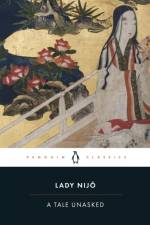
Lady Nijo's A Tale Unasked (Towazugatari) is the last, and arguably the finest, among classical Japanese literature's famous 'women's diaries'. Thought to have been completed around 1307, when the author was in her late forties, the first two thirds of this autobiographical work document in rich and compelling detail the experiences of an imperial concubine whose time at court was ruled and finally ruined by her passionate and complicated love life. The final third of the work equally memorably describes her peripatetic life after the emperor expelled her from the court in her mid-twenties and she became a nun, wandering the roads of Japan as a form of Buddhist austerity.Meredith McKinney's superb translation breathes new life into Lady Nijo's fascinating diaries, which survived her era in a single copy and were only rediscovered in the 1940s.
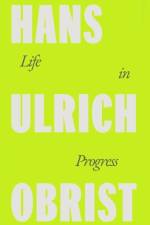
When Hans Ulrich was six years old, he was knocked down by a speeding car as he was crossing the street. Hospitalised for weeks, a sense of urgency was instilled in him. Enraptured by the healing powers of art from this young age, he began to travel across Europe on night trains, visiting artist studios.?Part unputdownable coming-of-age story, part tour de force of the contemporary art world, part user's manual on how to live a life driven by curiosity, conversation, and not least hope, Obrist takes us through the formative experiences that made him. From his first exhibition in his Zurich kitchen to penning 250 postcards while trapped by an avalanche in Val Bregaglia, Life in Progress is an enchanting ode the healing properties that engaging with art and the people around us boundlessly affords.??
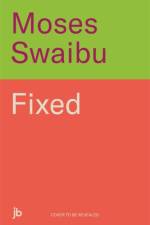
In 2012, English football was rocked by the biggest match-fixing operation to hit these shores in recent times. An Asian syndicate had infiltrated the Conference South with players being offered vast sums of money to help rig games and net millions of pounds for the fixers. Loyal fans attending matches were oblivious to the fact that outcomes had been predetermined. The remarkable story of how this syndicate was able to take hold of the national sport is told to us by a man who not only played in many of these games, but went to jail for helping to fix them - Moses Swaibu. Fixed breaks new ground as Moses Swaibu becomes the first player ever to write openly about how he helped to fix games, revealing exactly what happens on the pitch when a match is being manipulated. He also exposes how the criminal gangs operate, how young professional players are targeted and groomed and the threats of violence that are used to keep them in check. Offering a fascinating insight into the ugly side of the beautiful game, it's a sporting autobiography like none ever written before.
At his trial for impiety and corrupting youth in ancient Greece, Socrates is reputed to have said; "The unexamined life is not worth living." The legendary philosopher believed that a life devoid of introspection, self-reflection, and critical thinking is essentially meaningless and lacks value.This sentiment provides context for Clocking the Goose, a memoir of short stories about growing up and getting over it, by Robert Moseley.The stories in Clocking the Goose illuminate the struggles of childhood, bring insight to the process of individuation, and provide an offbeat, alternative perspective on figuring out and fulfilling personal destiny.As these narratives reveal, the process of discovering and actualizing personal potential necessitates trial and error. Mistakes and missteps are as crucial to becoming a fully realized human being as the positive choices and the successful actions a person takes.If becoming fully human and alive is the reader's cup of tea, which is the core motivation driving Moseley's missives, he or she must endure inner contradictions that can be tormenting but necessary to make one mindful that human beings can do horrific as well as magnificent things at any time.What emerges from these stories is the realization that Moseley wasn't so afraid of making mistakes or of his shadow self, as he was of failing to become wholly himself and fully alive.Starting with his volatile, reactive and painful childhood, the stories in Clocking the Goose take the reader from sad and funny childhood struggles common to us all and the challenges of adolescence and young adulthood, to gaining a mature perspective on what being human is all about.Self-knowledge, self-acceptance, forgiveness and redemption are essential themes that run throughout the book.In tandem to the stories themselves, the pre and post story elements of this memoir provide social context to the author's personal struggles. Here, Moseley weighs in with his views on social media, the Woke movement, and America's corporatized culture in ways that make his personal journey culturally relevant.The emotional thrust of this memoir is that the business of becoming a human being in full is a harrowing and humbling process. Becoming conscious that saintly and savage traits eternally coexist within all individuals has the potential to transform or destroy us depending on the choices we make and the responsibility we take in creating our lives.Being mindful of this, hopefully, makes us more tolerant and compassionate towards our failings and the foibles of others.From a social perspective this memoir is framed in the viewpoint that modern America has been coopted by a corporate mind-set and an immature, unconscious and often rapacious social media culture that truncates our humanity.At the end of the day, Clocking the Goose affirms the value of individuation, and of embracing the light and darker angels of human nature with grace and forgiveness.
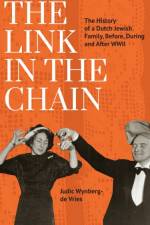
The Link in the Chain chronicles the survival of a young Dutch Jewish family through the Nazi occupation of Holland from 1940 to 1945. But it is also a love story. Just days before the Germans invaded, 19-year-old Judic de Vries married Bram Wynberg, the love of her life. Together they spent the next four years in hiding, making countless life-and-death decisions, separated from their families and even their own children. In spite of devastating losses, Judic and Bram rebuilt a life in Holland and then started over again in Canada. This memoir reveals their courage and hopes, and Judic's determination to connect us to all that was taken.
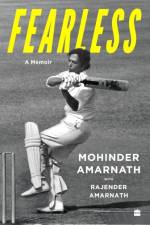
Grit, guts and gumption defined Amarnath's rollercoaster career. According to both Sunil Gavaskar and Imran Khan, Amarnath was the best batsman of their era. But strangely, he kept getting dropped from the Indian team, and subsequently became famous for his comebacks, earning him the moniker 'the comeback king'. He was a player who didn't flinch in the face of fire: a fearless cricketer and a man who just wouldn't be defeated or denied.
Forbidden but Allowed is an intimate memoir of a British expatriate navigating life in Saudi Arabia from 1984 to 1998.
The memoirs of the Polish-Jewish writer, physician and humanitarian aid activist, Alina Margolis-Edelman (1922-2008), presents the life of its author from her childhood in Lódz, Poland till the end of the World War II. Soon after the beginning of the war her father was shot by the Gestapo, and her mother moved to Warsaw Ghetto with Alina and her younger brother. Alina enrolled in the Jewish School of Nursing and worked as a nurse and a courier for the Resistance movement. In a rescue action she describes in the book, she saved the life of Marek Edelman - one of the leaders of the Ghetto Uprising (1943), and he later became her husband. The stories told in her book illuminate issues of anti-Semitism, Holocaust, and Jewish resistance to oppression. She writes about solidarity in times of great danger, resilience in dire situations, dignity of love and care.
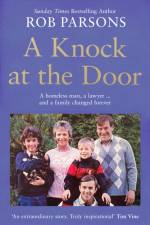
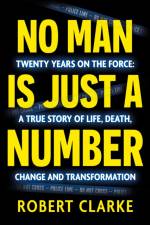
A wonderfully humorous and witty true-crime memoir, documenting the highs and lows of life and offering insight into the institution of British policing.
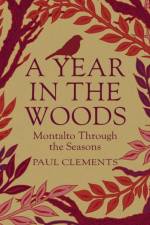
Recovering from surgery, Paul Clements and his wife, Felicity, spent a year in a remote cottage in the woodlands of Montalto Estate, Co. Down. Through the lens of a curious observer and a budding bird watcher, Clements describes in exquisite detail his discovery of the restorative power of nature. Beautifully written, A Year in the Woods is a fusion of social and cultural history, nature writing and memoir. Reflecting back on this magical year spent in the woods through the journal he kept, Clements describes his awakening to the wonder of the woodland and developing his deep connection to nature. Peppered with fascinating folklore and history, Clements celebrates the changing seasons, from harsh winter storms to dry languid summer evenings. Clements is a gifted writer, but it is his detailed and often humorous descriptions of the complexities of nature at his doorstep from the foibles and idiosyncrasies of various fauna, to his awe of nature's resilience to ever-changing weather conditions that ultimately captivates the reader.
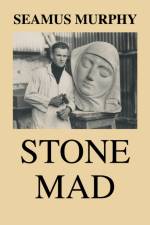
50th Anniversary EditionIn this beloved memoir, Seamus Murphy tells the story of his seven-year stone carving apprenticeship in Ireland. His artistic sensitivity matched his fellow craftsmen's reverence for 'the well made thing,' creating a tale of warmth, humour, and profound beauty.
Since 1945 the world has changed at breakneck speed. In this unique social history, acclaimed bestselling historian Alistair Moffat tells the story of these changes - many of which have been dizzying and disorientating - and how they have affected each and every one of us in all parts of the country.
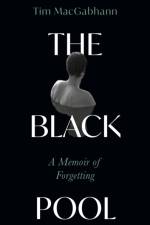
An enthralling quest to solve the mystery of depersonalisation, one of the least understood but increasingly diagnosed mental illnesses.
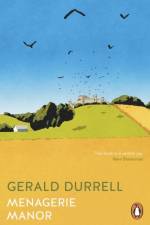
A new Gerald Durrell title for Penguin, to celebrate the centenary of his birthThe Manor of the title is Les Augrès Manor in Trinity, Jersey. Inside, we find a remarkable collection of pen portraits of some of the creatures of Gerald Durrell's Zoo. We also discover some of the timeless lessons Durrell learned about making real and sustaining his childhood ambition of having his own zoo - and why conservation matters more than ever. One of Gerald Durrell's most beloved titles is back in print as a Penguin paperback to celebrate the centenary of his birth. 'This book is a certain joy' New Statesman'Animals come close to being Durrell's best friends. . . . He writes about them with style, verve, and humour' Time
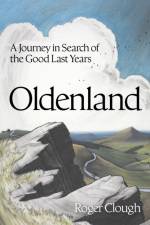
A beautifully written and philosophical journey through the natural landscape of old age - what it means to age, to be old, and to still be you.
Abonner på vårt nyhetsbrev og få rabatter og inspirasjon til din neste leseopplevelse.
Ved å abonnere godtar du vår personvernerklæring.