






![Lettres Choisies [de Voltaire.]: Avec Le Traité De La Connaissance Des Beautés Et Des Défauts De La Poésie Et De L'éloquence Dans La Langue Française, af Louis Moland](https://cdnbackdoor.tales.as/thumbnail/150x225/products/00217/39327/lettres-choisies-de-voltaire-avec-le-traite-de-la-connaissance-des-beautes-et-des-defauts-de-la-poesie-et-de-leloquence-dans-la-langue-fran.jpg)















Gjør som tusenvis av andre bokelskere
Abonner på vårt nyhetsbrev og få rabatter og inspirasjon til din neste leseopplevelse.
Ved å abonnere godtar du vår personvernerklæring.Du kan når som helst melde deg av våre nyhetsbrev.

A 1975 diary of a youth's circumnavigation of the globe, hitchhiking through Europe and returning home along the 'Hippie Trail'. A travel adventure that also charts a young man's development from suburban naiveté to a nascent worldliness.
In a quest to advocate for her daughter, Pepper Stetler uncovers the dark history of the IQ that leads her to question what exactly we are measuring when we measure intelligence. When Pepper Stetler was told that her daughter, Louisa, who has Down Syndrome, would be regularly required to take IQ tests to secure support in school, she asked a simple question: why? In questioning the authority and relevance of the test, Stetler sets herself on a winding, often dark, investigation into how the IQ test came to be the irrefutable standard for measuring intelligence. The unsettling history causes Stetler to wonder what influence this test will have over her daughter's future, and, if its genesis is so mired in eugenics, whether Louisa should be taking it at all. So what are we measuring when we try to measure "intelligence"? As she uncovers the history of IQ, exposing its roots in eugenics, racism, xenophobia, and ableism, Stetler realizes that the desire to quantify intelligence is closely tied to a desire to segregate society. She traces its legacy from inception to the present day, where schools and society have adopted the IQ as shorthand for an individual's aptitude--in essence, their worth. Boldly, Stetler questions how this rigid definition of intelligence has influenced who society holds up as successful and, perhaps more importantly, what it is that we miss when we judge someone solely on their measured intelligence. Blending a mother's love and dedication to her daughter with incisive historical and cultural analysis, A MEASURE OF INTELLIGENCE investigates the origins and influence of the IQ test on our modern education system, questions how we define and judge intelligence, challenges its flawed foundation, and argues for a fundamental reevaluation of how we understand an individual's perceived potential.
An inside look at the double life of a university professor turned CIA contract intelligence officer. No Cloak, No Dagger gives an inside look at the double life of Lester Paldy, a university professor who was recruited by the CIA and brought into the secret world of espionage.
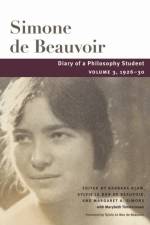
Written between the age of eighteen and twenty-one, the entries in the third volume of Diary of a Philosophy Student take readers into Simone de Beauvoir's thoughts while illuminating the people and ideas swirling around her. The pages offer rare insights into Beauvoir's intellectual development; her early experiences with love, desire, and freedom; and relationships with friends like Élisabeth "Zaza" Lacoin, and Maurice Merleau-Ponty. It also presents Beauvoir's shocking account of Jean-Paul Sartre's sexual assault of her during their first sexual encounter--a revelation certain to transform views of her life and philosophy. In addition, the editors include a wealth of important supplementary material. Barbara Klaw provides a detailed consideration of the Diary's role in the development of Beauvoir's writing style by exploring her use of metanarrative and other literary techniques, part of a process of literary creation that saw Beauvoir use the notebooks to cultivate her talent. Margaret A. Simons's essay places the assault by Sartre within an appraisal of Beauvoir's complicated legacy for #MeToo while suggesting readers engage with the diary through the lens of trauma.
Abonner på vårt nyhetsbrev og få rabatter og inspirasjon til din neste leseopplevelse.
Ved å abonnere godtar du vår personvernerklæring.