









Gjør som tusenvis av andre bokelskere
Abonner på vårt nyhetsbrev og få rabatter og inspirasjon til din neste leseopplevelse.
Ved å abonnere godtar du vår personvernerklæring.Du kan når som helst melde deg av våre nyhetsbrev.

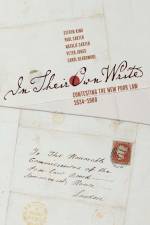
Few subjects in European welfare history attract as much attention as the nineteenth-century English and Welsh New Poor Law. Its founding statute was considered the single most important piece of social legislation ever enacted, and at the same time, the coming of its institutions - from penny-pinching Boards of Guardians to the dreaded workhouse - has generally been viewed as a catastrophe for ordinary working people. Until now it has been impossible to know how the poor themselves felt about the New Poor Law and its measures, how they negotiated its terms, and how their interactions with the local and national state shifted and changed across the nineteenth century. In Their Own Write exposes this hidden history. Based on an unparalleled collection of first-hand testimony - pauper letters and witness statements interwoven with letters to newspapers and correspondence from poor law officials and advocates - the book reveals lives marked by hardship, deprivation, bureaucratic intransigence, parsimonious officialdom, and sometimes institutional cruelty, while also challenging the dominant view that the poor were powerless and lacked agency in these interactions. The testimonies collected in these pages clearly demonstrate that both the poor and their advocates were adept at navigating the new bureaucracy, holding local and national officials to account, and influencing the outcomes of relief negotiations for themselves and their communities. Fascinating and compelling, the stories presented in In Their Own Write amount to nothing less than a new history of welfare from below.
The term Boundless is an adjective meaning unlimited, immeasurable and abundant. It also serves as the description of something no longer bound, resulting in freedom. The end result of this double entendre is Boundless: Freedom in Christ, living in the abundance. The heart behind this book is to encourage people, just as Peter did, that in truth God is no respecter of persons. "If He did it for me, He is able and willing to do it for you." -Kenya Fowler
In Beauty and Conflict, Jordy van Enkhuizen describes the splendours of Congo and its people, while at the same time recounting the various struggles he came across during his work with a non-governmental organisation in the beautiful, but troubled northeast of the Democratic Republic of Congo. In his gripping account as a pharmacist flying between different rural areas in 2016, he makes detailed observations on the state of affairs in the heart of Africa and intriguingly explains how humanitarian aid workers attempt to make a change in a landscape controlled by various armed groups.From the bleak colonisation by the Belgian King Leopold II to the numerous joyful children who waddled barefoot along the lava rock-covered roadsides with stacks of firewood on their heads, his narrative is both enlightening and entertaining. Written from the heart, but with a soothing sense of humour, Beauty and Conflict is a compassionate and revealing story about the lives of the Congolese and those providing them with indispensable humanitarian aid.
La Casa de Lamela traza su ascendencia hasta el s. VII . También se la conoce como Casa Grande de Lamela o simplemente Linaje López de Prado, en referencia al apellido de sus miembros durante las últimas quince generaciones . Su lema es ''Velis Nolis, Do ut Des''. De acuerdo con datos publicados por el Instituto Nacional de EstadÃstica (INE), el número de personas vivas con el apellido López de Prado se reduce a 74, de los cuales a 35 les viene por vÃa paterna y a 39 por vÃa materna. Entre los miembros de este Linaje se cuentan Señores Jurisdiccionales de Castro de Rey y Riberas de Lea, Señores Vinculares y Mayorazgos de San Christóbal de MartÃn, Caballeros de las Ãrdenes de Carlos III, Santiago, Calatrava, Alcántara, Montesa, Procuradores ante la Real ChancillerÃa de Valladolid, Generales del Cuerpo de CaballerÃa y del Estado Mayor del Aire, Armadores del Puerto de la Coruña, Notarios, Alcaldes, Médicos, Doctores, Profesores, Teólogos, héroes de la Reconquista y de la Guerra de Independencia, etc. El genearca de este Linaje fue Don MartÃn DÃaz de Prado, I Señor de Albires, Renedo de Valdetuéjar, Tarna, Caso y Belerda. Era ya ilustre y poderoso Ricohombre cuando vino a reinar Don Alfonso VII "El Emperador", y la primera noticia que de él se tiene alcanza al año 1.115, en que asistió con otros próceres del Reino al Concilio celebrado en Oviedo. La Crónica del mismo Rey dice: "De esta familia ha habido muy señalados caballeros en el Reino de León, Galicia y Asturias, y de ella hay muchas casas solariegas". Aunque originarios de Asturias, la rama principal de la Casa de Lamela se asentó en Monforte de Lemos, Galicia, donde probó numerosas veces su nobleza ante la Sala de Hijosdalgo de la Real Audiencia y ChancillerÃa de Valladolid. La Casa de Lamela tiene ente jurÃdico propio reconocido por el Ministerio del Interior del Reino de España bajo la denominación ''Asociación Nobiliaria VÃnculo y Mayorazgo de Lamela'', asà como la posesión legal de los mencionados sÃmbolos heráldicos para su uso exclusivo. La genealogÃa de la Casa de Lamela fue estudiada a finales del Siglo XIX, por el párroco de San Cristóbal de MartÃn, Don Manuel Novoa y Varela, redactando el "Memorial de la Casa Grande de Lamela". Manuel Novoa tuvo acceso a toda la documentación del Archivo de la Casa y sabemos que utilizó varios documentos genealógicos elaborados por los presbÃteros Don Manuel Jacinto López de Prado y DÃaz de Armesto (n. 14 de Noviembre de 1732) y el Licenciado Don Pedro López de Prado y RodrÃguez (n. 20 de Abril de 1660), los cuales se conservan parcialmente en el Archivo. Un detallado estudio caligráfico del Memorial nos aportarÃa una información interesante para conocer la psicologÃa del autor, pero la mera observación de su escritura nos dice que era una persona de mente ordenada y nada dada a las suposiciones, ciñéndose a la lectura de los protocolos notariales, sin hacer referencia a las informaciones procedentes de tradiciones orales, tan abundantes en el Antiguo Reino de Galicia. Esta mentalidad documentalista y racional nos priva de conocer algo del carácter de los Señores de Lamela. Su obra se aleja de los tÃpicos Memoriales del Siglo XVIII y XIX, escritos para justificar la nobleza e importancia de una Casa, muchas veces con el fin de obtener una nueva merced nobiliaria, un puesto en la Corte, una prebenda, etc. La mayorÃa de sus páginas son un simple resumen de protocolos notariales, testamentos, cartas, genealogÃas que justificaban el derecho de presentación en diversos curatos, cartas de hidalguÃa, sentencias judiciales, laudos arbitrales, dictámenes, etc. La motivación de este Memorial la atribuimos a la aplicación forzosa de las leyes de supresión de los Mayorazgos de 1820 y 1836. El libro que presentamos completa la genealogÃa e historia familiar con los documentos encontrados en archivos eclesiásticos, históricos, notariales y militares; perm
After all the transitions and changes taking place in my life over the last 53 years, I discovered that I am not my own. I realized that to be what you were created to be requires a hand of God to lead me in that direction. My stubbornness and hard heart caused the rug to be pulled out from under me. God looked at his clock and said it was his turn to us me for his glory. Upon me still refusing to let go of my lifestyle, I suffered much mentally and emotionally. My life was not where I wanted it to be, I was lost and still seeking love in a man and the homosexual lifestyle. My unhappiness triggered God to step in and do what he does best and that is change me for his glory. Here it is, 2010 back in West Palm Beach without my permission once again. A place that I hated but God wanted me back in this place for a reason unknown to me, I couldn't see why he wanted me to come back but the clock was ticking and wanted me to get in line or get left behind.
Are you willing to die for your team? That's what I ask myself when I'm given an assignment. I don't remember...I was about to lie. I remember the day that the Lord called me to lead. I had no idea that I was answering His call at the time. I just knew that someone was in a leadership position, that they didn't ask for, but they rose to the occasion because no one else was willing to do it.You see, I am a woman of true faith. And as a leader of true faith, it is my duty to be the example of what a woman of true faith looks like consistently...without wavering. I cannot tire...I cannot falter...and I must not fail. The Lord called me...and I answered...but I had no idea where He was leading me to...until I got there. And now...there's no turning back. I am on a mission to become Dr. MIA. Missing In Action. Because it is, and always will be...all of Him and none of me.
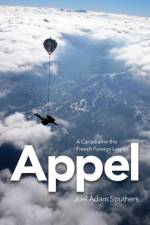
Appel: A Canadian in the French Foreign Legion is the first-hand account of the author's six years as a professional soldier during the 1990s, and his experience in the Legion's elite Groupe des?Commandos Parachutistes (GCP). Joel Struthers recounts the dangers and demands of military life, from the rigours of recruitment and operational training in the rugged mountains of France, to face-to-face combat in the grasslands of some of Africa's most troubled nations. Told through the eyes of a soldier, and interspersed with humorous anecdotes, Appel is a fascinating story that debunks myths about the French Foreign Legion and shows it more accurately as a professional arm of the French military. Struthers provides insight into the rigorous discipline that the Legion instills in its young recruits, - who trade their identities as individuals for a life of adventure and a role in a unified fighting force whose motto is "Honour and Loyalty." Foreword by Col. Benoit Desmeulles, former commanding officer of the Legions 2e R?giment ?tranger Parachutistes.
El Milagro con Olor a RosasAferrado a la Vida El Milagro con Olor a Rosas. Aferrado a la Vida es una historia basada en hechos de la vida real que narra cómo Rommel Hernández, a quien se le diagnosticó con un tumor cerebral localizado entre la glándula pineal y el nervio optico, cabe destacar que los médicos le daban pocas posibilidades de vida y logró milagrosamente superar tres complejas operaciones.Esta historia contada con sencillez y sensibilidad por Emperatriz Toledo fué inspirada en la experiencia maravillosa que vivió su esposo Rommel Hernández, un hombre optimista con fortaleza espiritual que gracias a su Fe inquebrantable gracias a Dios y a la virgen de Fátima recuperó su salud.Emperatriz quiso escribir esta inspiradora historia para contarnos que gracias al poder de la Fe, el Amor y la Esperanza que los milagros son posibles.También recordamos que la Vida es un Milagro y que la gratitud es la memoria del corazón.
Pardon My Truth depicts memories of love, family, and a hidden life exposed after thirty-four years of marriage. In 1983, a young girl from Georgia and a young man from the Bahamas fell head over heels in love after crossing paths in a college hallway.After a spur-of-the-moment ceremony at a courthouse and creating a beautiful life together, one fateful afternoon, her husband desperately revealed a secret he had shrouded since he was a boy. From there, everything spiraled out of control. For years, Kim was forced into a life of keeping secrets for others, for her husband, children, family, and friends. While Kim desperately tried to stay together for the kids, her spirituality, grace, and patience eventually taught her that everyone deserves love. By making the heart wrenching decision to get divorced, she put herself first. Kim left an unhappy marriage and finally learned to love herself.Kim's vulnerability bleeds through the pages, exposing her deep inner struggles and tough decisions made in her marriage. Her story serves as a warning and an encouragement to expose veiled truths before you take someone you love on your journey. Truth and honesty were Kim's compass that led her to a destiny she never imagined--one that only became possible once she opened her heart and sang out, "I will walk in my truth."
A tale of power, corruption & secrecy... with a billion dollar empire hanging in the balance. An insider's view of the fall of Scientology's notorious Guardian's Office and its takeover by the 21-year old, and now embattled, David Miscavige.
Are you wondering what a wild boar in rural France, boats, and Africa have in common? Well, they have all provided rich fodder for tales of mishaps and mistakes. Against the backdrop of his life experiences, John Beadon has woven these tales, mostly real-life events, and others imagined during long, sleepless nights. As a sailor, adventurer, and all-round risk-taker, John has had more than his share of interesting experiences. With his great sense of humour, he has always been able to see the funny side of things (albeit sometimes only in hindsight!), and he hopes you will enjoy reading the stories as much as he has enjoyed writing them. Chuckle-inducing and easy to read, this book will assuredly provide you with some light relief.
Growing up in a small Long Island town in the '50s and '60s, we lived away from it all in what people called 'the sticks.' West of us nearly fifty miles was New York. We simply referred to it as 'the city.' As the years went by, the city kept moving closer and closer. New faces were added to the town of the Millers, the Smiths and the Andersons. They came from Brooklyn mostly and had names that either began with the letter 'O' or ended with it. Our fathers had special names for these immigrants, but our mothers begged us not to repeat them. You could name any sport and we had enough for two teams. Eventually, each team was integrated with talent and geography to ensure harmony and our future. In the end, we made each other better than we ever would have been apart.
The life experiences of Susan Jessie Hutchison in the British colony of 1930's Kenya. Susan and her husband TT Thakore were the first interracial marriage breaking the color bar that was previously strictly enforced by law. While a marriage certificate was issued by the British authorities, Susan's children were not permitted to attend white only schools.
This work has been selected by scholars as being culturally important, and is part of the knowledge base of civilization as we know it.This work is in the "public domain in the United States of America, and possibly other nations. Within the United States, you may freely copy and distribute this work, as no entity (individual or corporate) has a copyright on the body of the work.Scholars believe, and we concur, that this work is important enough to be preserved, reproduced, and made generally available to the public. We appreciate your support of the preservation process, and thank you for being an important part of keeping this knowledge alive and relevant.
From childhood foot races to lost friendships, from cotton fields to football fields, from third Wednesdays of October to last years of graduate school, from first loves to happily-ever-afters, and from one case of racial injustice to the next, experience what life was like for a young Max Parker as he grows up in the American south. The harrowing aftermath of Reconstruction and the oncoming "conclusion" of Jim Crow, the Emmitt Till era and the Civil Rights movement, and the election of Barack Obama and the Black Lives Matter protests provide instrumental backdrops as he grows from a child to an educator, an academic, and a family man. Stand by him as he fights against racism at the potato grader, in his previously segregated new church, and even while going for a bike ride with an old friend. Root for him as, experience by experience-from the daily to the extraordinary-he eventually removes the masks that had both protected him and held him back from becoming 100% his authentic self. In The Mask-Wearing Journey of Sweet Papa T: Why African American Men Hide Their Feelings, Dr. Parker recounts key moments throughout his life where he thought "masking" was unfortunately necessary. What would have happened had he not worn masks? When did he realize masking was not the answer? How does it feel to live a life free of masks? Vivid with detail, lush with emotion, and rich with history, Dr. Parker's story has all of these answers and more.
I'd like to think of myself as normal, but that would be a lie. I'm flawed, just like everyone else in this crazy mixed up world. Unfortunately for me, I'm flawed more than most, right down to my cerebral cortex. Since being diagnosed with mental illness at a young age my life has been anything but easy. So many times in my life my illness has consumed me, pulling my emotions into the depths of hell. But I've survived to tell my story raw and unfiltered. So sit back, relax, and enjoy the ride that is #InDah'sEyes. Hopefully by telling my story I can help someone like me realize that they aren't alone. That mental illness is real. No matter who you may be.
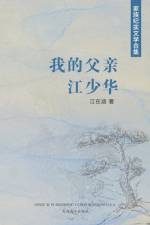
本书是作者用心记载的自己父辈的家族往事。父亲江少华是南宋丞相兼民族英雄江万里的二十三代嫡孙。祖父江勋旺是位抗日英雄,曾任国民革命军七十军中校营长,代理团长, 于国共内战结束后被新政权所杀害。之后,父亲和他的母亲,祖母和姐姐弟弟艰难地在大陆生活着。在极其艰苦恶劣的条件下,父亲失学两年,为别人喂牛。后来重返学校,完成了中学六年的学业。在学校时,他为人友善,才华横溢,成绩优异,被老师誉为"衣着最破,成绩最好。" 然而高考前夕被小人陷害,被树为"白旗",并把"不宜录取"的批语写入档案。虽然高考成绩很高,可上北京大学或南京大学,却失去了上大学的可能。后来在社会上游荡,靠挖矿、挑河沙养护自已和家人。万幸苍天垂怜,他的一位恩师在河边找到了他,把他带回母校,做了一个辅导老师,从此,开始了他四十七年的教学生涯。父亲后来遇到了美丽的母亲,两人深深地相爱着。却因父亲的家庭出身问题,受到母亲家里的一致反对。最后,倔强的母亲坚持不懈,父亲也非常努力,几经波折,有情人终于得以成为眷属。文革时期,父亲的家人遭到严重迫害。大姑被人杀害,曾祖母被迫害至死。父亲也被下放到了山区劳动。直到九一三事件,林彪出事后,父亲才得以回城,和母亲和孩子们重聚。粉碎四人帮后,恢复高考,父亲得以施展才华,成为一名优秀的教师。九十年代,母亲下岗,失去收入,父亲又到处奔波,到处讲课,掙钱供养还在外地读书的孩子们,累坏了身体。退休后,父亲和母亲又东奔西跑,为我们带大了一个又一个孙辈。就在他们终于可以休息一下的时候,父亲却患上了帕金森症,逐渐失去了生活自理能力。二零二零年新冠疫情爆发。父亲病重。在他最后的时刻,他渴望见到在外地的孩子们,却因为疫情,无法实现这个愿望,抱憾离世。
This book is a sort of memoir, but I didn't write it to aggrandize my separate self but to ask how responsible we should or can be for one another, or for ourselves. We speak of responsibility and determinism and free will and predestination in terms both sociological and theological. But the theoretical question is how real is the labyrinth of differences we imagine or perceive and enjoy or decry. And the practical question is how we can deal with whatever it is. And both questions ask what anyone is.Billy Lee Harman
In Pain into Power, Uchenna takes the reader on a journey from her childhood to her adulthood. As a child, she had dreams of becoming a track star or playing for the WNBA. Uchenna was expelled her last year in high school. She got pregnant at the age of nine-teen with her daughter Camiyah not knowing which direction to turn or where her life was headed. She struggles from abusive relationships, scandalous friendships, drugs, depression, anxiety and much more. As she says, " I do not sugar coat anything, I give it real and raw." She uses her pain to express her power and she gives advice to people that has been through what she has been through or similar.
The story of one man's journey from the depths of mental hell to the promised light of recovery. This dramatic narrative will make readers re-evaluate what they thought they knew about OCD. For 40 years Dave keeps his horrible intrusive thoughts a secret. A police investigation crashes his world around him. He seeks professional help. He is diagnosed with an extreme case of OCD, which answers why he had the terrible thoughts for so long but also why the police showed up at his door.A contract for the movie rights to this book has been signed.
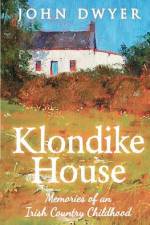
In Klondike House, John Dwyer recounts his memories of growing up on the remote but beautiful Beara Peninsula in West Cork, Ireland. This was Ireland of the 1970s and 80s before the arrival of the short-lived economic riches of the Celtic Tiger.Dwyer's vivid and colorful prose describes his hard but happy life as part of a isolated but close-knit community: Early school days spent in a building with no running water or electricityAn encounter with a violent sheep that literally turned his world upside downThe days spent cutting the turf and saving the hay by handAn Irish Christmas where nearly everything on the table was sourced from the farmHis exciting family history that brought his relations to the Klondike Gold Rush in CanadaComplemented by a collection of evocative photographs, each story tells of a way of life that has now largely disappeared.Sprinkled with a selection of fitting works by some of Ireland's best-known poets such as Seamus Heaney and Patrick Kavanagh, this gem of a book is a chronicle of the simple but happy life of an Irish farmer boy
Hopping in the Footsteps of Che Guevara: A Memoir is not only a searing recollection of the author, George P A Dover's bittersweet experiences of living and studying in Castro's Cuba for five years ( 1977 - 1981 ). It is also a revealing dichotomy of the mindset, sheer willpower, and determination of a young man who discovers his passion for the Spanish language and refuses to let societal perception, parental objections, and male ego stop him from pursuing it to the fullest. In addition, Hopping in the Footsteps of Che Guevara: A memoir is a soul-searching re-examination of the author's journey from insecurity caused by congenital amputations to the ultimate discovery of his true and authentic self. Blessed with the privilege to study in the country that his revolutionary hero, Che Guevara, had helped liberate and once called home, George P A Dover seized the opportunity and hopped, thanks to the swag caused by his prosthesis, with remarkable achievements - even historic - on the same soil that Che shed his blood.
As a little girl in 1930s Vienna, I had no idea of the cataclysm that was coming. But my father saw it, and brought his small family to start a new life in Australia. I loved the freedom, the beach, the new adventures - but as I grew older I also came to understand that I was now an outsider. As my family broke apart, I threw myself into my new life, until at university I met the man of my dreams - and lived Happy Lee Ever After!
This book is a compilation of my dad's poetry, intimate writings about love, humorous stories, and just snippets from his everyday life. It is my gift to him for his upcoming 82nd birthday. It is also a gift to my children/grandchildren, my sisters, their children/grandchildren, and to all of his nieces, nephews, and their children. My hope is to capture these snapshots, these insights into the man that man my dad has been and preserve them as part of his enduring legacy.
This is a story of courage, faith, and hope. At the time when everything seemed lost and Diane had given up confidence in finding a solution; an option and a miracle arose in the least expected place. This is the true story of a woman who received the worst news of her life, who thought that everything was over but who rose from the ashes and with faith and courage, and literally crossing an entire continent achieved the healing she was looking to obtain. Diane T. Ivins, wrote this book as a testimony of her unshakeable faith in God and also in science that came from the hand of a humble doctor who chose to be "clay in the hands of the Potter." Diane lives in Miami, Florida, where she proclaims to all who want to listen to her that miracles are possible and this book bears witness to them.
Benjamin's Journey chronicles the life journey of the author and his large, extended family starting with his birth on the family farm on Collins Mountain in Wise County, Virginia. The son of a coal miner, he grew up in an environment dominated by poverty and diminished expectations but also steeped in the strong values and experiences of the southern Appalachian culture. Following his graduation as the first member of his extended family to earn a college degree, he went on to a successful business career and personal life. It tells the story of how the author spent much of his adult life trying to run away from the negative stereotypes associated with his Appalachian culture only to return later in life. The Appalachia to which he returned was vastly different from the one that he left thirty years earlier due to the ravages of the drug epidemic, chronic poverty, and the collapse of the coal industry. The challenges of being born in Appalachia are real, but the author's uplifting message is that, not only can these challenges be overcome, he offers a detailed plan of how to do it.An excerpt from Benjamin's Journey was the First Place Award Winner for Non-fiction by the Appalachian Author's Guild and was later selected as the Second Place Award Winner by the Virginia Writers Club during the Golden Nib 2018 statewide competition.
In the world of religion and culture, there are places and experiences that people will never feel comfortable sharing. Through God's divine plan, this book will change the lives of millions. Some may feel like they have to hide the things that have happened to them or live in shame. But God has a healing plan and a purpose for even those who feel they cannot change their story. As this book reaches the hands of readers, it is good to be mindful of those who may be hurting around you. My prayer is you share this story with anyone who needs to feel love and find forgiveness. God can change your life and give you new hope. Love, forgive, and let go of any past hurts. Watch God elevate you. Know who you are. You are fearfully and wonderfully made. Always remember who you are. I love you but God, Jesus Christ, or the Holy Spirit loves you the most.
40 essays, poems, and spells crafted and channeled in the author's 40th year. A cosmic and radiant collection of prose that invites the reader to stay soft, go slow, and be present.
Nine writers. Nine months. A memoir master class. A Weave, a Basket, a Vessel offers a rare, behind-the-scenes look at an intensive workshop-the readings, lessons, and prompts that yielded new writing as well as the conversations and questions that bolstered or rearranged ideas about the memoir form. In these pages, flash nonfiction emerges in call-and-response fashion; exquisite lines of prose are reconfigured into choral poems; and brand-new, longer-length writing from talented writers is presented for the first time. Throughout, master-class teacher Beth Kephart explores the journey itself-the hopes she had as she forged her in-depth syllabus and the lessons she learned along the way.Taken as a whole, the book offers a map for both teachers and writers seeking to expand their understanding of the possibilities of truth in prose.
Abonner på vårt nyhetsbrev og få rabatter og inspirasjon til din neste leseopplevelse.
Ved å abonnere godtar du vår personvernerklæring.