











Gjør som tusenvis av andre bokelskere
Abonner på vårt nyhetsbrev og få rabatter og inspirasjon til din neste leseopplevelse.
Ved å abonnere godtar du vår personvernerklæring.Du kan når som helst melde deg av våre nyhetsbrev.

Based on one interview with Admiral Melhorn conducted by Etta-Belle Kitchen and Charles Melhorn in February 1970 (77 pages) and one with Commander Melhorn conducted by Etta-Belle Kitchen in February 1970 (76 pages), the volume contains 153 pages of interview transcript plus an index. The transcript is copyright 1983 by the U.S. Naval Institute; the interviewees placed no restrictions on its use.
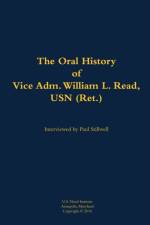
Based on ten interviews conducted by Paul Stillwell, from December 1997 through March 1998. The volume contains 639 pages of interview transcript plus an index and appendices. The transcript is copyright 2002 by the U.S. Naval Institute; the interviewee has placed no restrictions on its use.
Based on 21 interviews conducted by John T. Mason, Jr., from August 1972 through August 1973. The volume contains 817 pages of interview transcript plus an index. The transcript is copyright 2003 by the U.S. Naval Institute; the interviewee has placed no restrictions on its use.
Based on ten interviews conducted by John T. Mason, Jr., from March 1971 through September 1971. The volume contains 402 pages of interview transcript plus an index. The transcript is copyright 1973 by the U.S. Naval Institute; the interviewee has placed no restrictions on its use.
Based on nine interviews conducted by John T. Mason, Jr., from December 1970 through March 1971. The volume contains 444 pages of interview transcript plus an index and appendices. The transcript is copyright 1973 by the U.S. Naval Institute; the interviewee has placed no restrictions on its use.
Based on two interviews conducted by Etta-Belle Kitchen in May 1970. The volume contains 292 pages of interview transcript plus an index. The transcript is copyright 1975 by the U.S. Naval Institute; the restrictions originally placed on the transcript by the interviewee have since been removed.
Based on five interviews conducted by Paul Stillwell in August 1983 and September 1983. The volume contains 355 pages of interview transcript plus an index. The transcript is copyright 1986 by the U.S. Naval Institute; acess to these interviews is currently restricted.
Based on seven interviews conducted by Dr. John T. Mason Jr. from July through October 1969, the volume contains 257 pages of interview transcript plus an index. The transcript is copyright 1997 by the U.S. Naval Institute; the interviewee placed no restrictions on its use. This is a revised version of the original oral history, which was issued in 1970. The new version has been completely retyped, annotated with footnotes, and given a detailed index.
Based on 12 interviews conducted by Paul Stillwell from May 1996 through January 1997, the volume contains 555 pages of interview transcript plus appendices. The transcript is copyright 2016 by the U.S. Naval Institute; the interviewee placed no restrictions on its use.
After he was graduated from the Naval Academy in 1932, Admiral Ward attended MIT where he received his MS in electrical engineering. In World War II he was gunnery officer in the USS North Carolina (BB-55), participating in the battles of Guadalcanal, battle of Espiritu Santo, and bombardment for the landing in Kwajalein. After the war he was CO of the USS Hollister (DD-788). In 1961 he served as Commander Second Fleet and Commander Strike Fleet, Atlantic, involved in the Cuban blockade. During the years 1963 to 1965, Ward was Deputy Chief of Naval Operations, first for plans and policy, and then for fleet operations and readiness. He completed his distinguished naval career serving as the U.S. Representative to the Military Committee of NATO.
Based on six interviews conducted by John T. Mason Jr. from July 1972 through June 1973, the volume contains 322 pages of interview transcript plus an index. The transcript is copyright 1974 by the U.S. Naval Institute; the restrictions originally placed on the transcript by the interviewee have since been removed.
Schneider has had an unconventional career. He set out to be an active-duty career officer in the Coast Guard. But the illness and death of his first wife led him into the Coast Guard Reserve and a new career in higher education while rearing the couple's daughters. The memoir thus details his active Coast Guard service, career in higher education, and his role in reshaping the fundamental nature of the Coast Guard Reserve. Schneider graduated from the Coast Guard Academy in 1968 and was on board the cutter USCGC Dallas (WHEC-716) during Vietnam War service. Subsequently, he was an instructor at Officer Candidate School, a graduate student at Wesleyan University, and taught at the Coast Guard Academy before transferring to the Coast Guard Reserve in 1977. He worked 1977-85 as executive officer, University of Delaware-College of Marine Studies and in 1985 earned a Ph.D. from the University of Delaware. He served in a variety of administrative positions at Drexel University from 1985 to 1992. His reserve duty was at Indian River, Delaware, the Philadelphia Marine Safety Office, and the New York Marine Safety Office. He has served as president of Norwich University, a private military institution in Northfield, Vermont, since 1992. As a senior reserve officer in the 1990s Schneider was involved in the transformation of the Coast Guard Reserve.
After graduating from the Naval Academy in 1918, Admiral Schoeffel had duty with the Destroyer Force in the Atlantic during World War I. Designated a naval aviator in 1921, he served in air squadrons in the Pacific Fleet. After duty as navigator in the carrier Saratoga USS (CV-3), he was Assistant Director for Aviation Ordnance where he served on various committees dealing with aircraft armament matters affecting the Navy Department. In 1943 he assumed command of the light aircraft carrier USS Cabot (CVL-28) which took part in many air strikes in the Pacific. In 1945 he was Deputy Chief of Staff to CinC Pacific Fleet and Pacific Ocean Areas. The apex of his career came when he became Chief of the Bureau of Ordnance in 1950, the first naval aviator to serve as chief of that bureau.
In telling of his life and career, Chaplain Stevenson made it clear that he wanted to contribute more than just a collection of sea stories. As a result, he emphasized more than a dozen issues while doing the telling. One point that he made repeatedly was that members of the Chaplain Corps should emphasize institutional ministry rather than limiting themselves to parish ministry. Stevenson was born and reared in Brooklyn and got his undergraduate education at the small Tarkio College in Missouri. He later got his religious training at Pittsburgh-Xenia Theological Seminary. He began his active Navy service as a student in 1957 at Chaplain School in Newport, Rhode Island. Subsequent duties were at the Great Lakes Naval Training Center, with Destroyer Squadron Ten; at Naval Station Newport, on board the attack aircraft carrier USS Saratoga (CVA-60); and at Naval Air Station Glenview, Illinois. In the late 1960s he was a postgraduate student in at Princeton Theological Seminary, then was involved with the Personal Response Program in South Vietnam. In the early and mid-1970s he was in the training division on the staff of the Chief of Chaplains, a student in the Chaplain School advanced course, and senior chaplain at the Naval Training Center, Orlando, Florida. He served in 1976-77 on the staff of John O'Connor, Chief of Chaplains, and provides some superb observations on O'Connor's style and achievements. Stevenson subsequently was Fleet Chaplain, Pacific Fleet/Chaplain, Naval Logistics Command Pacific Fleet, Deputy Chief of Chaplains, and served from 1983 to 1985 as the Navy's Chief of Chaplains. In his post-retirement years he worked as a civilian pastor.
Captain Triest joined the Civil Engineer Corps in 1941, and his first assignment was the design and logistics for building a secret base, "Bobcat," as a refueling station in the Christmas Islands. He describes the construction of an airfield, hospital, tank farm, and loading facilities on Ascension Island. In 1942 he headed the work of the Seabees at Espiritu Santo in the New Hebrides, and then was sent to Tulagi as a trouble shooter to rebuild the esprit de corps of the 27th battalion that had fallen to pieces. The rejuvenated battalion built facilities at Emirau and Guadalcanal--fighter air strips and a base for the Marines. Captain Triest completes his description of accomplishments of the Seabees during the war with a recounting of roads and a supply depot constructed in Okinawa--while working behind the lines as the Marines drove the Japanese off the island.
The son of four-star Admiral Joseph Strauss, Elliott Strauss followed his father into the naval profession. He graduated from the Naval Academy in 1923 and soon went on the shakedown cruise of the light cruiser USS Concord (CL-10). He subsequently was in the battleship USS Arkansas (BB-33), various destroyers, and the cruiser USS Nashville (CL-43); he commanded the USS Brooks (DD-232). In the mid-1930s he was an assistant naval attaché in Great Britain, later flag lieutenant for Commander Atlantic Squadron, Rear Admiral Alfred Johnson. Strauss became a naval observer in England on the eve of World War II, then was the first U.S. naval officer on the staff of Lord Louis Mountbatten, Chief of Combined Operations. Strauss took part in the Dieppe operation and later served on various staffs in the months leading up to the invasion of France in June 1944. He later commanded the attack transport USS Charles Carroll (APA-28) and the cruiser USS Fresno (CL-121). After duty in OpNav he commanded Destroyer Flotilla Six and later served with the U.S. mission to the North Atlantic Treaty Organization (NATO). After retirement he was chief of the U.S. aid mission to Tunisia.
After graduating from the Naval Academy in 1925, Admiral Walker served in battleships until he was "volunteered" for submarine school in 1927. Between 1928 and 1937 he served in a series of submarines: USS R-8 (SS-85), USS R-15 (SS-92), USS R-13 (SS-90), USS S-21 (SS-126), and USS S-31 (SS-136). While skipper of S-21 in the mid-1930s, he was instrumental in the development of the torpedo data computer that proved so successful for fleet submarines during World War II. He later served on the Pacific Fleet Submarine Force staff, first in gunnery and fire control, and later as operations officer during the early months of the war. He commanded the USS Mayrant (DD-402) during the North Africa invasion, leaving her when she was severely damaged by a German bomb off Sicily. His commands included the attack transport USS Effingham (APA-165), and the oilers USS Elokomin (AO-55) and Canisteo (AO-99). He later commanded Destroyer Squadron 14 and the U.S. Naval Mine Depot, Yorktown before retiring in 1955.
More than Just Caregivers shows how the interplay of early childhood champions and stakeholders makes the field stronger to secure the infinite future for the youngest members of Guyanese society. As a memoir-documentary, it captures the how and why of specialised training needed to raise the professional status of the Guyanese early childhood workforce. Key takeaways include illustrations about how successful outcomes hinge on dedication, collaboration, and willpower, and why sustainability becomes possible with public buy-in, funding, and support.
Stephanie Mendelson shares a gripping account of the most difficult and gut-wrenching time in her life. She finds herself as the caregiver to both of her parents as they simultaneously face terminal illness. She supports her mother through an unexpected battle with cancer, while trying to navigate her father's worsening dementia. A series of unbelievable and catastrophic life events take her down a road that she never could have imagined. The ride is full of heartbreak and unthinkable stress, but there she also finds love and perspective. Her story is infused with humor and joy, even as she faces her darkest days. Go along with her on the journey of the child becoming the parent that many of us will face Bear witness to the anguish and simultaneous beauty of being there until their last breath.
He feared escaping the daily terror of drug dealing and violence would overwhelm him, as it had so many other young men of color growing up in the housing projects. His life, and their lives, seemed destined to become more cruel statistics of the ghetto's unforgiving reality.
Keeper of the Red Cross, the Divine Masculine, and the Holy Grail unveils previously obscured connections linking a modern-day knight, the Knights Templar, and the House of David. Building on clues from William F. Mann's The Labyrinth of the Grail, the book artfully presents precise information that enlightened the author and uncovered truths about Jesus, Mary Magdalene, and John the Divine.The overarching purpose is to anchor the Divine Masculine in the earthly realm, aligning with the long-established Divine Feminine brought forth by Jesus and Mary Magdalene two millennia ago. Additional insights reveal the completion of Jesus' role throughout the Piscean Age and the transition of this role in the dawning Age of Aquarius.
A police detective and an investigative journalist team up in secret to try and solve a series of rapes and murders from the early 1980s on Florida's Gulf Coast, hoping to crack the cold case that has passed through generations of detectives.
Alors que, au lendemain de la Seconde guerre mondiale, en Italie et en France, les principals cultures politiques se sont consolidées, à partir de la fi n des années 1960, ells font face aux changements profonds qui affectent les sociétés ouest-européennes, jusqu'à la restructuration des systèmes de partis des deux pays au milieu des années 1990. Les auteurs et autrices de cet ouvrage collectif analysent les transformations et érosions subies par les cultures politiques, ainsi que l'hybridation et le renouveau de ces cultures.In the aftermath of World War II, Italy and France saw the consolidation of their principal political cultures. However, from the late 1960s onwards, these cultures encountered profound changes that impacted Western European societies, culminating in the restructuring of both countries' party systems by the mid-1990s. The authors of this collective work delve into the transformations and erosions experienced by these political cultures, as well as their hybridization and the emergence of new ones.
The untold story of the infamous criminal, Charles Salvador - known to millions as Britain's most violent prisoner Charles Bronson - from the unique perspective of his wife Irene Dunroe.
Abonner på vårt nyhetsbrev og få rabatter og inspirasjon til din neste leseopplevelse.
Ved å abonnere godtar du vår personvernerklæring.