
















Gjør som tusenvis av andre bokelskere
Abonner på vårt nyhetsbrev og få rabatter og inspirasjon til din neste leseopplevelse.
Ved å abonnere godtar du vår personvernerklæring.Du kan når som helst melde deg av våre nyhetsbrev.

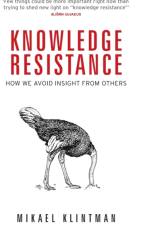
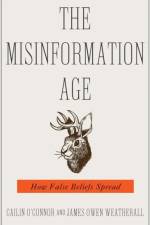
Concerns about people's resistance to facts and knowledge are becoming increasingly serious. This book draws on the social, economic and evolutionary sciences to provide an integrated understanding of the phenomenon. -- .
The Almanac Journal is a tool to help you pause and observe, to notice the changing seasons and what impact they have on you.
Students studying classical mechanics can learn Newton's laws of motion through this accessible and pedagogical guide. Carefully scaffolded everyday examples and full explanations of concepts and equations ensure that students will develop a deep and confident understanding of this fundamental and important subject.
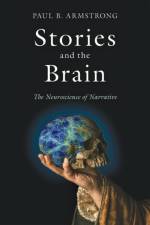
Taking up the age-old question of what our ability to tell stories reveals about language and the mind, this truly interdisciplinary project should be of interest to humanists and cognitive scientists alike.
In this complete guidebook we are going to take you from the very basics of using Stoicism in your daily life, to complete Mastery. We will show you how this ancient philosophy is going to work to make you feel happier and more virtuous
Statistical Methods for Geography is the essential introduction for geography students looking to fully understand and apply key statistical concepts and techniques.
Programming with Python for Social Scientists offers a vital foundation to one of the most popular programming tools in computer science, specifically for social science researchers, assuming no prior coding knowledge.
The book covers different aspects of mathematical methods for Physics. It is designed for graduate courses, but a part of it can also be used by undergraduate students.
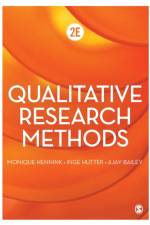
From selecting appropriate methods to publishing your findings, this second edition offers a multidisciplinary introduction to the qualitative research process built around the authors' Qualitative Research Cycle - consisting of the design, data collection and analytic cycles.
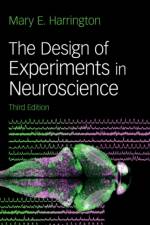
This much-anticipated third edition is an ideal core or supplementary text for undergraduates and graduate students studying neuroscience, neuroanatomy, neurophysiology, neurochemistry, or biological psychology. It offers a concise introduction to the basic principles of experimental design and analysis.
The social dynamics of "e;alternative facts"e;: why what you believe depends on who you know Why should we care about having true beliefs? And why do demonstrably false beliefs persist and spread despite consequences for the people who hold them? Philosophers of science Cailin O'Connor and James Weatherall argue that social factors, rather than individual psychology, are what's essential to understanding the spread and persistence of false belief. It might seem that there's an obvious reason that true beliefs matter: false beliefs will hurt you. But if that's right, then why is it (apparently) irrelevant to many people whether they believe true things or not? In an age riven by "e;fake news,"e; "e;alternative facts,"e; and disputes over the validity of everything from climate change to the size of inauguration crowds, the authors argue that social factors, not individual psychology, are what's essential to understanding the persistence of false belief and that we must know how those social forces work in order to fight misinformation effectively.
Abonner på vårt nyhetsbrev og få rabatter og inspirasjon til din neste leseopplevelse.
Ved å abonnere godtar du vår personvernerklæring.