




Gjør som tusenvis av andre bokelskere
Abonner på vårt nyhetsbrev og få rabatter og inspirasjon til din neste leseopplevelse.
Ved å abonnere godtar du vår personvernerklæring.Du kan når som helst melde deg av våre nyhetsbrev.

That we need money to live - like it or not - is a self-evident truism. Right? Not anymore. Drawing on almost three years of experience as The Moneyless Man, ex-businessman Mark Boyle not only demystifies money and the system that binds us to it, he also explains how liberating, easy and enjoyable it is to live with less of it. In this book, Mark takes us on an exploration that goes deeper into the thinking that pushed him to make the decision to go moneyless, and the philosophy he developed along the way. Bursting with radical new perspectives on some of the vital, yet often unquestioned, pillars of economic theory and what it really means to be 'sustainable' - as well as creative and practical solutions for how we can live more with less - Mark offers us one of the world's most thought-provoking voices on economic and ecological ideas. Mark's original, witty style will help simplify and diversify your personal economy, freeing you from the invisible ties that limit you, and making you more resilient to financial shocks. The Moneyless Manifesto will enable you to start your journey into a new world.
A preeminent physicist unveils a field-defining theory of the origins and purpose of lifeWhy are we alive? Most things in the universe aren't. And everything that is alive traces back to things that, puzzlingly, weren't. For centuries, the scientific question of life's origins has confounded us. But in Every Life Is on Fire, physicist Jeremy England argues that the answer has been under our noses the whole time, deep within the laws of thermodynamics. England explains how, counterintuitively, the very same forces that tend to tear things apart assembled the first living systems.But how life began isn't just a scientific question. We ask it because we want to know what it really means to be alive. So England, an ordained rabbi, uses his theory to examine how, if at all, science helps us find purpose in a vast and mysterious universe.In the tradition of Viktor Frankl's Man's Search for Meaning, Every Life Is on Fire is a profound testament to how something can come from nothing.
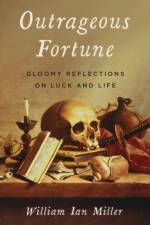
In this book, William Ian Miller offers his reflections on the perverse consequences of so-called 'good things.' With wit and sensitivity, along with a large measure of fearless self-scrutiny, he points to and invites us to recognize the gloomy, neurotic, despondent tendencies of reasonably sentient humanity.
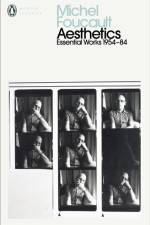
Presents a collection of Michel Foucault's articles, interviews and seminars. This work focuses primarily upon the philosophy, literature and other works of the imagination which have informed Foucault's particular engagement with ethics and power and includes Foucault's arresting commentaries on the work of de Sade, Rousseau, Marx, and Nietzsche.
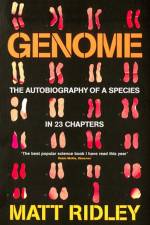
The most important investigation of genetic science since The Selfish Gene, from the author of the critically acclaimed and best-selling The Red Queen and The Origins of Virtue.The genome is our 100,000 or so genes. The genome is the collective recipe for the building and running of the human body. These 100,000 genes are sited across 23 pairs of chromosomes. Genome, a book of about 100,000 words, is divided into 23 chapters, a chapter for each chromosome. The first chromosome, for example, contains our oldest genes, genes which we have in common with plants.By looking at our genes we can see the story of our evolution, what makes us individual, how our sexuality is determined, how we acquire language, why we are vunerable to certain diseases, how mind has arisen. Genome also argues for the genetic foundations of free will. While many believe that genetics proves biological determinism, Ridley will show that in fact free will is itself in the genes. Everything that makes us human can be read in our genes. Early in the next century we will have determined the function of every one of these 100,000 genes.
The World As Will And Idea (Complete): Translated From The German By R. B. Haldane, M.A. And J. Kemp, M.A.; Complete Edition Of Three Volumes, Vol. I. - III.This book is a result of an effort made by us towards making a contribution to the preservation and repair of original classic literature.In an attempt to preserve, improve and recreate the original content, we have worked towards:1. Type-setting & Reformatting: The complete work has been re-designed via professional layout, formatting and type-setting tools to re-create the same edition with rich typography, graphics, high quality images, and table elements, giving our readers the feel of holding a 'fresh and newly' reprinted and/or revised edition, as opposed to other scanned & printed (Optical Character Recognition - OCR) reproductions.2. Correction of imperfections: As the work was re-created from the scratch, therefore, it was vetted to rectify certain conventional norms with regard to typographical mistakes, hyphenations, punctuations, blurred images, missing content/pages, and/or other related subject matters, upon our consideration. Every attempt was made to rectify the imperfections related to omitted constructs in the original edition via other references. However, a few of such imperfections which could not be rectified due to intentional\unintentional omission of content in the original edition, were inherited and preserved from the original work to maintain the authenticity and construct, relevant to the work.We believe that this work holds historical, cultural and/or intellectual importance in the literary works community, therefore despite the oddities, we accounted the work for print as a part of our continuing effort towards preservation of literary work and our contribution towards the development of the society as a whole, driven by our beliefs. We are grateful to our readers for putting their faith in us and accepting our imperfections with regard to preservation of the historical content. HAPPY READING!
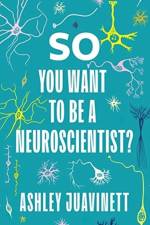
So You Want to Be a Neuroscientist? is a contemporary and engaging guide for aspiring neuroscientists of diverse backgrounds and interests. Ashley Juavinett provides a candid look at the field, offering practical guidance that explores everything from programming to personal stories.
Streetlamps, neon signs - an ever-present glow that has changed the natural world and adversely affected our health; Paul Bogard illuminates the problems caused by a lack of darkness.We live awash in artificial light. But night's natural darkness has always been invaluable for our spiritual health and the health of the natural world, and every living creature suffers from its loss.Paul Bogard investigates what we mean when we talk about darkness. He travels between the intensely lit cities - from glittering Las Vegas to the gas-lit streets of Westminster - and the sites where real darkness still remains, such as the Brecon Beacons and the island of Sark. Encountering scientists, physicians, activists and writers, Bogard discusses how light is negatively affecting the natural world; how our well-being is significantly influenced by darkness or its lack; and how it's not a matter of using light at night or not, but rather when and where, how and how much.A beautiful invocation of our constant companion, the night, which returns every day of our lives, this book reminds us of the power and mystery of the dark.
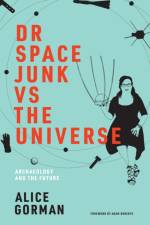
A pioneering space archaeologist explores artifacts left behind in space and on Earth, from moon dust to Elon Musk''s red sports car.Alice Gorman is a space archaeologist: she examines the artifacts of human encounters with space. These objects, left behind on Earth and in space, can be massive (dead satellites in eternal orbit) or tiny (discarded zip ties around a defunct space antenna). They can be bold (an American flag on the moon) or hopeful (messages from Earth sent into deep space). They raise interesting questions: Why did Elon Musk feel compelled to send a red Tesla into space? What accounts for the multiple rocket-themed playgrounds constructed after the Russians launched Sputnik? Gorman—affectionately known as “Dr Space Junk” —takes readers on a journey through the solar system and beyond, deploying space artifacts, historical explorations, and even the occasional cocktail recipe in search of the ways that we make space meaningful.Engaging and erudite, Gorman recounts her background as a (nonspace) archaeologist and how she became interested in space artifacts. She shows us her own piece of space junk: a fragment of the fuel tank insulation from Skylab, the NASA spacecraft that crash-landed in Western Australia in 1979. She explains that the conventional view of the space race as “the triumph of the white, male American astronaut” seems inadequate; what really interests her, she says, is how everyday people engage with space. To an archaeologist, objects from the past are significant because they remind us of what we might want to hold on to in the future.
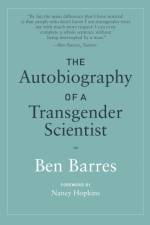
A leading scientist describes his life, his gender transition, his scientific work, and his advocacy for gender equality in science.Ben Barres was known for his groundbreaking scientific work and for his groundbreaking advocacy for gender equality in science. In this book, completed shortly before his death from pancreatic cancer in December 2017, Barres (born in 1954) describes a life full of remarkable accomplishments—from his childhood as a precocious math and science whiz to his experiences as a female student at MIT in the 1970s to his female-to-male transition in his forties, to his scientific work and role as teacher and mentor at Stanford. Barres recounts his early life—his interest in science, first manifested as a fascination with the mad scientist in Superman; his academic successes; and his gender confusion. Barres felt even as a very young child that he was assigned the wrong gender. After years of being acutely uncomfortable in his own skin, Barres transitioned from female to male. He reports he felt nothing but relief on becoming his true self. He was proud to be a role model for transgender scientists.As an undergraduate at MIT, Barres experienced discrimination, but it was after transitioning that he realized how differently male and female scientists are treated. He became an advocate for gender equality in science, and later in life responded pointedly to Larry Summers''s speculation that women were innately unsuited to be scientists. Privileged white men, Barres writes, “miss the basic point that in the face of negative stereotyping, talented women will not be recognized.” At Stanford, Barres made important discoveries about glia, the most numerous cells in the brain, and he describes some of his work. “The most rewarding part of his job,” however, was mentoring young scientists. That, and his advocacy for women and transgender scientists, ensures his legacy.
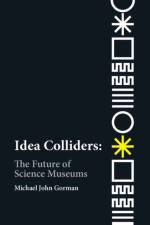
A provocative call for the transformation of science museums into “idea colliders” that spark creative collaborations and connections.Today''s science museums descend from the Kunst-und Wunderkammern of the Renaissance—collectors'' private cabinets of curiosities—through the Crystal Palace exhibition of 1851 to today''s “interactive” exhibits promising educational fun. In this book, Michael John Gorman issues a provocative call for the transformation of science museums and science centers from institutions dedicated to the transmission of cultural capital to dynamic “idea colliders” that spark creative collaborations and connections. This new kind of science museum would not stage structured tableaux of science facts but would draw scientists into conversation with artists, designers, policymakers, and the public. Rather than insulating visitors from each other with apps and audio guides, the science museum would consider each visitor a resource, bringing questions, ideas, and experiences from a unique perspective.Gorman, founder of the trailblazing Science Gallery, describes three scenarios for science museums of the future—the Megamuseum Mall, “the Cirque de Soleil of the science museum world”; the Cloud Chamber, a local space for conversations and co-creation; and the invisible museum, digital device-driven informal science learning. He discusses hybrids that experiment with science and art and science galleries that engage with current research, encouraging connection, participation and surprise. Finally, he identifies ten key shifts in the evolution of science museums, including those from large to small, from interactive to participatory, from enclosed to porous, and from subject-specific to cross-disciplinary.
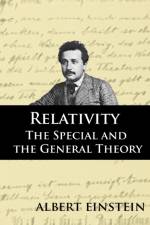
After completing the final version of his general theory of relativity, Albert Einstein wrote a book about relativity for a popular audience. His intention was "to give an exact insight into the theory of relativity to those readers who, from a general scientific and philosophical point of view, are interested in the theory, but who are not conversant with the mathematical apparatus of theoretical physics." The book remains one of the most lucid explanations of the special and general theories ever written. In the early 1920s alone, it was translated into ten languages, and fifteen editions in the original German appeared over the course of Einstein''s lifetime.
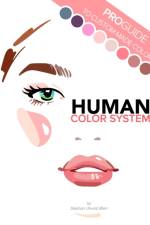
Human Color System gives a deep understanding of color harmony. How to customize colors for individuals are the new standard as trend is exchanged with personal taste and expression. This is a book that explores, and categorizes human color diversity and gives in-depth knowledge on how to create custom applications and cosmetic products. A book specially made for professional makeup artists, beauty advisors, designers, product developers, programmers, journalists and creatives in the fashion and beauty industry, who want to understand and master the knowledge of customizing colors for individuals. It empowers the beauty industry with the knowledge to make more ethical decisions when creating color compositions and looks. It eradicates trend and instead focuses on individual needs. This book sets out a new direction for how to create and minimize product cost and pressure on our planetary resources. But first of all, this book is a celebration of human diversity.
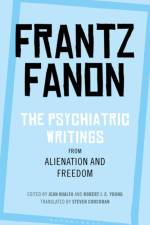
The first English translation of Frantz Fanon's psychiatric writings, so can provide a significant insight to Fanon's overall vision for society, The writings - which were thought to be lost - provide a unique insight into Fanon's thoughts on the development of psychiatric medicine, and specifically methods of treatment between 1951-60, Fanon always thought of himself as a practicing psychiatrist and his writing and research reveals him to be a pioneer of ethnopsychiatry, or the idea that ethnic and cultural factors could influence mental illness, and an advocate of therapy that operated outside of the psychiatric hospital system, thus providing a model for modern mental health provision, Features ten rare photographs of Fanon during his psychiatric practice and research.
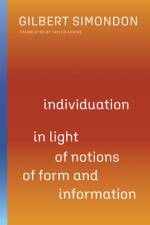
"A long-awaited translation on the philosophical relation between technology, the individual, and milieu of the living"--
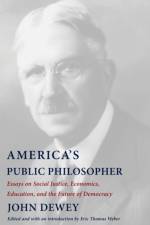
John Dewey was America's greatest public philosopher. This book gathers the clearest and most powerful of Dewey's public writings and shows how they continue to speak to the challenges we face today.
David Graeber's influential thinking was always at odds with the liberal and left-wing mainstream. Drawing on his huge theoretical and practical experience as an ethnologist and anthropologist, activist and anarchist, Graeber and his interlocutors develop a ramified genealogy of anarchist thought and possible perspectives for 21st-century politics. Diverging from the familiar lines of historical anarchism, and against the background of movements such as Occupy Wall Street and the Gilets jaunes, the aim is to provide new political impulses that go beyond the usual schemata of unavoidableness. The spontaneous and swift-moving polylogue shows Graeber as a spirited, unorthodox thinker and radical activist for whom the group can always achieve more than the individual.
Discover why man's best friend wags, walks, sniffs, barks, pees, behaves and thinks the way he does.
Abonner på vårt nyhetsbrev og få rabatter og inspirasjon til din neste leseopplevelse.
Ved å abonnere godtar du vår personvernerklæring.