













Gjør som tusenvis av andre bokelskere
Abonner på vårt nyhetsbrev og få rabatter og inspirasjon til din neste leseopplevelse.
Ved å abonnere godtar du vår personvernerklæring.Du kan når som helst melde deg av våre nyhetsbrev.

The quest to find a theory of quantum gravity that could potentially explain everything.
Adapt, embrace uncertainties and create more resilient business strategies by mastering the futuring mindset.
Zen Buddhist priest Shunmyo Masuno understands that today's busy world leaves little time or space for self-reflection, but that a gardeneven in the most urban of spacescan provide some respite. In his words, "e;The garden is a special spiritual place where the mind dwells."e; With this in mind, Masuno has designed scores of spectacular Japanese gardens and landscapes with the aim of helping people achieve a balanced life in the 21st century.This book explores Masuno's design process and ideas, which are integral to his daily Zen training and teachings. It features 15 unique gardens and contemplative landscapes completed in six countries over as many yearsall thoughtfully described and documented in full-color photos and drawings. Readers will also find insights on Masuno's philosophy of garden design and a conversation between the designer and famed architect Terunobu Fujimori.Zen Garden Design provides an in-depth examination of Masuno's gardens and landscapesnot just as beautiful spaces, but as places for meditation and contemplation.
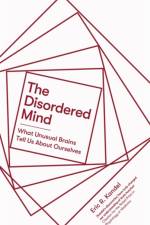
'[Kandel's discoveries] have truly changed our understanding of brain function' - Citation for the Nobel Prize in Physiology or Medicine'[Eric Kandel is] one of the preeminent neuroscientists in the world' - Sue Halpern, The New York Review of Books Highly commended at the British Medical Association Book Awards 2019Neurological and psychiatric disorders have long been regarded as fundamentally different, depending on whether they appear to affect the brain or the mind. In reality, the brain and the mind are inseparable. Both types of disorder can affect every aspect of brain function: from perception, action, memory and emotion to empathy, social interaction, attention and consciousness. It is easy to view brain disorders as simply tragic or frightening. However, studying where these functions go wrong provides a window on the workings of the healthy brain, and makes it more likely that scientists and clinicians will be able to develop effective treatments or preventative strategies. As individuals, and as a society, we are also able to better empathise with people with disorders of the mind.Building on his pioneering research, Eric R. Kandel illustrates how breakthrough studies of brain disruptions can deepen our understanding of thought, feeling, behaviour, memory and creativity, and perhaps in the future will transform medical care and lead to the development of a unified theory of mind.
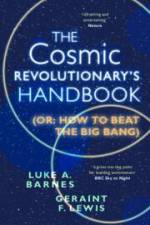
For all those who wonder about our bizarre universe, and those who want to overthrow the big bang, this book gives you 'just the facts': the observations that have shaped established ideas and theories. The authors pull back the curtains, and show how cosmology really works.
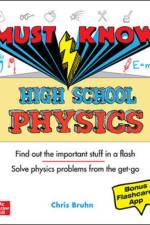
"Find out the important stuff in a flash. Solve physics problems from the get-go"--Cover.
Through science and philosophy, Conscience illuminates the answer to the question of how we determine right from wrong.
The untold history of how people came to conceive, to manage, and to dispute environmental crisis, The Environment is essential reading for anyone who wants to help protect the environment from the numerous threats it faces today.
How can we think about things in the outside world? There is still no widely accepted theory of how mental representations get their meaning. In light of pioneering research, Nicholas Shea develops a naturalistic account of the nature of mental representation with a firm focus on the subpersonal representations that pervade the cognitive sciences.
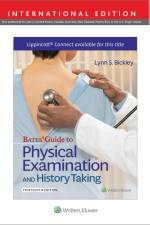
Widely used by both students and practitioners, Bates' Guide to Physical Examination and History Taking provides authoritative, step-by-step guidance on performing the patient interview and physical examination, applying clinical reasoning, shared decision-making, and other core assessment skills-all based on a firm understanding of clinical evidence. This highly regarded text includes fully illustrated, step-by-step techniques that outline the correct performance of the physical examination and an easy-to-follow two-column format featuring examination techniques on the left and abnormalities (clearly indicated in red) with differential diagnosis on the right. Bates' also includes a unit on special populations, covering special stages in the life cycle-infancy through adolescence, pregnancy, and aging.
It is because historical discourse is actualized in its culturally significant form as a specific kind of writing that we may consider the relevance of literary theory to both the theory and the practice of historiography."
Abonner på vårt nyhetsbrev og få rabatter og inspirasjon til din neste leseopplevelse.
Ved å abonnere godtar du vår personvernerklæring.