






Gjør som tusenvis av andre bokelskere
Abonner på vårt nyhetsbrev og få rabatter og inspirasjon til din neste leseopplevelse.
Ved å abonnere godtar du vår personvernerklæring.Du kan når som helst melde deg av våre nyhetsbrev.

Brachycephalic dogs are a source of health and welfare concerns for small animal vets. This book equips them with practical knowledge, covering technically-challenging surgical procedures, management of unique disorders and ethical and welfare aspects of choosing and caring for these breeds.
From neutron star mergers to the survival skills of tardigrades, this fascinating book is an ideal primer for students or anyone curious about life and the Universe.
This groundbreaking book brings creative writing to social research. Its innovative format includes creatively written contributions by researchers from a range of disciplines, modelling the techniques outlined by the authors. The book is user-friendly and shows readers: * how to write creatively as a social researcher; * how creative writing can help researchers to work with participants and generate data; * how researchers can use creative writing to analyse data and communicate findings. Inviting beginners and more experienced researchers to explore new ways of writing, this book introduces readers to creatively written research in a variety of formats including plays and poems, videos and comics. It not only gives social researchers permission to write creatively but also shows them how to do so.
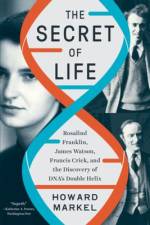
James Watson and Francis Crick's 1953 discovery of the double helix structure of DNA is the foundation of virtually every advance in our modern understanding of genetics and molecular biology. But how did Watson and Crick do it-and why were they the ones who succeeded?In truth, the discovery of DNA's structure is the story of five towering minds in pursuit of the advancement of science, and for almost all of them, the prospect of fame and immortality: Watson, Crick, Rosalind Franklin, Maurice Wilkins, and Linus Pauling. Each was fascinating and brilliant, with strong personalities that often clashed. Howard Markel skillfully re-creates the intense intellectual journey, and fraught personal relationships, that ultimately led to a spectacular breakthrough. But it is Rosalind Franklin-fiercely determined, relentless, and an outsider at Cambridge and the University of London in the 1950s, as the lone Jewish woman among young male scientists-who becomes a focal point for Markel.The Secret of Life is a story of genius and perseverance, but also a saga of cronyism, misogyny, anti-Semitism, and misconduct. Drawing on voluminous archival research, including interviews with James Watson and with Franklin's sister, Jenifer Glynn, Markel provides a fascinating look at how science is done, how reputations are undone, and how history is written, and revised.A vibrant evocation of Cambridge in the 1950s, Markel also provides colorful depictions of Watson and Crick-their competitiveness, idiosyncrasies, and youthful immaturity-and compelling portraits of Wilkins, Pauling, and most cogently, Rosalind Franklin. The Secret of Life is a lively and sweeping narrative of this landmark discovery, one that finally gives the woman at the center of this drama her due.
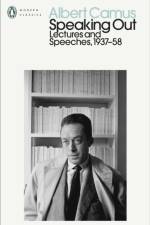
A new collection of Albert Camus' most brilliant speeches and lectures'Freedom is dangerous, as hard to live as it is exalting...'This definitive new collection of Albert Camus' public speeches and lectures gives a compelling insight into one of the twentieth century's most enduring writers. From a pre-war speech on the politics of the Mediterranean - delivered when he was just twenty-two - to his impassioned Nobel Prize acceptance lectures and several pieces appearing in English for the first time, Speaking Out shows Camus' clarity and subtlety of thought, his 'stubborn humanism' and his unerring commitment to freedom and justice.Translated by Quintin Hoare
The story of the Universe from the moment time and space came into existence at the Big Bang. This third edition has a new chapter, all-new photography and has been revised and updated to reflect a decade of new discoveries.
'If you have time to read only one book on how to undertake academic research, this is the one!' - Rebecca Piekkari, Professor of International Business and Vice Dean for Research and International Affairs at Aalto University, School of Business, Finland.
From the international bestselling authors of WillpowerWhy does a bad impression last longer than a good one? Why does losing money affect us more than gaining it? What makes phobias so hard to shake?The answer is the negativity bias - or in other words, the power of bad. As John Tierney and Roy F. Baumeister show, we are wired to react to bad over good. It makes sense in evolutionary terms, but in our modern world the lure of bad is, well, bad. It governs people's moods, drives marketing and dominates our news. It can explain everything from why wars start or couples divorce, to why we mess up job interviews or feud with neighbours. But there is good news. By using smart strategies from new science, we can train our brains to get better at spotting our own negativity bias, fighting back with our rational minds to manage the bad in our lives - and even using its power for positive results. Breaking bad's hold over us can help our own lives, at work and in our relationships. Properly understood, bad can be a good thing.
Sally Coulthard explores the miraculous world of the earthworm, the modest little creature without whom life as we know it would not be possible.
At a summer tea party in Cambridge, England, a lady states that tea poured into milk tastes differently than that of milk poured into tea. Her notion is shouted down by the scientific minds of the group. But one guest, by the name Ronald Aylmer Fisher, proposes to scientifically test the lady's hypothesis. There was no better person to conduct such a test. For Fisher had brought to the field of statistics an emphasis on controlling the methods for obtaining data and the importance of interpretation. He knew that how the data was gathered and applied was as important as the data themselves.In The Lady Tasting Tea, readers will encounter not only Ronald Fisher's theories (and their repercussions), but the ideas of dozens of men and women whose revolutionary work affects our everyday lives. Writing with verve and wit, author David Salsburg traces the rise and fall of Karl Pearson's theories, explores W. Edwards Deming's statistical methods of quality control (which rebuilt postwar Japan's economy), and relates the story of Stella Cunliff's early work on the capacity of small beer casks at the Guinness brewing factory. The Lady Tasting Tea is not a book of dry facts and figures, but the history of great individuals who dared to look at the world in a new way.
A NEW STATESMAN BOOK OF THE YEAR 2020 'An extraordinary achievement . . . gripping, grim and witty' Robert MacFarlane 'Unputdown-able ... No book could be more timely' Richard J Evans Today, the bunker has become the extreme expression of our greatest fears: from pandemics to climate change and nuclear war. And once you look, it doesn't take long to start seeing bunkers everywhere. In Bunker, acclaimed urban explorer and cultural geographer Bradley Garrett explores the global and rapidly growing movement of 'prepping' for social and environmental collapse, or 'Doomsday'. From the 'dread merchants' hustling safe spaces in the American mid-West to eco-fortresses in Thailand, from geoscrapers to armoured mobile bunkers, Bunker is a brilliant, original and never less than deeply disturbing story from the frontlines of the way we live now: an illuminating reflection on our age of disquiet and dread that brings it into new, sharp focus. The bunker, Garrett shows, is all around us: in malls, airports, gated communities, the vehicles we drive. Most of all, he shows, it's in our minds.
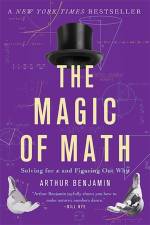
"Arthur Benjamin... joyfully shows you how to make nature's numbers dance. Let his book be your partner for a lifetime of learning."-Bill Nye, Science Educator and CEO, The Planetary Society
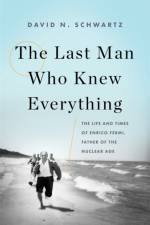
The definitive biography of the brilliant, charismatic, and very human physicist and innovator Enrico Fermi
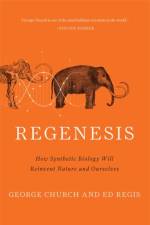
"Bold and provocative... Regenesis tells of recent advances that may soon yield endless supplies of renewable energy, increased longevity and the return of long-extinct species."-New Scientist
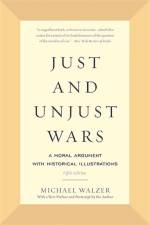
"A magnificent book, an honor to its writer... a book that makes for a return of civilized discussion of the question of the morality of war."-New York Review of Books
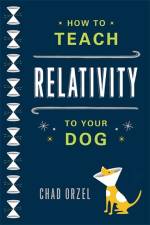
Everyone talks to their pets; Chad Orzel tells his about relativity.
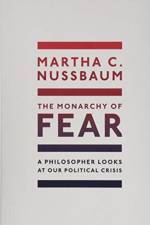
From one of the world's most celebrated moral philosophers comes a thorough examination of the current American political crisis and recommendations for how to mend a divided country.
Abonner på vårt nyhetsbrev og få rabatter og inspirasjon til din neste leseopplevelse.
Ved å abonnere godtar du vår personvernerklæring.