







Gjør som tusenvis av andre bokelskere
Abonner på vårt nyhetsbrev og få rabatter og inspirasjon til din neste leseopplevelse.
Ved å abonnere godtar du vår personvernerklæring.Du kan når som helst melde deg av våre nyhetsbrev.

A powerful and commanding account of the life of trailblazing political activist Angela DavisEdited by Toni Morrison and first published in 1974, An Autobiography is a classic of the Black Liberation era which resonates just as powerfully today. Long hard to find, it is reissued now with a new introduction by Davis, for a new audience inspired and galvanised by her ongoing activism and her extraordinary example.In the book, she describes her journey from a childhood on Dynamite Hill in Birmingham, Alabama, to one of the most significant political trials of the century: from her political activity in a New York high school to her work with the U.S. Communist Party, the Black Panther Party, and the Soledad Brothers; and from the faculty of the Philosophy Department at UCLA to the FBI's list of the Ten Most Wanted Fugitives. Told with warmth, brilliance, humour, and conviction, it is an unforgettable account of a life committed to radical change.
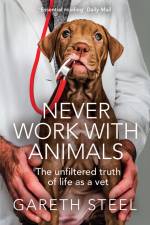
Gareth Steel wants you to understand vets in a way you never could have before.How it feels to watch a healed dog bound into their owner's arms. The joy of breathing life into the fluid-filled lungs of a newborn calf after a difficult labour. The satisfaction of rescuing a distressed sheep from the high-tide line.What it's like to work 100-hour weeks for less than the minimum wage. How it can scar your soul to euthanize a beloved puppy with its grieving family beside you. The pressure of having to know such a diverse range of medicine, that one hour you can be protecting yourself from a dangerously distressed horse and the next you can be performing delicate surgery on a tiny mouse. How all these pressures have built up to the extent that vets have four times the national suicide rate, and why.Gareth Steel has been a vet for nearly twenty years and has worked all over the UK, across both rural and city practices, dealing with all manner of household pets and farm animals. This is his fascinating raw account of just how involved the job is and the toll the extreme emotions that come with it can take, but it also a heart-warming and often humorous story of the desperate lengths we go to for the love of animals.
Drawing on premodern theology and postmodern theory, this book shows that religious and political commitments can endure uncertainty through the practice of hope. Since hope is shared by people who are religious and by people who are not, it shows that faith has a future in a secular age.
Intended for non-science majors Physics CoursesSince defining this course 30 years ago, Paul Hewitts best-selling text continues as the benchmark by which all others are judged. In Conceptual Physics Twelfth Edition Paul Hewitt makes physics interesting, understandable, and relevant for non-science majors. The Twelfth Edition will delight students with informative and fun Hewitt-Drew-It screencasts, updated content and applications. Hewitts text is guided by the principle of concepts before calculations and is famous for engaging students with analogies and imagery from the real-world that build a strong conceptual understanding of physical principles ranging from classical mechanics to modern physics. This program presents a better teaching and learning experiencefor you and your students. Prepare for lecture: NEW! 100 Hewitt-Drew-It screencasts, authored and narrated by Paul Hewitt, explain physics concepts through animation and narration. The exciting new Screencasts, accessed through QR codes in the textbook, will enable students to engage with the physics concepts more actively outside of class. Make physics delightful: Relevant and accessible narrative, analogies from real-world situations, and simple representations of the underlying mathematical relationships make physics more appealing to students. Build a strong conceptual understanding of physics: Students gain a solid understanding of physics through practice and problem solving in the book.
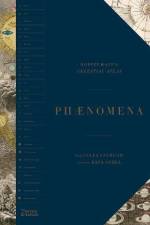
A beautiful showcase of Johann Doppelmayr's magnificent Atlas Coelestis that deconstructs its intricately drawn plates and explores its influential ideas. Showcasing Johann Doppelmayr's magnificent 1742 map of the cosmos, Atlas Coelestis, this spectacular guide to the heavens is also a superb introduction to the fundamentals and history of astronomy. Charting constellations, planets, comets and moons, Doppelmayr's Atlas presents the ideas and discoveries of many famous and influential astronomers, including Copernicus, Riccioli, Kepler, Newton and Halley, in intricate colour plates that interweave annotated diagrams and tables with figurative drawings and ornamental features. Here, you can appreciate the beauty of those exquisite astronomical and cosmographical plates and comprehend the details, which are also presented in step-by-step deconstructed form. Astronomer Giles Sparrow elucidates the scientific ideas inherent in each plate, expertly decoding and analysing the complex information contained in them and placing Doppelmayr's sumptuous Atlas in the context of the ground-breaking discoveries made during the Renaissance and Enlightenment periods. A spectacular, revelatory celestial compendium to the cosmos, Phaenomena expands on and explains Doppelmayr's original, awe-inspiring Atlas and reflects upon its influence on the development of the science of astronomy to the present day.
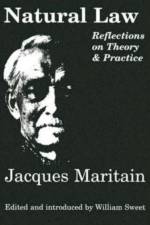
Can there be universal moral principles in a culturally and religiously diverse world? Are such principles provided by a theory of natural law? Jacques response to both questions is "yes".These essays, selected from the writings of one of the most influential philosophers of the past hundred years, provide a clear statement of Maritain's theory of natural law and natural rights. Maritain's ethics and political philosophy occupies a middle ground between the extremes of individualism and collectivism. Written during a period when cultural diversity and pluralism were beginning to have an impact on ethics and politics, these essays provide a defense of natural law and natural right that continues to be timely.The first essay introduces Maritain's theory of connatural knowledge -- knowledge by inclination -- that lies at the basis of his distinctive views on moral philosophy, aesthetics, and mystical belief. The second essay gives Maritain's principal metaphysical arguments for natural law as well as his account of how that law can be naturally known and universally held.The third essay in this collection explains the roots of the natural law and shows how it provides a rational foundation for other kinds of law and for human rights. In the fourth essay, reflecting his personalism and integral humanism, Maritain indicates how he extends his understanding of human rights to include the rights of the civic and of the social or working person.
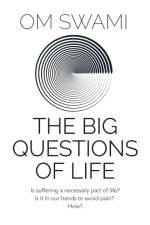
Pain is inevitable; suffering is optional. Loss is unavoidable; grief isn't. Death is certain. And life? Well, life isn't certain. Its uncertainty, unpredictability, even its irrationality, make it what it is. Often, we run blindly into fire, we step on snakes, we get entangled in snares -- these are the fires of desire, the snakes of attachment, and the snares of jealousy and covetousness. If we are bitten, burnt and hurt, we call it suffering, and believe it to be the way of life, when, in fact, we are mistaking our pain for our suffering. We have little control over the former but the latter is almost entirely in our hands. We can take things in our stride or be tossed on the tide. All it takes is to be able to open our eyes. This choice, we must remember, is ours; always.Om Swami's new book marks the way to enlightenment through mindful thinking.
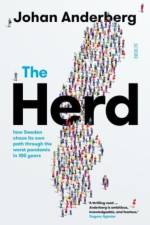
A real-life thriller about a nation in crisis, and the controversial decisions its leaders made during the Covid-19 pandemic.First, the government instituted no restrictions. Then, it didn¿t order the wearing of face masks. While the rest of the world looked on with incredulity, condemnation, admiration, and even envy, a small country in Northern Europe stood alone. As Covid-19 spread across the globe rapidly, the world shut down. But Sweden remained open.The Swedish Covid-19 strategy was alternately lauded and held up as a cautionary tale by international governments and journalists alike ¿ with all eyes on what has been dubbed `The Swedish Experiment¿. But what made Sweden take such a different path?In The Herd, journalist Johan Anderberg narrates the improbable story of a small nation that took a startlingly different approach to fighting the virus, guiding the reader through the history of epidemiology and the ticking-clock decisions that pandemic decision-makers were faced with on a daily basis.
This book provides knowledge of the basic theory, spectral analysis methods, chemometrics, instrumentation, and applications of near-infrared (NIR) spectroscopy-not as a handbook but rather as a sourcebook of NIR spectroscopy.
One of Britain's most radical veterans takes us on a guided tour through ex-military life at the heart of a dead empire.
The international bestseller that offers an alternative to chucking your most irksome idiot out a window.
This revised, new edition retains its class-tested coverage of how metals behave in water while updating and expanding information about metals processing methods.
Science Book Prize-winning science writer Philip Ball explores the diversity of thinking minds, from the variety of human minds to those of mammals, insects, computers and plants, in a book that brilliantly illuminates how many different ways there are to think and engage with the world; and how particular are our own.
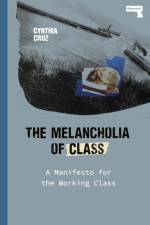
What does it mean to be working-class in a middle-class world? Cynthia Cruz shows us how class affects culture and our mental health and what we can do about it - calling not for assimilation, but for annihilation.
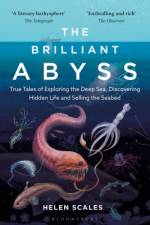
The deep sea is the last, vast wilderness on the planet. For centuries, myth-makers and storytellers have concocted imaginary monsters of the deep, and now scientists are looking there to find bizarre, unknown species, chemicals to make new medicines, and to gain a greater understanding of how this world of ours works. With an average depth of 12,000 feet and chasms that plunge much deeper, it forms a frontier for new discoveries. The Brilliant Abyss tells the story of our relationship with the deep sea - how we imagine, explore and exploit it. It captures the golden age of discovery we are currently in and looks back at the history of how we got here, while also looking forward to the unfolding new environmental disasters that are taking place miles beneath the waves, far beyond the public gaze. Throughout history, there have been two distinct groups of deep-sea explorers. Both have sought knowledge but with different and often conflicting ambitions in mind. Some people want to quench their curiosity; many more have been lured by the possibilities of commerce and profit. The tension between these two opposing sides is the theme that runs throughout the book, while readers are taken on a chronological journey through humanity's developing relationship with the deep sea. The Brilliant Abyss ends by looking forwards to humanity's advancing impacts on the deep, including mining and pollution and what we can do about them.
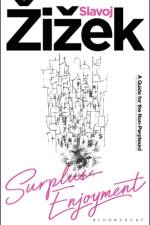
Contemporary life is defined by excess. There must always be more, there is never enough. We need a surplus to what we need to be able to truly enjoy what we have. Slavoj Zizek's guide to surplus (and why it's enjoyable) begins by arguing that what is surplus to our needs is by its very nature unsubstantial and unnecessary. But, perversely, without this surplus, we wouldn't be able to enjoy, what is substantial and necessary. Indeed, without the surplus we wouldn't be able to identify what was the perfect amount. Is there any escape from the vicious cycle of surplus enjoyment or are we forever doomed to simply want more? Engaging with everything from The Joker film to pop songs and Thomas Aquinas to the history of pandemics, Zizek argues that recognising the society of enjoyment we live in for what it is can provide an explanation for the political impasses in which we find ourselves today. And if we begin, even a little bit, to recognise that the nuggets of 'enjoyment' we find in excess are as flimsy and futile, might we find a way out?
A very timely history of disease outbreaks, from the authors of Quackery: stories of outbreaks (and their patient zeros), plus chapters on the science, culture, and cures for different types of epidemics and pandemics. Popular reading on a timely topic.
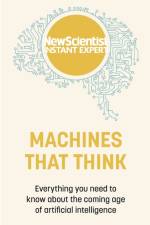
Machines That Think explores how artificial intelligence helps us understand human intelligence, machines that compose music and write stories - and asks if AI is really a threat.
Abonner på vårt nyhetsbrev og få rabatter og inspirasjon til din neste leseopplevelse.
Ved å abonnere godtar du vår personvernerklæring.