









Gjør som tusenvis av andre bokelskere
Abonner på vårt nyhetsbrev og få rabatter og inspirasjon til din neste leseopplevelse.
Ved å abonnere godtar du vår personvernerklæring.Du kan når som helst melde deg av våre nyhetsbrev.

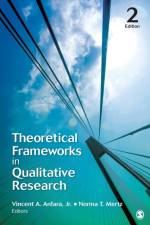
Giving readers an insight into the minds of researchers, this book brings together the reflections of various authors on the qualitative theoretical framework they used, and how they made research design decisions based on the chosen theoretical framework.
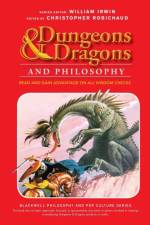
Explores a range of philosophical topics, including the nature of free will, the metaphysics of personal identity, the morality of crafting fictions, sex and gender issues in tabletop game play, and friendship and collaborative storytelling. It provides gamers with philosophical insights that can lead to an appreciation of Dungeons and Dragons.
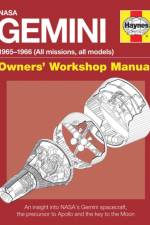
An insight into NASA's Gemini spacecraft, the precursor to Apollo and the key to the Moon NASA's Gemini space flight programme followed on from the pioneering Mercury missions which put the first US astronauts into space.
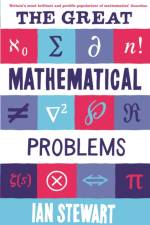
There are some mathematical problems whose significance goes beyond the ordinary - like Fermat's Last Theorem or Goldbach's Conjecture. This book explains why these problems exist, why they matter, what drives mathematicians to incredible lengths to solve them and where they stand in the context of mathematics and science as a whole.
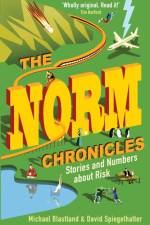
A far from average book: the real story behind the statistics on risk, chance and choice.
Disasters and discoveries. Industrial espionage and invention. Warfare and biopiracy. The race to find gold, uranium, precious stones. The history of scientific discovery is packed with fascinating incident. Lars OEhrstroem tells illuminating stories, rich with human interest, each based around a chemical element and principle.
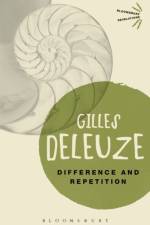
Since its publication in 1968, Difference and Repetition, an exposition of the critique of identity, has come to be considered a contemporary classic in philosophy and one of Gilles Deleuze's most important works. The text follows the development of two central concepts, those of pure difference and complex repetition. It shows how the two concepts are related, difference implying divergence and decentring, repetition being associated with displacement and disguising. The work moves deftly between Hegel, Kierkegaard, Freud, Althusser and Nietzsche to establish a fundamental critique of Western metaphysics, and has been a central text in initiating the shift in French thought - away from Hegel and Marx, towards Nietzsche and Freud.
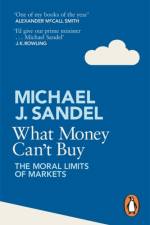
Should we pay children to read books or to get good grades? Is it ethical to pay people to test risky new drugs or to donate their organs? What about hiring mercenaries to fight our wars, outsourcing inmates to for-profit prisons, auctioning admission to elite universities, or selling citizenship to immigrants willing to pay? Isn't there something wrong with a world in which everything is for sale? In recent decades, market values have crowded out nonmarket norms in almost every aspect of life-medicine, education, government, law, art, sports, even family life and personal relations. Without quite realizing it, Sandel argues, we have drifted from having a market economy to being a market society. In What Money Can't Buy, Sandel examines one of the biggest ethical questions of our time and provokes a debate that's been missing in our market-driven age: What is the proper role of markets in a democratic society, and how can we protect the moral and civic goods that markets do not honour and money cannot buy?
With this text, Leszek Kolakowski demonstrates that no matter how hard man strives for purely rational thought, there has always been - and always will be - a resevoir of mythical images that lend "being" and "consciousness" a specifically human meaning.
In his most important work, Max Horkheimer surveys and demonstrates the gradual ascendancy of Reason in Western philosophy, its eventual total application to all spheres of life, and what he considers its present reified domination. First published in 1947, Horkheimer here explores the ways in Nazism - that most irrational of political movements - had co-opted ideas of rationality for its own ends. Ultimately, the book is a warning of the ways this might happen again and, as such, this is a book that has never appeared more timely.
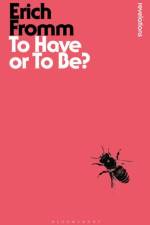
To Have Or to Be? is one of the seminal books of the second half of the 20th century. Nothing less than a manifesto for a new social and psychological revolution to save our threatened planet, this book is a summary of the penetrating thought of Eric Fromm. His thesis is that two modes of existence struggle for the spirit of humankind: the having mode, which concentrates on material possessions, power, and aggression, and is the basis of the universal evils of greed, envy, and violence; and the being mode, which is based on love, the pleasure of sharing, and in productive activity. To Have Or to Be? is a brilliant program for socioeconomic change.
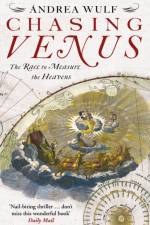
On two days in 1761 and 1769 hundreds of astronomers pointed their telescopes towards the skies to observe a rare astronomical event: the transit of Venus across the face of the sun. United by this momentous occasion, scientists from around the globe came together to answer the essential question: how can the universe be measured?
A new and radical reexamination of today's neoliberalist "new economy” through the political lens of the debtor/creditor relation."The debtor-creditor relation, which is at the heart of this book, sharpens mechanisms of exploitation and domination indiscriminately, since, in it, there is no distinction between workers and the unemployed, consumers and producers, working and non-working populations, between retirees and welfare recipients. They are all 'debtors,' guilty and responsible in the eyes of capital, which has become the Great, the Universal, Creditor."—from The Making of the Indebted ManDebt—both public debt and private debt—has become a major concern of economic and political leaders. In The Making of the Indebted Man, Maurizio Lazzarato shows that, far from being a threat to the capitalist economy, debt lies at the very core of the neoliberal project. Through a reading of Karl Marx's lesser-known youthful writings on John Mill, and a rereading of writings by Friedrich Nietzsche, Gilles Deleuze, Félix Guattari, and Michel Foucault, Lazzarato demonstrates that debt is above all a political construction, and that the creditor/debtor relation is the fundamental social relation of Western societies.Debt cannot be reduced to a simple economic mechanism, for it is also a technique of "public safety” through which individual and collective subjectivities are governed and controlled. Its aim is to minimize the uncertainty of the time and behavior of the governed. We are forever sinking further into debt to the State, to private insurance, and, on a more general level, to corporations. To insure that we honor our debts, we are at once encouraged and compelled to become the "entrepreneurs” of our lives, of our "human capital.” In this way, our entire material, psychological, and affective horizon is upended and reconfigured.How do we extricate ourselves from this impossible situation? How do we escape the neoliberal condition of the indebted man? Lazzarato argues that we will have to recognize that there is no simple technical, economic, or financial solution. We must instead radically challenge the fundamental social relation structuring capitalism: the system of debt.
Alicia Juarrero argues that a mistaken, 350-year-old model of cause and explanation--one that takes all causes to be of the push-pull, efficient cause sort, and all explanation to be prooflike--underlies contemporary theories of action.
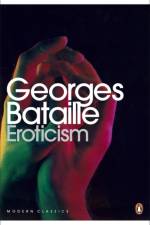
Linking the underlying sexual basis of religion to death, this title offers an array of insights into incest, prostitution, marriage, murder, sadism, sacrifice and violence, as well as includes comments on Freud, Sade and Saint Theresa.
Powerfully evoking the unquenchable American spirit of exploration, award-winning photographer Dan Winters chronicles the final launches of Discovery, Atlantis, and Endeavor in this stunning photographic tribute to America's space shuttle program.
For centuries, scientists had only one way to study the brain: wait for misfortune to strike - strokes, seizures, infections, lobotomies, horrendous accidents, phantom limbs, Siamese twins - and see how the victims changed afterwards.
The tools you need to ace your Chemisty II course College success for virtually all science, computing, engineering, and premedical majors depends in part on passing chemistry.
Did Myra Hindley deserve to be punished? Does any criminal? Is belief in free will an essential foundation for morality, or an excuse for unwarranted cruelty? Is free will a myth and, if so, can we let go of it?
Philosophy starts with questions, but attempts at answers are just as important, and these answers require reasoned argument. Cutting through notoriously dense and verbose philosophical prose, this book sets 100 famous and influential arguments in context, including key quotations, to provide a sense of style and approach.
This generous selection from Galileo's writings contains all the essential texts. Newly translated by Mark Davie and William R. Shea, the contents include full representation from his scientific masterpieces, his contributions to the debate on science and religion, and key documents from his trial before the Inquisition in 1633.
A compelling and eloquent articulation of a future when humanity will transcend logic and find profound meaning in the absurd.
The quickest ever way to learn everything, from the physics of black holes to quantum computing.
Since publication of John Emsley's Nature's Building Blocks in 2003 there have been a number of new developments. Fully updated for 2010, this fascinating A-Z guide includes three new named and validated elements, new uses, a 'Deadly elements' section, and an updated Periodic Table. A wonderful reference guide for anyone working with elements.
A new edition of a classic text in the philosophy of science illuminating the major developments in the field.
Will relentless consumerism end up destroying our planet? Or can science and technology allow us to innovate our way out of trouble? This book invite you to examine the risks and opportunities to come.
Abonner på vårt nyhetsbrev og få rabatter og inspirasjon til din neste leseopplevelse.
Ved å abonnere godtar du vår personvernerklæring.