







Gjør som tusenvis av andre bokelskere
Abonner på vårt nyhetsbrev og få rabatter og inspirasjon til din neste leseopplevelse.
Ved å abonnere godtar du vår personvernerklæring.Du kan når som helst melde deg av våre nyhetsbrev.

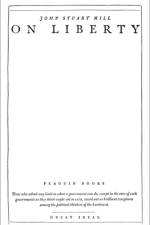
'Over himself, over his own body and mind, the individual is sovereign.' To this 'one very simple principle' the whole of Mill's essay On Liberty is dedicated. While many of his immediate predecessors and contemporaries, from Adam Smith to Godwin and Thoreau, had celebrated liberty, it was Mill who organized the idea into a philosophy, and put it into the form in which it is generally known today. The editor of this essay, Gertrude Himmelfarb records responses to Mill's books and comments on his fear of 'the tyranny of the majority'. Dr Himmelfarb concludes that the same inconsistencies which underlie On Liberty continue to complicate the moral and political stance of liberals today.
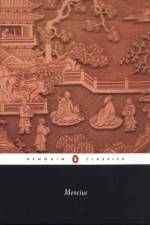
Mencius was one of the great philosophers of ancient China, second only in influence to Confucius, whose teachings he defended and expanded. The Mencius, in which he recounts his dialogues with kings, dukes and military men, as well as other philosophers, is one of the Four Books that make up the essential Confucian corpus. It takes up Confucius's theories of jen, or goodness and yi, righteousness, explaining that the individual can achieve harmony with mankind and the universe by perfecting his innate moral nature and acting with benevolence and justice. Mencius' strikingly modern views on the duties of subjects and their rulers or the evils of war, created a Confucian orthodoxy that has remained intact since the third century BCE.
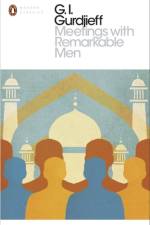
The exhilarating, life-affirming call to spiritual arms from world-renowned spiritual teacher G. I. Gurdjieff'Gurdjieff's voice is heard as a call.He calls because he suffers from the inner chaos in which we live.He calls to us to open our eyes.He asks us why we are here, what we wish for, what forces we obey. He asks us, above all, if we understand what we are . . .'Part adventure narrative, part travelogue, part spiritual guide, Meetings with Remarkable Men is suffused with Gurdjieff's unique perspective on life. With vivacity and charm, he organizes his account around portraits of the remarkable men and women who accompanied him through remote parts of the Near East and Central Asia, and who aided his search for hidden knowledge. Among them are Gurdjieff's own father (a traditional bard), a Russian prince dedicated to the search for Truth, a Christian missionary who entered a World Brotherhood deep in Asia, and a woman who escaped slavery to become a trusted member of Gurdjieff's group of fellow seekers.Meetings with Remarkable Men conveys a haunting sense of what it means to live fully - with conscience, with purpose and with heart.
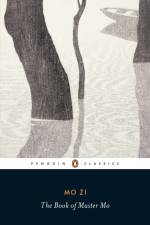
A key work of ancient Chinese philosophy is brought back to life in Ian Johnston's compelling and definitive translation, new to Penguin Classics. Very little is known about Master Mo, or the school he founded. However, the book containing his philosphical ideas has survived centuries of neglect and is today recognised as a fundamental work of ancient Chinese philosophy. The book contains sections explaining the ten key doctrines of Mohism; lively dialogues between Master Mo and his followers; discussion of ancient warfare; and an extraordinary series of chapters that include the first examples of logic, dialectics and epistemology in Chinese philosophy. The ideas discussed in The Book of Master Mo - ethics, anti-imperalism, and a political hierarchy based on merit - remain as relevant as ever, and the work is vital to understanding ancient Chinese philosophy.Translator Ian Johnston has an MA in Latin, a PhD in Greek and a PhD in Chinese, and was Associate Professor of Neurosurgery at Sydney University until his retirement. He has published translations of Galen's medical writings, early Chinese poetry (Singing of Scented Grass and Waiting for the Owl), and early Chinese philosophical works (the Mozi and - with Wang Ping - the Daxue and Zhongyong). In 2011 he was awarded the NSW Premier's Prize and the PEN medallion for translation.Unlike previous translations, this version includes the complete text. It also includes an introduction and explanatory end notes. 'A landmark endeavour' Asia Times'A magnificent and valuable achievement' Journal of Chinese Studies'Eminently readable and at the same time remarkably accurate...Johnston's work will be the standard for a long time' China Review International'Compelling and engaging reading...while at the same time preserving the diction and rhetorical style of the original Chinese' New Zealand Journal of Asian Studies
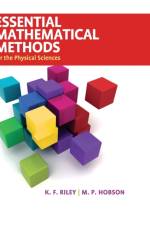
The mathematical methods that physical scientists need for solving substantial problems in their fields of study are set out clearly and simply in this tutorial-style textbook. Students will develop problem-solving skills through hundreds of worked examples, self-test questions and homework problems. Each chapter concludes with a summary of the main procedures and results and all assumed prior knowledge is summarized in one of the appendices. Over 300 worked examples show how to use the techniques and around 100 self-test questions in the footnotes act as checkpoints to build student confidence. Nearly 400 end-of-chapter problems combine ideas from the chapter to reinforce the concepts. Hints and outline answers to the odd-numbered problems are given at the end of each chapter, with fully-worked solutions to these problems given in the accompanying Student Solutions Manual. Fully-worked solutions to all problems, password-protected for instructors, are available at www.cambridge.org/essential.
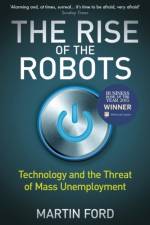
Intelligent algorithms are already well on their way to making white collar jobs obsolete: travel agents, data-analysts, and paralegals are currently in the firing line. In the near future, doctors, taxi-drivers and ironically even computer programmers are poised to be replaced by ';robots'. Without a radical reassessment of our economic and political structures, we risk the very implosion of the capitalist economy itself. In The Rise of the Robots, technology expert Martin Ford systematically outlines the achievements of artificial intelligence and uses a wealth of economic data to illustrate the terrifying societal implications. From health and education to finance and technology, his warning is stark all jobs that are on some level routine are likely to eventually be automated, resulting in the death of traditional careers and a hollowed-out middle class. The robots are coming and we have to decide now whether the future will bring prosperity or catastrophe.
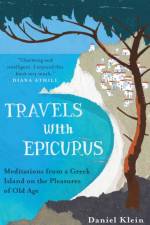
Our society worships at the fountain of youth. Each year, we seek to avert the arrival of old age using everything at our disposal, from extreme exercise and botox to pilates and cosmetic dentistry. But in the process, are we missing out on a distinct and extraordinarily valuable stage of life? Daniel Klein ponders whether it is better to be forever young or to grin toothlessly and live an authentic old age. He journeys to the Greek island of Hydra to discover the secrets of ageing happily. Drawing on the lives of octagenarian Greek locals, as well as philosophers ranging from Epicurus to Sartre, he uncovers the pleasures that are available only late in life. An escapist travel book, a witty meditation, and an optimistic guide to living well, this is a delightful jaunt through the terrain of old age, led by a funny and uniquely perceptive modern-day sage.
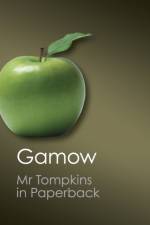
Since his first appearance over sixty years ago, Mr Tompkins has become known and loved by many thousands of readers as the bank clerk whose fantastic dreams and adventures lead him into a world inside the atom. George Gamow's classic provides a delightful explanation of the central concepts in modern physics, from atomic structure to relativity, and quantum theory to fusion and fission. Roger Penrose's foreword introduces Mr Tompkins to a new generation of readers and reviews his adventures in light of recent developments in physics.
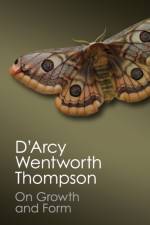
Why do living things and physical phenomena take the form they do? D'Arcy Thompson's classic On Growth and Form looks at the way things grow and the shapes they take. Analysing biological processes in their mathematical and physical aspects, this historic work, first published in 1917, has also become renowned for the sheer poetry of its descriptions. A great scientist sensitive to the fascinations and beauty of the natural world tells of jumping fleas and slipper limpets; of buds and seeds; of bees' cells and rain drops; of the potter's thumb and the spider's web; of a film of soap and a bubble of oil; of a splash of a pebble in a pond. D'Arcy Thompson's writing, hailed as 'good literature as well as good science; a discourse on science as though it were a humanity', is now made available for a wider readership, with a foreword by one of today's great populisers of science, explaining the importance of the work for a new generation of readers.
The science delusion is the belief that science already understands the nature of reality. The fundamental questions are answered, leaving only the details to be filled in. In this book, Dr Rupert Sheldrake, one of the world's most innovative scientists, shows that science is being constricted by assumptions that have hardened into dogmas. The sciences would be better off without them: freer, more interesting, and more fun. According to the dogmas of science, all reality is material or physical. The world is a machine, made up of dead matter. Nature is purposeless. Consciousness is nothing but the physical activity of the brain. Free will is an illusion. God exists only as an idea in human minds, imprisoned within our skulls. But should science be a belief-system, or a method of enquiry? Sheldrake shows that the materialist ideology is moribund; under its sway, increasingly expensive research is reaping diminishing returns. In the skeptical spirit of true science, Sheldrake turns the ten fundamental dogmas of materialism into exciting questions, and shows how all of them open up startling new possibilities.The Science Delusion will radically change your view of what is possible. and give you new hope for the world.
Why is America again unjustly at war? Why is its politics distorted by wedge issues like abortion and gay marriage? Why is anti-Semitism still so powerfully resurgent? Such contradictions within democracies arise from a patriarchal psychology still alive in our personal and political lives in tension with the equal voice that is the basis of democracy. This book joins a psychological approach with a political-theoretical one that traces both this psychology (based on loss in intimate life) and resistance to it (based on the love of equals) to the Roman Republic and Empire and to three Latin masterpieces: Virgil's Aeneid, Apuleius's The Golden Ass, and Augustine's Confessions. In addition, this book explains many other aspects of our present situation including why movements of ethical resistance are often accompanied by a freeing of sexuality and why we are witnessing an aggressive fundamentalism at home and abroad.
How propaganda undermines democracy and why we need to pay attentionOur democracy today is fraught with political campaigns, lobbyists, liberal media, and Fox News commentators, all using language to influence the way we think and reason about public issues. Even so, many of us believe that propaganda and manipulation aren't problems for us-not in the way they were for the totalitarian societies of the mid-twentieth century. In How Propaganda Works, Jason Stanley demonstrates that more attention needs to be paid. He examines how propaganda operates subtly, how it undermines democracy-particularly the ideals of democratic deliberation and equality-and how it has damaged democracies of the past.Focusing on the shortcomings of liberal democratic states, Stanley provides a historically grounded introduction to democratic political theory as a window into the misuse of democratic vocabulary for propaganda's selfish purposes. He lays out historical examples, such as the restructuring of the US public school system at the turn of the twentieth century, to explore how the language of democracy is sometimes used to mask an undemocratic reality. Drawing from a range of sources, including feminist theory, critical race theory, epistemology, formal semantics, educational theory, and social and cognitive psychology, he explains how the manipulative and hypocritical declaration of flawed beliefs and ideologies arises from and perpetuates inequalities in society, such as the racial injustices that commonly occur in the United States.How Propaganda Works shows that an understanding of propaganda and its mechanisms is essential for the preservation and protection of liberal democracies everywhere.
James Scott taught us what's wrong with seeing like a state. Now, in his most accessible and personal book to date, the acclaimed social scientist makes the case for seeing like an anarchist. Inspired by the core anarchist faith in the possibilities of voluntary cooperation without hierarchy, Two Cheers for Anarchism is an engaging, high-spirited, and often very funny defense of an anarchist way of seeing--one that provides a unique and powerful perspective on everything from everyday social and political interactions to mass protests and revolutions. Through a wide-ranging series of memorable anecdotes and examples, the book describes an anarchist sensibility that celebrates the local knowledge, common sense, and creativity of ordinary people. The result is a kind of handbook on constructive anarchism that challenges us to radically reconsider the value of hierarchy in public and private life, from schools and workplaces to retirement homes and government itself. Beginning with what Scott calls "e;the law of anarchist calisthenics,"e; an argument for law-breaking inspired by an East German pedestrian crossing, each chapter opens with a story that captures an essential anarchist truth. In the course of telling these stories, Scott touches on a wide variety of subjects: public disorder and riots, desertion, poaching, vernacular knowledge, assembly-line production, globalization, the petty bourgeoisie, school testing, playgrounds, and the practice of historical explanation. Far from a dogmatic manifesto, Two Cheers for Anarchism celebrates the anarchist confidence in the inventiveness and judgment of people who are free to exercise their creative and moral capacities.
The remarkable scientific story of how Earth became an oxygenated planetThe air we breathe is twenty-one percent oxygen, an amount higher than on any other known world. While we may take our air for granted, Earth was not always an oxygenated planet. How did it become this way? Donald Canfield-one of the world's leading authorities on geochemistry, earth history, and the early oceans-covers this vast history, emphasizing its relationship to the evolution of life and the evolving chemistry of the Earth. Canfield guides readers through the various lines of scientific evidence, considers some of the wrong turns and dead ends along the way, and highlights the scientists and researchers who have made key discoveries in the field. Showing how Earth's atmosphere developed over time, Oxygen takes readers on a remarkable journey through the history of the oxygenation of our planet.
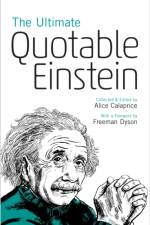
Here is the definitive new edition of the hugely popular collection of Einstein quotations that has sold tens of thousands of copies worldwide and been translated into twenty-five languages.The Ultimate Quotable Einstein features 400 additional quotes, bringing the total to roughly 1,600 in all. This ultimate edition includes new sections--"e;On and to Children,"e; "e;On Race and Prejudice,"e; and "e;Einstein's Verses: A Small Selection"e;--as well as a chronology of Einstein's life and accomplishments, Freeman Dyson's authoritative foreword, and new commentary by Alice Calaprice.In The Ultimate Quotable Einstein, readers will also find quotes by others about Einstein along with quotes attributed to him. Every quotation in this informative and entertaining collection is fully documented, and Calaprice has carefully selected new photographs and cartoons to introduce each section.Features 400 additional quotationsContains roughly 1,600 quotations in allIncludes new sections on children, race and prejudice, and Einstein's poetryProvides new commentaryBeautifully illustratedThe most comprehensive collection of Einstein quotes ever published
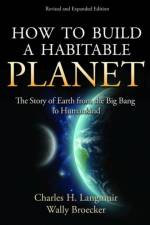
Since its first publication more than twenty-five years ago, How to Build a Habitable Planet has established a legendary reputation as an accessible yet scientifically impeccable introduction to the origin and evolution of Earth, from the Big Bang through the rise of human civilization. This classic account of how our habitable planet was assembled from the stuff of stars introduced readers to planetary, Earth, and climate science by way of a fascinating narrative. Now this great book has been made even better. Harvard geochemist Charles Langmuir has worked closely with the original author, Wally Broecker, one of the world's leading Earth scientists, to revise and expand the book for a new generation of readers for whom active planetary stewardship is becoming imperative. Interweaving physics, astronomy, chemistry, geology, and biology, this sweeping account tells Earth's complete story, from the synthesis of chemical elements in stars, to the formation of the Solar System, to the evolution of a habitable climate on Earth, to the origin of life and humankind. The book also addresses the search for other habitable worlds in the Milky Way and contemplates whether Earth will remain habitable as our influence on global climate grows. It concludes by considering the ways in which humankind can sustain Earth's habitability and perhaps even participate in further planetary evolution. Like no other book, How to Build a Habitable Planet provides an understanding of Earth in its broadest context, as well as a greater appreciation of its possibly rare ability to sustain life over geologic time. Leading schools that have ordered, recommended for reading, or adopted this book for course use: Arizona State University Brooklyn College CUNY Columbia University Cornell University ETH Zurich Georgia Institute of Technology Harvard University Johns Hopkins University Luther College Northwestern University Ohio State University Oxford Brookes University Pan American University Rutgers University State University of New York at Binghamton Texas A&M University Trinity College Dublin University of Bristol University of California-Los Angeles University of Cambridge University Of Chicago University of Colorado at Boulder University of Glasgow University of Leicester University of Maine, Farmington University of Michigan University of North Carolina at Chapel Hill University of North Georgia University of Nottingham University of Oregon University of Oxford University of Portsmouth University of Southampton University of Ulster University of Victoria University of Wyoming Western Kentucky University Yale University
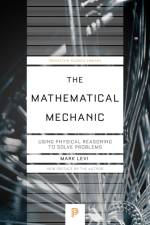
Everybody knows that mathematics is indispensable to physics--imagine where we'd be today if Einstein and Newton didn't have the math to back up their ideas. But how many people realize that physics can be used to produce many astonishing and strikingly elegant solutions in mathematics? Mark Levi shows how in this delightful book, treating readers to a host of entertaining problems and mind-bending puzzlers that will amuse and inspire their inner physicist. Levi turns math and physics upside down, revealing how physics can simplify proofs and lead to quicker solutions and new theorems, and how physical solutions can illustrate why results are true in ways lengthy mathematical calculations never can. Did you know it's possible to derive the Pythagorean theorem by spinning a fish tank filled with water? Or that soap film holds the key to determining the cheapest container for a given volume? Or that the line of best fit for a data set can be found using a mechanical contraption made from a rod and springs? Levi demonstrates how to use physical intuition to solve these and other fascinating math problems. More than half the problems can be tackled by anyone with precalculus and basic geometry, while the more challenging problems require some calculus. This one-of-a-kind book explains physics and math concepts where needed, and includes an informative appendix of physical principles. The Mathematical Mechanic will appeal to anyone interested in the little-known connections between mathematics and physics and how both endeavors relate to the world around us.
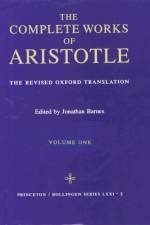
The Oxford Translation of Aristotle was originally published in 12 volumes between 1912 and 1954. It is universally recognized as the standard English version of Aristotle. This revised edition contains the substance of the original Translation, slightly emended in light of recent scholarship; three of the original versions have been replaced by new translations; and a new and enlarged selection of Fragments has been added. The aim of the translation remains the same: to make the surviving works of Aristotle readily accessible to English speaking readers.
The Oxford Translation of Aristotle was originally published in 12 volumes between 1912 and 1954. It is universally recognized as the standard English version of Aristotle. This revised edition contains the substance of the original Translation, slightly emended in light of recent scholarship; three of the original versions have been replaced by new translations; and a new and enlarged selection of Fragments has been added. The aim of the translation remains the same: to make the surviving works of Aristotle readily accessible to English speaking readers.
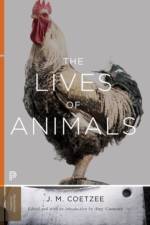
The idea of human cruelty to animals so consumes novelist Elizabeth Costello in her later years that she can no longer look another person in the eye: humans, especially meat-eating ones, seem to her to be conspirators in a crime of stupefying magnitude taking place on farms and in slaughterhouses, factories, and laboratories across the world. Costello's son, a physics professor, admires her literary achievements, but dreads his mother's lecturing on animal rights at the college where he teaches. His colleagues resist her argument that human reason is overrated and that the inability to reason does not diminish the value of life; his wife denounces his mother's vegetarianism as a form of moral superiority. At the dinner that follows her first lecture, the guests confront Costello with a range of sympathetic and skeptical reactions to issues of animal rights, touching on broad philosophical, anthropological, and religious perspectives. Painfully for her son, Elizabeth Costello seems offensive and flaky, but--dare he admit it?--strangely on target. Here the internationally renowned writer J. M. Coetzee uses fiction to present a powerfully moving discussion of animal rights in all their complexity. He draws us into Elizabeth Costello's own sense of mortality, her compassion for animals, and her alienation from humans, even from her own family. In his fable, presented as a Tanner Lecture sponsored by the University Center for Human Values at Princeton University, Coetzee immerses us in a drama reflecting the real-life situation at hand: a writer delivering a lecture on an emotionally charged issue at a prestigious university. Literature, philosophy, performance, and deep human conviction--Coetzee brings all these elements into play. As in the story of Elizabeth Costello, the Tanner Lecture is followed by responses treating the reader to a variety of perspectives, delivered by leading thinkers in different fields. Coetzee's text is accompanied by an introduction by political philosopher Amy Gutmann and responsive essays by religion scholar Wendy Doniger, primatologist Barbara Smuts, literary theorist Marjorie Garber, and moral philosopher Peter Singer, author of Animal Liberation. Together the lecture-fable and the essays explore the palpable social consequences of uncompromising moral conflict and confrontation.
A leading figure in the emerging field of extinction studies, Thom van Dooren puts philosophy into conversation with the natural sciences and his ethnographic encounters to vivify the cultural and ethical significance of modern-day extinctions. Unlike other meditations on the subject, Flight Ways incorporates the particularities of real animals and their worlds, drawing philosophers, natural scientists, and general readers into the experience of living among and losing biodiversity.Each chapter of Flight Ways focuses on a different species or group of birds: North Pacific albatrosses, Indian vultures, an endangered colony of penguins in Australia, Hawaiian crows, and the iconic whooping cranes of North America. Written in eloquent and moving prose, the book takes stock of what is lost when a life form disappears from the world-the wide-ranging ramifications that ripple out to implicate a number of human and more-than-human others. Van Dooren intimately explores what life is like for those who must live on the edge of extinction, balanced between life and oblivion, taking care of their young and grieving their dead. He bolsters his studies with real-life accounts from scientists and local communities at the forefront of these developments. No longer abstract entities with Latin names, these species become fully realized characters enmeshed in complex and precarious ways of life, sparking our sense of curiosity, concern, and accountability toward others in a rapidly changing world.
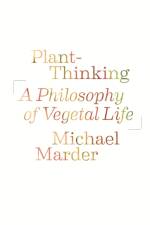
The margins of philosophy are populated by non-human, non-animal living beings, including plants. While contemporary philosophers tend to refrain from raising ontological and ethical concerns with vegetal life, Michael Marder puts this life at the forefront of the current deconstruction of metaphysics. He identifies the existential features of plant behavior and the vegetal heritage of human thought so as to affirm the potential of vegetation to resist the logic of totalization and to exceed the narrow confines of instrumentality. Reconstructing the life of plants "e;after metaphysics,"e; Marder focuses on their unique temporality, freedom, and material knowledge or wisdom. In his formulation, "e;plant-thinking"e; is the non-cognitive, non-ideational, and non-imagistic mode of thinking proper to plants, as much as the process of bringing human thought itself back to its roots and rendering it plantlike.
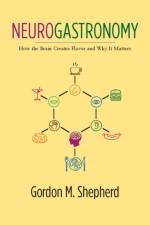
Leading neuroscientist Gordon M. Shepherd embarks on a paradigm-shifting trip through the "e;human brain flavor system,"e; laying the foundations for a new scientific field: neurogastronomy. Challenging the belief that the sense of smell diminished during human evolution, Shepherd argues that this sense, which constitutes the main component of flavor, is far more powerful and essential than previously believed.Shepherd begins Neurogastronomy with the mechanics of smell, particularly the way it stimulates the nose from the back of the mouth. As we eat, the brain conceptualizes smells as spatial patterns, and from these and the other senses it constructs the perception of flavor. Shepherd then considers the impact of the flavor system on contemporary social, behavioral, and medical issues. He analyzes flavor's engagement with the brain regions that control emotion, food preferences, and cravings, and he even devotes a section to food's role in drug addiction and, building on Marcel Proust's iconic tale of the madeleine, its ability to evoke deep memories. Shepherd connects his research to trends in nutrition, dieting, and obesity, especially the challenges that many face in eating healthily. He concludes with human perceptions of smell and flavor and their relationship to the neural basis of consciousness. Everyone from casual diners and ardent foodies to wine critics, chefs, scholars, and researchers will delight in Shepherd's fascinating, scientific-gastronomic adventures.
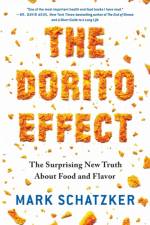
A lively argument from an award-winning journalist proving that the key to reversing Americas health crisis lies in the overlooked link between nutrition and flavor: The Dorito Effect is one of the most important health and food books I have read (Dr. David B. Agus, New York Times bestselling author).We are in the grip of a food crisis. Obesity has become a leading cause of preventable death, after only smoking. For nearly half a century weve been trying to pin the blame somewherefat, carbs, sugar, wheat, high-fructose corn syrup. But that search has been in vain, because the food problem thats killing us is not a nutrient problem. Its a behavioral problem, and its caused by the changing flavor of the food we eat. Ever since the 1940s, with the rise of industrialized food production, we have been gradually leeching the taste out of what we grow. Simultaneously, we have taken great leaps forward in technology, creating a flavor industry, worth billions annually, in an attempt to put back the tastes weve engineered out of our food. The result is a national cuisine that increasingly resembles the paragon of flavor manipulation: Doritos. As foodall foodbecomes increasingly bland, we dress it up with calories and flavor chemicals to make it delicious again. We have rewired our palates and our brains, and the results are making us sick and killing us. With in-depth historical and scientific research, The Dorito Effect casts the food crisis in a fascinating new light, weaving an enthralling tale of how we got to this point and where we are headed. Weve been telling ourselves that our addiction to flavor is the problem, but it is actually the solution. We are on the cusp of a new revolution in agriculture that will allow us to eat healthier and live longer by enjoying flavor the way nature intended.
On 25 October 1946, in a crowded room in Cambridge, Ludwig Wittgenstein and Karl Popper came face to face for the first and only time. The encounter lasted only ten minutes, and did not go well. Almost immediately, rumours started to spread around the world that the two philosophers had come to blows, armed with red-hot pokers . . .
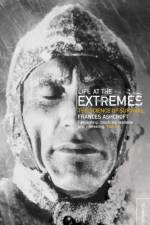
The debut of a female Steve Jones - likeable, literate, lucid and laconic. A sprightly, lavishly illustrated book on the science of human survival.How do people survive extremes of heat, cold, depth, speed and altitude? This book explores the limits of human survival and the physiological adaptations which enable us to exist under extreme conditions. In man's battle for survival in the harshest of environments, the knowledge imparted by physiology, the 'logic of life', is crucial. What causes mountain sickness? Why is it possible to reach the top of Everest without supplementary oxygen, yet be killed if a plane depressurises suddenly at the same altitude. Why are astronauts unable to stand without fainting when they return to Earth? Why do human divers get the bends but sperm whales don't? Will men always be able to run faster than women? Why don't penguins get frostbite?
How do we move, think and remember? Why do we get ill, age and die? Distinguished biologist Lewis Wolpert explains how cells provide the answers to the fundamental questions about our lives.Cells are the basis of all life in the universe. Our bodies are made up of billions of them: an incredibly complex society that governs everything, from movement to memory and imagination. When we age, it is because our cells slow down; when we get ill, it is because our cells mutate or stop working.In How We Live and Why We Die, Wolpert provides a clear explanation of the science that underpins our lives. He explains how our bodies function and how we derive from a single cell - the egg. He examines the science behind the topics that are much discussed but rarely understood - stem-cell research, cloning, DNA - and explains how all life evolved from just one cell. Lively and passionate, How We Live and Why We Die is an accessible guide to understanding the human body and, essentially, life itself.
'A monumental achievement - one of the great scientific biographies.' Michael Frayn The Strangest Man is the Costa Biography Award-winning account of Paul Dirac, the famous physicist sometimes called the British Einstein. He was one of the leading pioneers of the greatest revolution in twentieth-century science: quantum mechanics. The youngest theoretician ever to win the Nobel Prize for Physics, he was also pathologically reticent, strangely literal-minded and legendarily unable to communicate or empathize. Through his greatest period of productivity, his postcards home contained only remarks about the weather.Based on a previously undiscovered archive of family papers, Graham Farmelo celebrates Dirac's massive scientific achievement while drawing a compassionate portrait of his life and work. Farmelo shows a man who, while hopelessly socially inept, could manage to love and sustain close friendship.The Strangest Man is an extraordinary and moving human story, as well as a study of one of the most exciting times in scientific history. 'A wonderful book . . . Moving, sometimes comic, sometimes infinitely sad, and goes to the roots of what we mean by truth in science.' Lord Waldegrave, Daily Telegraph
"Mal et billede af Mig som du ser Mig med signaturen: Jesus, jeg har tillid til Dig!" Således sagde Jesus til den polske nonne Faustina, da Han åbenbarede sig for hende i 1931. Det blev begyndelsen på Faustinas mission for Jesus: Hun skulle udbrede kendskabet til Jesu Barmhjertighed gennem billedet, "Den Guddommelige Barmhjertighed", og hun skulle starte en bevægelse, hvor "Min Ånd skal være jeres leveregel." Jesus kaldte Faustina "Barmhjertighedens Apostel", og gennem hende ønskede Han at få mennesker til at vende sig og se på og bede til Hans Hellige og Barmhjertige Hjerte, så Han kan fylde dem med barmhjertighed og skænke dem fred. "FAUSTINA - Barmhjertighedens Apostel" er baseret på den Dagbog, som Faustina skrev om sit liv med Jesus. Den fortæller historien om Faustinas liv, hendes spiritualitet og hendes mission med at udbrede Den Guddommelige Barmhjertighed, en mission, der i dag har bredt sig til hele verden, og som senest har fået tilført endnu en impuls med pave Frans's proklamation af Barmhjertighedens År.
Abonner på vårt nyhetsbrev og få rabatter og inspirasjon til din neste leseopplevelse.
Ved å abonnere godtar du vår personvernerklæring.