





Gjør som tusenvis av andre bokelskere
Abonner på vårt nyhetsbrev og få rabatter og inspirasjon til din neste leseopplevelse.
Ved å abonnere godtar du vår personvernerklæring.Du kan når som helst melde deg av våre nyhetsbrev.

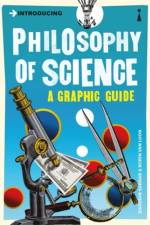
What do scientists actually do? Is science "e;value-free"e;? How has science evolved through history? Where is science leading us? "e;Introducing Philosophy of Science"e; is a clear and incisively illustrated map of the big questions underpinning science. It is essential reading for students, the general public, and even scientists themselves.
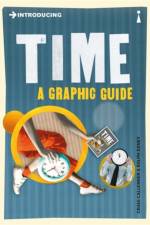
What is time? The 5th-century philosopher St Augustine famously said that he knew what time was, so long as no one asked him. Is time a fourth dimension similar to space or does it flow in some sense? And if it flows, does it make sense to say how fast? Does the future exist? Is time travel possible? Why does time seem to pass in only one direction?These questions and others are among the deepest and most subtle that one can ask, but "e;Introducing Time"e; presents them - many for the first time - in an easily accessible, lucid and engaging manner, wittily illustrated by Ralph Edney.
In this scientific tour de force, world-class physicist Frank Wilczek argues that beauty is at the heart of the logic of the universe, a principle that has guided his pioneering work in quantum physics. As this book demonstrates, the human quest to find the beauty embodied in the universe connects all scientific pursuit from Pythagoras and Plato on to Galileo and Newton, Maxwell and Einstein. Indeed, Wilczek shows us just how deeply intertwined our ideas about beauty and art are with our scientific understanding of the cosmos. Gorgeously illustrated, A Beautiful Question is the culmination of Wilczek's life work and a mind-expanding book that combines the age-old human quest for beauty and the age-old human quest for truth.
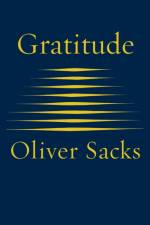
Oliver Sacks died in August 2015 at his home in Greenwich Village, surrounded by his close friends and family. He was 82. He spent his final days doing what he loved: playing the piano, swimming, enjoying smoked salmon - and writing. As Dr Sacks looked back over his long, adventurous life his final thoughts were of gratitude. In a series of remarkable, beautifully written and uplifting meditations, in Gratitude Dr Sacks reflects on and gives thanks for a life well lived, and expresses his thoughts on growing old, facing terminal cancer and reaching the end. I cannot pretend I am without fear. But my predominant feeling is one of gratitude. I have loved and been loved; I have been given much and I have given something in return; I have read and travelled and thought and written. I have had an intercourse with the world, the special intercourse of writers and readers. Above all, I have been a sentient being, a thinking animal, on this beautiful planet, and that in itself has been an enormous privilege and adventure.
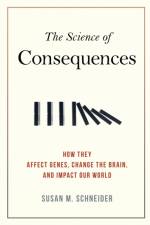
Actions have consequences--and the ability to learn from them revolutionized life on earth. While it's easy enough to see that consequences are important (where would we be without positive reinforcement?), few have heard there's a science of consequences, with principles that affect us every day. Despite their variety, consequences appear to follow a common set of scientific principles and share some similar effects in the brain--such as the "e;pleasure centers."e; Nature and nurture always work together, and scientists have demonstrated that learning from consequences predictably activates genes and restructures the brain. Applications are everywhere--at home, at work, and at school, and that's just for starters. Individually and societally, for example, self-control pits short-term against long-term consequences. Ten years in the making, this award-winning booktells a tale ranging from genetics to neurotransmitters, from emotion to language, from parenting to politics, taking an inclusive interdisciplinary approach to show how something so deceptively simple can help make sense of so much.
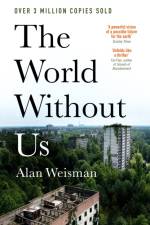
"e;On the day after humans disappear, nature takes over and immediately begins cleaning house - or houses, that is. Cleans them right off the face of the earth. They all go."e;What if mankind disappeared right now, forever ... what would happen to the Earth in a week, a year, a millennium? Could the planet's climate ever recover from human activity? How would nature destroy our huge cities and our myriad plastics? And what would our final legacy be? Speaking to experts in fields as diverse as oil production and ecology, and visiting the places that have escaped recent human activity to discover how they have adapted to life without us, Alan Weisman paints an intriguing picture of the future of Earth. Exploring key concerns of our time, this absorbing thought experiment reveals a powerful - and surprising - picture of our planet's future.
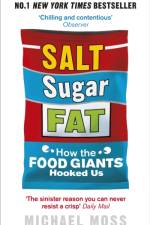
The No.1 New York Times BestsellerIn China, for the first time, the people who weigh too much now outnumber those who weigh too little. In Mexico, the obesity rate has tripled in the past three decades. In the UK over 60 per cent of adults and 30 per cent of children are overweight, while the United States remains the most obese country in the world.We are hooked on salt, sugar and fat. These three simple ingredients are used by the major food companies to achieve the greatest allure for the lowest possible cost. Here, Pulitzer Prize-winning investigative reporter Michael Moss exposes the practices of some of the most recognisable (and profitable) companies and brands of the last half century. He takes us inside the labs where food scientists use cutting-edge technology to calculate the bliss point of sugary drinks. He unearths marketing campaigns designed in a technique adapted from the tobacco industry to redirect concerns about the health risks of their products, and reveals how the makers of processed foods have chosen, time and again, to increase consumption and profits, while gambling with our health.Are you ready for the truth about what s in your shopping basket?
The basic questions of Who Am I? Where Am I Going? What Is the Purpose of Life? are asked by every generation, and Patanjali's answers (given in the third century BC) form one of the oldest spiritual texts in the world. 'That which unites' is called 'Yoga' - and is thus much broader than the form of exercise so popular today. It is a way to restore our lost wholeness, our integrity as complete human beings, by unifying the personality around a centre that is silent and unbounded. Alistair Shearer's superb introduction and translation bring these ancient, vital teachings to life in the modern world and are for all those who seek the benefits of self-knowledge.
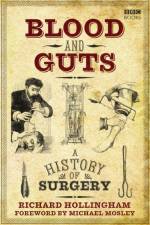
Today, astonishing surgical breakthroughs are making face transplants, limb transplants and a host of other previously undreamed of operations possible. But getting here has not been a simple story of selfless men working tirelessly in the pursuit of medical advancement. Instead it's a bloodstained tale of blunders, arrogance, mishap and murder. In trying to keep us alive, surgeons have all too often killed us off, and life-saving solutions have often come from the most surprising places. Accompanying a BBC series, Blood and Guts is an incredible story of stolen corpses, medical fraud, lobotomized patients - and every now and then courageous advances that have saved the lives of millions around the world.You may think twice before going under the knife...
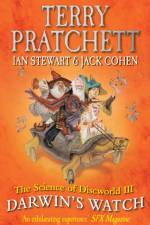
Roundworld is in trouble again, and this time it looks fatal. Having created it in the first place, the wizards of Unseen Univeristy feel vaguely responsible for its safety. They know the creatures who lived there escaped the impending Big Freeze by inventing the space elevator - they even intervened to rid the planet of a plague of elves, who attempted to divert humanity onto a different time track. But now it's all gone wrong - Victorian England has stagnated and the pace of progress would embarrass a limping snail. Unless something drastic is done, there won't be time for anyone to invent spaceflight and the human race will be turned into ice-pops.Why, though, did history come adrift? Was it Sir Arthur Nightingale's dismal book about natural selection? Or was it the devastating response by an obscure country vicar called Charles Darwin, whose bestselling Theology of Species made it impossible to refute the divine design of living creatures? Either way, it's no easy task to change history, as the wizards discover to their cost. Can the God of Evolution come to humanity's aid and ensure Darwin writes a very different book? And who stopped him writing it in the first place?
Why is the Mona Lisa the most famous painting in the world? Why did Facebook succeed when other social networking sites failed? Did the surge in Iraq really lead to less violence? And does higher pay incentivize people to work harder?If you think the answers to these questions are a matter of common sense, think again. As sociologist and network science pioneer Duncan Watts explains in this provocative book, the explanations that we give for the outcomes that we observe in life-explanations that seem obvious once we know the answer-are less useful than they seem. Watts shows how commonsense reasoning and history conspire to mislead us into thinking that we understand more about the world of human behavior than we do; and in turn, why attempts to predict, manage, or manipulate social and economic systems so often go awry.Only by understanding how and when common sense fails can we improve how we plan for the future, as well as understand the present-an argument that has important implications in politics, business, marketing, and even everyday life.
Are you fed up losing at family board game nights? Do you want to learn how to destroy the competition?Get the inside tips from preposterously overqualified experts on how to win a range of common family games, board games and more. * A mime artist tells you how to do the best charades* A mathematician tells you how to win Connect 4* A professional racing driver tells you how to take corners in Scalextric* A Scrabble champion reveals his secrets* A game theorist tells you what properties to buy in Monopoly in order to bankrupt and embarrass your competitors.This is a must read for anyone who takes games too seriously and for bad losers everywhere.
Essentials of Operations Management is a brand new concise version of the market-leading text Operations Management. It has been developed forstudents on short courses in operations management for example, doing an initial course at undergraduate, postgraduate or post-experience level. In these books the author team have set the standards in Operations Management which other textbooks seek to emulate: Expert authorship, an engaging writing style, and an interesting collection of cases combine to communicate the importance of managing operations and processes within a successful organisation.
Research Methods for Arts and Event Management provides a compelling and comprehensive guide to research methods for undergraduate and postgraduate students in arts and event management, as well as for managers in the arts/culture/events industries. This book provides students and practising managers with the following: Essential skills in designing their own qualitative and quantitative research studies that can be implemented in a real working environment Guidance in designing, managing, and monitoring research work which students and practising managers may commission from consultants The necessary theoretical and practical basis to identify and implement appropriate methodologies to conduct research for academic dissertations and theses in the fields of arts, cultural and event management. Furthermore, the book provides readers with multiple test questions, exercises and further resources, as well as a section on specialist terminology. A. J. Veal is Adjunct Professor at the School of Leisure, Sport and Tourism, University of Technology, Sydney, Australia. Christine Burton is an Associate Professor with the UTS Business School, University of Technology, Sydney. Her research focuses on audience development in the museum and arts sectors. Prior to becoming an academic, Christine worked as an arts consultant in Australia and the United Kingdom. Christine has worked on a number of research projects and consultancies including social impact of the arts, arts facilities development and public art planning and development.
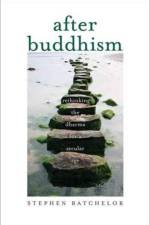
Some twenty-five centuries after the Buddha started teaching, his message continues to inspire people across the globe, including those living in predominantly secular societies. What does it mean to adapt religious practices to secular contexts? Stephen Batchelor, an internationally known author and teacher, is committed to a secularized version of the Buddha's teachings. The time has come, he feels, to articulate a coherent ethical, contemplative, and philosophical vision of Buddhism for our age. After Buddhism, the culmination of four decades of study and practice in the Tibetan, Zen, and Theravada traditions, is his attempt to set the record straight about who the Buddha was and what he was trying to teach. Combining critical readings of the earliest canonical texts with narrative accounts of five members of the Buddha's inner circle, Batchelor depicts the Buddha as a pragmatic ethicist rather than a dogmatic metaphysician. He envisions Buddhism as a constantly evolving culture of awakening whose long survival is due to its capacity to reinvent itself and interact creatively with each society it encounters. This original and provocative book presents a new framework for understanding the remarkable spread of Buddhism in today's globalized world. It also reminds us of what was so startling about the Buddha's vision of human flourishing.
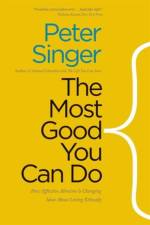
Peter Singer's books and ideas have been disturbing our complacency ever since the appearance of Animal Liberation. Now he directs our attention to a challenging new movement in which his own ideas have played a crucial role: effective altruism. Effective altruism is built upon the simple but profoundly unsettling idea that living a fully ethical life involves doing the "e;most good you can do."e; Such a life requires a rigorously unsentimental view of charitable giving: to be a worthy recipient of our support, an organization must be able to demonstrate that it will do more good with our money or our time than other options open to us. Singer introduces us to an array of remarkable people who are restructuring their lives in accordance with these ideas, and shows how, paradoxically, living altruistically often leads to greater personal fulfillment than living for oneself.Doing the Most Good develops the challenges Singer has made, in the New York Times and Washington Post, to those who donate to the arts, and to charities focused on helping our fellow citizens, rather than those for whom we can do the most good. Effective altruists are extending our knowledge of the possibilities of living less selfishly, and of allowing reason, rather than emotion, to determine how we live. Doing the Most Good offers new hope for our ability to tackle the world's most pressing problems.
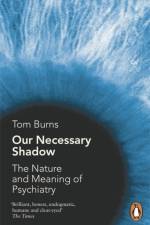
Our Necessary Shadow is the first attempt in a generation to explain the whole subject of psychiatry, from the UK's leading expert, Tom BurnsA lot is written about psychiatry and the things it deals with, but very little that describes psychiatry itself. Why should there be such a need? There isn't a raft of books explaining all the other branches of medicine. But for good or ill, psychiatry is a polemical battleground, critcised on the one hand as an instrument of social control or a barbaric practice, while on the other the latest developments in neuroscience are trumpeted as offering lasting solutions to mental illness. Which of these strikingly contrasting positions should we believe? This is the first attempt in a generation to explain the whole subject of psychiatry. In this deeply thoughtful, descriptive and sympathetic book, Tom Burns reviews the historical development of psychiatry, the places where there is much agreement on treatment and where there is not, throughout alert to where psychiatry helps, and where it is imperfect. What is clear is that mental illnesses are intimately tied to what makes us human in the first place. And the drive to relieve the suffering they cause is even more human. Psychiatry, for all its flaws, currently represents our best attempts to discharge this most human of impulses. It is not something we can just ignore. It is our necessary shadow.Tom Burns is Professor of Social Psychiatry at Oxford University. From the late 1980s he has conducted research, in addition his clinical and teaching work, and has produced nearly 200 peer-reviewed scientific articles.
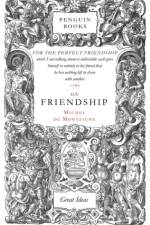
Throughout history, some books have changed the world. They have transformed the way we see ourselves - and each other. They have inspired debate, dissent, war and revolution. They have enlightened, outraged, provoked and comforted. They have enriched lives - and destroyed them. Now Penguin brings you the works of the great thinkers, pioneers, radicals and visionaries whose ideas shook civilization, and helped make us who we are.Michel de Montaigne was the originator of the modern essay form; in these diverse pieces he expresses his views on relationships, contemplates the idea that man is no different from any animal, argues that all cultures should be respected, and attempts, by an exploration of himself, to understand the nature of humanity.
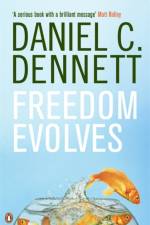
Dennett shows that human freedom is not an illusion; it is an objective phenomenon, distinct from all other biological conditions and found in only one species - us. There was a time on this planet when it didn't exist, quite recently in fact. It had to evolve like every other feature of the biosphere, and it continues to evolve today. Dennett shows that far from there being an incompatibility between contemporary science and the traditional vision of freedom and morality, it is only recently that science has advanced to the point where we can see how we came to have our unique kind of freedom.
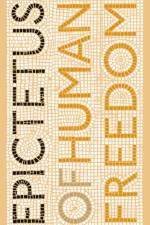
In this personal and practical guide to moral self-improvement and living a good life, the second-century philosopher Epictetus tackles questions of freedom and imprisonment, stubbornness and fear, family, friendship and love, and leaves an intriguing document of daily life in the classical world.GREAT IDEAS. Throughout history, some books have changed the world. They have transformed the way we see ourselves - and each other. They have inspired debate, dissent, war and revolution. They have enlightened, outraged, provoked and comforted. They have enriched lives - and destroyed them. Now Penguin brings you the works of the great thinkers, pioneers, radicals and visionaries whose ideas shook civilization and helped make us who we are.
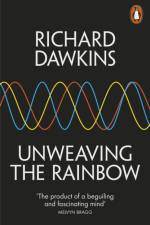
A dazzling, passionate polemic against anti-science movements of all kinds. Keats accused Newton of destroying the poetry of the rainbow by explaining the origin of its colours. In this illuminating and provocative book, Richard Dawkins argues that Keats could not have been more mistaken, and shows how an understanding of science enhances our wonder of the world. He argues that mysteries do not lose their poetry because they are solved: the solution is often more beautiful than the puzzle, uncovering even deeper mysteries. Dawkins takes up the most important and compelling topics in modern science, from astronomy and genetics to language and virtual reality, combining them in a landmark statement on the human appetite for wonder.
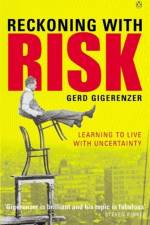
"e;This is an important book, full of relevant examples and worrying case histories. By the end of it, the reader has been presented with a powerful set of tools for understanding statistics...anyone who wants to take responsibly for their own medicalchoices should read it"e; - New ScientistHowever much we crave certainty, we live in an uncertain world. But are we guilty of wildly exaggerating the chances of some unwanted event happening to us? Are ordinary people idiots when reasoning with risk?Far too many of us, argues Gerd Gigerenzer, are hampered by our own innumeracy. Here, he shows us that our difficulties in thinking about numbers can easily be overcome.
'A passionate defence of the enduring power of human nature ... both life-affirming and deeply satisfying' Daily TelegraphRecently many people have assumed that we are blank slates shaped by our environment. But this denies the heart of our being: human nature. Violence is not just a product of society; male and female minds are different; the genes we give our children shape them more than our parenting practices. To acknowledge our innate abilities, Pinker shows, is not to condone inequality, but to understand the very foundations of humanity.'Brilliant ... enjoyable, informative, clear, humane' New Scientist'If you think the nature-nurture debate has been resolved, you are wrong ... this book is required reading' Literary Review'An original and vital contribution to science and also a rattling good read' Matt Ridley, Sunday Telegraph 'Startling ... This is a breath of air for a topic that has been politicized for too long' Economist
In late 1888, only weeks before his final collapse into madness, Nietzsche (1844-1900) set out to compose his autobiography, and Ecce Homo remains one of the most intriguing yet bizarre examples of the genre ever written. In this extraordinary work Nietzsche traces his life, work and development as a philosopher, examines the heroes he has identified with, struggled against and then overcome - Schopenhauer, Wagner, Socrates, Christ - and predicts the cataclysmic impact of his 'forthcoming revelation of all values'. Both self-celebrating and self-mocking, penetrating and strange, Ecce Homo gives the final, definitive expression to Nietzsche's main beliefs and is in every way his last testament.
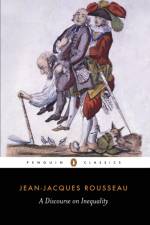
In A Discourse on Inequality Rousseau sets out to demonstrate how the growth of civilization corrupts man s natural happiness and freedom by creating artificial inequalities of wealth, power and social privilege. Contending that primitive man was equal to his fellows, Rousseau believed that as societies become more sophisticated, the strongest and most intelligent members of the community gain an unnatural advantage over their weaker brethren, and that constitutions set up to rectify these imbalances through peace and justice in fact do nothing but perpetuate them. Rousseau s political and social arguments in the Discourse were a hugely influential denunciation of the social conditions of his time and one of the most revolutionary documents of the eighteenth-century.
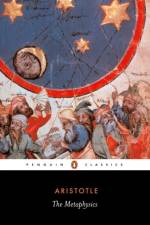
The Metaphysics presents Aristotle's mature rejection of both the Platonic theory that what we perceive is just a pale reflection of reality and the hardheaded view that all processes are ultimately material. He argued instead that the reality or substance of things lies in their concrete forms, and in so doing he probed some of the deepest questions of philosophy: What is existence? How is change possible? And are there certain things that must exist for anything else to exist at all? The seminal notions discussed in The Metaphysics - of 'substance' and associated concepts of matter and form, essence and accident, potentiality and actuality - have had a profound and enduring influence, and laid the foundations for one of the central branches of Western philosophy.
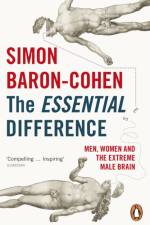
'The Essential Difference' shows that, on average, male and female minds are of a slightly different character. Men tend to be better at analysing systems (better systemisers), while women tend to be better at reading the emotions of other people (better empathisers).
One of the most important nineteenth-century schools of thought, Utilitarianism propounds the view that the value or rightness of an action rests in how well it promotes the welfare of those affected by it, aiming for 'the greatest happiness of the greatest number'. Jeremy Bentham (1748-1832) was the movement's founder, as much a social reformer as a philosopher. His greatest interpreter, John Stuart Mill (1806-73), set out to humanize Bentham's pragmatic Utilitarianism by balancing the claims of reason and the imagination, individuality and social well-being in essays such as 'Bentham', 'Coleridge' and, above all, Utilitarianism. The works by Bentham and Mill collected in this volume show the creation and development of a system of ethics that has had an enduring influence on moral philosophy and legislative policy.
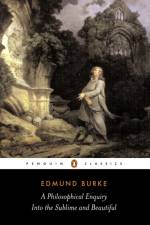
Edmund Burke was one of the foremost philosophers of the eighteenth century and wrote widely on aesthetics, politics and society. In this landmark work, he propounds his theory that the sublime and the beautiful should be regarded as distinct and wholly separate states - the first, an experience inspired by fear and awe, the second an expression of pleasure and serenity. Eloquent and profound, A Philosophical Enquiry is an involving account of our sensory, imaginative and judgmental processes and their relation to artistic appreciation. Burke's work was hugely influential on his contemporaries and also admired by later writers such as Matthew Arnold and William Wordsworth. This volume also contains several of his early political works on subjects including natural society, government and the American colonies, which illustrate his liberal, humane views.
Abonner på vårt nyhetsbrev og få rabatter og inspirasjon til din neste leseopplevelse.
Ved å abonnere godtar du vår personvernerklæring.