





Gjør som tusenvis av andre bokelskere
Abonner på vårt nyhetsbrev og få rabatter og inspirasjon til din neste leseopplevelse.
Ved å abonnere godtar du vår personvernerklæring.Du kan når som helst melde deg av våre nyhetsbrev.

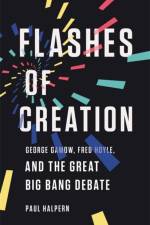
A respected physics professor and author breaks down the great debate over the Big Bang and the continuing quest to understand the fate of the universe. Today, the Big Bang is so entrenched in our understanding of the cosmos that to doubt it would seem crazy. But as Paul Halpern shows in Flashes of Creation, just decades ago its mere mention caused sparks to fly. At the center of the debate were Russian American physicist George Gamow and British astrophysicist Fred Hoyle. Gamow insisted that a fiery explosion explained how the elements of the universe were created. Attacking the idea as half-baked, Hoyle countered that the universe was engaged in a never-ending process of creation. The battle was fierce. In the end, Gamow turned out to be right -- mostly -- and Hoyle, despite his many achievements, is remembered for giving the theory the silliest possible name: "The Big Bang." Halpern captures the brilliance of both thinkers and reminds us that even those proved wrong have much to teach us about boldness, imagination, and the universe itself.
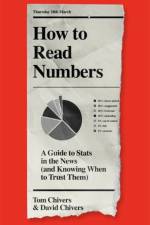
A short, practical, timely guide to the tools you need to understand the numbers we read in the news everyday - and how we often get them wrong
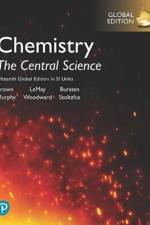
For courses in two-semester generalchemistry. Accurate, data-driven authorship with expanded interactivityleads to greater student engagement Unrivaled problem sets, notablescientific accuracy and currency, and remarkable clarity have made Chemistry:The Central Science the leading general chemistry text for more than adecade. Trusted, innovative, and calibrated, the text increases conceptualunderstanding and leads to greater student success in general chemistry bybuilding on the expertise of the dynamic author team of leading researchers andaward-winning teachers. MasteringTMChemistry is not included. Students, if Mastering is arecommended/mandatory component of the course, please ask your instructor forthe correct ISBN and course ID. Mastering should only be purchased whenrequired by an instructor. Instructors, contact your Pearson rep for moreinformation. Mastering is an online homework,tutorial, and assessment product designed to personalize learning and improveresults. With a wide range of interactive, engaging, and assignable activities,students are encouraged to actively learn and retain tough course concepts.
What is the secret to humanity's evolutionary success? Could it be our strength, our intellect...or something much nicer?
Go is rapidly becoming the preferred language for building web services. While there are plenty of tutorials available that teach Go's syntax to developers with experience in other programming languages, tutorials aren't enough. They don't teach Go's idioms, so developers end up recreating patterns that don't make sense in a Go context. This practical guide provides the essential background you need to write clear and idiomatic Go.No matter your level of experience, you'll learn how to think like a Go developer. Author Jon Bodner introduces the design patterns experienced Go developers have adopted and explores the rationale for using them. You'll also get a preview of Go's upcoming generics support and how it fits into the language.Learn how to write idiomatic code in Go and design a Go projectUnderstand the reasons for the design decisions in GoSet up a Go development environment for a solo developer or teamLearn how and when to use reflection, unsafe, and cgoDiscover how Go's features allow the language to run efficientlyKnow which Go features you should use sparingly or not at all
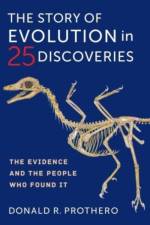
4.6 billion years of the story of life on Earth, in 52,000 words. Brief, brilliant and entirely gripping.
An incisive theoretical manifesto arguing that feminism is the only route to an antifascist global future.
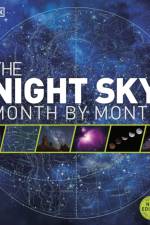
An invaluable, user-friendly guide to discovering and navigating the night sky every monthThe Night Sky Month by Month in ebook format offers directions for observing stars and constellations in both the northern and southern hemispheres at any time of the year. Positions of stars and planet locations for each month are included, plus get tips on what equipment to use and how. Packed with specially-commissioned artworks and photography with illustrated overviews introducing each month with a guide to the main attractions, such as bright stars and prominent constellations, this will inspire both beginners to star-gazing as well as amateur astronomers.
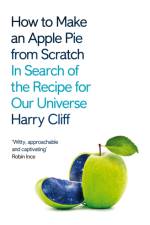
To make an apple pie, one first needs to build a universe. A brilliantly accessible introduction to today's physics by a young academic and educator.
A biologist-turned-philosopher shows how scientific discoveries can help resolve some of philosophy's longest-debated issues
As a fundamental aspect of our knowledge of the physical world, quantum mechanics remains a vital subject in physics. This is a collection of the late Richard P Feynman's lectures. It is suitable for students of physics and those seeking an introduction to the field from the inimitable Richard Feynman.
As a fundamental aspect of our knowledge of the physical world, quantum mechanics remains a vital subject in physics. This is a collection of the late Richard P Feynman's lectures. It is suitable for students of physics and those seeking an introduction to the field from the inimitable Richard Feynman.
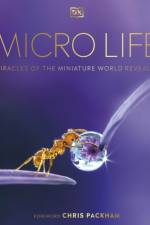
Explore the miracles of the microscopic world.Find out all about the unique and beautiful kingdoms of life at a microscopic scale and how every organism meets the challenges of survival no matter its size. The perfect book for people who enjoy photography, nature, and biology.Inside the pages of this exciting nature book, you'll find: - Microscopic life-forms (often neglected), and their larger life-forms in extreme close-ups, revealing details such as nerve cells and hair follicles - Artworks support the beautiful images, providing a deeper insight into structure and function and building a picture of how living organisms work at a microscopic level - Comprehensive coverage of the natural world, including all the main groups of living things- Explores overlooked groups that have a huge role in the natural world: insects, which make up 80 percent of the world's animal species; and bacteria - of which there are more in a human mouth than there are people in the world- The book is organised according to the main functions of life: movement, reproduction, energy and feeding, sensing the surroundings, defence, etc. - Foreword for the book written by Chris PackhamExplore the inhabitants of an invisible world in incredible detail with this book which contains macro photography and spectacular microscope imagery. You'll have so much information about the hidden world of intricate structures beyond the naked eye. From the tiniest spiders and insects to even microscopic creatures such as bacteria and viruses, this book contains it all!See the beauty of a pollen grain, a butterfly egg, the spore of a fungus, and a human's nerve cell in extreme close up. The amazing imagery in Micro Life contains focus-stacked macro photographs and micrographs (microscope images), including scanning electron micrographs. Illustrations in this book explain the science - from the workings of an insect's eye to how a plant "breathes" through its leaves. Micro Life is an unexpectedly breathtaking look at the natural world. Find out how life works and how organisms solve the fundamental problems of movement, reproduction, energy, communication, and defence. Suitable for all the family, this stunning book makes a wonderful gift for those interested in photography, nature or biology.
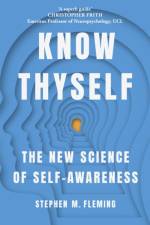
The Science of Self Awareness. The surprising story of humanitys greatest power -- introspection -- and how understanding it can help us lead better lives
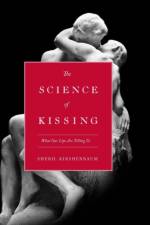
From a scientist and journalist working in the tradition of Olivia Judson comes a wonderfully witty and erudite exploration of how and why we kiss.
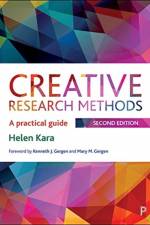
Creative research methods can help to answer complex contemporary questions which are hard to answer using conventional methods alone. Creative methods can also be more ethical, helping researchers to address social injustice. This bestselling book, now in its second edition, is the first to identify and examine the five areas of creative research methods: * arts-based research * embodied research * research using technology * multi-modal research * transformative research frameworks. Written in an accessible, practical and jargon-free style, with reflective questions, boxed text and a companion website to guide student learning, it offers numerous examples of creative methods in practice from around the world. This new edition includes a wealth of new material, with five extra chapters and over 200 new references. Spanning the gulf between academia and practice, this useful book will inform and inspire researchers by showing readers why, when, and how to use creative methods in their research.
Abonner på vårt nyhetsbrev og få rabatter og inspirasjon til din neste leseopplevelse.
Ved å abonnere godtar du vår personvernerklæring.