





Gjør som tusenvis av andre bokelskere
Abonner på vårt nyhetsbrev og få rabatter og inspirasjon til din neste leseopplevelse.
Ved å abonnere godtar du vår personvernerklæring.Du kan når som helst melde deg av våre nyhetsbrev.

Essays addressing, from various angles, the relationship between Europe and philosophy in today's crisis-ridden contexts such as xenophobia and migration.
In the face of widespread environmental and social destabilization and growing uncertainty about the future of humanity, this collection of essays brings the philosophical tradition of phenomenology to the question of relations between generations to examine our ethical, political, and environmental obligations to future people. Emphasizing phenomenology's rich reflections on the role of time in the constitution of the social-historical world and its relation to the environment, the essays interweave the central themes of mortality, natality, generativity, and amor mundi to build vital bridges between new developments in both eco- and critical phenomenology and important work in intergenerational ethics. Together, the chapters reevaluate the traditional scope and foundational concepts of environmental ethics and social justice, paving the way for a revised understanding of intergenerational responsibilities, culminating in the key insight that future people are of us. The result is an invaluable conceptual toolkit for phenomenologists, ethicists, theorists, students, and activists concerned with environmental justice and climate ethics.
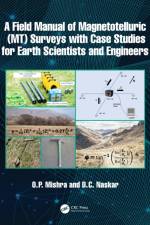
This book details geophysical techniques with description of physics involved in different methodologies of magnetotellurics (MT). The chapters describe conceptual background of MT geophysical methods along with the instrumentation, illustrations and applicability of the individual methodology supported by successful case histories.
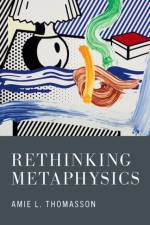
In Rethinking Metaphysics, Amie Thomasson aims to change how we think about metaphysics: what it can do, and why it matters. Traditional metaphysics has aimed to discover deep truths about the world. But this has led to rivalries with science, epistemological mysteries, and a despairing scepticism about how we could gain knowledge in metaphysics. Thomasson argues that the problems with prior approaches to metaphysics arise from a problematic assumption that all discourse functions in the same way. By better understanding the plurality of linguistic functions, we can also disentangle ourselves from many old metaphysical problems--including problems about properties, numbers, morality and modality.
This book applies interpretive video-analysis to explore the intersections between the sociology of knowledge and interaction studies.
This book presents a broad-spectrum content of the functionalized materials and well-established methods, and a commercial perspective of various investigations conducted so far on dye degradation as an environmental cleaning application. It covers areas of advanced materials and efficient methods for the environmental remediation field.
How and when should we end a war? What place should the pathways to a war's end have in war planning and decision-making? This volume treats the topic of ending war as part and parcel of how wars begin and how they are fought - a unique, complex problem, worthy of its own conversation. New essays by leading thinkers and practitioners in the fields of philosophical ethics, international relations, and military law reflect on the problem and show that it is imperative that we address not only the resolution of war, but how and if a war as waged can accommodate a future peace. The essays collectively solidify the topic and underline its centrality to the future of military ethics, strategy, and war.
This book re-examines the place of Carnap and Quine in the history of analytic philosophy by presenting them as sharing philosophical motivations despite their notable differences. It will be accessible to professional philosophers, graduate students, and advanced undergraduates.
In two often neglected passages of the Critique of Pure Reason, Kant submits that the Critique is a 'treatise' or a 'doctrine of method'. Gabriele Gava argues that these passages point out that the Critique is the doctrine of method of metaphysics, with the task of showing that metaphysics can become a science.
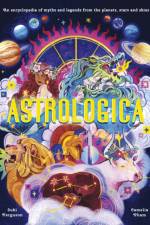
Astrologica is a visually stunning illustrated guide to the stories behind zodiac signs and systems from around the world.
Opportunities for Learning brings together the works of one of the most highly regarded past Presidents of the American Sociological Association, focusing on uncovering and addressing educational inequities in elementary and secondary schools. Few sociologists of education can rival the depth and breadth of Maureen T. Hallinan's contributions to the field. This book compiles her writings, some of which have never been published before, to bring the full insight of both her sociological imagination and her theoretical and empirical research. Through articles, book chapters, and invited lectures, Hallinan explores the interplay among theory, research, and policy. Other pieces focus on the importance of opportunities to learn, peer friendships, and ability grouping for instruction. She writes in depth about various attempts of educational reform, and the effects of Catholic schools. Hallinan sought to address the enduring problems of sociological theorizing and research within education, and her writings contribute important insights and provide foundations for the next generation of social scientists. This collection demonstrates Hallinan's keen ability to communicate balanced inquiry by engaging multiple perspectives in her theoretical framework coupled with strong empirical testing of the relationships.
Abonner på vårt nyhetsbrev og få rabatter og inspirasjon til din neste leseopplevelse.
Ved å abonnere godtar du vår personvernerklæring.