



Gjør som tusenvis av andre bokelskere
Abonner på vårt nyhetsbrev og få rabatter og inspirasjon til din neste leseopplevelse.
Ved å abonnere godtar du vår personvernerklæring.Du kan når som helst melde deg av våre nyhetsbrev.

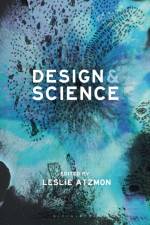
This compelling new volume addresses the inter-relationship, in both historical and contemporary contexts, between design and scientific research and practice.
Collects together for the first time essays devoted to a detailed historical and systematic discussion of the topic of life in Kant's work.
Wilfrid Sellars and Donald Davidson were two of the most influential American philosophers of the twentieth century. This volume explores the deep similarities and differences between these two philosophers.
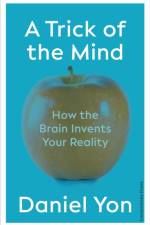
'This book will profoundly change the way you consider your own mind' Lewis Dartnell, bestselling author of The Knowledge, Origins and Being Human'You will not a find a more up-to-date or more compelling account of how a mind emerges from the brain' Chris Frith - Emeritus Professor of Neuropsychology at University College LondonHow does your brain decide what it's seeing, from the physical world to other people? For decades, scientists have tried to understand how our brains work, not realising that the answer lies much closer to home than it seems.The latest research in neuroscience and psychology suggests that the brain is doing the same thing that the scientists are: using past experiences to build theories of how the world works, and using these models to predict and make sense of it. Through this process, your brain constructs the reality that you live in.In this book Daniel Yon takes the research one step further, uncovering how your brain colours your perception of the world, the judgements you make about other people and the beliefs you form about yourself. With transformative applications for how we engage with other communities and approach mental illness, A Trick of The Mind will revolutionise the way you think.
An invigorating exploration of the pleasures and social benefits of conversationTalking Cure is a timely and enticing excursion into the art of good conversation. Paula Marantz Cohen reveals how conversation connects us in ways that social media never can and explains why simply talking to each other freely and without guile may be the cure to what ails our troubled society.Drawing on her lifelong immersion in literature and culture and her decades of experience as a teacher and critic, Cohen argues that we learn to converse in our families and then carry that knowledge into a broader world where we encounter diverse opinions and sensibilities. She discusses the role of food in encouraging conversation, the challenges of writing dialogue in fiction, the pros and cons of Zoom, the relationship of conversation to vaudeville acts, and the educational value of a good college seminar where students learn to talk about ideas. Cohen looks at some of the famous groups of writers and artists in history whose conversation fed their creativity, and details some of the habits that can result in bad conversation.Blending the immediacy of a beautifully crafted memoir with the conviviality of an intimate gathering with friends, Talking Cure makes a persuasive case for the civilizing value of conversation and is essential reading for anyone interested in the chatter that fuels culture.
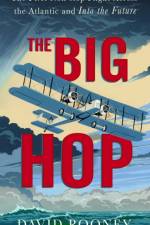
'David Rooney is an expert storyteller with a big heart, capturing not only the perils faced by the intrepid airmen who attempted the flight, but also their humanity' JOHN LANCASTER, author of The Great Air RaceNewfoundland, 1919. Buffeted by winds, an unwieldy aircraft - made mainly from wood and stiff linen - struggled to take off from the North American island's rocky slopes. Cramped side by side in its open cockpit were two men, freezing cold and barely able to move but resolute. They had a dream: to be the first in human history to fly, non-stop, across the Atlantic Ocean. But there were three other teams competing against them, and as the waves raged a few miles below, memories of wartime crashes resurfaced . . .It was just over six months since the 'War to End all Wars' had come to its close. Between them, the seven young aviators who would get off the ground for the transatlantic race had already defied death many times. Mining letters, diaries and evocative unpublished photographs, David Rooney's deeply researched account of the audacious contest shows how it was the airmen's thrilling wartime experiences that ultimately led them to the 'Big Hop', and brought old friends together for one more daring adventure.These Atlantic pioneers weren't scientists or stoical upper-class officers. They were ordinary, working men, risking their lives in the name of progress. Unjustly forgotten by history, they nonetheless paved the way for the Earharts and Lindberghs who came after - and ushered in the age of global connection in which we live now.A non-stop flight across the Atlantic might seem routine today; almost a chore. But it is only possible because of those who went first.
Offers a unified vision for approaching human ethical responses to what science is telling us about the crises facing our environment and climate.
Abonner på vårt nyhetsbrev og få rabatter og inspirasjon til din neste leseopplevelse.
Ved å abonnere godtar du vår personvernerklæring.